Why the Price Went Up After Fifteen Years
An Ontario ATV or UTV trail permit costs more than it did after a long period without a price increase. That can feel like a sudden jump, especially if you ride only a few times a year. The key is to understand what the permit pays for, what it does not cover, and how to check whether it suits the trails you plan to ride.
Which price went up, and what does the permit cover?
The increase discussed here is for an organized trail permit, not the provincial registration permit and plate for your machine. Those are separate requirements with different purposes. Ontario registration identifies the vehicle for legal use; a trail permit helps pay for access to participating trail networks.
That distinction matters when comparing costs. Paying to register an ATV does not automatically buy access to a maintained club trail. Likewise, buying a trail permit does not replace required vehicle registration, insurance, or compliance with local riding rules. If you are sorting out the registration side, start with Registering an ATV in Ontario.
The long-standing price was familiar to riders, so an increase after roughly fifteen years can seem bigger than it is when considered against the full period. But the old price is not a guarantee that the same operating costs can be covered indefinitely. Trail systems require ongoing work, and the costs of maintaining them do not stay fixed just because a permit price has.
An organized trail permit may support work such as clearing and grooming routes, repairing signs, maintaining bridges and drainage, and coordinating volunteers and clubs. Costs can also include administration and liability insurance associated with the trail network. The exact allocation and terms depend on the permit program, so check its current information before buying.
| Cost or requirement | What it is for | Does an ATV trail permit replace it? |
|---|---|---|
| Ontario vehicle registration | Registering the machine and displaying its plate | No |
| Insurance | Meeting applicable insurance requirements for the way you ride | No |
| Organized trail permit | Access to participating trail networks and support for trail operations | No |
| Separate club or site pass | Access to a trail system with its own permit rules | Not necessarily |
The permit price is therefore best understood as one part of a riding budget, not as a blanket charge that makes every ride legal or every trail available. For a closer look at what the permit covers, see The OFATV Permit and What It Costs in Ontario.
Why a long-held price eventually changes
A permit price can stay unchanged for years while the cost of running the service rises. That does not mean every expense increases at the same pace, or that a particular expense alone caused the change. It does mean that, over a long period, a price that once covered a club’s share of trail work may no longer stretch as far.
Trail maintenance is practical, recurring work. A route can need attention after heavy rain, erosion, fallen trees, or use by multiple trail users. Signs wear out or get damaged; bridges and culverts need inspection and repair. Clubs also rely on people to plan work, communicate closures, and keep maps and trail information useful. Some work is done by volunteers, but volunteer effort does not eliminate the need for materials, equipment, insurance, or coordination.
Insurance is another relevant part of the picture. A permit program may include liability coverage connected to its network or activities. Insurance does not guarantee that every rider’s individual policy requirements are met, and it does not remove the need to understand where and how your own policy applies. Check the program’s current explanation of included coverage and your insurer’s terms rather than assuming one replaces the other.
The trail-permit structure also matters. In a program where most of the revenue is directed to the rider’s chosen club, the increase can give that club more support for local trail work. The remaining share may help fund shared administration, insurance, or services that individual clubs would otherwise have to manage separately. Check the current breakdown with the permit provider: allocations and program details are more useful than assuming every dollar goes directly to trail clearing.
That arrangement can make the price change easier to understand, but it does not mean every rider receives identical value. Someone who rides regularly on a maintained network may make more use of the access than someone who takes one short ride. A club in an area with extensive maintenance needs may also face different demands from one with fewer active trails. A permit’s price reflects the program’s costs and structure, not a guaranteed number of kilometres or a promise that every route will be open on every day.
The increase followed a long period in which the price remained stable; it is not necessarily a signal that the permit is an annual tax or that Ontario vehicle registration has changed. The background and timing of the increase are covered in The First Ontario Price Rise Since 2010. For the current permit price and any purchase or renewal conditions, check the permit provider directly. Past prices are not a reliable way to budget for a future purchase.
What the increase means for your riding plans
For frequent riders, a higher annual permit may still be a practical way to access the trails they use. For occasional riders, a short-term option, day pass, or separate local pass may fit better. The right choice depends on where you intend to ride, how often you will go, and which permit rules apply in that area.
Do not assume a permit covers every Ontario trail. Some networks have separate passes or access arrangements, and crossing from one club area into another does not always mean the same permit is accepted. Check the network map and permit terms for each area on your route. Does Your Permit Cover the Next Club’s District? is a useful starting point, while Ontario’s Separate Club Passes explains why one purchase may not cover every destination.
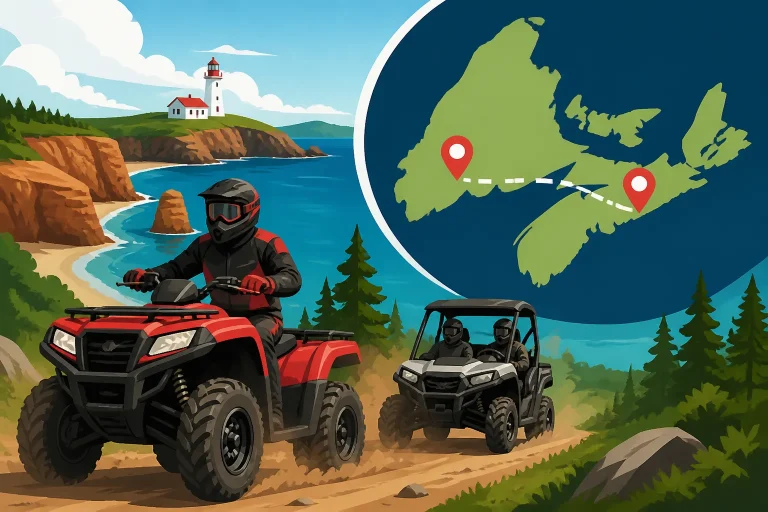
Reciprocity also deserves a careful check if you plan to travel outside Ontario. Agreements between trail organizations can differ by province and may change. A permit recognized in one place is not automatically accepted everywhere, and an Ontario permit does not authorize riding on land or trails that are closed to motorized use. Confirm acceptance with the destination trail organization before leaving home.
If you usually ride only a local area, investigate whether that club sells its own pass or requires a separate one. For example, a network may have its own access rules even if it connects with trails managed by other organizations. Confirm the route, not just the town or region: one section of a planned ride could use a different system from the next.
Keep the trail permit separate in your budget from vehicle registration and insurance. A realistic trip budget can include:
- The appropriate trail permit or site pass for each area
- Registration and insurance requirements for the machine
- Fuel, food, and possible lodging
- Any parking or staging fees
- A backup plan if weather, trail conditions, or a closure changes your route
This is especially useful for riders planning a weekend or multi-day trip. A pass that seems economical for one network may not cover every segment of a longer route. Confirming access in advance is better than finding out at a trailhead that another pass is required.
Also check whether your machine and riding plans meet the permit’s conditions. Trail access rules can address permitted vehicle types, permitted routes, operating hours, or other limits. A pass is permission to use the covered network under its terms; it is not a substitute for municipal rules, landowner permission, or provincial requirements. If you are unsure about the trail itself, check Ontario ATV Trail Permits Explained and verify the specific route with the relevant club.
How to decide whether the new price is worth it
Start with your expected riding, not the price you remember paying years ago. List the networks you realistically expect to visit and check what each one requires. Then compare the available permit types and the period they cover. A full-season or annual option may work well if you ride often, while a day or short-term option may better suit a one-off visit—if those options are available for the network you want.
A quick decision process helps:
- Choose the trail areas first. Identify the actual network or club routes you plan to ride, rather than assuming a regional pass covers them all.
- Check current access terms. Look at the permit provider’s current rules, including any separate club passes, duration, vehicle eligibility, and proof-of-purchase requirements.
- Estimate how often you will ride. Compare the options offered for that area against your likely trips, not an idealized schedule.
- Add the other required costs. Registration, insurance, fuel, lodging, and parking may remain separate.
- Recheck before departure. Trail openings, closures, and local conditions can affect whether a route is usable.
Renewal timing can affect the amount you pay if the program offers a renewal incentive or an early purchase period. Those conditions are specific to the permit program and can change, so do not rely on an old receipt or a past discount. See Renewing Early to Save $20 for the renewal question, then confirm the current terms directly with the provider.
It is also worth separating “worth it” from “cheap.” A permit can cost more and still be worthwhile if it gives you access to the trails you want and supports a maintained network. Conversely, a pass may be poor value for your plans if you rarely ride, use a different network, or need to buy an additional pass for most of your route. The relevant comparison is between the permit’s current terms and the riding you will actually do.
If the price increase is the reason you are reconsidering where to ride, compare the destinations as well as the pass types. Look at trail distance, staging access, riding conditions, closures, and whether the route connects with other networks. For a longer trip, the simplest plan is often to confirm every trail section and its permit requirement before you travel, rather than choosing a pass based on a broad regional name.
The old price can be a useful reference point, but it cannot tell you what a permit should cost today or whether it fits your next ride. Think of the increase as a prompt to check where the money goes, which trails are included, and whether the pass matches your riding habits. Then use the provider’s current information to make the final comparison.
Disclaimer
This article is for general informational purposes only and does not constitute professional advice. Laws, prices and regulations vary by location and change over time. Consult a qualified professional for guidance on your specific situation.