Paying for a Passenger Too
A passenger can change the cost of an ATV outing in the Ganaraska Forest, even when you bring only one machine. The key is that forest access may be charged per person, not just per vehicle. Here’s how to plan for the driver and passenger, avoid confusing different kinds of permits, and confirm what you need before setting out.
Why a passenger may need a separate pass
The Ganaraska Forest is a managed recreation area, so access rules and fees are not automatically the same as riding on a public trail or Crown land. For motorized use, the cost may depend on the people riding as well as the machine. In practical terms, bringing a passenger can mean arranging access for two people, even if you are travelling on one ATV or UTV.
That per-person approach is easy to miss if you assume that one vehicle pass covers everyone aboard. Before your visit, check the current Ganaraska Forest fee schedule and access rules for your planned activity. Confirm whether the pass you intend to buy covers only its named rider, how passengers are handled, and whether the passenger’s age affects the options.
This is especially important for side-by-sides. A driver may think of the vehicle as the unit being admitted, while the forest’s access system may count individual riders. The same question applies to a passenger on a two-up ATV: don’t assume that sharing a seat also means sharing an access pass.
If the current rules require each rider to have their own authorization, the passenger should be covered before entering the forest. A pass for the driver does not necessarily extend to a second person simply because both people are in the same vehicle. For the broader distinction between forest access and other trail permissions, see Paying per person in the Ganaraska Forest and Ganaraska Forest Fees for Ontario Riders.
| What you are paying for | What to check before you go |
|---|---|
| Forest access for the driver | Which pass or authorization applies to your activity and visit |
| Forest access for the passenger | Whether the passenger needs a separate pass and whether age affects eligibility |
| Vehicle or towing access | Whether parking or tow-vehicle authorization is separate |
| Ontario machine registration | Whether your ATV or UTV has the required provincial registration |
| Club or trail access | Whether a separate trail permit applies outside the forest |
Treat these as separate questions rather than assuming that one purchase covers everything. A pass that admits a person to the forest does not necessarily satisfy vehicle registration requirements or provide access to every trail network you may reach.
What to confirm before buying
Fees, pass types, age rules, and access arrangements can change. Rather than relying on an old receipt, a friend’s recollection, or a social media post, check the current information from the forest operator before you pay. When the wording is unclear, contact the operator and describe your exact setup.
Have these details ready:
- How many people will ride? Count the driver and every passenger. Ask whether each person needs a separate forest pass.
- What machine are you bringing? Specify ATV or UTV, and whether it is a single-rider or passenger-carrying model.
- How old is the passenger? Ask whether age changes the permitted use, pass category, supervision rules, or fee.
- Are you towing the machine? Check whether the truck or trailer needs a separate parking or vehicle pass.
- Where do you plan to ride? Confirm that the pass covers the intended forest area and motorized activity.
- Are you visiting for one day or more? Compare the available options for your actual plans instead of assuming a particular pass covers a longer period.
If you are visiting with a young rider, the passenger question can overlap with rules about who may operate a machine and who must supervise. A forest pass is not a substitute for following applicable riding rules. Check the details for the passenger’s age and role, and review Youth Operator Rates in the Forest before deciding which option to purchase.
Also check whether the pass must be purchased in advance, displayed in a particular way, or presented at an entry point. Keep proof of purchase available during the visit. If a pass is tied to an individual, don’t assume another person can use it just because you are travelling together.
Forest access is not the same as an ATV trail permit
A common source of confusion is that “permit” can refer to different things. A forest access pass, an Ontario vehicle permit, insurance, and a trail permit each serve a different purpose. Paying for one does not automatically settle the others.
A forest pass concerns access to the managed forest under its rules. Ontario registration concerns the machine and its legal operation under provincial requirements. Insurance is a separate matter, and a trail permit may be required on a club-managed trail network. Check each requirement that applies to your route and activity.
This matters if you are planning to ride beyond the Ganaraska Forest or connect to a different trail system. Do not assume that a forest access purchase gives you permission to use all nearby trails. The rules can differ between locations, and separate passes may be required. Ontario ATV Trail Permits Explained is useful for understanding how trail permits differ from other permissions, while Does Your Permit Cover the Next Club’s District? addresses the question of continuing into another club area.
It is also important not to confuse public-land access with managed-forest access. Ontario’s public-land rules do not mean that every privately managed or designated recreation property is free to use. A forest may have its own access controls, operating conditions, and fees. Check the rules for the actual place you plan to ride rather than assuming that a permit or policy for another area applies.
A quick comparison helps:
- Forest pass: permission to use the relevant forest area under its access rules.
- Vehicle registration: provincial registration for the ATV or UTV.
- Insurance: financial protection and proof of coverage where required.
- Trail permit: authorization to ride on a particular trail network when that network requires one.
- Parking or tow-vehicle pass: permission for a truck or trailer to use designated parking, if required.
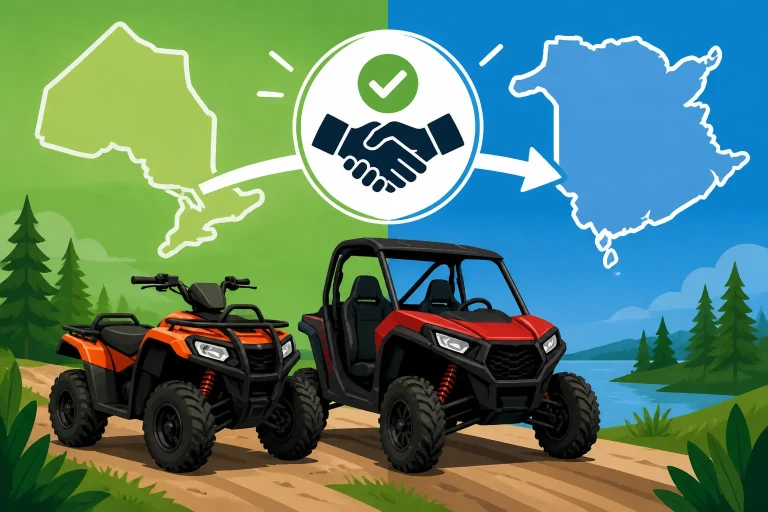
For a broader explanation of permit differences and reciprocal arrangements, see Why Ontario and Quebec No Longer Share Permits. Reciprocity between trail systems is not the same as forest admission, and it should not be treated as a blanket pass for every riding area.
Budgeting for a driver and passenger
When you plan the cost of a ride, count people as well as machines. If the forest requires an individual pass for each rider, the passenger adds an access cost even though you are not bringing a second ATV. If parking or towing is charged separately, include that too. The current fee schedule is the right place to confirm the amounts and any conditions; don’t rely on a figure from a previous season.
For a one-time visit, compare the available short-term option with your actual trip. For repeated visits, check whether a longer-term pass makes sense for each person who will ride. A pass bought for one rider may not cover a family member or friend on a later outing. Read the terms carefully before assuming that a household, vehicle, or group can share one authorization. When a Ganaraska Annual Pass Beats Buying Day Passes can help with the annual-versus-short-term decision.
Parking can add another detail. If you are bringing a truck and trailer, confirm whether the pass you are buying includes parking or whether the tow vehicle needs separate authorization. Don’t assume that paying for the driver and passenger also covers the vehicle used to get the ATV to the forest. See Ganaraska Forest Parking Passes for Tow Vehicles for that specific question.
A simple planning note can prevent surprises at the entrance:
- Driver: confirm the correct forest access pass.
- Passenger: confirm whether a separate pass is required.
- Machine: verify that its registration and equipment meet applicable requirements.
- Truck and trailer: check parking and towing rules.
- Route: confirm whether any additional trail permit is needed beyond the forest.
If the passenger decides not to ride, the answer may depend on the pass terms and the forest’s refund or change policy. Check those terms before purchasing rather than expecting a pass to be transferable or refundable. Similarly, if a different person takes the passenger’s place, ask whether the existing pass can be changed. A person-specific authorization may not be reusable by someone else.
The safest approach is to confirm each rider’s access before leaving home. That avoids arriving with a pass for the driver but no authorization for the passenger, and it helps keep forest access, registration, insurance, parking, and trail permits from being mixed together.
Disclaimer
This article is for general informational purposes only and does not constitute professional advice. Laws, prices and regulations vary by location and change over time. Consult a qualified professional for guidance on your specific situation.