Transferring a Permit to a Buyer in Ontario
The moment you decide to buy or sell an ATV or UTV in Ontario, one of the biggest questions that pops up is, "How do we actually make this legal?" It’s easy to get caught up in the excitement of a new machine or the relief of a successful sale, but overlooking the correct transfer of the Ontario ORV Permit can lead to headaches, fines, and even a completely unrideable machine for the buyer. This guide will meticulously walk you through every step of transferring an ORV Permit to a buyer in Ontario, ensuring a smooth, legal, and stress-free transaction for both parties.
The Core of the Transaction: The Ontario ORV Permit
When you're dealing with an Off-Road Vehicle (ORV) in Ontario, the permit isn't just a piece of paper; it's the legal backbone of ownership. Understanding its nuances is the first crucial step for a successful transfer.
Understanding the Ontario Vehicle Permit for ORVs
Think of the Ontario Vehicle Permit for your ATV or UTV as its official birth certificate and ownership record rolled into one. Unlike some jurisdictions where a separate "title" document confirms ownership, in Ontario, this permit serves that purpose for ORVs. It details the machine's Vehicle Identification Number (VIN), make, model, year, and most importantly, the registered owner's name and address. This permit proves that the machine has been properly registered with ServiceOntario, making it legal to operate on designated trails and permissible roads, provided all other regulations are met.
Without a valid permit showing the current owner's details, the machine isn't legally recognized, which means it can't be registered in a new owner's name. It's an ongoing record that tracks the machine from its first registration through every subsequent owner. Each time an ORV changes hands, this document is the primary instrument that facilitates the legal transfer. It’s a one-time registration, too, meaning you won’t have annual renewals to worry about, unlike passenger vehicles. This unique aspect underscores its importance as a permanent record linked directly to the machine itself.
Why the Permit is Absolutely Essential for the Buyer
For a buyer, receiving the properly signed-off Ontario Vehicle Permit from the seller isn't just a formality; it's the absolute cornerstone of becoming the legal owner. Without this document, you simply cannot register the ATV or UTV in your name at ServiceOntario. Imagine buying a house but never getting the deed—it's that fundamental. Trying to register a machine without the correct permit from the previous owner is a bureaucratic nightmare, often leading to endless loops of frustration and, ultimately, denial of registration.
The permit is what links the physical machine to a legal owner in the provincial database. When you visit ServiceOntario, they will verify the VIN on the permit against the machine itself (and often require photos or an inspection for imported or unique machines) to ensure continuity of ownership. If the permit is missing, incomplete, or incorrectly filled out by the seller, you'll be sent home empty-handed. This means you won't be able to get your own plate, ride legally, or obtain proper insurance, essentially rendering your new purchase an expensive yard ornament. Ensuring the seller provides a complete and accurate permit is the buyer's first and most critical due diligence. Without it, you’ll be struggling to prove [Proving Ownership of an Ontario ATV] at all.
The Seller's Role in a Smooth Transfer
As the seller, you hold the keys to a successful transfer. Your attention to detail and proper preparation of documents will make all the difference for your buyer and ensure you've legally divested yourself of the machine.
Preparing the Permit for Transfer
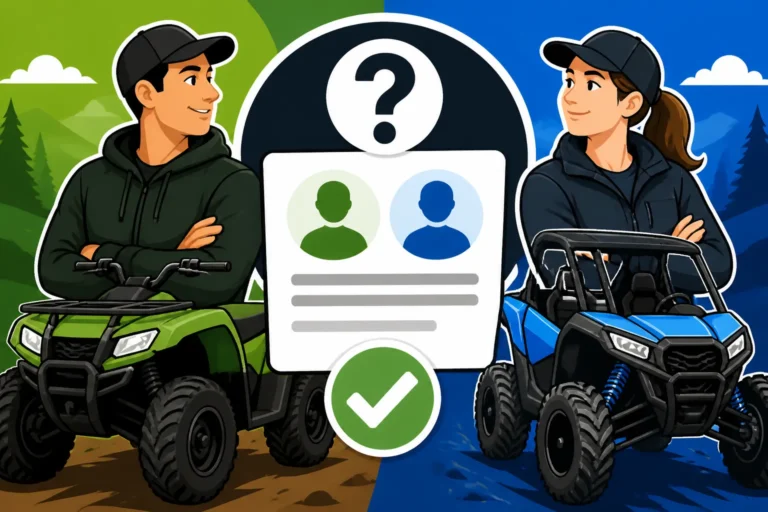
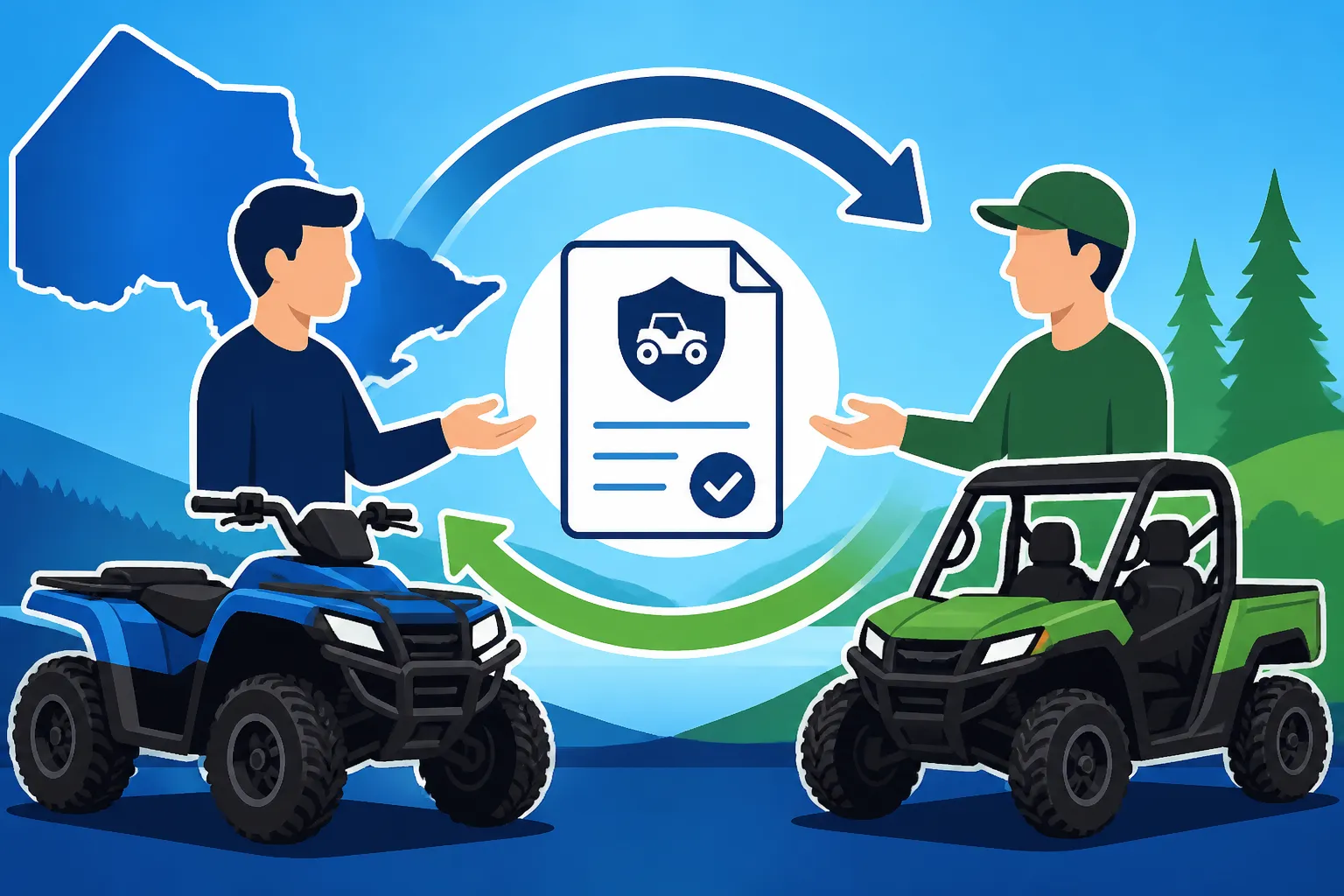
The Ontario Vehicle Permit itself is designed to facilitate ownership transfer. On the back of the permit, you'll find a section specifically labelled "Application for Transfer." This is where the magic happens for the change of ownership. As the seller, it's your responsibility to accurately and legibly fill out this section. You'll need to provide the full name and address of the new owner (the buyer), the exact date of the sale, and the purchase price of the ORV. These details are critical, not just for the transfer itself, but also for ServiceOntario to calculate the Retail Sales Tax (RST) the buyer will need to pay.
It’s paramount that you fill out every field completely and clearly. Any smudges, cross-outs, or missing information can cause delays or even rejection at ServiceOntario, forcing the buyer to come back to you for corrections. Make sure your signature is consistent with how it appears elsewhere on your identification. Before handing it over, review everything with the buyer present to confirm accuracy. This step of [Handing the Permit to a Buyer] is often rushed, but it’s foundational to a legal and trouble-free transfer.
The Importance of a Detailed Bill of Sale
While the permit handles the official ownership change, a comprehensive bill of sale is your legal safety net. It’s far more than just a receipt; it’s a legally binding document that protects both the buyer and the seller by clearly outlining the terms of the transaction. A good bill of sale should include:
- Vehicle Information: The full Vehicle Identification Number (VIN), make, model, year, and any distinguishing features of the ORV.
- Seller Information: Your full legal name, address, and contact details.
- Buyer Information: The buyer’s full legal name, address, and contact details.
- Purchase Price: The agreed-upon sale price in Canadian dollars.
- Date of Sale: The exact date the transaction took place.
- "As-Is" Clause: Most private sales of used vehicles in Ontario are "as-is," meaning the buyer accepts the vehicle in its current condition with no warranties from the seller. This clause should be explicitly stated to protect you from future claims.
- Signatures: Both the seller's and buyer's signatures, preferably witnessed by a third party, though this isn't strictly required for legality.
Having a robust bill of sale helps to avoid disputes down the road, clearly documenting what was sold, for how much, and under what conditions. You can find excellent templates online, and resources like LawDepot offer customizable bill of sale forms that ensure all necessary legal clauses are included, providing peace of mind for both parties. Always make two copies, one for the seller and one for the buyer, both signed by everyone involved. This document will be critical for the buyer, especially if there are any questions regarding the purchase price declared for [Retail Sales Tax on an Ontario Private Sale].
Safely Handing Over the Documents
The physical exchange of documents is a critical juncture in the transfer process. Ideally, this should happen in person, at a secure location, once all funds have been verified and exchanged. Before you part ways, ensure that:
- The Permit is Fully Completed: Double-check that the "Application for Transfer" section on the back of the Ontario Vehicle Permit is completely filled out with the buyer's information, the date of sale, and the correct purchase price. Your signature should be clear.
- The Bill of Sale is Signed and Copied: Both you and the buyer have signed two identical copies of the detailed bill of sale. Each of you should keep one original signed copy. This is not the time to rely on photocopies alone for the original transaction.
- Proof of Insurance Discussion: While insurance isn't required for the transfer of the permit, it is legally required for the buyer to operate the ORV on trails and any permissible roads. You might want to briefly discuss this with the buyer, reminding them they'll need proof of insurance to register the machine in their name at ServiceOntario. This helps them prepare for the next step.
- Exchange of Keys and Machine: Once all paperwork is correctly handled and funds are secured, the physical machine and its keys can be handed over.
By taking these steps, you not only ensure the buyer has all the necessary paperwork to complete their registration, but you also legally protect yourself as the seller, proving that you have transferred ownership on a specific date for a specific amount. This minimizes your liability for the machine going forward.
The Buyer's Responsibilities at ServiceOntario
Once you have your new-to-you ORV and the seller’s signed-off permit and bill of sale, the ball is firmly in your court. Your next stop is ServiceOntario, and going prepared will save you a lot of time and potential frustration.
Gathering Required Documents for Registration
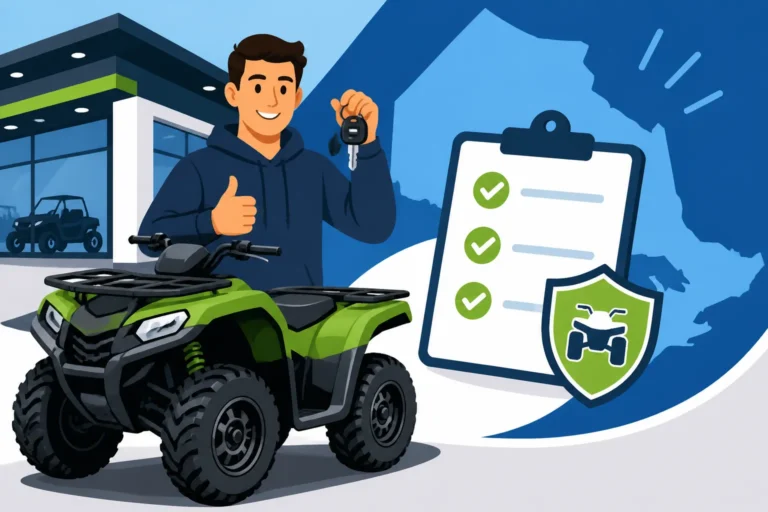
Your visit to ServiceOntario for ORV registration requires a specific set of documents. Think of it like assembling your team for a big ride – you wouldn't forget your helmet, would you? Here's your checklist:
- The Original Ontario Vehicle Permit: This is the permit provided by the seller, with the "Application for Transfer" section on the back completely filled out and signed by them. This is absolutely non-negotiable. If it's missing or incomplete, you'll be turned away.
- A Detailed Bill of Sale: Your signed original copy of the bill of sale, clearly outlining the purchase price, VIN, and both parties' information. This document supports the details on the permit and confirms the sale terms. A well-crafted bill of sale, perhaps one created using a template from LawDepot, provides clear evidence of your transaction.
- Proof of Identity: Your valid Ontario driver's license (G1 is usually not enough if you intend to ride on roads, but acceptable for registration itself) or another form of government-issued photo ID.
- Proof of Insurance: You absolutely need proof that the ORV is insured under a valid Motor Vehicle Liability Policy. This is mandatory for registration in Ontario, regardless of where you plan to ride it. Even if you're only riding on private land, you need it. An insurance binder or policy document clearly showing the ORV's VIN and your name as the insured party will suffice. For more information, check out [Insurance and Ontario ORV Registration].
- Payment for Fees and Taxes: Be prepared to pay the one-time registration fee and the 13% Retail Sales Tax (RST) on the purchase price. Acceptable payment methods typically include debit, credit card, or cash.
Having all these documents organized and readily accessible when you arrive at ServiceOntario will dramatically speed up the process and prevent a wasted trip. For a full list of what you need to bring, refer to [Ontario ATV Registration Paperwork].
Understanding Retail Sales Tax (RST) on the Purchase
Ah, the dreaded taxman! In Ontario, when you purchase a used ATV or UTV, you'll be required to pay 13% Retail Sales Tax (RST) on the purchase price. This is paid directly to ServiceOntario when you register the machine, not to the seller.
The tricky part here is how ServiceOntario determines the value. If the declared purchase price on your bill of sale is significantly lower than the wholesale value (also sometimes referred to as "book value") of the ORV, ServiceOntario may levy the 13% tax on the higher wholesale value, not the price you actually paid. This is to prevent people from declaring a ridiculously low sale price just to avoid taxes. They have internal guides for assessing the value of different makes and models. So, while declaring the actual price you paid is honest, be aware they might question a very low figure.
However, there are legitimate exemptions to paying RST, which are important to understand:
- Family Gifts: If the ORV is genuinely a gift from a direct family member (e.g., parent to child, spouse to spouse), you can often claim an exemption. Specific forms and declarations are usually required to prove this relationship and the nature of the gift.
- Estate Transfers: If you inherit an ORV as part of an estate, it's typically exempt from RST. Again, documentation like the will or probate papers will be needed.
- Farm Use: If the ORV is purchased specifically and primarily for farm use on land assessed as farmland, there might be an RST exemption. You'll need to fill out a specific form attesting to its use.
Always check with ServiceOntario or their website for the most current requirements and forms for these exemptions. Don't assume anything; confirm it beforehand. For a deeper dive into this, see [13 Percent RST on an Ontario ATV] and [Ontario RST Exemptions for an ATV].
Here's a quick look at how RST typically plays out:
| Scenario | RST Payable | Documentation Required (in addition to permit/bill of sale) |
|---|---|---|
| Standard Private Sale | 13% of declared purchase price (or wholesale, if higher) | Detailed Bill of Sale |
| Family Gift | Exempt (if eligible relationship) | Family Gift Exemption Form, proof of relationship |
| Estate Transfer | Exempt | Will, Estate Certificate (or similar) |
| Farm Use | Exempt (if primary use on farm land) | Farm Use Exemption Form, proof of farm registration |
The Six-Day Deadline and Its Implications
You’ve got your new ORV, and you’re excited to hit the trails! But hold on – Ontario has a strict deadline for registering your newly acquired machine: you have six days from the date of purchase to complete the transfer at ServiceOntario. This isn't just a suggestion; it's a rule with real consequences.
Missing this six-day window can lead to immediate complications. Firstly, you won't be able to legally operate the ORV. Riding an unregistered ORV, even if you just bought it, can result in significant fines. Law enforcement officers don't care about your good intentions; they care about compliance. Secondly, after the six days, you might encounter additional hurdles or paperwork at ServiceOntario, though typically the main consequence is the inability to ride legally and the risk of fines.
The province sets this deadline to ensure timely updates to the ownership database and to prevent people from delaying registration (and thus delaying tax payment). It's a clear incentive to complete the legal part of the transaction promptly. So, as soon as you shake hands with the seller and drive off with your new machine, make that ServiceOntario appointment or plan your visit within those six crucial days. Don’t let excitement turn into a costly mistake. For more details on this, check out [Ontario's Six-Day Registration Deadline] and [What Happens After the Sixth Day].
Common Pitfalls and How to Avoid Them
Even with the best intentions, things can go sideways. Knowing the common pitfalls in ORV permit transfers can help you navigate around them and ensure a smooth process.
Lost or Missing Permit Dilemmas
This is perhaps the most common and frustrating pitfall: the seller has lost the original Ontario Vehicle Permit. For a buyer, this can feel like hitting a brick wall. Without that document, you cannot complete the transfer.
If you are the seller and realize you’ve lost the permit, you absolutely must obtain a replacement before you can sell the machine. You, as the registered owner, need to go to ServiceOntario with your proof of identity and request a replacement permit. There will be a small fee for this. It is impossible for a buyer to register a machine without the permit, even with a solid bill of sale, because ServiceOntario needs that official transfer section signed off by the registered owner. Trying to find alternative ways to [Registering a Quad With Nothing but a Frame Number] is usually a long, arduous, and often unsuccessful path best avoided.
If you are the buyer and the seller tells you they don't have the permit, walk away or insist they obtain a replacement before you exchange any money. Do not proceed with the sale relying on a promise that they will get one later, or that you can register it with just a bill of sale. It won't happen. Protect yourself by making the provision of a valid, signed-off permit a condition of sale.
Incomplete or Incorrect Information
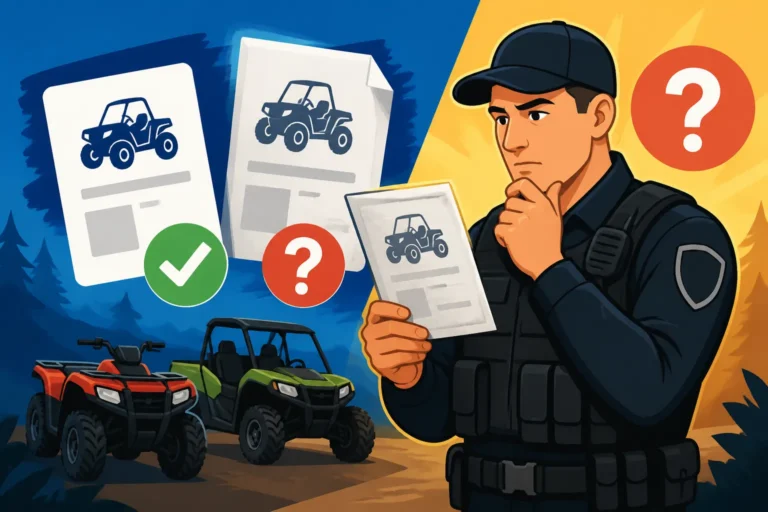
A simple mistake on the transfer section of the permit or on the bill of sale can derail your entire registration process. Whether it's a misspelled name, an incorrect address, a missing signature, or an unclear purchase date, ServiceOntario staff are trained to look for these discrepancies. They will likely reject your application and send you back to get corrections.
Imagine the frustration: you've taken time off work, driven to ServiceOntario, waited in line, only to be told the seller misspelled your street name or forgot to sign a section. Now you have to contact the seller, arrange another meeting, and hope they're available and willing to help. This can be especially difficult if the seller lives far away or if communication becomes challenging after the sale.
To avoid this:
- Review Everything Together: Before the seller leaves, meticulously go over every single detail on both the permit’s transfer section and the bill of sale. Check names, addresses, VIN, dates, and prices.
- Clear Signatures: Ensure all required signatures are present and legible.
- No Cross-Outs or White-Out: Try to avoid any alterations. If a mistake is made while filling it out, it's often better to start with a fresh bill of sale template (again, a customizable LawDepot form can be a lifesaver here) rather than trying to amend sloppy work.
A few extra minutes of careful review at the point of sale can save you hours or even days of headaches later on.
Financial Considerations Beyond the Purchase Price
When budgeting for your new ORV, it’s easy to focus solely on the sticker price. However, there are crucial additional costs that can catch buyers off guard if not anticipated:
- Retail Sales Tax (RST): As discussed, this 13% tax on the purchase price (or wholesale value) can add a significant chunk to your overall expenditure. For a $10,000 ORV, that's an extra $1,300 right off the bat, paid at ServiceOntario.
- One-Time Registration Fee: While it's a one-time fee, there is a cost associated with the initial registration and issuance of your new permit and plate. This isn't an annual renewal, but it is an upfront cost. You can find out more about this specific charge under [Ontario ATV Registration Cost].
- Insurance Costs: Getting a quote for ORV insurance before you buy can be a wise move. Policies can vary widely based on the machine, your riding history, where you live, and the coverage limits you choose. This isn't a one-time cost but an ongoing expense that makes riding legal. Don't forget, you need proof of insurance to register the machine.
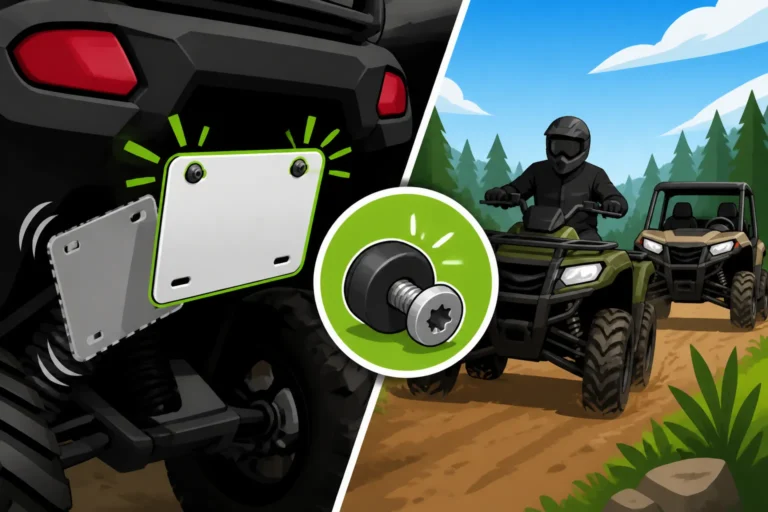
- Plate Cost (if separate): While often bundled with the registration fee, confirm if there's a separate cost for the physical [Ontario ORV Plates and Where They Mount].
A comprehensive financial checklist can help you account for all these expenses, ensuring there are no unpleasant surprises when you go to register. Be prepared for all these costs, as they are mandatory before you can legally hit the trails.
Special Situations in Permit Transfer
While most transfers follow a standard process, there are unique scenarios that require extra steps or different approaches. Knowing how to handle these can save you a lot of grief.
Transferring a Machine Without an Existing Permit Rare
This is a rare and often complex situation, but it does happen. You might encounter an ORV that doesn't have an existing Ontario Vehicle Permit for various reasons:
- Very Old Machines: Some vintage machines predating robust registration requirements might never have been issued a permit.
- Imported Machines: An ORV imported from outside Ontario (or even outside Canada) might only have a foreign registration or a bill of sale from another jurisdiction.
- Homebuilt Machines: Custom-built or significantly modified machines may never have had a standard VIN or permit.
- Abandoned/Recovered Machines: In very specific circumstances (e.g., police auction of a recovered machine where the original owner cannot be traced), a machine might be sold without a traditional permit.
In these cases, you won't have the "Application for Transfer" section to fill out. Instead, you'll need to demonstrate proof of ownership through other means. This usually involves:
- A detailed bill of sale from the previous owner (or auction house).
- Any past registration documents, even if from another province or country.
- For imported machines, customs documentation (import declarations, proof of duties paid). See [Ontario Registration for an Imported Machine].
- A sworn affidavit affirming ownership and the circumstances of acquisition.
- Sometimes, an inspection by a Ministry of Transportation (MTO) officer or a certified mechanic to verify the VIN and ensure the machine isn't stolen or cobbled together unsafely.
This process is significantly more involved than a standard transfer and will likely require multiple visits to ServiceOntario and possibly direct contact with MTO. It’s always best to inquire about the specific requirements for your situation directly with ServiceOntario before purchasing such a machine to understand the hurdles involved. If you are ever faced with [Proving You Own a Quad With No Papers], be ready for a challenge.
Transfers Involving Dealers vs. Private Sales
The process for transferring an ORV permit differs notably depending on whether you're buying from a private seller or an authorized dealer.
-
Dealer Sales: When you buy a new or used ORV from an Ontario dealer, they typically handle almost all the registration paperwork for you. They will complete the permit transfer, collect the RST, and submit everything to ServiceOntario on your behalf. You'll usually just need to provide your identification and proof of insurance. This streamlines the process considerably and generally ensures everything is done correctly, as dealers are familiar with the regulations. They effectively act as the intermediary, ensuring the transfer is seamless. This convenience is often factored into the price, but it saves you time and reduces the risk of errors. Learn more about this by reading [Registering an ATV Bought From an Ontario Dealer].
-
Private Sales: In a private sale, the onus is entirely on the buyer and seller to ensure all paperwork is correctly completed and submitted. The seller must provide the properly signed-off permit and a comprehensive bill of sale, and the buyer is responsible for taking these documents to ServiceOntario within the six-day deadline, paying the RST and registration fees, and securing their own plate. While private sales can sometimes offer better deals, they demand more diligence and responsibility from both parties regarding paperwork and legal compliance. It’s crucial for both parties to understand their roles and responsibilities to avoid issues. If you are buying a [Buying a Used ATV in Ontario], be especially vigilant.
Out-of-Province Purchases Moving to Ontario
Bringing an ORV into Ontario from another province (or even another country) adds layers of complexity to the registration process. It's not just a simple transfer.
If you're buying an ORV from outside Ontario and plan to register and ride it within the province, you'll generally need:
- Original Ownership Documents: The equivalent of an ORV permit or title from the previous jurisdiction, properly signed off by the seller.
- Bill of Sale: A detailed bill of sale as outlined previously.
- Proof of Identity: Your Ontario driver's license.
- Proof of Insurance: Valid Ontario ORV insurance.
- Import Documentation (for international purchases): If importing from the United States or another country, you'll need customs clearance paperwork, including proof that all import duties and taxes (like GST/HST) have been paid at the border. Without this, ServiceOntario cannot register the machine.
- Safety Standards Certificate (potentially): While ORVs don't always require a safety certificate in the same way cars do for transfer, machines from certain jurisdictions or specific types of ORVs might require an inspection to ensure they meet Ontario's safety standards. It's best to confirm this with ServiceOntario based on the machine's origin.
You will pay the Ontario RST on the purchase price (or appraised value) at ServiceOntario, even if you paid sales tax in another province or country (though you might be able to claim a credit for taxes paid elsewhere, you'll need to check the specifics). The key is that Ontario wants to ensure the machine has a clear chain of ownership and meets provincial requirements before issuing an Ontario Vehicle Permit and plate. For specific details on bringing a machine across borders, consult [Ontario Rules for an Out-of-Province Machine].
Disclaimer
This article is for general informational purposes only and does not constitute professional advice. Laws, prices and regulations vary by location and change over time. Consult a qualified professional for guidance on your specific situation.