Buying a Quad From a Seller Who Lost the Permit
Oh, the thrill of finding that perfect used ATV or UTV! You’ve scoured the online marketplaces, perhaps driven a few hours to check out a promising lead, and finally, you've found the one. It looks great, the price is right, and you're already picturing yourself tearing up the trails. But then, the seller drops the bombshell: "I can't seem to find the ownership papers." Panic sets in. Can you even buy this machine? Will you ever be able to register it in your name? This guide is here to walk you through exactly what to do when you're buying a quad from a seller who's lost the Ontario Vehicle Permit, and how to navigate this tricky situation to protect yourself and get your new ride on the trails legally.
The Initial Hurdle: Why a Missing Permit is a Big Deal
It’s easy to dismiss a missing piece of paper as a minor inconvenience, but when it comes to vehicle ownership in Ontario, the Ontario Vehicle Permit is anything but minor. For an off-road vehicle like an ATV or UTV, it’s the legal cornerstone of your ownership. Without it, you're looking at a serious roadblock to getting your machine legally registered and plated.
Understanding the Ontario Vehicle Permit's Role
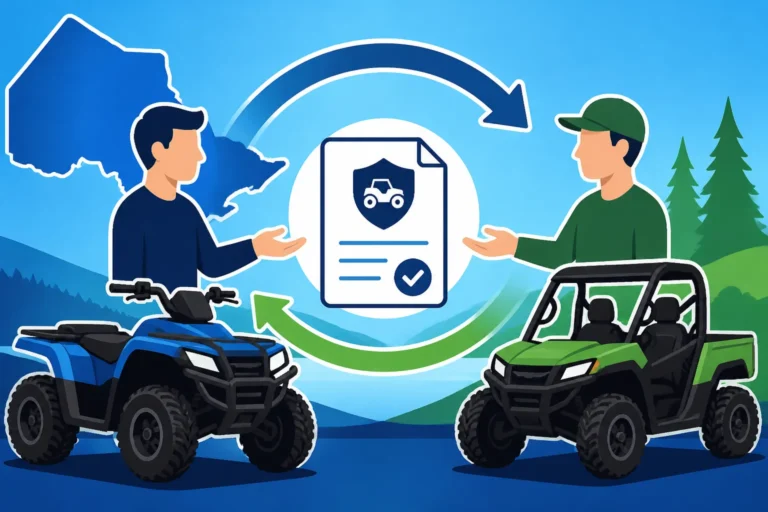
Think of the Ontario Vehicle Permit as the deed to your house or the ownership papers for your car. It's the official government document that establishes who the legal owner of the ATV or UTV is and that the machine is registered in the province. When you buy a used machine, the seller is required to sign over their portion of this permit to you, which then allows you to take it to ServiceOntario and transfer the ownership into your name. Without the physical permit, there's no official way for the seller to legally transfer the vehicle to you in the standard process. This document is crucial for establishing clear title and ensuring a smooth transfer. You can learn more about its specific details in [The Ontario Vehicle Permit Explained].
When the seller says, "I lost the permit," it immediately raises a red flag. It’s not just about a missing piece of paper; it’s about the complete breakdown of the standard, legal transfer process. ServiceOntario relies heavily on that signed permit to process new registrations. They want to see that clear chain of ownership from one registered owner to the next. Without it, you’re essentially asking them to register a vehicle for which you can’t fully prove the seller had the right to sell it to you, or that you have the right to own it.
The Buyer's Red Flags and Risks
This situation is fraught with potential pitfalls for you, the buyer. Your biggest concerns should revolve around the legality and history of the machine you're about to purchase. You need to be extremely cautious and perform thorough due diligence.
The most severe risk is buying a stolen vehicle. If the permit is "lost," how can you be sure the person selling it is the rightful owner? A legitimate owner who genuinely lost their permit would likely be willing to go through the process of getting a replacement. Another significant concern is outstanding liens. An ATV or UTV might have money owing on it, even if the seller claims otherwise. If a financial institution has a lien on the vehicle, they are the legal owner until that debt is paid. If you buy the machine, the lien could transfer with it, leaving you responsible for someone else's debt. ServiceOntario usually checks for liens during a standard transfer, but without the permit, the process becomes less straightforward, and you could unknowingly take on a huge headache.
Beyond these serious issues, there's the practical problem: you simply might not be able to register the ATV or UTV in your name. If you can't satisfy ServiceOntario's requirements, you'll be stuck with a machine you can't legally ride on public trails or roads, and therefore can't insure. This means you've spent your hard-earned money on a very expensive lawn ornament. Dealing with these issues after the fact can be incredibly frustrating, time-consuming, and potentially costly, far outweighing any perceived "deal" you might be getting on the purchase price. This is why due diligence is so incredibly vital when you're [Buying a Used ATV in Ontario].
Your Options When the Permit is Gone
When faced with a seller who has misplaced their Ontario Vehicle Permit, you essentially have two main paths forward. One is considerably safer and more recommended than the other. Let’s break down your options and what they entail.
Asking the Seller to Get a Replacement Permit
This is, hands down, the best and safest approach. If the seller is legitimate and the machine is truly theirs, they should have no problem going to ServiceOntario and getting a replacement permit.
The process for the seller is relatively simple. They need to visit a ServiceOntario centre, present their valid identification (such as an Ontario driver's licence), and provide the vehicle's identification number (VIN). They'll also need to pay a nominal fee for the replacement. Once they receive the new permit, it will be in their name, and they can then legally sign over the ownership portion to you, just as they would with the original. This is also the process they would follow if they needed [Replacing a Lost Ontario ORV Plate].
Crucial Advice: Do not proceed with the purchase until the seller has obtained this replacement permit. This protects you entirely. It ensures that the seller is indeed the legal owner, that there are no immediate red flags ServiceOntario would catch during the replacement process, and that you'll have the correct documentation for a smooth transfer of ownership into your name. If the seller balks at this, or makes excuses, consider it a giant red flag and seriously reconsider the purchase. A legitimate seller wanting to make a clean sale will understand and cooperate. While there is a small fee involved, you can usually find information on [What a Replacement Plate Costs in Ontario] and other related fees to understand the minor cost.
Proceeding Without the Seller's Help (Cautionary Tale)
Sometimes, you encounter a situation where the seller is either unwilling, unable, or simply disappears after initially discussing the sale. This path is significantly riskier and far more complicated. If you decide to go this route, you’re essentially taking on the burden of proving ownership to ServiceOntario without the primary document they expect.
This will require an incredibly robust and detailed [Ontario ATV Bill of Sale Requirements], along with extensive research on your part. You’ll need to gather as much supporting evidence as possible to convince ServiceOntario that you are the rightful, legal owner and that the machine can be registered in your name. This is far from guaranteed and will likely involve multiple trips and conversations with ServiceOntario staff, possibly even escalating to a supervisor. The difficulty of [Ontario ATV Registration Without a Bill of Sale] is an important lesson here; imagine trying to register it without the permit and without a truly solid bill of sale. It's a non-starter.
The reality is that ServiceOntario's primary goal is to prevent the registration of stolen vehicles or vehicles with unclear ownership. When the permit is missing, you’re asking them to make an exception, and they will be extremely cautious. You'll need to demonstrate beyond a reasonable doubt that you have a legal right to that machine.
Here's a quick comparison of what you'd typically bring:
| Document Category | Standard Purchase (Permit Available) | Lost Permit Scenario (Buyer's Burden) |
|---|---|---|
| Ontario Vehicle Permit | Signed over by seller | Unavailable |
| Bill of Sale | Required for purchase price/RST | Absolutely critical, highly detailed |
| Buyer's ID | Required | Required |
| Proof of VIN | Usually on permit | Critical, may need separate verification |
| Lien Check Report | Recommended | Absolutely essential |
| Police Clearance | Not usually needed | Highly recommended, may be requested |
| Supporting Affidavits | Not usually needed | May be required from seller/witnesses |
Verifying Ownership and History (Essential Steps)
Before you even think about paying a single dollar for an ATV or UTV with a missing permit, you absolutely must perform thorough checks on the vehicle's history. These steps are non-negotiable for your protection. For a smooth transaction at ServiceOntario, having all your [Documents to Bring to the Counter] organized will be a huge benefit.
-
VIN Check: The Vehicle Identification Number (VIN) is your ATV's unique fingerprint. It's usually stamped on the frame and is recorded on the Ontario Vehicle Permit. Even without the permit, you need to locate this VIN on the physical machine. Once you have it, perform a comprehensive VIN check. Several online services (some paid) can provide a detailed history report that includes accident records, previous registration details, and importantly, any reports of the vehicle being stolen. This is covered in more detail in [Ontario ATV VIN Check Before Buying]. If the VIN on the machine doesn't match what the seller tells you, or if the report shows any red flags, walk away immediately.
-
Lien Check: This is another critical step. You need to ensure there are no outstanding financial claims against the ATV or UTV. A lien search can typically be done through a service like the Personal Property Security Act (PPSA) registry in Ontario. For a small fee, you can get a report that confirms whether there are any registered liens against the VIN. If a lien exists, the machine technically belongs to the financial institution until the debt is cleared. Buying a vehicle with a lien means you could legally lose it if the original owner defaults on their payments. You definitely want to conduct an [Ontario ATV Lien Check Before Buying] to protect yourself.
-
Police Check: If your VIN check or lien check raises any suspicions, or if you simply have a gut feeling that something isn't right, don't hesitate to contact your local police service. Provide them with the VIN and ask them to check their databases for any reports of theft. While they might not be able to give you extensive details due to privacy concerns, they can often confirm if the vehicle is currently listed as stolen. This simple step can save you from a world of legal trouble and financial loss.
By diligently performing these checks, you're building a strong case for yourself and minimizing the risk of a fraudulent transaction. This due diligence is part of [Checks Before You Buy a Used Quad in Ontario].
Crafting a Robust Bill of Sale (When the Permit is Missing)
When the seller doesn't have the Ontario Vehicle Permit, your Bill of Sale transforms from a standard transaction record into your absolute lifeline. This document needs to be meticulously drafted to protect you and provide ServiceOntario with the necessary information to process your registration.
Why a Detailed Bill of Sale is Your Lifeline
In the absence of the signed-over permit, the Bill of Sale becomes your primary proof that a transaction occurred and that ownership was transferred to you. It's the document you'll rely on to demonstrate to ServiceOntario that you lawfully acquired the ATV or UTV. Therefore, it needs to be far more comprehensive and explicit than a typical bill of sale, often going beyond the basic requirements for [Ontario ATV Bill of Sale Requirements].
This document should not only clearly state the agreed-upon terms of the sale but also explicitly address the missing permit. It should include clauses where the seller affirms their legal right to sell the vehicle, confirms it's free of liens, and acknowledges that the permit is unavailable. This puts the responsibility and legal affirmation squarely on the seller, providing you with a layer of legal protection should issues arise later. You can think of it as your detailed narrative of how you came to own the machine, critical for [Proving Ownership of an Ontario ATV] in a non-standard situation.
Using a reputable template, perhaps from a service like LawDepot, can be incredibly beneficial here. These templates are designed to cover various contingencies and can ensure you don't overlook crucial legal language that might protect you down the line. A generic, handwritten receipt might not cut it, particularly if ServiceOntario agents are already scrutinizing your application due to the missing permit. While a [Registering a Quad With a Handwritten Bill of Sale] is sometimes possible, a formal, typed, and comprehensive one is always better in these circumstances.
Key Elements for a "Lost Permit" Bill of Sale
To ensure your Bill of Sale stands up to scrutiny and offers you maximum protection, it must include several specific details, especially when the Ontario Vehicle Permit is missing:
- Full Legal Names and Addresses: Include the complete legal names and current residential addresses of both the buyer (you) and the seller. This ensures clear identification of all parties involved in the transaction.
- Detailed ATV/UTV Description: Be exhaustive. Include the make, model, year, Vehicle Identification Number (VIN), engine size, colour, and odometer reading (if applicable). Any unique features, modifications, or existing damage should also be noted. The more specific, the better.
- Purchase Price: Clearly state the agreed-upon purchase price in Canadian dollars.
- Date of Sale: Specify the exact date the transaction occurred.
- Explicit Statement Regarding the Missing Permit: This is crucial. Include a clause that clearly states that the Ontario Vehicle Permit for the ATV/UTV is lost, missing, or unavailable at the time of sale.
- Seller's Affirmation of Ownership and Lack of Liens: The seller must explicitly state and guarantee that they are the sole legal owner of the ATV/UTV, that they have the full right to sell it, and that the vehicle is free of any liens, encumbrances, or outstanding debts. This clause is a non-negotiable protection for you.
- "As-Is" Clause (if applicable): While not directly related to the permit, it's common practice for private sales to include an "as-is, where-is" clause, meaning you accept the vehicle in its current condition without warranty.
- Buyer's Acknowledgment: Include a statement that the buyer acknowledges the permit is missing and understands that they will be responsible for obtaining a replacement or proving ownership to ServiceOntario.
- Signatures of Both Parties: Both the buyer and the seller must sign the Bill of Sale.
- Witness Signatures (Recommended): Having one or two impartial witnesses sign and print their names can add significant legal weight to the document, especially if there are any disputes later.
- Notary Public (Highly Recommended for High-Risk Situations): If you have any significant reservations or the value of the machine is high, consider having the Bill of Sale notarized. A notary public verifies the identities of the signatories, adding an extra layer of legal authenticity.
- Indemnification Clause (Optional but Protective): You might consider adding a clause where the seller agrees to indemnify and hold the buyer harmless from any claims, damages, or liabilities arising from the seller's representations of ownership or the missing permit.
Tools like LawDepot offer excellent templates that can guide you through creating such a comprehensive document, ensuring all necessary legal bases are covered, which is invaluable in a situation where standard documentation is absent.
Steps at ServiceOntario with a Problematic Purchase
Once you have that robust Bill of Sale and have completed all your due diligence, the real challenge of registration begins. Be prepared for extra scrutiny and potentially a longer process than a standard transfer when you visit a ServiceOntario centre.
First, gather every single piece of documentation you have. This includes your meticulously crafted Bill of Sale, the results of your VIN check, your lien check report, your personal identification, and any other correspondence or proof of ownership you might have. Present yourself as thoroughly prepared as possible. You should already have a good idea of what [Documents to Bring to the Counter] for a regular registration, and then add everything else you've gathered.
When you approach the counter, be honest and upfront about the situation. Clearly explain that you've purchased an ATV/UTV where the seller genuinely lost the Ontario Vehicle Permit, and that you've taken all possible steps to verify ownership and protect yourself. Present your documentation and calmly explain how you've tried to confirm the legitimacy of the sale. The ServiceOntario staff are trained to handle various situations, but a missing permit is a significant deviation from the norm, so expect questions.
They will likely want to verify the VIN themselves and possibly conduct their own internal checks. Be patient and cooperative. If the initial counter agent seems unsure, politely ask if a supervisor can provide guidance. Persistence, combined with thorough documentation, is key. While [Registering an ORV at a ServiceOntario Centre] is typically straightforward, this will be an exception. You might be asked to fill out additional forms or even provide an affidavit confirming the circumstances of the sale and your belief in its legitimacy. This entire process underscores why it's always preferable to have the seller obtain a replacement permit first, as it bypasses all these potential headaches and delays.
Disclaimer
This article is for general informational purposes only and does not constitute professional advice. Laws, prices and regulations vary by location and change over time. Consult a qualified professional for guidance on your specific situation.