Importing a Quad From the United States
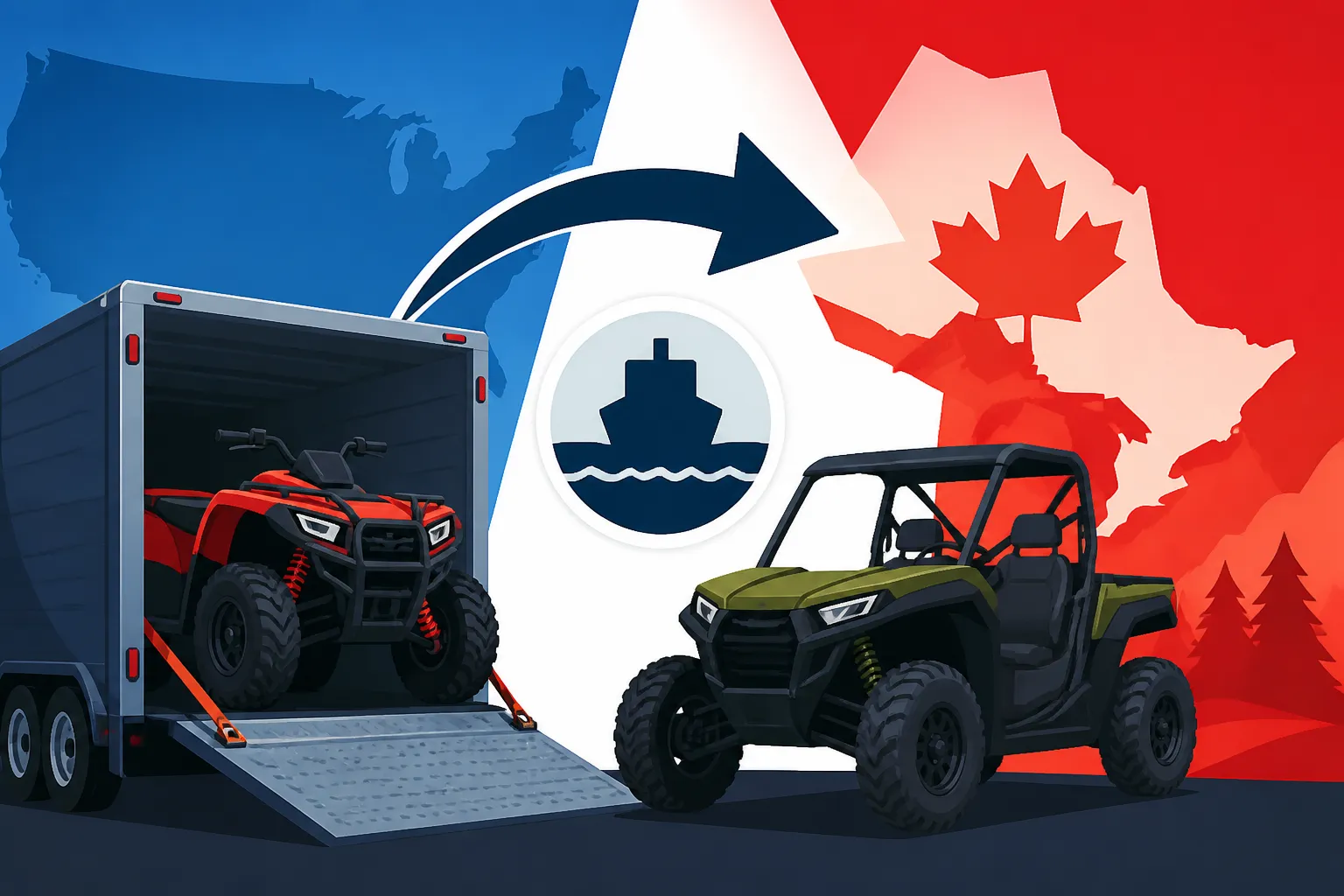
So, you've been eyeing that sweet deal on a side-by-side or ATV down in the United States, haven't you? It's a common dream for many Ontario riders – the lure of a wider selection, perhaps a model not readily available up here, or just a price that seems too good to pass up. But then reality hits: how do you actually get that machine across the border and legally onto Ontario trails? It can feel like wading through thick mud with a dead engine, trying to figure out the maze of customs, taxes, and provincial registration. This guide is here to untangle that whole process for you, giving you a clear path from browsing U.S. listings to getting an Ontario plate on your imported quad.
The Allure and the Initial Hurdles of Bringing a U.S. Quad to Ontario
There's definitely a draw to looking south for your next off-road machine. It's not just about the adventure; it's often about finding that perfect combination of price and features. But before you get too excited and start planning a road trip, there are some crucial first steps to consider.
Why Riders Look South of the Border
Let's be honest, we've all scrolled through online marketplaces or driven past dealerships in places like Michigan or New York and seen prices that make us do a double-take. Sometimes, the Canadian dollar conversion works in your favour, or maybe a particular model year has a surplus in the States. You might find a wider variety of used machines, perhaps specialized builds or limited editions that just didn't make it up to Canada in significant numbers. For some, it's simply the thrill of the hunt, knowing they've secured a unique piece of equipment at a competitive price. This allure can be strong, pushing many riders to consider the import process.
Early Checks: Is Your Dream Machine Even Importable?
Before you commit to anything, you absolutely must do your homework. While the Registrar of Imported Vehicles (RIV) program primarily deals with on-road vehicles and isn't usually a major hurdle for off-road vehicles like ATVs and UTVs (as they generally don't fall under the same federal motor vehicle safety standards for import into Canada), it's still critical to understand what kind of machine you're looking at.
You'll want to confirm if the quad meets any Canadian safety or emissions standards, even if unofficial. Most major manufacturers build their machines to international standards, so a factory-built ATV from a reputable brand like Honda, Yamaha, Polaris, or Can-Am is usually fine. However, if you're looking at a highly modified, custom-built, or older, obscure model, you might run into issues. Always confirm the make, model, and year of manufacture. While we don't have an exact equivalent for ORVs as we do for cars, it's wise to ensure your chosen machine isn't an oddball that might cause headaches later. For a deeper dive into general import requirements, you might want to read up on [Ontario Rules for an Imported Machine].
The Importance of a Clean Title and Ownership Papers
This is perhaps the single most critical step on the U.S. side of things. You simply cannot import and register a machine in Ontario without rock-solid proof of ownership. In the United States, this usually comes in the form of a Certificate of Title, much like a pink slip for a car. This document proves who the legal owner is and will show if there are any liens on the machine.
Before you hand over any cash, insist on seeing the physical title. Verify that the Vehicle Identification Number (VIN) on the title matches the VIN stamped on the quad's frame. If the seller doesn't have a title, or if it's a "salvage" or "parts only" title, proceed with extreme caution – or better yet, don't proceed at all. A simple bill of sale from a private seller, even if notarized, is not a substitute for a title at the border or at ServiceOntario. You need that primary ownership document.
You should also seriously consider doing a lien check. Just because the seller has a title doesn't mean there isn't still money owing on the machine. Some U.S. states might have different lien registration processes than Ontario, and you don't want to buy a quad only to find out it's technically still owned by a bank in Arizona. For more on ensuring you have the right papers, check out [Proving Ownership of an Ontario ATV].
Navigating the Border: Customs, Duties, and Taxes
Once you've found your machine and secured the proper ownership documents, the next big hurdle is the Canadian border. This is where many riders get anxious, but with the right preparation, it can be a smooth process.
The Canada Border Services Agency (CBSA) Process
When you arrive at the Canadian border, you must declare that you are importing an off-road vehicle. Do not try to sneak it in or downplay what it is. Honesty is absolutely the best policy here. You'll be directed to a secondary inspection area where a Canada Border Services Agency (CBSA) officer will review your documents.
What you'll need to present to the CBSA officer:
- Proof of Identity: Your passport, Canadian birth certificate, or Permanent Resident card.
- Proof of Canadian Residency: This could be your driver's license or another document showing your Ontario address.
- U.S. Title: The original Certificate of Title you received from the seller.
- Bill of Sale: A detailed bill of sale, preferably typed or clearly written, showing the purchase price, seller's and buyer's full names and addresses, the date of sale, and the VIN of the quad. This is crucial for determining the value for tax purposes.
The officer will review these documents and process your import. They will likely issue you a Customs Form B3 (Canada Customs Coding Form) or another similar document, which is your proof that the vehicle was legally imported and any applicable duties and taxes were paid. Keep this document safe! It's essential for your provincial registration. To ensure you have all your ducks in a row for this stage, you might find [Customs Paperwork for an Imported Machine] helpful.
Understanding Duties and the GST/HST
This is where the costs beyond the purchase price come in. When importing goods into Canada, you may be subject to duties and taxes.
- Duties: For ATVs and UTVs manufactured in the United States or Mexico, under the current trade agreements (like CUSMA/USMCA, which replaced NAFTA), you might not pay any duty. However, if the machine was manufactured in a country outside of North America (e.g., Japan, Europe) and you're importing it from the U.S., duties could apply. These rates vary, but they are typically a percentage of the declared value. The CBSA officer will determine this at the border. Always be prepared for the possibility, even if it's unlikely for common machines.
- GST/HST: This is almost always applicable. When you import a quad into Ontario, you will pay the Harmonized Sales Tax (HST), which is currently 13%, on the declared value of the machine. This 13% is comprised of a 5% federal Goods and Services Tax (GST) and an 8% provincial Retail Sales Tax (RST). You will pay this directly to the CBSA at the border when you complete the import process. This is why having an accurate bill of sale is so important – the declared value is what the tax will be based on. For more general information on provincial taxes, see [13 Percent RST on an Ontario ATV].
Additional Provincial Retail Sales Tax (RST) Considerations
Since Ontario uses the Harmonized Sales Tax (HST), the 13% you pay at the border includes the provincial portion of the sales tax. This means that, for the purchase price itself, you generally won't pay additional provincial retail sales tax when you go to register the machine at ServiceOntario. You've already paid the full 13% HST to the federal government via CBSA.
However, be aware that if the CBSA officer determined the value of your machine to be significantly different from your declared purchase price (for example, if you declared an unrealistically low price on the bill of sale), ServiceOntario could still assess additional RST based on a fair market value. It's best to have a realistic and honest declared purchase price to avoid any flags. For a broader understanding of how RST applies to ORV purchases in Ontario, refer to [Ontario RST on an ATV Purchase].
Registering Your U.S. Import in Ontario
You've successfully cleared customs, paid your dues, and now have your machine and your customs paperwork in hand. The final, crucial step is to get that Ontario Vehicle Permit and licence plate.
Required Documents for ServiceOntario
This is where all your meticulous paperwork preparation pays off. You'll need to head to a ServiceOntario centre, and it's always a good idea to bring all your original documents, even those you think might not be strictly necessary, just in case.
Here's the checklist of what you'll typically need:
- Proof of Identity: Your valid Ontario driver's licence.
- Proof of Canadian Residency: Your driver's licence usually suffices.
- Original U.S. Certificate of Title: The document proving your legal ownership from the United States.
- Bill of Sale: The detailed bill of sale from the U.S. seller, matching the VIN on the title.
- Customs Paperwork: The Customs Form B3 or similar import declaration you received from the CBSA, proving you legally imported the machine and paid HST. This is absolutely critical as it indicates the vehicle has been cleared by federal authorities.
- Proof of Insurance: While you don't always need to show proof of insurance at the time of registration for an ORV that will only be used off-road, it's mandatory if you plan to ride on any public roads (where permitted by municipal by-law) and a good idea to have it in place before you leave the ServiceOntario centre anyway. Many riders prefer to have their insurance policy active from the moment they take possession, even before registration.
Having a clear, well-structured bill of sale is incredibly helpful, whether from a dealer or a private seller. If you're looking for reliable templates for these kinds of transactions, resources like LawDepot offer various legal document forms that can help ensure you have all the necessary information covered for your records. This helps prevent any confusion about the terms of sale. For a comprehensive list of all the paperwork typically required, take a look at [Ontario ATV Registration Paperwork].
The Ontario Vehicle Permit and Plate
Once ServiceOntario has verified all your documents and you've paid the one-time registration fee (which is separate from your HST payment), they will issue you an Ontario Vehicle Permit (often informally called the "ownership paper") and a green Ontario ORV licence plate.
The Ontario Vehicle Permit will list you as the owner of the off-road vehicle, detailing its make, model, VIN, and other relevant information. Keep this document in a safe, dry place, and always carry a copy (or the original, protected from the elements) with you when you ride.
A great perk of registering an ORV in Ontario is that, unlike passenger cars or snowmobiles, there is no annual renewal fee or sticker to worry about. This is a one-time registration, and as long as you remain the owner, that permit and plate are valid. Just ensure the plate is properly mounted on your machine. For more details on the permit itself, see [The Ontario Vehicle Permit Explained], and for plate specifics, check out [Ontario ORV Plates and Where They Mount].
What to Do If You Lack Full Documentation
Let's say you bought a quad from a private seller in the U.S., and they only provided a handwritten bill of sale, or perhaps the title was lost years ago. This is a much trickier situation, and frankly, one you should try to avoid. ServiceOntario requires clear proof of ownership. If you don't have an original U.S. title, they might not be able to process your registration.
In very rare and specific circumstances, if the U.S. quad is old enough that titles weren't commonly issued in its state of origin, or if there's a demonstrable reason why a title isn't available, ServiceOntario might consider a sworn affidavit. This is a formal, legal document where you declare under oath that you are the rightful owner, detailing how and when you acquired the machine. You would typically need to get this notarized.
However, this is not a guaranteed path, and it can be a lengthy and frustrating process. It's always best to have a clean, original title. If you find yourself in this situation, consulting a legal professional for assistance with an affidavit or statement of ownership might be necessary. LawDepot also offers templates for various affidavits, which could be a starting point if ServiceOntario indicates this route is viable. But truly, the best advice is to avoid purchasing a U.S. machine without proper, official ownership papers from the outset. You can learn more about proving ownership in challenging situations through [Proving You Own a Quad With No Papers].
Beyond Registration: Insurance and Ongoing Considerations
Getting your imported quad registered in Ontario is a huge accomplishment, but the journey doesn't quite end there. There are a few more vital pieces of the puzzle to ensure you're riding safely and legally.
Mandatory Insurance for Ontario ORVs
Listen up, folks: this is not optional. Even if you only plan to ride on private land, all off-road vehicles in Ontario require a valid motor vehicle liability insurance policy. If you're going to venture onto any public lands, managed trails, or municipal roads (where permitted), you absolutely need proof of insurance. Without it, you could face hefty fines and your machine could be impounded. An uninsured ride is never worth the risk. For a detailed look into what Ontario requires, consult [Insurance and Ontario ORV Registration].
Finding an ORV-Friendly Insurer
Not all insurance companies are created equal when it comes to off-road vehicles. While many major insurers offer policies for ATVs and UTVs, some specialize in them or have more competitive rates. It's a good idea to shop around and get quotes from a few different providers. Be upfront about the fact that it's an imported machine. Most reputable insurers won't have an issue as long as it's been legally imported and registered.
You'll typically need to provide the VIN, make, model, and year of your quad. Consider what kind of coverage you need: basic liability is the minimum required by law, but you might want to consider collision, comprehensive (for theft, fire, vandalism), or even coverage for accessories and modifications.
Maintaining Your Imported Quad
Finally, think about the practicalities of owning an imported machine. For major brands, finding parts and service in Ontario is generally not an issue, as many components are universal or easily cross-referenced. However, if you've purchased a less common model or a specific trim level that wasn't widely sold in Canada, you might occasionally face longer lead times for specialized parts or run into a mechanic who isn't immediately familiar with that exact variant. Most often, this is a minor inconvenience, but it's something to keep in mind, especially for very niche or older machines.
Key Steps and Documents for Importing a U.S. Quad
Here’s a quick overview of the main steps and documents you’ll navigate when bringing your U.S. quad into Ontario, compared to a local purchase:
| Feature/Step | Buying from a U.S. Seller and Importing | Buying from an Ontario Seller (Private or Dealer) |
|---|---|---|
| Pre-Purchase Check | Crucial: Verify U.S. title (clean, matching VIN, no liens). Research importability for unique machines. | Verify Ontario Vehicle Permit (matching VIN, no liens). Consider a VIN check. |
| Ownership Document | Original U.S. Certificate of Title. (A detailed bill of sale is also needed, but the title is paramount.) | Original Ontario Vehicle Permit (signed by seller, if private sale). Bill of sale also required. |
| Border Crossing (CBSA) | Required: Declare vehicle, present U.S. Title, Bill of Sale, ID. Pay any applicable duties and HST (13%). Receive customs clearance forms (e.g., Form B3). | Not applicable. |
| Taxes Paid at Border | Yes, 13% HST (federal GST + provincial RST portion) paid to CBSA. Potential duties if non-North American made. | Private Sale: 13% RST (HST) paid at ServiceOntario based on purchase price or wholesale value. Dealer Sale: 13% HST paid to dealer at time of purchase. |
| ServiceOntario Visit | Required: Present Customs paperwork (Form B3), U.S. Title, Bill of Sale, ID, Proof of Insurance. Pay one-time ORV registration fee. | Required: Present signed Ontario Vehicle Permit, Bill of Sale, ID, Proof of Insurance. Pay 13% RST (if private sale) and one-time ORV registration fee. |
| Registration Output | Ontario Vehicle Permit and green ORV licence plate. | Ontario Vehicle Permit and green ORV licence plate. |
| Annual Renewal | No. One-time registration. | No. One-time registration. |
| Insurance | Mandatory for all ORVs in Ontario, even off-road. Must be obtained after import but before first ride. | Mandatory for all ORVs in Ontario, even off-road. Must be obtained after purchase but before first ride. |
| Potential Hassles | U.S. seller's paperwork, CBSA declarations, potential duties, confirming clear title, processing at ServiceOntario. | Ensuring seller has valid permit, lien checks, accurate bill of sale. |
| Common Cost Elements | Purchase price, travel costs, U.S. title/documentation fees, duties, 13% HST at border, Ontario ORV registration fee, insurance. | Purchase price, 13% RST/HST, Ontario ORV registration fee, insurance. |
| Recommended Documents | Original U.S. Title, detailed Bill of Sale (potentially from LawDepot), customs forms (B3), Canadian ID, proof of residency, insurance. | Signed Ontario Vehicle Permit, detailed Bill of Sale (potentially from LawDepot), Canadian ID, proof of residency, insurance. |
| Learning More | [Registering an ORV at a ServiceOntario Centre], [Ontario ATV Registration Cost] | [Registering an ORV at a ServiceOntario Centre], [Ontario ATV Registration Cost] |
Importing a quad from the United States to Ontario might seem like a daunting task at first glance, but by breaking it down into manageable steps – from verifying ownership and clearing customs to registering and insuring your machine – it becomes a very achievable goal. With careful preparation and attention to detail, you can indeed secure that dream machine from south of the border and enjoy it on the beautiful trails of Ontario.
Disclaimer
This article is for general informational purposes only and does not constitute professional advice. Laws, prices and regulations vary by location and change over time. Consult a qualified professional for guidance on your specific situation.