Ontario Trails With Rock and Hills
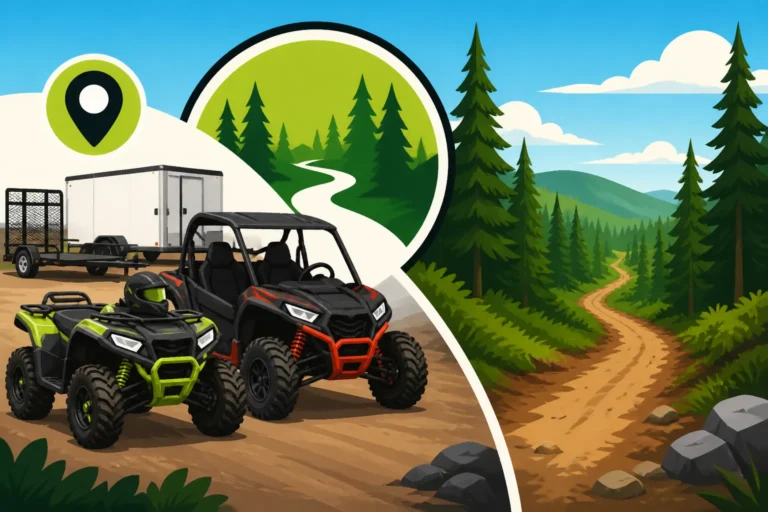
Loose rock, steep grades and sudden changes in traction can turn an Ontario ATV ride into a very different day than a smooth forest-road cruise. This guide helps you find areas known for hilly, rocky riding, choose routes that fit your machine and experience, and prepare for changing trail conditions without assuming every trail is open or suitable for every rider.
Where to Find Rocky and Hilly ATV Trails in Ontario
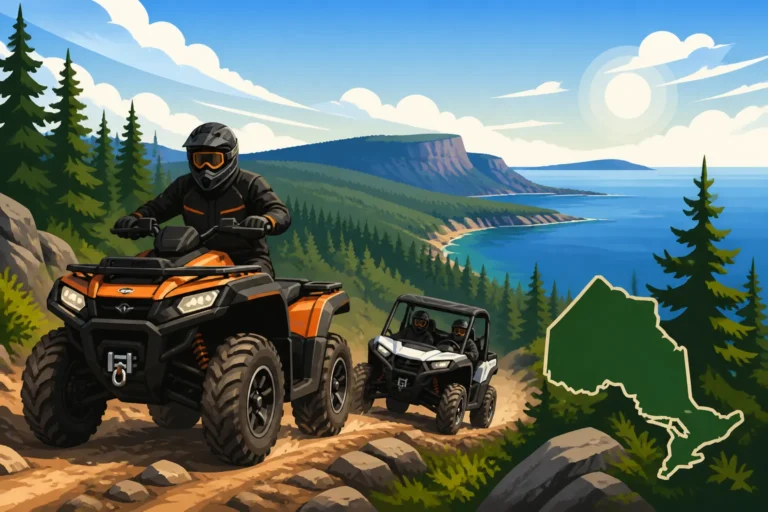
Ontario’s Canadian Shield country is a natural place to look for climbs, exposed rock and uneven ground. Around Bancroft, Haliburton and Mattawa, riders can encounter terrain that feels much more demanding than a flat, packed trail. But difficulty varies from route to route, and even one trail can change character after rain, erosion or maintenance.
Before choosing a destination, check which local club or trail organization manages the route. A trail permit, seasonal opening and permitted machine type can all depend on the area. Start with current club information rather than treating a map pin or an old ride report as proof that a trail is open.
Bancroft and the Five-Points Area
The Bancroft area is well known among riders looking for a more rugged outing, and the Five-Points network is one place to investigate. Expect the possibility of rocky sections, uneven ground and climbs that demand more attention than a wide gravel road. The exact experience depends on the route you select, recent weather and your machine.
A sensible plan is to choose a shorter loop first, especially if your group has different experience levels. A technical section that feels manageable to one rider may be stressful for someone on a heavier side-by-side, a newer machine or a quad without suitable tires. Before heading out, review [Riding the Five-Points Trail System in Haliburton] and verify the current trail information for the specific area you plan to ride.
Bancroft can also work as part of a longer regional trip, but don’t assume that nearby trail systems connect seamlessly or accept the same permit. If you’re planning to link areas, check access and permit details in advance. [Connecting HATVA to Bancroft and EOTA] is a useful starting point for understanding the regional connection, while the local trail organization remains the place to confirm what is currently rideable.
Haliburton Highlands and the Voyageur Multi-Use Trail
The Haliburton region offers a mix of trail experiences, including routes through rugged, hilly country. Some sections may suit a relaxed ride, while others can include more demanding slopes or uneven surfaces. If your group is looking for technical riding, compare the specific route options rather than assuming the entire network has the same character.
For a broader ride, Haliburton can be part of a multi-area itinerary. The key is to confirm which organizations manage each section and what permits are needed. [HATVA and Ontario's Haliburton Network] provides context on the local network, and [Ontario's Eastern Ontario Trails Alliance Pass] can help you understand that another organization may have its own access requirements.
Near Mattawa, the Voyageur Multi-Use Trail offers another area to explore if you’re seeking a northern Ontario ride with varied terrain. The route is shared with other trail users, so stay alert, follow posted rules and keep your speed appropriate for visibility and surface conditions. Read [Riding the Voyageur Multi-Use Trail] before planning a trip, and check the trail manager’s latest notices before travelling.
Comparing Areas Before You Book a Trip
A destination’s reputation is only a starting point. A rocky area can still have easier routes, and a trail described as scenic may include rough or steep sections. Use the table below as a planning framework, not as a guarantee about the condition or difficulty of any particular trail.
| Area to research | Why riders consider it | What to verify before riding |
|---|---|---|
| Bancroft and Five-Points | Rugged terrain and a range of route options | Current trail status, permit rules, route difficulty and machine suitability |
| Haliburton Highlands | A large regional network with varied riding | Which trails are open, which organization manages each section and permit coverage |
| Mattawa and the Voyageur Multi-Use Trail | Northern scenery and a shared multi-use route | Seasonal access, shared-use rules, trail conditions and current notices |
| A newly discovered trail on a digital map | May help with trip planning and orientation | Whether the route is legal, open, maintained and approved for your vehicle |
An app such as onX Offroad can be one planning aid, but don’t treat any digital map as permission to ride a route. Compare it with information from the local trail organization, check signs on the ground and turn around if conditions or access don’t match your plan.
How to Choose a Route That Matches Your Machine and Skills
The best rocky ATV trail isn’t necessarily the hardest one you can find. It’s the one your group can ride safely while leaving enough time and energy to get back. Consider the least experienced rider, the largest or heaviest machine, the weather and how far the group is from a road or staging area.
If you’re new to uneven terrain, a loop with straightforward exits is often a better choice than a long route with several difficult climbs. Look for local advice, recent condition reports and trail descriptions that explain the surface rather than relying on labels like “easy” or “challenging” alone.
Read Trail Descriptions With Care
Look for details about exposed rock, steep slopes, mud, narrow sections, water crossings and technical obstacles. These descriptions tell you more than a general difficulty label. A wide trail with a short rocky climb may suit your group better than a long, narrow route where passing or turning around is difficult.
Also consider how the trail changes after weather. Rain can make smooth rock slick, fill depressions and wash material onto the route. A dry, familiar trail may feel entirely different after a storm. Check [Ontario Trail Conditions Before You Ride] and [Ontario Trail Closures to Check First] as part of your pre-trip routine, then confirm any local updates close to departure.
Digital navigation can help you review a planned route, but use it as a supplement rather than the final authority. onX Offroad may be useful during the planning process, yet the route still needs to be checked against the responsible club’s information and on-site signs. Save a paper or offline backup if you expect limited cell service, and make sure everyone in the group knows the route plan.
Match the Terrain to Your ATV or UTV
A smaller, lighter quad may feel more nimble on a narrow, rocky section, while a side-by-side can provide more passenger space and occupant protection. That doesn’t mean one type is automatically better. A wider, heavier machine may be harder to position on a tight trail, and a compact ATV can still become stuck or lose traction on a steep, loose climb.
Check the machine’s tires, brakes, steering and protective equipment before the ride. Make sure passengers have appropriate helmets and that everyone understands how to secure themselves, especially in a UTV. Carry recovery gear suited to your machine and know how to use it. A winch can help in some situations, but it is not a substitute for route selection, safe spacing and good judgment.
Pay attention to the group’s comfort level as well as the vehicle’s capability. If a rider is worried before a climb, pause and assess the line, surface and safe turnaround options. It’s better to walk a section, take an easier route or head back than to let group pressure push someone into a risky manoeuvre.
Plan for a Range of Riding Abilities
A mixed-experience group should agree on a pace and regrouping plan before leaving the staging area. Pick a lead rider who knows the route and a sweep rider who stays with the last machine. At junctions, wait until the group is together and everyone knows which way to go. On hills, leave enough space that a rider below isn’t forced to stop suddenly.
If you’re taking newer riders, look for routes that allow them to build confidence without requiring a difficult obstacle just to continue. [Ontario Trails for Beginners] can help you think through route selection, even if your eventual goal is more technical terrain. A first ride on a new network is a good time to keep the plan conservative and learn how the local trails are marked.
Riding Rocky Climbs and Descents More Safely
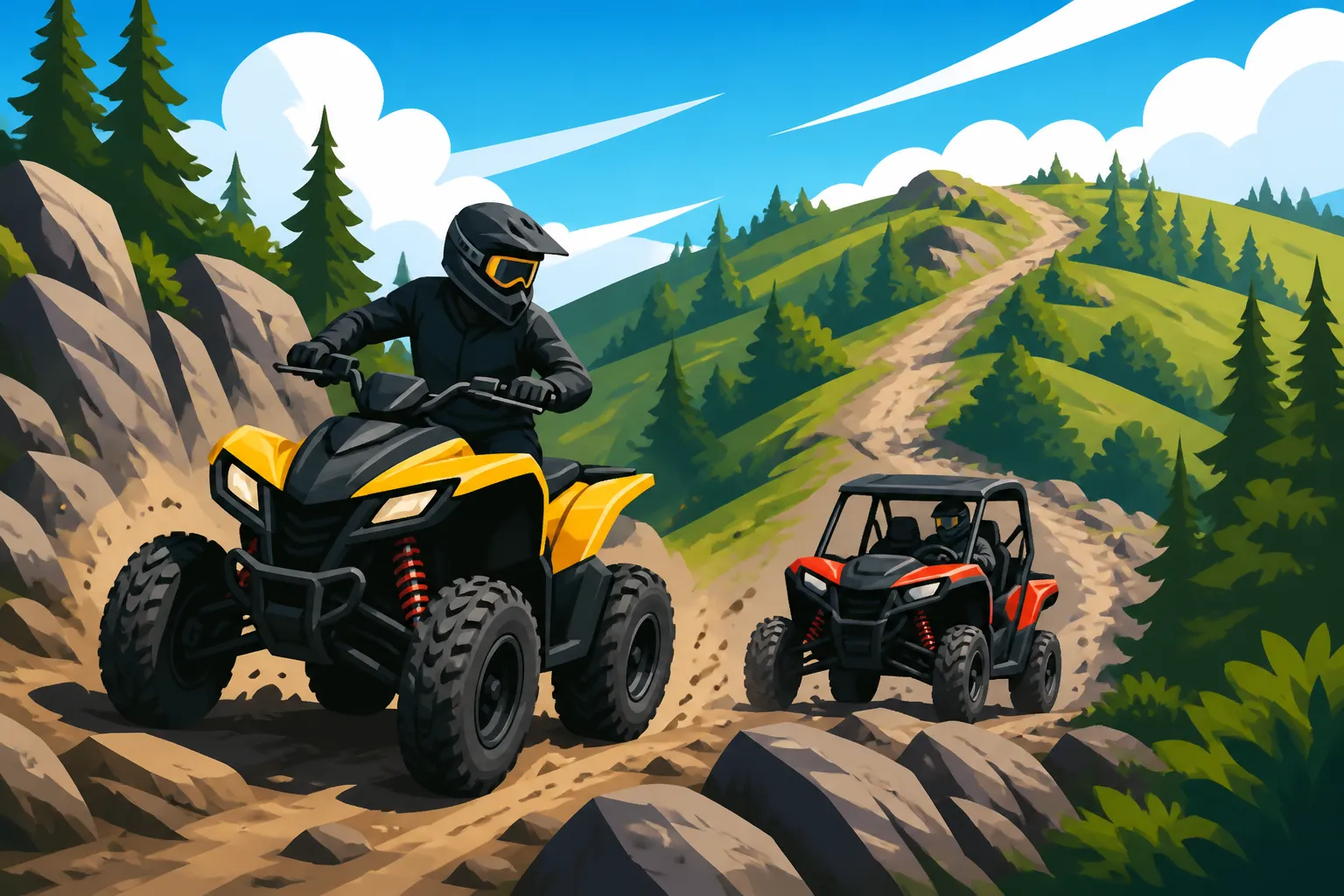
Rocky terrain rewards steady decisions more than sudden bursts of speed. Before an obstacle, slow down enough to assess the surface, choose a clear line and check for loose stones or hidden ruts. Avoid following so closely that you cannot stop if the rider ahead loses traction or needs to change direction.
Conditions can shift quickly on a slope. Rain, leaf litter, loose gravel and polished rock can all reduce grip. If you can’t see the full climb or descent, stop somewhere safe and scout it before committing. Never assume a route is safe simply because another vehicle made it through.
Climbing Without Losing Control
Approach a climb at a controlled, steady pace. Choose a line before you start, keep your attention on the route ahead and avoid abrupt steering or throttle changes. If the machine struggles, don’t keep spinning the tires; that can dig into the surface, worsen traction and damage the trail. Stop only when you can do so safely, then reassess whether to continue, back out or use a different route.
For a side-by-side, distribute passengers and cargo as the manufacturer recommends, and keep seat belts fastened. Don’t let a passenger lean or shift suddenly while the vehicle is climbing. On an ATV, stay within the machine’s operating guidance and move your body only in a controlled way that supports balance. Riders should know the controls and limits of their own vehicle rather than relying on a riding companion’s technique.
Keep the group spaced out on climbs. If the first machine stops or needs to reverse, another vehicle close behind can leave little room to react. When the route is narrow, use safe pullouts or agreed regrouping points instead of stopping in the middle of a steep section.
Descending, Turning Around and Using Recovery Gear
Descending a rocky slope can be harder than climbing it. Choose a low, controlled speed and avoid sudden braking or sharp turns that could unsettle the vehicle. Follow the machine manufacturer’s guidance for descending, and don’t let a passenger’s weight or movement shift unexpectedly. If the descent looks beyond your comfort level, find a safe alternative before the group commits.
Turning around on a slope is especially risky. Don’t attempt a tight turn where the vehicle could roll, slide or tip. If you need to retreat, pause to evaluate the terrain and use an appropriate recovery method with trained help. Keep people clear of tensioned recovery lines, and use equipment only as intended.
A recovery plan starts before anyone gets stuck. Carry suitable equipment, know where it is stored and agree on how the group will communicate. If the situation is unstable or beyond your experience, don’t improvise a risky recovery. Protect people first, then consider whether professional assistance is needed.
Preparing for a Rocky Ontario Trail Ride
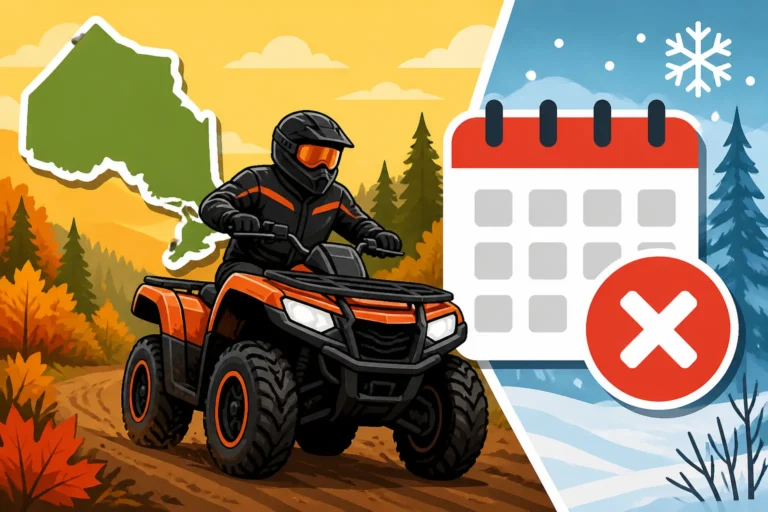
A successful ride begins with a realistic plan. Confirm the trail is open, identify the organization responsible for it, understand permit requirements and check whether the route is suitable for your vehicle. Conditions in spring can be especially sensitive: soft ground and thawing surfaces may be vulnerable to rutting, and some trails may have seasonal closures. Review [Ontario Riding After Spring Thaw] before planning an early-season outing.
Tell someone where you’re going and when you expect to return. Carry water, food, a first-aid kit, basic tools and a way to communicate that suits the area. Cell coverage can be unreliable in remote locations, so don’t build your safety plan around being able to make a call from every point on the trail.
Use Maps and Local Trail Information Together
Start with the official trail map or information from the club or organization that manages your destination. Check route access, closures, permitted vehicle types, staging locations and any shared-use rules. [Ontario ATV Trail Maps] can help you understand map resources, while the local organization’s notices should guide your final route choice.
A digital tool such as onX Offroad can help you review your plan, but it should not replace signs, local directions or current trail information. Map data can be incomplete or out of date, and a visible line on a map does not necessarily mean an ATV or UTV may legally use it. If the trail is unmarked, closed or inconsistent with your plan, stop and verify access rather than guessing.
Before the trip, make sure every rider understands the route and knows what to do if the group gets separated. Save the staging area and planned turnaround points, and agree on a time to head back. Good navigation is not only about avoiding wrong turns; it also helps the group avoid stretching a short ride into an exhausting one.
Pack for Changing Conditions
Bring clothing suited to the forecast and the possibility of rain, wind or a temperature change. Eye protection matters on rocky trails, where dust, branches and small stones can become hazards. Gloves and sturdy footwear help with control and comfort, especially when riders need to stop, inspect a route or handle recovery equipment.
Carry a basic repair kit appropriate to your machine, along with water and food for a longer-than-planned outing. Keep gear secured so it won’t shift on a rough section. For longer rides, think through fuel range and identify where you can safely turn around before the machine is low.
Finally, leave enough daylight and energy for the return trip. A challenging trail can take longer than expected when the group stops to assess obstacles or recover a machine. Riding within your limits, respecting closures and choosing a route that fits the least experienced person in the group make rocky Ontario trails more enjoyable—and help keep them in good condition for the next ride.
Disclaimer
This article is for general informational purposes only and does not constitute professional advice. Laws, prices and regulations vary by location and change over time. Consult a qualified professional for guidance on your specific situation.