Riding Through a June Blackfly Hatch
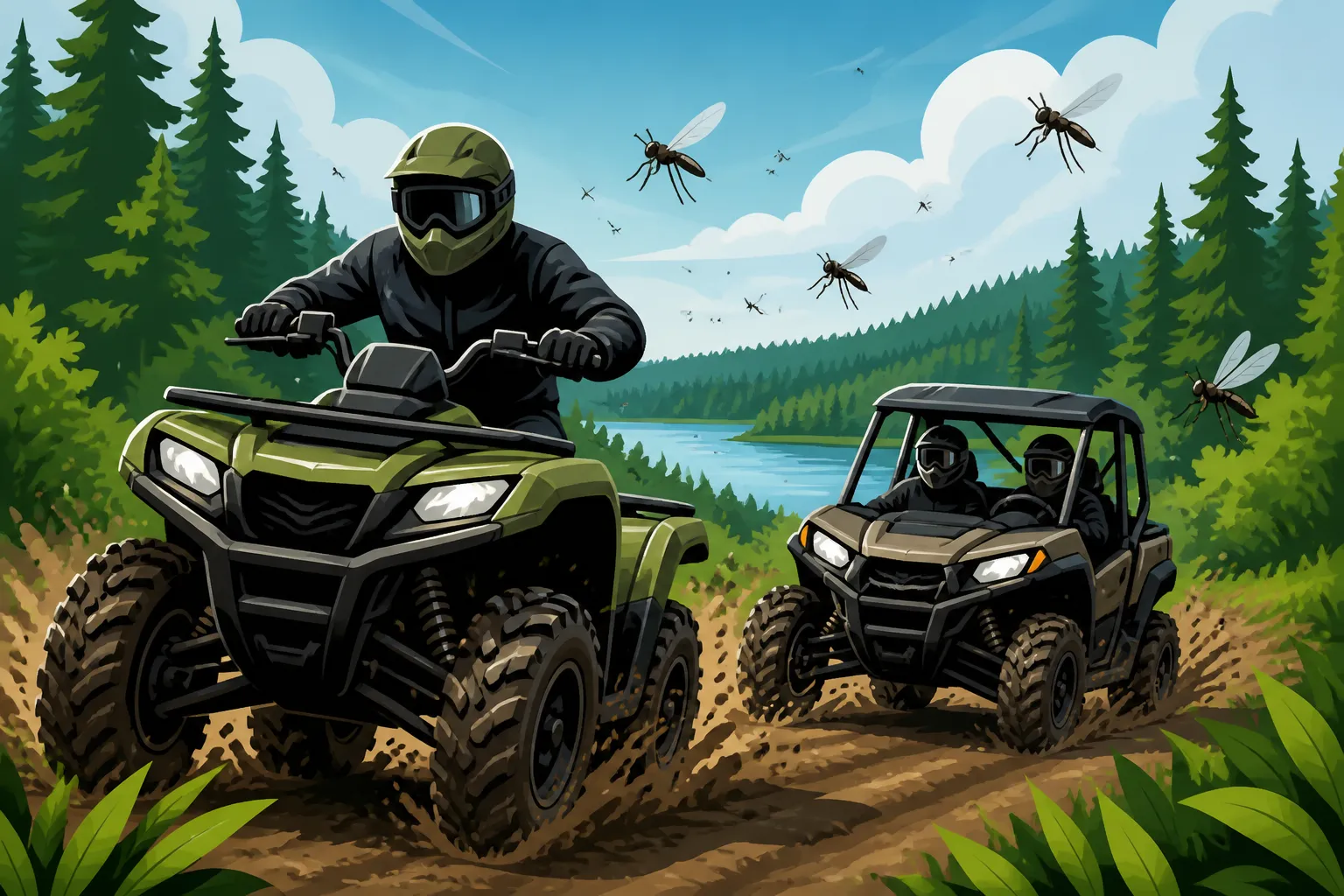
A June ATV ride in Ontario can turn uncomfortable fast when blackflies swarm around your face, ears, and neck—especially on a slow, shaded trail with little breeze. The right clothing, repellent, route plan, and break strategy can make the difference between calling it early and enjoying the ride. Here’s how to prepare for a blackfly hatch and manage it safely once you’re out.
Why June Blackflies Can Make an ATV Ride Miserable
When blackflies are most noticeable
Blackflies are a familiar nuisance in many parts of Ontario in late spring and early summer, but the timing and intensity of a hatch vary with local weather, water conditions, and the season. A warm spell after a cool period can make activity feel sudden. One trail may seem manageable while a nearby stretch feels thick with insects.
They’re especially hard to ignore when you’re moving slowly, stopping often, or riding through sheltered areas. A breeze can help keep them off you, while a still stretch of bush can leave them circling your face and gathering around exposed skin. That means the same day can feel very different on an open road, a wooded trail, and a staging area.
Think about the route as well as the calendar. A ride near Mattawa, in Algoma, or around Haliburton may involve changing terrain and weather over the course of the day. Before you leave, check local trail and club updates, then plan for the possibility that conditions will be worse in some sections than others. For broader seasonal planning, see Ontario Riding Seasons and Club Closures and Ontario Trail Conditions After Rain.
Why riding makes the insects harder to manage
On foot, you can usually stop, turn away from a swarm, and adjust your clothing. On an ATV or UTV, your hands are occupied and your attention needs to stay on the trail. Swatting at your face, wiping your eyes, or trying to fix a loose head net while moving can distract you at exactly the wrong time.
Blackflies around your eyes or inside a helmet can also make a rider tense up. You may blink more, crane your neck, or focus on the insects instead of ruts, rocks, branches, and the person ahead. That distraction can affect the whole group, not just the rider being bitten. If someone is overwhelmed, pull over somewhere safe rather than trying to push through while they’re distracted.
Passengers need a plan too. A passenger who is uncomfortable may shift around or reach toward their face, which can be unsettling in a side-by-side. Before setting off, agree that anyone who needs to adjust gear should tell the driver and wait until the machine is stopped in a safe place.
How to Prepare for Blackflies Before You Leave
Wear layers that protect skin without getting in the way
Your first line of defence is clothing that leaves as little skin exposed as practical. Lightweight long sleeves, long pants, socks that overlap trouser cuffs, and gloves can help. Choose clothes you can wear comfortably while riding; heavy or restrictive layers can become unpleasant once the day warms up.
A head net can be useful when blackflies are active, particularly while you’re parked or moving slowly. Try it on with your helmet before the ride. Check that it doesn’t interfere with your vision, helmet fit, chin strap, goggles, or any ventilation you rely on. If it bunches up around your face or catches in your gear, it’s better to discover that at home than beside a trail.
A mesh layer can also be uncomfortable if it presses against exposed skin, so wear it over a brimmed hat or another layer when appropriate. Bring a spare in case the first one gets wet, torn, or difficult to see through. Keep a small bag for used or damp gear so it doesn’t end up tangled with clean clothing in your truck or trailer.
Use repellent carefully and pack it where you can reach it
If you choose to use an insect repellent, follow the product label for where and how to apply it, how often to reapply, and any age-related directions. Apply it before gearing up where possible, so you can avoid spraying near your eyes, helmet padding, or other equipment. Don’t assume a product works for the whole ride; sweat, rain, and time can affect how long protection lasts.
Pack repellent somewhere accessible, but secure it so it won’t spill or get crushed. If you’re riding in a group, don’t pass around an open container while machines are moving. Stop first, and wash your hands before handling food or touching your eyes.
It also helps to bring water, a clean cloth, and basic first-aid supplies. If a bite causes a severe or unusual reaction, or symptoms are concerning, stop the ride and seek appropriate medical advice. A small amount of preparation is easier than trying to improvise when everyone is tired, warm, and ready to get home.
Plan the route and tell the group what to expect
A realistic route can reduce the amount of time you spend stopped in a buggy area. Choose a ride length that leaves room for breaks, delays, and an early return if someone is struggling. A route with reasonable stopping options is often a better choice than a long, remote loop when the hatch is intense.
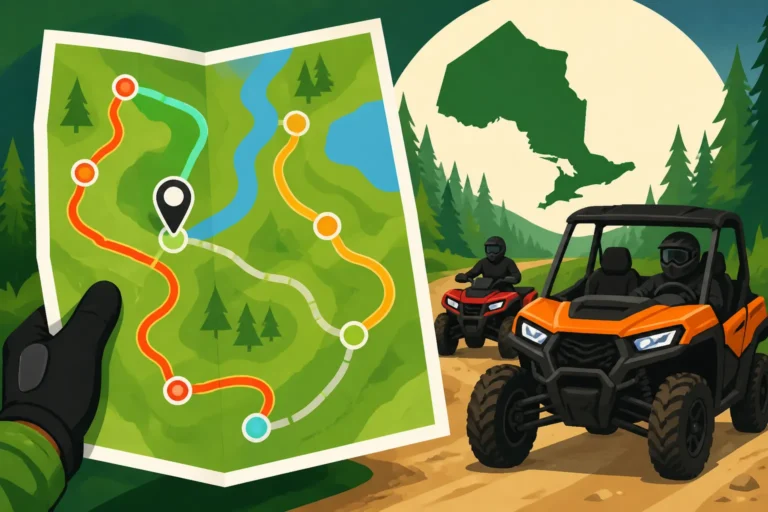
Use a map to understand the route before leaving, and download or save what you may need if cell service is unreliable. Apps such as onX Offroad can help riders review mapped routes and prepare for areas where reception may be limited, but don’t treat a map app as permission to ride. Confirm that the trail is open and that your access is allowed through the relevant club or land manager. [Following Club Trail Markers] and Ontario Trails With Cell Coverage are useful topics to consider when planning.
Before departing, let someone know where you expect to ride and when you plan to be back. If the group is splitting into separate machines, agree on a regrouping point and what to do if one vehicle has to turn around. That simple conversation prevents a miserable bug-filled stop from becoming a confusing search for the rest of the group.
| Before the ride | Why it helps | Practical check |
|---|---|---|
| Long sleeves, pants, gloves, and socks | Limits exposed skin | Check cuffs and gaps before starting |
| Head net or suitable face protection | Helps during slow sections and stops | Test it with your helmet and goggles |
| Repellent used as directed | Adds another layer of protection | Bring it securely packed for reapplication |
| Water and a clean cloth | Makes breaks and cleanup easier | Keep them accessible without loose gear |
| Route and return plan | Reduces uncertainty if conditions worsen | Share the plan with someone outside the group |
Managing a Blackfly Hatch on the Trail
Stop before adjusting your gear
If bugs get inside your helmet or a head net slips out of place, don’t try to fix it while riding. Signal the group, find a safe place to pull over, and park away from traffic or a narrow section of trail. Turn the machine off before removing or adjusting gear, and keep an eye on where the rest of the group stops.
A planned break can be more comfortable if you choose the location carefully. An exposed spot with some airflow may feel better than a still pocket of bush, though conditions can change quickly. Keep the stop short if bugs are overwhelming, and avoid leaving the trail or entering private property to find a more comfortable place. For route access and local rules, [Ontario Landowner Permission Rules] provides related guidance.
When you get back on the machine, take a moment to settle your gear and let your eyes adjust. Confirm that everyone is ready, that passengers are properly secured, and that the rider in front knows the group is moving again. Rushing because the insects are irritating can create more risk than the insects themselves.
Keep the group moving at a safe, comfortable pace
It’s tempting to speed up to get away from a swarm, but that’s not a good reason to ride faster than the trail allows. Keep a pace that leaves you time to react to surface changes, blind corners, other trail users, and the machine ahead. Dust, branches, mud, and insects can all reduce comfort or visibility; none should prompt a rider to take chances.
If one rider is having a much harder time than the others, adjust the plan. That could mean a shorter loop, a longer sheltered break in a suitable spot, or heading back together. Avoid leaving someone behind to ride alone simply because the rest of the group wants to continue.
For a larger group, agree on signals and spacing before setting off. Leave enough room to stop without crowding the machine ahead, and don’t assume the rider behind has noticed a change in pace. If someone pulls over, the group should know whether to stop together or regroup at a pre-agreed location.
Use navigation as a backup, not a substitute for local information
A map can help you stay oriented if you need to shorten a ride or return by a different permitted route. If you use onX Offroad or another navigation tool, prepare before you lose service: save the relevant map area, check that the route is the one you intend to ride, and make sure your phone is charged and protected from weather.
But digital maps can’t replace current trail information or signs at the trailhead. Clubs may close sections, conditions may change, and a mapped line doesn’t necessarily mean motorized access is allowed. Check the appropriate local updates before riding, follow posted closures, and use trail markers to confirm you’re still on the intended route.
If your group relies on phones, carry a practical backup plan. That might include a paper map, a power bank, or a written meeting point. The goal isn’t to carry every possible gadget; it’s to avoid making a bad decision because a screen is unavailable or difficult to read with gloves on.
Deciding Whether to Ride, Reroute, or Call It Early
Adjust the day to the people in your group
There’s no prize for finishing a planned loop when everyone is uncomfortable. A new rider, a child passenger, or someone who reacts strongly to insect bites may need more frequent stops or a shorter route. Ask how people are doing before they reach the point of frustration, rather than waiting until they’re already distracted and ready to quit.
Consider the whole ride, including getting to the trail, staging, and loading up afterward. A group may manage the trail itself but become miserable while waiting in a still parking area. Have protective layers on before you unload, and keep the ride’s starting routine efficient so everyone spends less time standing around.
If a participant develops symptoms that seem serious or unusual, treat that as a health concern, not a minor inconvenience to ride through. Stop in a safe place and get appropriate help. For general planning around a longer trip, [Trailering to a Northern Trail Town] can help you think through the logistics beyond the trail itself.
Know when conditions call for a different day
A blackfly hatch isn’t the only factor to consider. Heavy rain, soft ground, poor visibility, fatigue, and trail closures can make an uncomfortable ride less sensible. Check the forecast and local trail information, then make a decision based on the full picture—not just the fact that the machines are already loaded.
If you choose to go, keep a lower-stress option in mind. That may mean choosing a shorter known route instead of exploring an unfamiliar connector, or selecting an area where it’s easier to turn back. Apps such as onX Offroad may assist with orientation, but verify access and conditions with the relevant local trail organization before you rely on a route.
After the ride, check yourself and your riding gear for bites, irritation, and damage to nets or clothing. Clean and dry equipment before storing it, and make a note of what worked. Maybe a head net fogged your goggles, a jacket cuff left a gap, or the group needed a better regrouping plan. Those small observations make the next June ride much easier to prepare for.
Disclaimer
This article is for general informational purposes only and does not constitute professional advice. Laws, prices and regulations vary by location and change over time. Consult a qualified professional for guidance on your specific situation.