Does a Peeled-Off Permit Sticker Still Count on Trail?
A permit sticker that has peeled away creates an awkward question at the trailhead: does your paid pass still count? The answer depends on whether the permit can be verified and what the issuing club requires. Here’s how to handle a loose, damaged or missing Ontario trail sticker before you ride.
Does a peeled-off permit sticker still count?
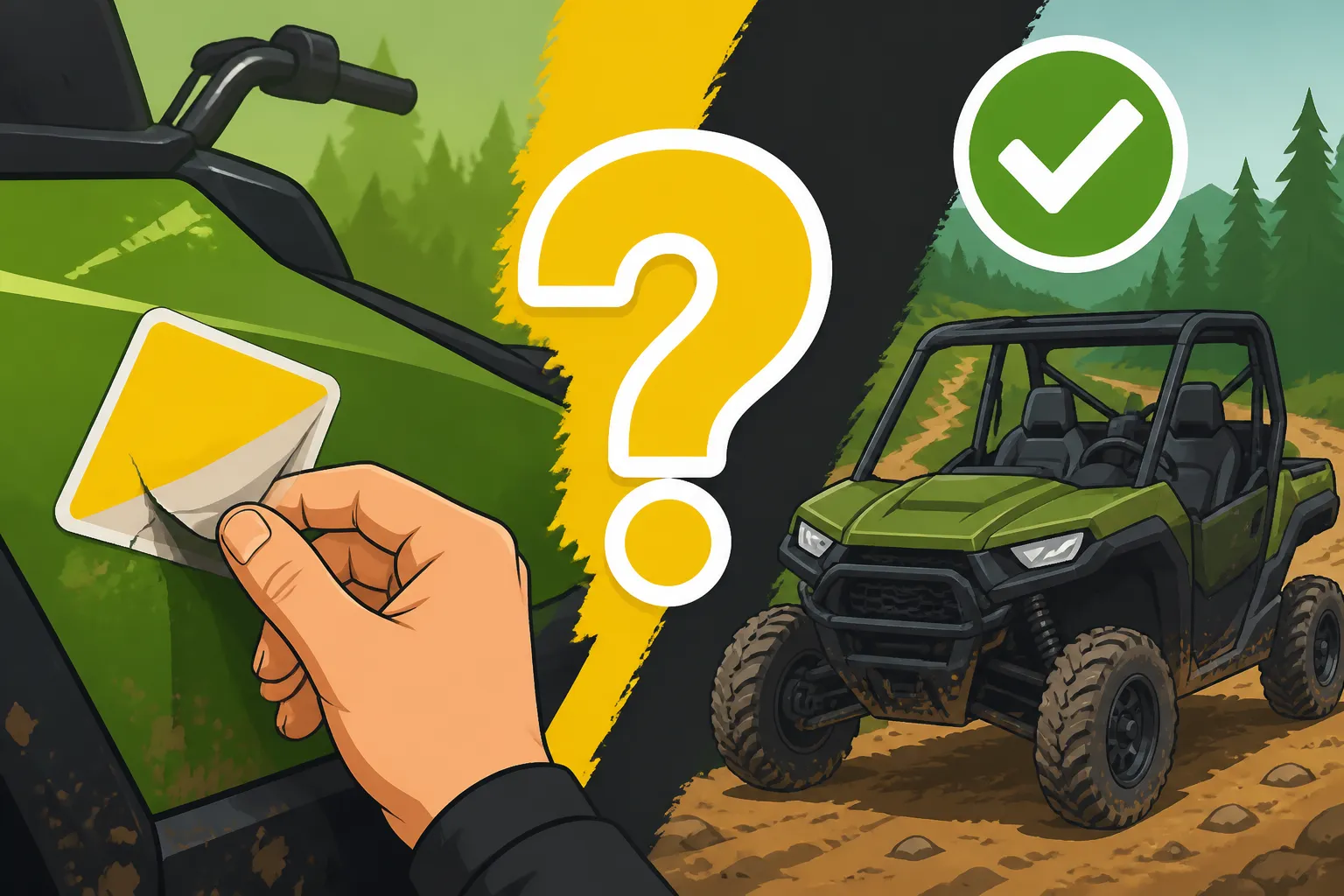
A peeled-off sticker may be genuine and paid for, but that does not guarantee it will be accepted during a trail check. The sticker is a visible way to show that a machine has a valid trail permit. If it is no longer attached, is unreadable or appears to have been moved from another vehicle, a patroller may not be able to verify it at a glance.
The important distinction is between having purchased a permit and displaying it as required. A receipt or account record can help explain the situation, but it may not replace the required sticker. The permit issuer’s rules and the particular trail system matter, so there is no safe assumption that proof of payment alone will be enough.
Before riding, check the instructions that came with your permit and contact the club or provider that issued it. Ask whether the loose sticker can be reapplied, whether it must be replaced, and what proof to carry while the issue is being resolved. If you cannot get a clear answer, postpone riding on a trail that requires the permit rather than risk being turned back or treated as riding without a valid pass.
This applies to trail permits, not the provincial vehicle registration plate. Ontario registration and a trail permit serve different purposes. A machine can have a current registration permit and plate but still need a separate trail pass to use a permitted trail network. For the distinction, see Ontario ATV Trail Permits Explained and The Ontario Vehicle Permit Explained.
| Sticker condition | What it can mean at a trail check | Practical next step |
|---|---|---|
| Attached, readable and in the specified location | The pass is easier to verify visually | Carry any additional proof required by the issuer |
| Partly lifted but still attached | It may peel farther off, and its details may be difficult to see | Stop and ask the issuer how to secure or replace it |
| Detached but intact | Purchase may be valid, but the required display may be in question | Contact the issuer before riding; keep the sticker and proof of purchase |
| Torn, faded or unreadable | A patroller may not be able to confirm the permit from the sticker | Ask about replacement and carry supporting records |
| Missing | There may be no visible permit evidence on the machine | Do not assume a phone receipt is enough; resolve it with the issuer |
The table is a practical guide, not a promise that every patrol will make the same decision. A permit sold by a club or trail organization can have display and replacement conditions that differ from another provider’s rules. Review the instructions for the exact pass you bought.
Why the sticker’s condition matters
A permit sticker is generally meant to be displayed on the machine covered by the permit. Its placement makes it possible for a patroller to check for a pass without relying only on a rider’s explanation. Details such as the correct sticker, its legibility and where it is affixed may all matter.
If it has come loose, a patroller cannot easily tell from the sticker alone whether it was issued for that machine, whether it is current, or whether it has been transferred. That does not mean a rider who paid for a pass has deliberately done anything wrong. It does mean there may be a verification problem that is best solved before setting out.
Review the provider’s placement directions rather than choosing a convenient spot at random. Where the Sticker Goes explains why following those directions matters, while What an OFATV Trail Permit Sticker Looks Like can help you recognize the type of pass you have. Requirements may vary between permit systems, so use the directions for your own pass if they differ from a general example.
A loose sticker is different from a missing receipt
The sticker and the purchase record serve different roles. The sticker provides visible evidence on the machine. A confirmation email, account page or receipt can help establish that you bought a permit, but a record on your phone may not satisfy a display requirement by itself.
That distinction is especially important if you bought a permit online or just before the ride. Save the confirmation and make sure you can access it without relying on cell service. Still, do not treat the receipt as permission to ride with a missing or unusable sticker unless the issuer confirms that this is acceptable.
If your permit uses a digital display or a different identification method, follow that provider’s instructions instead. Not every trail pass uses the same system. For more on digital proof, see Showing a Permit on a Phone.
A sticker that has been moved can raise questions
A sticker that has detached and then been placed elsewhere may be hard to distinguish from one transferred between machines. Avoid moving it to another quad, side-by-side or plate just to make it visible. A permit is generally issued under specific conditions, and it may not be transferable between machines.
If the original surface is dirty, wet or damaged, do not press the sticker onto a new spot without checking whether the issuer allows that placement. You could make it harder to read or damage it further. Keep the sticker as it is, take a clear photo of its condition, and ask the provider what to do next.
What to do if your sticker has peeled off
Use a cautious, simple process. The goal is to preserve the sticker and make sure the issuer can confirm what happened before you enter a trail system.
- Do not discard the sticker. Keep every piece, including any backing or fragments that came away. Do not scrape, trim or alter it.
- Photograph its condition. Take clear photos of the sticker and the area where it was originally attached. If it is damaged, photograph the damage closely.
- Find your purchase record. Save the confirmation email, receipt or account information that identifies the permit. Have the machine details and the purchaser’s information available when you contact the provider.
- Contact the issuing organization. Ask whether the sticker can be reattached, whether a replacement is needed, and whether you may ride while waiting. Ask for specific instructions rather than relying on a general answer about proof of purchase.
- Follow the placement directions. If the issuer says it can be reapplied, use the location and method they specify. If it cannot be reused, ask how to obtain a replacement and what to do with the damaged sticker.
- Carry the supporting information. Keep the provider’s response and your purchase record accessible during the ride, even if you have resolved the display issue.
Keep the provider’s reply in writing when possible. A message or email that describes the sticker problem and the approved next step is more useful than trying to remember a brief phone conversation. It still does not override the permit’s rules, but it can make the situation easier to explain if a patroller asks.
If the provider says the sticker must be replaced, wait until you have followed its replacement process. Replacing a Lost Trail Permit covers the separate situation where a pass is missing entirely; a peeled sticker may need a different remedy, so confirm which process applies.
Do not assume that using stronger glue, clear tape or a protective layer will solve the problem. Adhesives and coverings can obscure permit details, damage the sticker, or conflict with placement instructions. Ask before adding anything over or beneath it. If you need to mount a replacement, follow the issuer’s directions rather than improvising a fix at the trailhead.
Avoiding the problem and handling a trail check
A few checks before the first ride can prevent a sticker problem from becoming a last-minute delay. Once the sticker is applied, confirm that it is secure, readable and in the location specified by the permit provider. Avoid placing it where routine contact, mud, washing or flexing is likely to lift an edge. Do not cover it with anything that makes it difficult to inspect unless the issuer specifically permits that protection.
Before heading out, check that the pass you bought applies to the trail area you plan to ride. A sticker can be intact and still not cover a different club’s network or a separate trail system. Does Your Permit Cover the Next Club’s District? explains why checking coverage matters when a route crosses between areas.
At a trail check, stay calm and be straightforward. Show the sticker if it is still attached, then explain that it has lifted or detached. Offer your purchase record and any written instructions from the issuer. A patroller can tell you what they can verify and what the trail system requires, but do not expect them to approve a substitute that the provider has not authorized.
What a Trail Patroller Checks gives more context about a permit inspection. If the sticker is clearly damaged or missing, the practical response may be to stop riding and contact the provider rather than continue in the hope that a receipt will settle the matter later. This is especially sensible if the route will take you far from a trailhead or somewhere you cannot easily turn back.
| Before the ride | Check |
|---|---|
| Sticker | Is it attached, readable and placed as directed? |
| Permit record | Can you access the receipt or confirmation if asked? |
| Coverage | Does the pass apply to the club or trail area you intend to use? |
| Damage | Is an edge lifting, or is the sticker torn or faded? |
| Replacement plan | Do you know whom to contact if it comes off? |
A little preparation also helps if the sticker has already started to lift. Do not wait until you are at a remote trail entrance to decide whether a loose pass is acceptable. Contact the issuer while you have time to get an answer, and do not ride until you know what it authorizes.
The safest takeaway is straightforward: a detached sticker may still be evidence that you paid, but it may not meet the trail system’s display requirements. Keep it, document the damage, contact the issuer and get instructions before riding. If replacement is required, resolve that first rather than assuming a phone receipt or a reattached sticker will automatically count.
Disclaimer
This article is for general informational purposes only and does not constitute professional advice. Laws, prices and regulations vary by location and change over time. Consult a qualified professional for guidance on your specific situation.