Ontario Rules for an Out-of-Province Machine
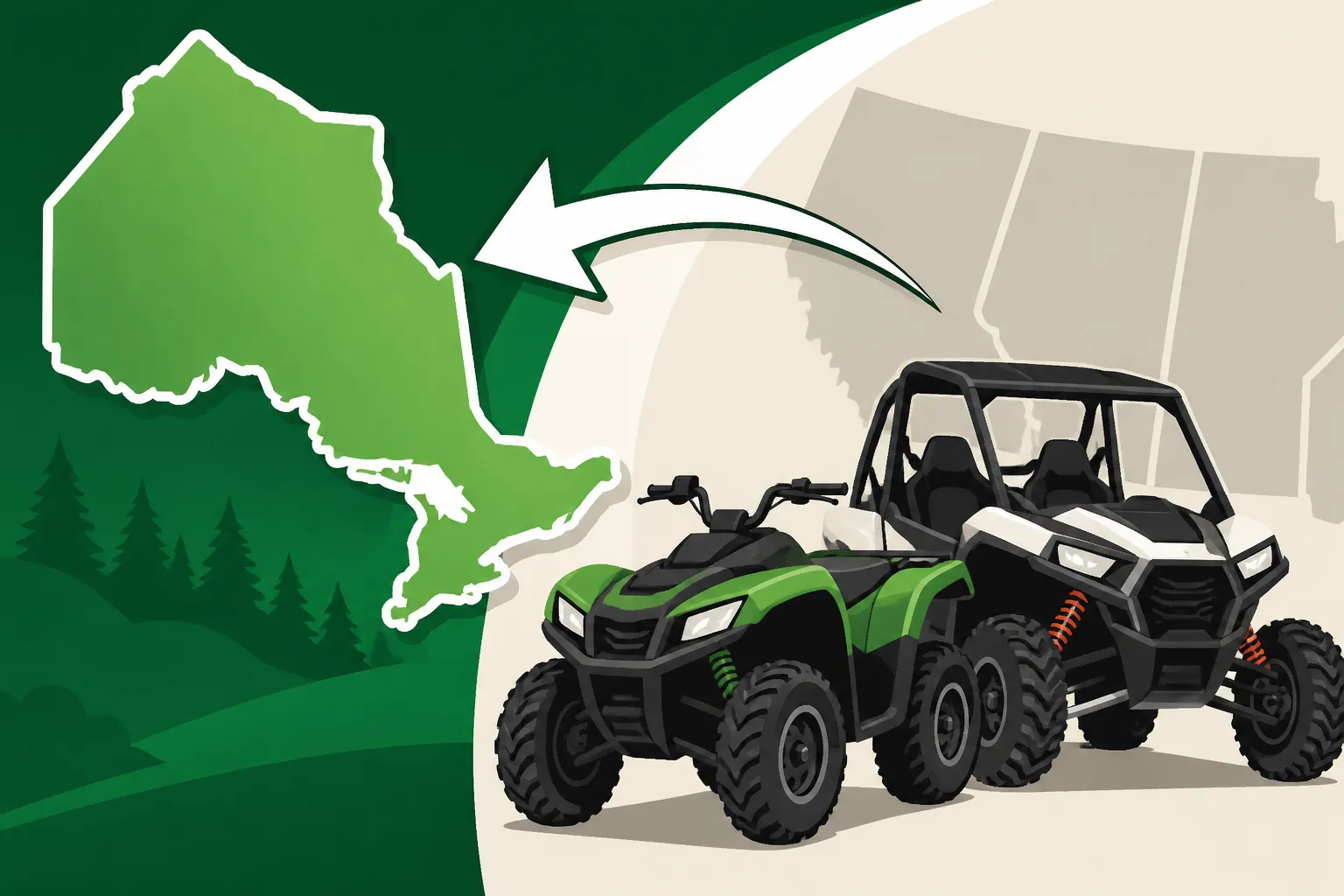
Bringing an ATV or UTV into Ontario from another province or even the United States can feel like navigating a whole new world of paperwork and rules. You've got your machine, you're ready to hit the trails, but suddenly you're faced with questions about registration deadlines, taxes, and what documents Ontario actually cares about. This guide is here to unravel all those complexities, helping you understand exactly what's required to get your out-of-province machine properly registered and road-ready in Ontario.
Understanding Ontario's ATV/UTV Registration Philosophy
Ontario's approach to ATV and UTV registration is quite distinct from many other places, and it’s one of the first things people moving to the province often find surprising. While other jurisdictions might require annual renewals or different types of documentation, Ontario has carved its own path, creating a system that, once understood, is actually quite straightforward for the long haul.
Why Ontario's System Is Unique No Annual Renewal
One of the biggest differences you'll encounter is that Ontario doesn't require annual registration renewals for off-road vehicles (ORVs) like ATVs and UTVs. That's right, once you register your machine and get your Ontario Vehicle Permit and licence plate, you're generally set. This contrasts sharply with provinces or states where you might be used to receiving renewal notices in the mail every year and paying a fee. For many, this "one and done" approach is a welcome relief after years of annual payments and sticker applications.
The fee you pay at ServiceOntario for your initial registration covers the administrative costs of putting your machine into the provincial system and assigning it a unique identifier and plate. It's a "lifetime" permit for that specific machine, tied to its Vehicle Identification Number (VIN). This means that as long as the machine remains in Ontario and its ownership doesn't transfer, you won't need to visit ServiceOntario again for registration purposes. You might be wondering, [Does an Ontario ATV Permit Expire?] The answer, for the permit itself, is generally no, not in the traditional sense of an annual expiry date. This unique system helps reduce ongoing administrative burdens for riders, allowing them to focus more on enjoying the trails rather than chasing down renewal deadlines.
The Importance of the Ontario Vehicle Permit
The Ontario Vehicle Permit (OVP) is the cornerstone of ORV ownership in Ontario. It's a critical document that serves as your official proof that your ATV or UTV is registered with the province. Unlike some regions that might issue a "title" document, Ontario uses this permit to record essential information about your machine, including its make, model, year, VIN, and most importantly, the name of the registered owner.
This permit is not just a piece of paper; it’s your machine's official identity document within Ontario. If you're pulled over by an OPP officer or a trail warden, they will ask to see your OVP. It confirms that your machine is legally allowed to operate on designated trails and roads where permitted. Without it, or a true copy, you could face fines. For those coming from jurisdictions that primarily rely on a "title," it's important to understand this distinction. The OVP is not just about showing ownership; it’s about confirming registration status. It's vital to keep this document safe and dry, perhaps in a sealed bag within your riding gear, or at least a true photocopy. You'll want to review [The Permit Versus a Title in Ontario] to fully grasp this distinction. You also need to know the rules around [Carrying the Permit or a True Copy] when you're out riding.
Bringing Your Machine from Another Province
If you're relocating to Ontario and bringing your trusty ATV or UTV with you from another Canadian province, there's a specific process you'll need to follow to integrate it into Ontario's registration system. This isn't just about changing an address; it's about ensuring your machine meets provincial requirements and that you can legally ride it here.
The Six-Day Window for Registration
One of the most crucial rules to remember when bringing an out-of-province ORV into Ontario is the six-day registration window. This rule stipulates that you must register your ATV or UTV with ServiceOntario within six days of it being "brought into Ontario for use on a highway or for private use by the person having ownership or control of the ORV." In simpler terms, once your machine officially resides in Ontario under your ownership or control, you have less than a week to get it registered.
This deadline is strict and important to adhere to. If you fail to register your machine within this period, you could face penalties or difficulties down the line. It’s not uncommon for people to underestimate how quickly those six days fly by, especially when unpacking and settling into a new home. So, make it a priority once your machine arrives. For more details on this tight timeframe, check out [Six Days From Purchase in Ontario]. It might sound like a hassle, but taking care of this early ensures you avoid any unnecessary stress or legal complications before you even get to enjoy your first Ontario ride.
Necessary Documents for an Out-of-Province Transfer
When you head to ServiceOntario to register your out-of-province machine, you'll need more than just your good intentions. The staff will require specific documentation to prove ownership, verify the machine’s identity, and confirm your own identity. The core documents include:
- Proof of Ownership: This is paramount. It could be your previous registration certificate from the other province, a bill of sale if you recently purchased it, or a sworn affidavit if you’ve owned it for a long time and the original paperwork is missing. The document needs to clearly show the Vehicle Identification Number (VIN) and the transfer of ownership to you.
- Personal Identification: Bring valid photo identification, such as an Ontario driver's licence or other government-issued ID.
- Proof of Ontario Address: A utility bill, lease agreement, or other official document showing your current Ontario residence.
- The Machine's VIN: While it should be on your ownership documents, the VIN is crucial for verification. [Ontario ATV VIN Check Before Buying] is a good idea even if you've owned the machine, just to be sure.
If you find yourself in a situation where original ownership documents are missing, perhaps because you’ve owned the machine for many years and never needed to show a bill of sale, it can be a bit more challenging. In such cases, ServiceOntario might require a sworn statement or an affidavit of ownership. It's always best to contact ServiceOntario directly beforehand to confirm what alternatives they accept for [Proving Ownership of an Ontario ATV] in non-standard situations.
Provincial Versus Territorial Differences
While the general principles of registering an out-of-province machine in Ontario remain consistent across Canada, there can be slight nuances depending on whether your machine is coming from another province or one of Canada's territories. Most of the time, the process is very similar, as Canadian provinces largely operate under comparable legal frameworks for vehicle registration.
For instance, bringing a machine from a neighbouring province like Quebec, as detailed in [Moving a Quebec-Plated Machine to Ontario], or from further west, like [Moving a Manitoba-Plated Machine to Ontario], will involve submitting your previous provincial registration as proof of ownership. The key is that the previous jurisdiction's documents clearly identify the machine and you as the owner. Territorial registrations, while less common, would follow a similar pattern, with ServiceOntario assessing the equivalent ownership documents provided. The underlying principle is always to establish a clear chain of custody and ownership that satisfies Ontario's requirements, ensuring the machine hasn't been stolen and that you are indeed the rightful person to register it in the province.
Importing Your Machine from the United States
Bringing an ATV or UTV across the Canada-U.S. border and into Ontario involves a few more hoops to jump through than a provincial transfer, primarily due to customs and import regulations. This isn't just about provincial registration; it's about officially bringing a vehicle into the country first.
Navigating Customs and Border Services
Before you even think about registering your ATV or UTV in Ontario, you must successfully import it into Canada through the Canada Border Services Agency (CBSA). This is a critical first step, and without proper customs clearance, ServiceOntario will not register your machine. The process typically involves declaring the vehicle at the border, paying any applicable duties and taxes (federal Goods and Services Tax – GST – and possibly provincial sales tax – PST – or Harmonized Sales Tax – HST, if not already handled), and ensuring all import requirements are met.
It’s crucial to research the specific CBSA requirements before you arrive at the border. You may need to provide advance notice to CBSA for certain types of vehicles. Failing to declare your ORV or having incomplete documentation can lead to significant delays, penalties, or even seizure of your machine. Once cleared, you'll receive import documentation that proves your machine has officially entered Canada, and this will be an essential document for your ServiceOntario visit. The details can be found if you search for [Importing a Quad From the United States].
Required Documentation for US Imports
Importing a machine from the United States and then registering it in Ontario requires a comprehensive set of documents. This isn't a casual affair; the border services and ServiceOntario want to ensure everything is above board. Key documents you'll need include:
- Original Title/Certificate of Origin: This is the most important document to prove ownership and the machine's history. It must be the original, not a copy.
- Bill of Sale: A clear, detailed bill of sale showing the purchase price, seller's and buyer's information, and the machine’s VIN.
- Recall Clearance Letter (if applicable): For some vehicles, particularly newer ones, Transport Canada might require a letter from the manufacturer stating there are no outstanding safety recalls or that any recalls have been remedied. This is crucial for import.
- Import Forms (e.g., Form 1): Documentation received from the CBSA once your machine has successfully cleared customs. This proves it's legally in Canada.
- Personal Identification: Your valid driver's licence and proof of Ontario residency.
Having all this paperwork meticulously organized before you even approach the border, let alone ServiceOntario, will save you immense headaches. Any discrepancies or missing documents can bring the process to a grinding halt. Be prepared for thorough scrutiny, as both federal and provincial agencies want to ensure the integrity of their records and prevent the import of stolen or unsafe vehicles.
Retail Sales Tax RST on Out-of-Province Machines
One of the most frequently asked questions, and often a point of frustration for new Ontario residents, revolves around the Retail Sales Tax (RST) on their out-of-province ATVs and UTVs. Many assume that because they've owned the machine for years, or paid tax in another jurisdiction, they won't owe anything in Ontario. However, that's not always the case.
When RST Applies to Your Incoming Machine
When you register an ATV or UTV in Ontario that's coming from outside the province, the 13% Retail Sales Tax (RST) generally applies to its declared value. This often comes as a surprise, especially if you've owned the machine for a long time and paid sales tax in your previous province or state. Ontario considers this its first opportunity to collect sales tax on the machine within its jurisdiction. It’s not a "second tax" but rather Ontario’s initial collection of tax on the item's entry into its registry.
The RST is calculated on either the purchase price (if recently acquired and proven by a bill of sale) or the fair market value of the machine, as determined by ServiceOntario. They will often refer to industry guides or assess the condition of the machine if the declared value seems unusually low. This ensures fairness and prevents people from intentionally declaring a minimal value to avoid tax. For a deeper dive into how this tax is applied, read [13 Percent RST on an Ontario ATV]. This can be a significant cost, so it’s essential to be prepared for it, unless you qualify for an exemption.
Common RST Exemptions for Relocating to Ontario
Thankfully, Ontario does offer specific exemptions for the Retail Sales Tax, especially for individuals moving to the province. The most common exemption relevant to an out-of-province ATV or UTV is the "settlers" exemption. This applies if you were a resident of another Canadian province or territory, or another country, for at least six months before moving to Ontario, and you owned the ATV or UTV during that time. Essentially, if your machine genuinely accompanied you as part of your move, you likely won't owe RST.
To claim this exemption, you'll need to provide proof of your previous residency and ownership duration. This might include old utility bills, driver's licence records, or previous registration documents showing you owned the machine for at least six months in the former jurisdiction. It's about demonstrating that this isn't a new purchase being brought in, but a personal asset that's relocating with you. While the focus here is on relocation, other exemptions like [The Family Gift Exemption in Ontario] or estate transfers exist, but the settler exemption is usually the key one for those moving their own machine. To ensure you have all your ducks in a row for any claims, especially if there was a recent transfer of ownership, a clearly drafted document such as a bill of sale or gift deed can be incredibly helpful. Platforms like LawDepot offer robust templates that can help you formalize these types of transactions, providing the clear proof ServiceOntario often requires.
The Registration Process at ServiceOntario
Once you've gathered all your documents and navigated any customs hurdles, the final step is to visit a ServiceOntario centre to officially register your out-of-province ATV or UTV. While it might seem like just another government visit, a little preparation can make the experience much smoother.
Preparing for Your ServiceOntario Visit
Making a trip to ServiceOntario can sometimes feel like a lottery, especially during peak hours. To minimize your wait time and ensure you don't have to make multiple trips, it's highly recommended to book an appointment in advance. Many ServiceOntario locations offer online booking, which can save you a lot of time and frustration. You can usually find information on [Booking a Counter Appointment] on the ServiceOntario website.
Before you go, create a checklist of all the documents you need to bring. This includes:
- Your valid photo identification (e.g., Ontario driver's licence).
- Proof of your current Ontario address (e.g., utility bill).
- Your original proof of ownership for the ATV/UTV (e.g., previous provincial registration, US title, or detailed bill of sale). If you acquired the machine recently, having a clear and comprehensive bill of sale, perhaps drafted using templates from a resource like LawDepot, can make the process much smoother by clearly outlining the transaction and value.
- Any customs documentation if you imported the machine from the US.
- Proof of residency in your previous jurisdiction if claiming an RST exemption.
- The actual registration fee for the ORV.
Double-check that all documents are originals or certified true copies if required. Having everything neatly organized in a folder will present you as prepared and can often speed up the process. For a detailed list, you can refer to [Documents to Bring to the Counter].
What Happens at the Counter
When you arrive at your scheduled appointment or walk in, the ServiceOntario representative will guide you through the registration steps. Here's a general idea of what to expect:
- Document Review: The representative will meticulously review all your submitted documents. They'll verify your identity, proof of address, and most importantly, the ownership documents for your ATV/UTV. They will pay close attention to the VIN to ensure it matches across all paperwork and often physically inspect the VIN on the machine if it's present at the center (though typically you won't bring the machine itself).
- VIN Verification: The VIN is critical. It ensures the machine is unique and not registered elsewhere under different ownership.
- RST Assessment and Payment: If you don't qualify for an RST exemption, the representative will calculate the 13% RST based on the declared value or fair market value of your machine. You will need to pay this amount, along with the one-time registration fee, at this point.
- Permit and Plate Issuance: Once everything is processed and paid for, you will be issued your official Ontario Vehicle Permit and an Ontario licence plate for your ATV/UTV. Congratulations, your machine is now officially registered in Ontario!
Sometimes, unique situations arise, especially if ownership documents are less than perfect. In such cases, if you need to demonstrate continuous ownership or a specific type of transfer, having a well-drafted affidavit or statutory declaration can sometimes help. Resources like LawDepot provide templates for such legal documents, though you should always confirm with ServiceOntario if these will be accepted for your specific circumstances. The goal is to provide undeniable proof, and these kinds of documents can strengthen your case when standard paperwork is lacking.
Post-Registration Responsibilities and Usage
Getting your out-of-province ATV or UTV registered in Ontario is a major step, but it's not the end of your responsibilities. Once you have that shiny new Ontario plate and Vehicle Permit in hand, there are still a few crucial things you need to do before you hit the trails or permitted roads.
Plate Placement and Display Rules
That new Ontario licence plate isn't just a souvenir; it's a legal requirement that needs to be properly displayed on your ATV or UTV. Ontario has specific rules about where the plate must be mounted and how it should be displayed to ensure it's always visible. Generally, for ATVs and UTVs (which Ontario often categorizes as Off-Road Vehicles or ROVs), the licence plate must be securely attached to the rear of the machine.
It needs to be clearly visible from the rear, free from dirt, mud, or obstructions, and illuminated if you're riding at night. Using a sturdy licence plate bracket can prevent it from rattling loose or getting damaged on rough trails. Bending or obscuring the plate in any way is not permitted and can lead to fines. Take a moment to properly secure it, perhaps considering something more robust than just zip ties, especially given the vibrations and potential impacts of off-road riding. For more detailed guidance, refer to [Ontario ORV Plates and Where They Mount] and specifically [Ontario Plates on the Rear of a Quad]. Getting this right from the start avoids unnecessary hassle with enforcement officers.
Insurance Requirements for Ontario Riding
This is a non-negotiable point: in Ontario, every ATV and UTV must have valid insurance, whether you're riding on private land, designated trails, or approved municipal roads. Your registration proves ownership, but your insurance policy proves you're financially protected in case of an accident. You absolutely cannot ride an unregistered or uninsured ATV or UTV in Ontario.
Before you even think about putting your new plate on and heading out, contact an insurance broker or your existing insurance provider to get an ORV policy. Many home and auto insurers also offer specialized ORV coverage. Ensure your policy meets Ontario's minimum liability requirements, which are typically quite robust. Always carry proof of your insurance (your insurance card) with you whenever you ride, just as you would with your Ontario Vehicle Permit. An officer can ask for both at any time. For comprehensive information on what’s needed, make sure to read [Insurance and Ontario ORV Registration] and understand the implications of [Ontario's Mandatory ORV Insurance]. Riding uninsured carries severe penalties, including substantial fines and potential machine impoundment.
Trail Permits and Where to Ride
Now that your out-of-province machine is legally registered and insured in Ontario, you're probably eager to explore the vast network of trails. However, it’s important to understand that your provincial registration alone doesn't grant you access to all trails. Many of Ontario's maintained and signed trail systems are managed by local clubs that are part of the Ontario Federation of ATV Clubs (OFATV). To ride these club trails, you will need to purchase an annual OFATV trail permit.
This permit helps fund trail maintenance, signage, and insurance for the club networks. While some areas, particularly Crown Land, might allow "free use" of ORVs, these areas often have their own specific rules and restrictions, and might not offer the same level of infrastructure or safety as club trails. It’s crucial to research where you plan to ride and obtain the appropriate permits or permissions. Always check with the local club or municipality for their specific rules and trail status before heading out. Understanding [Ontario ATV Trail Permits Explained] and the rules for [Riding Crown Land in Ontario] will be essential for enjoying your machine responsibly and legally across the province.
| Feature / Document | Bringing from another Canadian Province | Importing from United States |
|---|---|---|
| Registration Deadline | Within 6 days of machine entering Ontario | Within 6 days of machine entering Ontario (post-customs) |
| Primary Ownership Proof | Previous provincial registration / Bill of Sale | Original US Title / Certificate of Origin |
| Customs Clearance | Not applicable | Required (CBSA import forms, duties/taxes paid) |
| Sales Tax (RST) | 13% RST on declared value, unless "settlers" exemption applies | 13% RST on declared value, unless "settlers" exemption applies (in addition to any federal/provincial tax at border) |
| ID & Proof of Address | Valid photo ID & Ontario proof of address required | Valid photo ID & Ontario proof of address required |
| VIN Verification | Required at ServiceOntario | Required at ServiceOntario |
| Recall Clearance Letter | Not typically required | May be required by Transport Canada for import |
| Required Forms | Ontario ORV application form | Ontario ORV application form + CBSA import forms |
| Insurance | Mandatory before riding | Mandatory before riding |
| Trail Permits | Required for OFATV club trails | Required for OFATV club trails |
Disclaimer
This article is for general informational purposes only and does not constitute professional advice. Laws, prices and regulations vary by location and change over time. Consult a qualified professional for guidance on your specific situation.