Checks Before You Buy a Used Quad in Ontario
Ah, the thrill of finding that perfect used quad or side-by-side! It’s like spotting a hidden gem, full of promise for countless adventures on Ontario's trails. But let's be honest, that excitement can quickly turn into a headache if you end up buying someone else's problems – whether it's mechanical nightmares, hidden debts, or a machine that isn't legally theirs to sell. This guide is all about equipping you with the essential checks and insider knowledge you need to navigate the used ORV market with confidence, ensuring your next purchase brings joy, not regret.
Verifying Ownership and Legal Status
When you're shelling out your hard-earned cash for a used off-road vehicle (ORV), the absolute last thing you want is to discover that the seller didn't actually have the right to sell it, or that there's a nasty surprise waiting for you down the line. This foundational step is all about making sure you’re dealing with a legitimate owner and a legally clear machine.
Confirming the Seller's Legitimacy
It might sound obvious, but you’d be surprised how often people skip this crucial step in their eagerness to get a good deal. Before any money changes hands, you need to confirm that the person standing in front of you is, in fact, the legal owner of the ATV or UTV. Don’t just take their word for it. Ask to see their driver's license and compare the name on it to the name on the Ontario Vehicle Permit. If the names don't match, that’s a massive red flag. Perhaps they're selling it for a friend or family member – in which case, you should insist on speaking directly with the registered owner or at least getting a notarized letter of authorization.
Think about it: if the seller's name doesn't match the permit, how do you know you're not buying a stolen machine, or one that's being sold without the true owner's permission? It's not about distrust, it's about protecting yourself and your investment. A legitimate seller will understand and respect your caution. If they push back or make excuses, it's time to walk away. This initial verification can save you immense heartache and financial loss down the road.
The Importance of the Ontario Vehicle Permit
The Ontario Vehicle Permit is arguably the most critical piece of paper in a used ORV transaction, even more so than a title in other jurisdictions. In Ontario, it serves as proof of ownership and is absolutely essential for transferring the machine into your name. Without it, you’re looking at a world of complications, if registration is even possible. [The Ontario Vehicle Permit Explained] is a great resource to understand its details.
When you inspect the permit, make sure it’s the original document – not a photocopy or a blurry picture on a phone. Look for key information: the Vehicle Identification Number (VIN) should match the VIN stamped on the machine itself, the year, make, and model should align, and most importantly, the seller's name must be listed as the current registered owner. This document is what ServiceOntario uses to officially record the transfer of ownership. If the permit is missing or incomplete, alarm bells should be ringing. While there are sometimes ways to register an ATV without the original permit, it’s a difficult and risky process, often requiring additional sworn statements and ServiceOntario’s discretion.
Checking for Liens and Encumbrances
Imagine buying your dream quad, only to have it repossessed because the previous owner still owed money on it! This nightmare scenario is precisely why checking for liens and encumbrances is non-negotiable. A lien means the ORV is used as collateral for a loan, and the lender has a legal claim to it until the debt is fully paid. If you buy a machine with a lien, you could become responsible for that debt, or worse, lose the machine entirely if the original owner defaults.
To protect yourself, you absolutely must perform a Personal Property Security Act (PPSA) search. This search will reveal if there are any registered liens against the ATV or UTV in Ontario. You can typically conduct a PPSA search online through various providers or directly at a ServiceOntario centre. You’ll need the VIN of the machine to do this. A clean PPSA report gives you peace of mind that no financial institution or individual has a claim on the machine. Always ensure this check is done before you hand over any money. For more detailed information on this, check out [Ontario ATV Lien Check Before Buying].
Scrutinizing the Machine's History and Condition
Once you're confident in the seller's legitimacy and the machine's legal standing, it's time to roll up your sleeves and inspect the vehicle itself. Buying a used ORV means you're inheriting its past, so knowing what to look for can prevent costly repairs and headaches down the trail.
The VIN Check – Your ATV's Fingerprint
The Vehicle Identification Number (VIN) is more than just a number on the permit; it’s the unique identifier for your ATV or UTV, a bit like its fingerprint. This 17-character code holds a wealth of information about the machine’s manufacturing details and can be crucial for uncovering its history. You’ll typically find the VIN stamped on the frame, usually in an easily accessible spot like the front frame rail, under the seat, or near the engine. Make sure the VIN on the machine matches the VIN on the Ontario Vehicle Permit and any other paperwork provided.
Using the VIN, you can perform a history check through various online services. While these services might not be as comprehensive for ORVs as they are for cars (due to less stringent reporting requirements for off-road accidents), they can still reveal if the machine has been reported stolen, salvaged, or has any other significant incidents in its past. A clear VIN history, combined with the PPSA search, offers a strong indication that you’re looking at a legitimate machine without a hidden checkered past. To learn more about this, you can look at [Ontario ATV VIN Check Before Buying].
Identifying Potential Red Flags and Damage
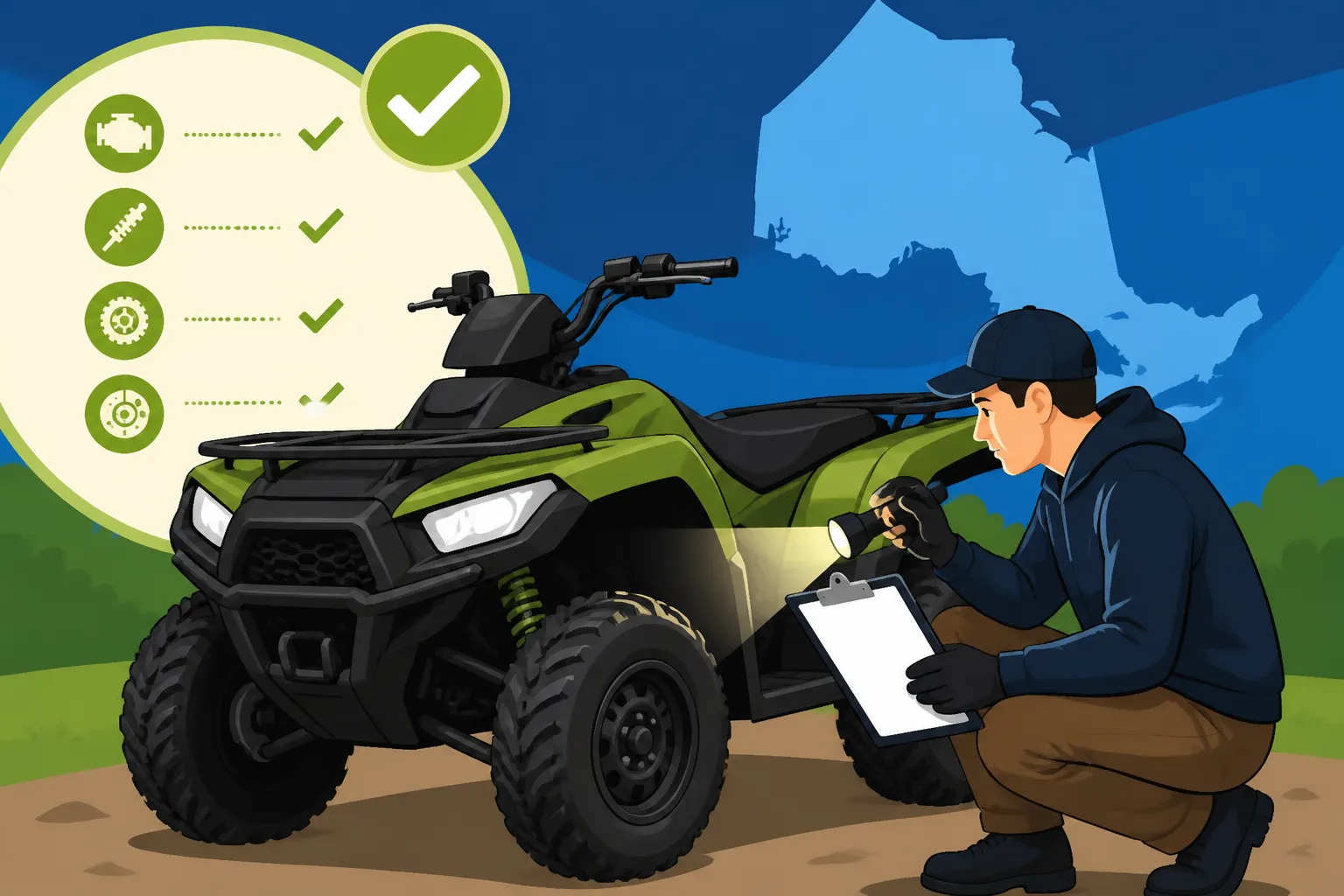
This is where your inner detective comes out. A thorough physical inspection of the ATV or UTV can reveal a lot about how it's been treated. Start by walking around the machine, looking for obvious signs of damage: bent or cracked plastics, deeply scratched paint, or mismatched panels can indicate rollovers or collisions. Pay close attention to the frame – any visible bends, welds that look like amateur repairs, or excessive rust could mean serious structural issues that compromise safety and performance.
Next, get down and dirty. Check the suspension components: are the shocks leaking fluid? Are the A-arms bent? Does the steering feel loose or wobbly? Inspect the tires for uneven wear, which could signal alignment problems. Look for fluid leaks under the engine and transmission – fresh oil, coolant, or differential fluid puddles are never a good sign. Pull the dipstick to check the oil condition; milky oil could suggest water contamination, while extremely dark, sludgy oil points to poor maintenance. Also, don't forget the electrical system – check all lights, indicators, and the horn. If possible, take it for a short test ride to assess engine performance, braking, and overall handling. Any strange noises, vibrations, or difficulty shifting gears are definite red flags.
Understanding the Machine's Intended Use and Maintenance
Every used ORV has a story, and asking the right questions can help you piece it together. Was this machine primarily used for casual trail riding, serious mud bogging, or perhaps as a utility vehicle on a farm? The answers will give you insight into the kind of wear and tear you might expect. A machine that spent its life plowing snow or pulling heavy loads on a farm might have more stress on its drivetrain and suspension than one used solely for leisurely weekend rides.
Ask about the maintenance history. Does the seller have records of oil changes, filter replacements, or major services? While not every private seller keeps meticulous records, a general idea of how well the machine was cared for is invaluable. A seller who can talk knowledgeably about their maintenance routine and show receipts is usually a good sign. If they can’t provide any details, assume the worst and factor in potential maintenance costs. This also ties into the concept that [Why ORVs Have No Red Book Value] means you can't rely on standard depreciation guides; individual condition is paramount.
Financial and Paperwork Considerations
Once you've fallen for a machine and confirmed its history, the focus shifts to ensuring the financial and legal transfer is airtight. This involves more than just handing over cash; it's about solidifying the agreement and understanding your tax obligations.
Crafting a Robust Bill of Sale
A simple handshake might work for some things, but when it comes to buying a used ATV or UTV in Ontario, a comprehensive Bill of Sale is your best friend. This document is a legal record of the transaction and offers protection for both the buyer and the seller. It clearly outlines the terms of the sale, proving that the ownership has officially transferred. Services like LawDepot offer excellent templates for creating a robust bill of sale, ensuring all necessary fields are covered.
Your Bill of Sale should include:
- The full names and addresses of both the buyer and the seller.
- The date of the transaction.
- A detailed description of the ATV/UTV, including make, model, year, colour, and most importantly, the VIN.
- The agreed-upon purchase price.
- A clear statement that the machine is being sold "as is, where is" if that is the case (which is typical for private sales), meaning you accept it in its current condition with no warranties.
- The signatures of both the buyer and the seller, and ideally, a witness.
- Any accessories or additional items included in the sale.
This document is absolutely critical for registration purposes at ServiceOntario. Without a proper Bill of Sale, you may face difficulties proving ownership. For more on what this document entails, refer to [Ontario ATV Bill of Sale Requirements].
Sales Tax (RST) Implications
Ah, taxes – the inevitable part of almost any significant purchase in Ontario. When you buy a used ATV or UTV from a private seller, you are generally required to pay 13% Retail Sales Tax (RST) on the purchase price. This isn't paid to the seller; it's paid to the provincial government when you register the machine in your name at ServiceOntario. This is an important distinction, as [Ontario RST Paid at the Counter, Not to the Seller] clarifies.
The RST is typically calculated on the greater of the purchase price or the wholesale value of the machine. However, since off-road vehicles don't typically have a "Red Book" value like cars, the purchase price declared on your Bill of Sale is usually what the tax is based on. Be honest about the price you paid; if ServiceOntario deems the declared price unrealistically low, they may assess a higher value for tax purposes. It's an additional cost to factor into your budget. However, there are some exemptions to RST, such as gifts between immediate family members, farm-use exemptions, or purchases by First Nations individuals with status cards. You can learn more about these in [13 Percent RST on an Ontario ATV] and [Ontario RST Exemptions for an ATV]. Using a legal template from a source like LawDepot can help ensure your Bill of Sale accurately reflects the price and any applicable exemptions.
What to Do if Papers Are Missing
Buying an ORV without its original Ontario Vehicle Permit or other crucial paperwork is a precarious situation, and frankly, it's often best to avoid it altogether. The risks are substantial: you might be buying a stolen machine, or one that cannot legally be transferred into your name. If the seller has lost the permit, they should ideally obtain a replacement before selling. If they're unwilling or unable, proceed with extreme caution.
If you find yourself in this rare and challenging situation, a meticulously detailed Bill of Sale becomes even more critical. You'll likely need to provide ServiceOntario with a sworn affidavit explaining the circumstances of the purchase and why the original permit is unavailable. This process is not guaranteed to succeed, and ServiceOntario staff have the discretion to deny registration if they are not satisfied with the proof of ownership. It's a bureaucratic hurdle that can lead to significant delays and potential outright denial of registration. Before you even consider this route, consult with ServiceOntario directly to understand their specific requirements and the likelihood of success. [Ontario ATV Registration Without a Bill of Sale] can offer more insights into this complex scenario.
The Final Steps: Registration and Insurance
You've done your due diligence, found the perfect machine, and the paperwork is in order. Now comes the exciting part: making it officially yours and ensuring you're legally ready to hit the trails.
Registering Your New-to-You Machine
Congratulations, you're almost ready to ride! After purchasing your used ATV or UTV, you have a strict six-day deadline to register it in your name at a ServiceOntario centre. [How Long You Have to Register an Ontario ATV] explains this crucial timeline. Don't procrastinate, because riding an unregistered ORV, even briefly, can lead to fines.
When you head to ServiceOntario, make sure you bring:
- The original Ontario Vehicle Permit, with the seller's portion signed off and the date of sale filled in.
- Your completed Bill of Sale, signed by both parties. This is where a professional template, perhaps from LawDepot, really pays off by ensuring all necessary details are present.
- Proof of identity (your driver's license).
- Proof of Ontario residency (if requested).
- Payment for the registration fee and any applicable Retail Sales Tax (RST).
The ServiceOntario representative will process the transfer, issue you a new Ontario Vehicle Permit in your name, and provide you with an ORV licence plate if one isn't already attached and valid. For a detailed walkthrough of the process, consult [Registering an ORV at a ServiceOntario Centre].
Securing Proper Insurance
Before you even think about firing up that engine and heading out, you absolutely must secure proper insurance for your ATV or UTV. In Ontario, it is legally mandatory to have a motor vehicle liability policy, even if you only plan to ride on private property or designated trails. This isn't just a suggestion; it's the law, and the penalties for riding uninsured are steep. [Insurance and Ontario ORV Registration] highlights the critical need for this coverage.
Your insurance policy should cover third-party liability, which protects you if you cause injury to another person or damage to their property. You can also opt for additional coverage like collision, comprehensive, or specified perils, depending on your needs and the value of your machine. It's a good idea to get insurance quotes before you finalize your purchase so you know the full cost of ownership. Many standard auto insurance providers also offer ORV policies, or you might need to seek out a specialized broker. You'll need proof of insurance when you register your machine at ServiceOntario, and you must carry that proof (or a true copy) with you whenever you're riding. Do not underestimate this requirement – [Ontario's Mandatory ORV Insurance] is there for a reason, to keep everyone safe and financially protected.
Comparison of Key Checks Before Buying a Used ORV
| Feature to Check | What to Look For | Why It's Important | Best Practice |
|---|---|---|---|
| Seller's Identity | ID matches name on Permit, legitimate seller | Prevents buying stolen property or from unauthorized seller | Insist on seeing valid photo ID (driver's license) |
| Vehicle Permit | Original document, VIN matches, seller's name as owner | Essential for legal ownership transfer; proof of current ownership | Verify all details; never accept a copy or picture |
| Liens (PPSA) | No registered financial claims against the ORV | Avoids repossession or inherited debt | Conduct a PPSA search using the VIN |
| VIN on Machine | Clearly visible, matches Permit, no signs of tampering | Confirms vehicle identity; can reveal theft or salvage history | Physically inspect VIN; run a history check |
| Physical Condition | Damage, leaks, rust, worn parts, irregular noises | Identifies potential repair costs and safety issues | Thorough visual inspection and test ride |
| Maintenance History | Service records, seller knowledge, usage patterns | Gauges past care and potential future issues | Ask questions about maintenance and use |
| Bill of Sale | Comprehensive, accurate details, signed by both parties | Legal record of sale; crucial for registration & tax calculation | Use a detailed template (e.g., from LawDepot); include "as is" clause |
| RST Obligations | Understanding the 13% tax at ServiceOntario | Avoids surprises; ensures proper budgeting | Factor 13% RST into your budget; understand exemptions |
| Missing Papers | Absence of Permit or other key documents | Major red flag; can prevent legal registration | Avoid transactions with missing papers if possible; consult ServiceOntario |
| Insurance | Mandatory liability coverage | Legal requirement for riding; protects against financial liability and fines | Obtain quotes BEFORE purchase; have proof ready for registration |
Disclaimer
This article is for general informational purposes only and does not constitute professional advice. Laws, prices and regulations vary by location and change over time. Consult a qualified professional for guidance on your specific situation.