Ontario Plates on the Front of a Three-Wheeler
One of the trickiest parts of owning any off-road vehicle in Ontario, especially a less common one like a three-wheeler, is making sure you’ve got all your ducks in a row when it comes to legalities. Many riders find themselves scratching their heads when it comes to where to properly mount their license plate, and for three-wheelers, it's a specific requirement that can catch you off guard. This guide will clarify exactly where your Ontario ORV plate needs to go on a three-wheeler, why it matters, and how to stay compliant.
Understanding Ontario's Off-Road Vehicle Act and Plate Requirements
Navigating the rules and regulations for off-road vehicles (ORVs) in Ontario can sometimes feel like trying to find your way through a dense bush trail without a map. There are specific mandates set forth in the province's Off-Road Vehicles Act that apply to all ORVs, from the smallest dirt bike to the largest side-by-side, and knowing these requirements is your first step toward responsible and legal riding. It's not just about having a plate; it's about having it correctly displayed.
The Core Mandate for All ORVs
At its heart, the Off-Road Vehicles Act, or [The Off-Road Vehicles Act and Ontario Riders], stipulates that any ORV operated on public land, or on any trail that requires registration, must be registered with ServiceOntario and display a valid license plate. This isn't just a suggestion; it's a legal obligation designed to ensure accountability, aid in identification during emergencies, and help trace vehicles in case of theft or an accident. The plate itself signifies that your machine is recognized by the province and that you, as the operator, are part of the broader system that helps maintain trails and enforce safety standards. Without proper registration and display, you risk significant fines and potential seizure of your vehicle.
Think of it like a vehicle on the road: every car needs a license plate. While ORVs might spend most of their time off the beaten path, they still interact with public spaces, whether it's crossing a road, riding on designated municipal routes, or traversing club trails. The plate is your machine's unique identifier, linking it back to you. It's a fundamental aspect of operating an ORV legally in Ontario, much like having insurance and a valid permit. Many clubs, like the OFATV, won't even let you on their trails if your machine isn't properly plated, regardless of whether you have a trail permit.
Why Three-Wheelers Have Unique Considerations
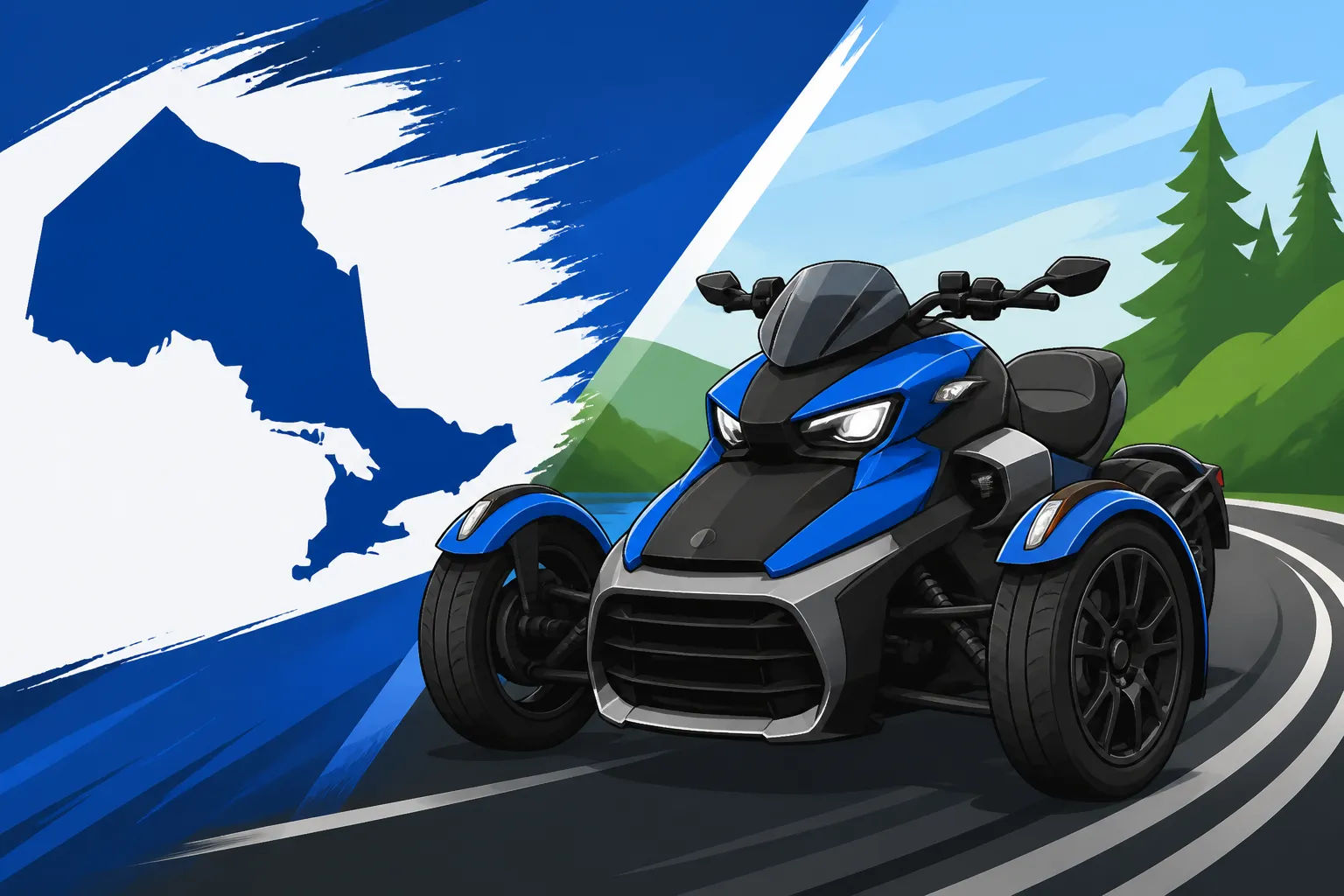
Three-wheelers, often referred to as ATCs (All-Terrain Cycles), hold a unique place in the ORV world. They typically feature a single front wheel and two rear wheels, which sets them apart geometrically from their quad (four-wheel) and side-by-side (SXS) counterparts. This distinct design has practical implications when it comes to plate mounting, leading to specific directives in the regulations. Unlike quads, which usually have a clear, flat space on the rear rack for a plate, or side-by-sides with their integrated rear bumpers, three-wheelers often lack an obvious, dedicated rear surface for display that meets visibility requirements.
Because of their design, the regulations for three-wheelers specifically direct that the plate must be displayed on the "foremost part" of the vehicle. This is a crucial distinction that often surprises riders who might assume a universal "rear plate" rule for all ORVs. The thinking behind this difference often boils down to visibility and safety. On many three-wheelers, the rear is taken up by the axle, suspension components, or could be easily obscured by cargo or the rider's body. The front, while perhaps less intuitive for some, offers a more consistent and unobstructed view, especially when the vehicle is approaching or being viewed from the front. This requirement emphasizes that not all ORVs are treated identically under the law, and understanding these nuances is vital to avoid potential issues.
The Specifics of Three-Wheeler Plate Placement
It’s easy to assume that all off-road vehicle plates go in the same spot, but Ontario’s regulations are quite precise, especially when it comes to three-wheelers. This isn’t a pick-your-favourite-spot kind of situation; there are clear rules that dictate where that rectangular piece of metal must be affixed. Getting this right is about more than just aesthetics; it’s about legal compliance and ensuring your plate is visible and readable at all times.
Deciphering the "Foremost Part" Rule
For three-wheelers, the Off-Road Vehicles Act specifically states that the plate must be affixed to the "foremost part" of the machine. What exactly does "foremost part" mean in practical terms? It generally refers to the very front of the vehicle, where it's most easily seen by someone facing the ORV. On most three-wheelers, this means securing the plate to the front rack, the front bumper, or a specially designed bracket that positions it clearly ahead of the handlebars and any other potentially obstructing components. It needs to be mounted horizontally and must be kept clean and legible, free from mud, snow, or debris that could obscure the numbers and letters.
This requirement for front mounting is a significant departure from the rules for other ORVs like quads or side-by-sides, which typically require rear plate placement. The rationale for three-wheelers stems from their unique design, where a clear, unobstructed view from the front is often more achievable than from the rear, which might be crowded with a single large tire, an exposed engine, or cargo space. Riders should not try to 'interpret' this rule broadly; "foremost part" is intended to mean as far forward and as visible as possible. If you're unsure, imagine an officer standing in front of your parked three-wheeler – can they easily read the plate without moving? If not, you might have an issue. Having your [Ontario ORV Permit Cost] already paid doesn't mean much if the plate isn't correctly displayed.
Practical Challenges and Solutions for Front Mounting
While the "foremost part" rule is clear, its practical application can present a few challenges for three-wheeler owners. One common issue is finding a sturdy, flat surface on the front of the machine that is suitable for mounting the plate without interfering with steering, suspension travel, or lighting. Many older three-wheelers, especially vintage models, might not have been designed with a dedicated front plate mounting point in mind. Riders might find themselves needing to get creative, but always within the bounds of legality and safety.
A common solution involves using aftermarket mounting brackets that attach to the front rack or bumper. These brackets are designed to hold the plate securely, horizontally, and with maximum visibility. It's crucial that whatever solution you choose, the plate is firmly attached to withstand vibrations, bumps, and potential impacts encountered during off-road riding. A rattling or poorly secured plate can quickly become damaged or even fall off, leading to a [Replacing a Lost Ontario ORV Plate] scenario and potential fines. Some riders even fabricate their own custom brackets, but if you do, ensure the material is robust and the design doesn't create any sharp edges or hazards. Remember, the goal is not just to mount it, but to mount it well so it stays put and remains visible in all riding conditions. This also links to ensuring you have proper documentation like a bill of sale, which could be drafted using templates from services like LawDepot, for any modifications or accessories you add, especially if they alter the vehicle’s original design in any way that might affect inspection or resale down the line.
Comparing Three-Wheelers to Other ORV Types
It’s important to understand that Ontario’s ORV regulations aren’t a one-size-fits-all approach. Different types of off-road vehicles have distinct design characteristics, and the province's laws often reflect these differences, particularly concerning where your license plate needs to be displayed. This comparison helps illustrate why three-wheelers have their own specific mounting instructions.
Quads and Side-by-Sides: Rear vs. Front
For the vast majority of four-wheeled ATVs (quads) and side-by-sides (ROVs), the Ontario regulations stipulate that the license plate must be affixed to the rear of the machine. This is a widely understood and generally straightforward rule for these types of ORVs. Quads typically have a rear rack or a designated flat area on the rear fender where the plate can be easily bolted on. Side-by-sides, with their more car-like structure, usually have a clear space on the rear bumper or tailgate specifically designed for plate attachment, often illuminated by a dedicated light. For these vehicles, the emphasis is on visibility from behind, especially when being followed on a trail or road, or when waiting at an intersection. You can find more details on this specific rule in [Ontario Plates on the Rear of a Quad].
The contrast with three-wheelers is stark. Where quads and side-by-sides prioritize rear visibility, three-wheelers specifically require front placement. This isn't just a quirky detail; it's a fundamental difference in how these various machine types are regulated for identification purposes. An officer checking machines on a trail or during a roadside stop will be looking for the plate in these very specific locations. Trying to mount a three-wheeler plate on the rear, similar to a quad, would be a direct violation of the rules for that specific vehicle class, leading to potential issues even if the plate itself is valid and current.
The Rationale Behind Different Placement Rules
The varied plate placement rules, particularly the front placement for three-wheelers versus rear for quads and side-by-sides, are rooted in practical considerations related to vehicle design, typical use, and optimal visibility. For quads and side-by-sides, the rear often offers the most consistent, unobstructed flat surface for a plate. Their bulk and common usage patterns mean that being identified from behind is frequently necessary, whether for trail patrols, other riders, or when briefly on a roadway. Their front ends can be busy with winches, lights, and complex suspension, making a clear front mount less universal.
Three-wheelers, on the other hand, present a unique challenge. Their often more open rear designs, especially on older models, might not provide a stable or consistently visible spot at the back. The single rear axle and sometimes exposed engine components can make rear mounting difficult or prone to damage and obstruction. The front, despite potentially being a less conventional spot for some riders, often provides the clearest and most durable mounting option, keeping the plate out of the direct line of fire from rear-wheel roost and debris. It ensures that when a three-wheeler is approaching or parked facing forward, its unique identifier is immediately apparent. This thoughtful distinction in the regulations aims to maximize the readability and integrity of the license plate across the diverse range of ORV types, acknowledging that one rule simply can't fit all.
Ensuring Legal Compliance and Avoiding Fines
Getting your Ontario ORV plate mounted correctly is just the first step. To truly stay on the right side of the law and avoid those unwelcome surprises in the form of fines or other enforcement actions, you need to commit to ongoing vigilance. It's about more than just the initial setup; it's about maintaining that compliance throughout every ride.
Regular Inspections and Maintenance
Once your plate is properly affixed to the foremost part of your three-wheeler, your job isn't done. Off-road riding is inherently rough on equipment, and license plates are no exception. Vibrations, mud, rocks, and even tree branches can all take their toll, leading to bent plates, obscured numbers, or even plates falling off entirely. This is why regular inspections are absolutely crucial. Before every ride, take a moment to visually check your plate. Is it still securely fastened? Are all the numbers and letters clearly visible? Is it free from excessive mud or dirt?
If you notice any issues, address them immediately. A bent plate can often be carefully straightened, but if it's too damaged to be legible, you'll need to look into [Replacing a Lost Ontario ORV Plate]. If it’s caked in mud, give it a quick wipe. Proactive maintenance goes a long way in preventing an officer from deeming your plate "not properly displayed" or "illegible," which can lead to tickets. Remember, the onus is on you, the rider, to ensure your vehicle is compliant at all times. Just having a valid [Ontario ATV Registration Cost] permit isn't enough; the plate itself must be in good order. It's also a good practice to keep a small set of basic tools, like a wrench or screwdriver, in your riding pack for quick trailside adjustments if something comes loose.
What an Officer Looks For Roadside
When an Ontario Provincial Police (OPP) officer, conservation officer, or municipal law enforcement officer stops you during a ride, they're not just checking for speed or helmet use. A key part of their roadside inspection will be your ORV's registration and plate. For a three-wheeler, they will specifically be looking for that plate mounted on the foremost part of your machine. They'll check that it's clearly visible, that the numbers and letters are readable, and that it's securely attached. They're looking for signs of tampering, obstruction, or negligence.
Beyond the plate itself, they'll also likely ask for your [Ontario Vehicle Permit Explained] (the green slip) and proof of insurance. It’s a good idea to keep a true copy of your permit in a waterproof bag on your machine. An officer has the authority to issue fines for an improperly displayed or illegible plate, riding an unregistered ORV, or for not having proper documentation. These fines can be substantial, making a few minutes of pre-ride checks a very worthwhile investment. Understanding [Ontario Fines for Riding Without a Permit] or an improperly displayed plate can really drive home the importance of thorough compliance. They’re not out to ruin your day, but to ensure everyone on the trails is safe and accountable, and a properly displayed plate is a huge part of that.
Obtaining and Maintaining Your Ontario ORV Plate
Getting your Ontario ORV plate for your three-wheeler is a relatively straightforward process, but it requires the right documentation and a visit to ServiceOntario. Once you have it, maintaining its integrity and knowing what to do if issues arise are crucial for uninterrupted legal riding.
The Initial Registration Process
The journey to getting your three-wheeler its proper Ontario license plate begins with registration at a ServiceOntario centre. Before you head out, make sure you have all the necessary paperwork. This typically includes:
- Proof of Ownership: This is usually a Bill of Sale if you purchased the machine, or a sworn affidavit if you inherited it or bought it without traditional paperwork (though the latter can be more complex). If you purchased your three-wheeler from a dealer, they might handle some of the initial paperwork for you, but if it was a private sale, you'll be responsible. Using a reliable template from LawDepot for your bill of sale can help ensure you have all the necessary details documented.
- Ontario Off-Road Vehicle Permit Application: This form will be available at ServiceOntario or online.
- Identification: Valid personal identification such as a driver's license.
- Payment: There is a one-time registration fee and often the 13% Retail Sales Tax (RST) on the purchase price of the vehicle, unless an exemption applies. You can read more about this in [13 Percent RST on an Ontario ATV].
Once you submit your documents and payment, ServiceOntario will issue you an Ontario Off-Road Vehicle Permit (the green slip) and your physical license plate. Remember, you have [How Long You Have to Register an Ontario ATV] from the date of purchase, so don't delay!
What to Do if Your Plate is Damaged or Lost
Accidents happen, especially in the rugged world of off-road riding. Your three-wheeler's front-mounted plate is exposed to the elements and potential impacts. If your plate becomes damaged to the point of being illegible, bent beyond repair, or if it simply falls off and is lost on the trail, you need to act quickly to replace it. Operating your three-wheeler with a damaged or missing plate is just as non-compliant as not having one at all, and can result in significant fines.
To get a replacement plate, you’ll need to visit a ServiceOntario centre again. You’ll typically need to bring your existing [Reading an Ontario ORV Permit] (the green permit), provide identification, and explain the circumstances of the damage or loss. There will be a fee for a replacement plate, which is usually a fraction of the initial registration cost. They might also ask you to fill out a short declaration form regarding the lost or damaged plate. It's a relatively simple process, but it’s vital to complete it as soon as possible to ensure you can continue to ride legally and safely. Don't risk getting caught without a valid, legible plate; addressing it promptly keeps you compliant and avoids unnecessary hassle.
Common Misconceptions and Clarifications
Even with clear rules, myths and misunderstandings can circulate among ORV riders. It’s easy to get confused, especially when dealing with specific vehicle types like three-wheelers or comparing rules across different provinces. Let’s clear up some of the most common points of confusion to ensure you’re operating your three-wheeler with complete confidence in Ontario.
"My Three-Wheeler is Old, the Rules Don't Apply"
This is a misconception that can lead to serious trouble. Some owners of vintage three-wheelers mistakenly believe that because their machine predates certain regulations or is no longer manufactured, it's exempt from current plating and registration requirements. This simply isn't true. In Ontario, if your three-wheeler is being operated on any public land, including provincial trails, road allowances, or designated municipal roads, it is subject to the exact same registration and plating requirements as a brand-new quad or side-by-side. The age of the vehicle does not grant it an exemption from these laws.
Whether your three-wheeler rolled off the assembly line in the 1970s or 1980s, if it’s on public property, it needs to be registered with ServiceOntario and display a valid, legible license plate on its foremost part. The intent of the law is to ensure all ORVs are identifiable and that their operators are accountable. If you recently acquired a vintage three-wheeler, perhaps through a private sale with minimal paperwork, you might need to take extra steps to establish [Proving Ownership of an Ontario ATV] before you can even register it. This could involve sworn affidavits or other methods to satisfy ServiceOntario's requirements, and professional legal document services like LawDepot might offer templates to help you draft necessary ownership declarations, ensuring your documentation is robust.
What if My Three-Wheeler Doesn't Have a Front Rack?
Many older three-wheelers, particularly sportier models, might not come equipped with a substantial front rack or bumper suitable for mounting a plate. This can lead to frustration for owners trying to comply with the "foremost part" rule. However, the lack of an obvious mounting point does not exempt you from the requirement. You are still legally obligated to display the plate at the front of your machine.
The solution usually involves aftermarket accessories. There are many companies that produce universal or model-specific front bumpers and racks that can be installed on three-wheelers, providing a sturdy surface for plate attachment. Alternatively, a custom fabrication might be necessary. The key is to ensure that whatever solution you choose:
- Positions the plate horizontally and clearly visible from the front.
- Does not obstruct any lights, controls, or crucial components.
- Is securely fastened to withstand the rigours of off-road riding.
Do not be tempted to simply zip-tie the plate to your handlebars or fender in a flimsy manner; it needs to be robustly mounted. If you’re unsure about options, speak to an ORV parts dealer or a custom fabrication shop that understands ORV safety and legal requirements. Your goal is not just to have the plate on, but to have it legally and safely on.
The Role of Insurance and Associated Paperwork
Beyond the physical plate on your three-wheeler, understanding the associated paperwork, particularly your permit and insurance, is paramount. These documents work hand-in-hand with your license plate to prove your machine's legality and your compliance as a rider.
Carrying Your Permit and Proof of Insurance
Having your three-wheeler registered and plated is fantastic, but it's only part of the story. Whenever you operate your ORV, you are legally required to carry both your Ontario Off-Road Vehicle Permit (the green slip) and proof of valid insurance. This is not optional. Think of it like driving a car; you wouldn't leave home without your driver's license, vehicle ownership, and insurance card. The same principle applies to your three-wheeler. You can learn more about this by checking out [Ontario ATV Insurance Requirements].
Many riders prefer to keep a true copy of their permit and insurance card in a waterproof pouch or sealed bag, safely secured on their machine. Some even laminate a copy to protect it from the elements. While the original permit is the official document, a true copy (like a photocopy or clear digital image on a device that can be easily shown) is generally accepted by law enforcement during a roadside check, as long as it's legible. However, it's always best to have the original readily available if possible, especially if you're dealing with a situation like a collision or if the officer specifically requests the original document for verification. Never ride without these critical pieces of paper; they are your proof of legal operation, and not having them can lead to tickets and headaches.
When Your Permit Needs Updating (and When It Doesn't)
Unlike passenger vehicles, Ontario ORV permits do not need to be renewed annually. This is a common point of confusion for riders, especially those who also own cars or snowmobiles. Once you register your three-wheeler and pay the one-time fee, that permit is valid for as long as you own the machine and it remains registered in your name. You can explore this further in [No Annual Renewal for an Ontario ORV]. This means no annual stickers, no yearly fees to ServiceOntario for the permit itself.
However, there are specific circumstances when you do need to update your permit:
- Change of Ownership: When you sell your three-wheeler, the permit must be transferred to the new owner. This is a crucial step in the selling process and ensures the machine is legally registered to its new custodian. For details on this, refer to [Transferring a Permit to a Buyer in Ontario].
- Change of Name or Address: If your legal name changes or you move to a new address, you must update this information on your ORV permit at ServiceOntario. This ensures your official records are accurate.
- Significant Modifications (Rare): In very rare cases where a modification fundamentally changes the vehicle's classification or identifying characteristics, an update might be required. However, for most accessory additions, this is not necessary.
For the most part, once your three-wheeler is registered and plated, you can enjoy years of riding without worrying about annual permit renewals, provided you keep the plate in good condition and carry your necessary documents. This makes ORV ownership in Ontario somewhat simpler than other vehicle types in terms of ongoing registration maintenance.
Plate Mounting Table for Different ORV Types in Ontario
To help clarify the differences in plate placement rules across various off-road vehicle types in Ontario, here's a handy table. This illustrates why three-wheelers have a distinct requirement compared to other popular machines.
| ORV Type | Plate Placement Rule | Common Mounting Locations | Key Rationale |
|---|---|---|---|
| Three-Wheeler | Affixed to the foremost part | Front rack, front bumper, custom bracket at the very front | Maximizes visibility from approaching angles; rear often obscured by design/cargo. |
| ATV (Quad) | Affixed to the rear | Rear rack, rear fender, integrated bumper mounting point | Maximizes visibility from behind; common usage on trails/roads. |
| Side-by-Side (ROV) | Affixed to the rear | Rear bumper, tailgate area, specific mounting bracket | Maximizes visibility from behind; robust vehicle structure allows clear rear placement. |
| Dirt Bike | Affixed to the rear | Rear fender, under the seat near the rear wheel (requires clear view) | Rear identification is key; minimalistic design limits front options. |
This table highlights the crucial distinction for three-wheelers. While most ORVs display their plate at the back, three-wheelers are specifically singled out for front-end placement to ensure optimal visibility and compliance with the Off-Road Vehicles Act.
Disclaimer
This article is for general informational purposes only and does not constitute professional advice. Laws, prices and regulations vary by location and change over time. Consult a qualified professional for guidance on your specific situation.