Insurance and Ontario ORV Registration
It's a common misconception among off-road enthusiasts: that insurance for your ATV or UTV is only needed if you plan to hit the pavement. But the truth in Ontario is far more complex, and frankly, a lot more critical. Many riders have found themselves in serious trouble, facing hefty fines or devastating financial liability, simply because they weren't aware of the mandatory insurance requirements. This guide will cut through the confusion, clearly outlining Ontario's rules for ORV insurance, what kind of coverage you need for registration and safe riding, and how to ensure you're fully protected both on and off the trails.
The Non-Negotiable Reality: Why Insurance Isn't Optional in Ontario
Let's be blunt: in Ontario, riding an Off-Road Vehicle (ORV) without proper insurance is playing with fire. It's not just a recommendation; it's a legal requirement that carries significant weight, whether you're cruising down a municipal road or tearing up a remote trail on Crown land. Many riders mistakenly believe that because they only ride on private property or designated trails, they're exempt from these rules. This simply isn't the case, and understanding why is your first step to being a responsible and protected rider.
The Law Says You Need It, Even Off-Road
Ontario's Off-Road Vehicles Act is quite clear: if your ORV is required to be registered and plated – which most are, unless it's strictly for farm use on your own land, or you're a First Nations purchaser with a valid status card – then it absolutely must be insured. This isn't just about covering accidents on the road; it extends to any incident that might occur off-road as well. Imagine a scenario where you're riding a club trail, accidentally lose control, and your machine collides with another rider's brand-new side-by-side, causing significant damage or even injury. Without insurance, you could be personally liable for tens of thousands of dollars, completely derailing your financial future.
This mandatory insurance isn't tied solely to operating on public roads or highways. It's a foundational requirement for owning and operating a registered ORV anywhere in the province where public access is permitted. Even if you're riding on a private trail system that requires an [Ontario ATV Trail Permit Cost], the underlying provincial law still demands you have valid insurance. This often comes as a surprise to riders new to Ontario or those who've simply been misinformed over the years, but ignoring it isn't an option if you want to ride legally and without constant worry.
Registration Requires Proof of Insurance
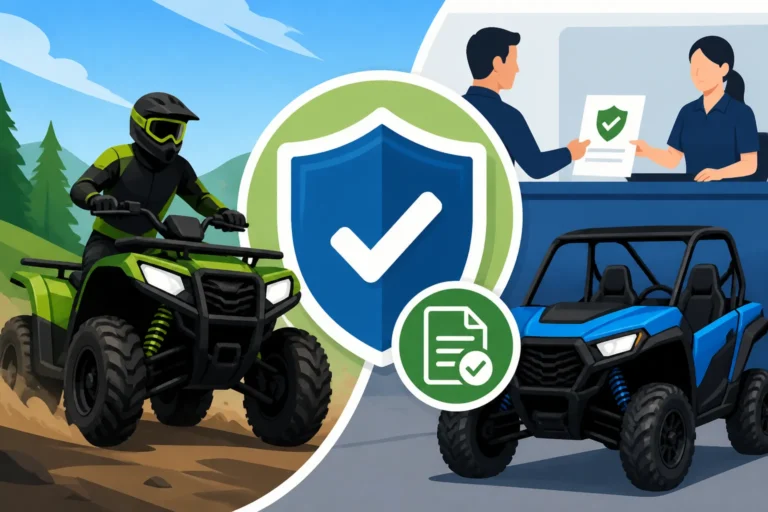
Here’s where the rubber meets the road, or perhaps, where the mud meets the tire. When you go to [Registering an ATV in Ontario] at a ServiceOntario centre, one of the crucial pieces of paperwork you'll need to present is proof of valid insurance. You can't get your [Ontario ORV Plates and Where They Mount] and your [The Ontario Vehicle Permit Explained] without it. Think of it like getting a driver's licence for your car; you need to show you're insured before you can legally operate it.
ServiceOntario staff are trained to look for specific details on your insurance slip, ensuring that your ORV is covered under an active policy. If you show up without it, or with insufficient proof, they simply won't process your registration. This mandatory step acts as a gatekeeper, ensuring that every registered ORV on Ontario's trails and roads has at least a basic level of financial protection in place. Don't waste a trip to ServiceOntario by not having your ducks in a row; get your insurance sorted before you head to the counter. Remember, you only have [How Long You Have to Register an Ontario ATV] from the date of purchase, so don't delay!
Understanding Your Liability and Protection
At its core, ORV insurance, particularly the mandatory liability component, is about protecting you from the financial fallout of accidents where you are deemed at fault. In Ontario, this means if you cause property damage or bodily injury to another person while operating your ORV, your insurance policy will step in to cover those costs, up to your policy limits. Without it, every penny comes directly out of your pocket – your savings, your assets, everything could be on the line.
Beyond the mandatory liability, comprehensive ORV insurance policies can offer a much broader safety net. This can include coverage for damage to your own machine, protection against theft, fire, or even vandalism. While not legally required for registration, having this additional coverage provides invaluable peace of mind. Consider how easily an ORV can be damaged during a tip-over on a rocky trail, or how devastating it would be if your prized side-by-side was stolen from your garage. This extra protection shifts the financial burden from your shoulders to your insurer, allowing you to focus on enjoying the ride rather than constantly worrying about potential losses.
What Kind of Insurance Does Ontario Demand?
When we talk about "mandatory insurance" for ORVs in Ontario, it's not a blanket term; there are specific requirements that need to be met. It's crucial to understand what kind of policy you need and what minimum coverage entails, as this directly impacts your ability to register your machine and legally ride it across the province. Don't assume your car insurance will automatically cover your quad; it's a separate beast with its own rules.
The Motor Vehicle Liability Policy Explained
The foundation of Ontario's ORV insurance requirement is a standard [The Motor Vehicle Liability Policy Ontario Wants]. This type of policy primarily focuses on third-party liability coverage. What does that mean? It means if you're involved in an accident while riding your ORV and you're found to be at fault, this policy will cover the costs associated with injuries to other people or damage to their property. For example, if you misjudge a turn on a shared trail and collide with another ORV, injuring the driver and damaging their machine, your liability coverage kicks in. Without it, you'd be personally responsible for medical bills, repair costs, and potentially even pain and suffering claims.
This isn't about covering damage to your machine; it's about protecting you from claims made against you. The minimum liability coverage required in Ontario is typically $200,000. While this might sound like a substantial sum, in today's world of escalating medical costs and vehicle repair expenses, a serious accident can easily exceed this minimum. This is why many experienced riders opt for higher liability limits, often $1 million or even $2 million, to ensure they have adequate protection against potentially ruinous claims.
Minimum Coverage Versus Adequate Protection
As just mentioned, while the law states a minimum of $200,000 in third-party liability, few riders find this truly "adequate." Think about it: a severe injury could lead to years of rehabilitation, lost income, and significant medical costs. A collision with a brand-new, expensive side-by-side could easily rack up tens of thousands in repair bills. If the total damages exceed your $200,000 minimum, you, the policyholder, are on the hook for the difference. This is why most insurance professionals and seasoned riders strongly recommend increasing your liability coverage to at least $1 million.
Beyond liability, consider "first-party" coverage options that protect your own investment. This includes collision coverage, which pays for damages to your ORV if you're involved in an accident, regardless of who is at fault (or if you simply hit a tree). Comprehensive coverage protects against non-collision incidents like theft, fire, vandalism, or even falling objects. While not mandatory for registration, these are the coverages that truly offer peace of mind, especially given the cost of repairing or replacing modern ORVs. Weigh the cost of these additional coverages against the potential financial devastation of an uninsured loss; often, the peace of mind is well worth the investment.
Specifics for Different ORV Types
The type of ORV you own can sometimes influence the specific details of your insurance policy, though the core liability requirement remains consistent. An ATV (All-Terrain Vehicle), a UTV (Utility Task Vehicle) or side-by-side, and an off-road motorcycle (often referred to as a dirt bike) all fall under the ORV umbrella, and all require insurance if registered for use off private property. However, insurers might look at them differently.
For instance, a UTV, particularly a larger one that might be considered an ROV (Recreational Off-Highway Vehicle) under [Ontario ORV Registration for a Side-by-Side], might have higher repair costs or different risk factors associated with it compared to a smaller single-rider ATV. Similarly, high-performance dirt bikes might carry different risk profiles than a utility-focused quad. When you're speaking with an insurance broker, be very clear about the make, model, and year of your specific machine, as well as its intended use. This ensures you get an accurate quote and a policy tailored to your vehicle. Some insurers might even have specific requirements or exclusions based on engine size or modifications, so always read the fine print and ask questions.
Finding and Securing Your ORV Insurance
Getting your ORV insured doesn't have to be a complicated ordeal, but it does require a bit of legwork to find the right coverage at a competitive price. Many new riders, or even those new to Ontario, aren't sure where to start. The good news is that there are several avenues you can explore, from specialized brokers to bundling with your existing policies.
Navigating Insurance Brokers and Providers
When it comes to ORV insurance, your best bet is often to work with a licensed insurance broker who specializes in recreational vehicles. Unlike a direct insurer who only sells their own products, a broker works for you. They can shop around with multiple insurance companies to find the best rates and coverage options that fit your specific needs and budget. They're also often more knowledgeable about the nuances of ORV regulations and how different policies apply to various riding scenarios in Ontario. Don't be shy about asking questions about deductibles, coverage limits, and any specific exclusions.
You might also find some direct insurance providers who offer ORV policies. It's always a good idea to get quotes from a few different sources to compare. Remember, the cheapest policy isn't always the best; make sure the coverage actually meets Ontario's legal requirements and provides the level of protection you're comfortable with. A quick search online or a call to a local broker can get you started, and many will even provide instant quotes.
Bundling with Existing Policies (Car, Home)
One of the most common and often cost-effective ways to insure your ORV is to add it to an existing insurance policy you already have, such as your car or homeowner's insurance. Many insurers offer multi-policy discounts, which can significantly reduce the overall premium for your ORV coverage. This often makes administrative sense too, as you're dealing with one company for all your insurance needs.
However, it's crucial not to simply assume your existing policies will cover your ORV. Your homeowner's policy might offer very limited liability coverage for incidents on your own property, but it almost certainly won't cover your ORV once you take it off your land, or provide collision and comprehensive coverage for the machine itself. Always explicitly ask your current insurance provider about adding your ORV to your policy. They will typically create a separate endorsement or policy specifically for the ORV, but it will be managed under your existing account. This is a great question to ask when you're comparing quotes for your [Ontario ATV Insurance Cost].
What Information Your Insurer Will Need
To get an accurate quote and set up your ORV insurance policy, your insurer will need some key pieces of information. Being prepared with these details can make the process much smoother and quicker.
Expect to provide:
- Your personal information: Name, address, date of birth, and driver's licence number.
- ORV details: Make, model, year, engine size (CCs), and importantly, the Vehicle Identification Number (VIN). The VIN is critical for identifying your specific machine, and it's what ServiceOntario will use when you [Registering an ORV at a ServiceOntario Centre].
- Intended use: Where and how often you plan to ride (e.g., recreational trails, utility work, occasional road use if permitted).
- Storage location: Where the ORV is kept when not in use (e.g., locked garage, shed, fenced yard).
- Driving record: Any past claims or convictions related to driving or operating recreational vehicles.
- Existing policies: Details of any other insurance you hold with them or another provider, especially if you're looking to bundle.
Having this information readily available will help your broker or insurer provide you with the most accurate and competitive quote. Don't forget, if you're buying a used machine, ensure you have all the necessary details from the seller, especially the VIN, to facilitate the insurance process. You'll need proof of ownership, and sometimes a bill of sale, which you can create using resources like LawDepot, can help ensure all parties have the necessary documentation.
Beyond Registration: Carrying and Proving Your Insurance
Once you've secured your ORV insurance and successfully registered your machine, your responsibilities don't end there. In Ontario, operating an ORV requires you to be able to prove you're insured at all times. This isn't just a suggestion; it's a legal requirement that carries significant weight, and not adhering to it can lead to serious consequences.
Always Have Proof On Hand
Think of your ORV insurance card like your driver's licence or your health card – you need to have it with you whenever you're operating the vehicle. Whether you're riding on an OFATV trail, traversing Crown land, or briefly using an approved municipal road, an officer can request proof of insurance. This means [Carrying an Insurance Card on a Ride] is non-negotiable.
Many riders keep their physical insurance slip in a waterproof pouch, perhaps with their [The Ontario Vehicle Permit Explained] (or a true copy of it), tucked securely in a storage compartment on their ORV or in their riding gear. While showing a digital copy on your phone might be accepted in some situations, a physical, legible copy is always the safest bet. After all, phones can run out of battery, get damaged, or lose signal in remote areas. Don't let a dead battery or a muddy screen turn a pleasant ride into a stressful encounter with law enforcement.
What an Officer Checks Roadside
If you're stopped by an Ontario Provincial Police (OPP) officer or a municipal by-law enforcement officer while riding your ORV, they have the authority to request specific documents. They'll typically ask for your driver's licence (or appropriate ORV licence if you're on a road where one is required), your ORV's permit (ownership), and your proof of insurance. They're looking for several key pieces of information on your insurance slip:
- Active Dates: They'll verify that the policy is current and hasn't expired.
- Vehicle Details: They'll match the VIN and vehicle description on your insurance slip to your actual ORV and your permit.
- Policy Holder Name: They'll ensure the insurance is in the name of the registered owner or an authorized operator.
- Minimum Coverage: While they may not delve into the specifics of your coverage limits, they are looking for evidence of the mandatory third-party liability.
Failing to produce any of these documents, including valid proof of insurance, can lead to immediate fines and other legal repercussions. These checks are a vital part of ensuring everyone on Ontario's trails and roads is compliant with the law and adequately protected.
Consequences of Riding Uninsured
Riding an ORV without valid insurance in Ontario is a serious offence, and the consequences can be severe. This isn't just a slap on the wrist; it's a significant legal and financial risk that no rider should ever take.
First and foremost, you're looking at substantial fines. [Ontario Fines for No ATV Insurance] can be thousands of dollars, far outweighing the cost of an annual insurance premium. On top of that, your ORV could be impounded, leaving you with towing and storage fees. Imagine having your prized machine hauled away on the spot, all because you tried to save a few hundred dollars on insurance.
Beyond the immediate penalties, the long-term consequences are even more daunting. If you're involved in an accident while uninsured, and you're found to be at fault, you are personally liable for all damages and injuries. This could mean paying out-of-pocket for tens of thousands, or even hundreds of thousands, of dollars in medical bills, property repairs, and legal fees. Such a financial burden could take years, or even decades, to recover from, potentially leading to bankruptcy. Don't let the desire to save a small amount on premiums put your entire financial future at risk. Insuring your ORV is not just a legal obligation; it's an act of self-preservation.
Common Questions and Misconceptions About ORV Insurance
Even with the clearest explanations, certain questions and misconceptions about ORV insurance tend to pop up repeatedly. It's easy to get confused with different types of policies, or wonder if an existing policy covers everything. Let's tackle some of these common concerns head-on.
Does My Homeowner's Policy Cover My ATV?
This is perhaps one of the most persistent myths in the ORV world, and it's a dangerous one. In nearly all cases, your standard homeowner's insurance policy offers extremely limited, if any, coverage for your ATV or UTV. While it might provide some minimal liability protection if the incident occurs on your insured property (e.g., your driveway, backyard), it almost certainly does NOT cover:
- Operation off your property: As soon as your ORV leaves your private land, your homeowner's liability coverage typically ceases for ORV-related incidents. This means no coverage for trail riding, road use, or even crossing a neighbour's field.
- Physical damage to the ORV: Your homeowner's policy will not pay to repair or replace your ORV if it's damaged in an accident, stolen, or catches fire. That's what dedicated ORV collision and comprehensive coverage is for.
So, while your homeowner's policy might cover the shed it's stored in, it won't protect the machine itself or your liability while you're out riding. Always get a separate ORV policy or an explicit endorsement on an existing policy that specifically lists your ATV or UTV. Relying on homeowner's insurance for off-property ORV use is a recipe for disaster.
Insurance for Rental ORVs and Guided Tours
What about when you're just renting an ORV for a day or taking a guided tour? Do you still need to worry about insurance? The answer is generally yes, but the way it's handled can differ.
When you [Renting an ATV in Ontario] from a commercial outfitter, the rental agreement will typically include some form of insurance. This is usually basic third-party liability coverage, as legally required for the rental company. However, it often comes with a very high deductible for any damage to the rental machine itself, and sometimes offers limited coverage for comprehensive or collision. You might be offered optional damage waivers or additional insurance at the counter. It's crucial to read these agreements carefully and understand what you are, and are not, covered for. If you decline the extra coverage and ding a fender, you could be on the hook for hundreds or thousands of dollars.
For guided tours, the tour operator will almost certainly have commercial insurance that covers their operations and guides. They may or may not include individual liability for participants, and often require you to sign waivers acknowledging your responsibility. Again, clarify the insurance situation with the tour provider before you sign up. Sometimes, if you have your own ORV policy, it might extend to cover you on a rental, but you'll need to check with your personal insurer.
Does an OFATV Permit Include Insurance?
This is another area of common confusion. Many riders purchase an annual [The OFATV Permit and What It Costs in Ontario] or a short-term pass from the Ontario Federation of ATV Clubs (OFATV), assuming this includes all necessary insurance. It does not.
An OFATV trail permit grants you legal access to the vast network of club trails across Ontario. It's an essential purchase for responsible trail riding, and the fees contribute to trail maintenance, development, and signage. The permit does include a small portion of its fee for liability insurance, but this is typically commercial general liability insurance for the club itself, covering incidents like trail maintenance negligence, not personal third-party liability for individual riders.
Your personal ORV insurance is a separate, mandatory requirement. The OFATV permit does not replace the provincial requirement for you to have your own [Ontario ATV Insurance Requirements]. You need both: your provincial ORV registration (which proves you have personal insurance) and your OFATV trail permit (if you're riding club trails). Think of it this way: your car registration doesn't cover your car insurance, and neither does your OFATV permit cover your ORV insurance. They are distinct requirements.
Table: Key Insurance Considerations for Ontario ORV Riders
To help clarify some of these points, here’s a quick overview of key insurance considerations.
| Feature | Minimum Legal Requirement (Ontario) | Recommended for Peace of Mind | Details & Scenarios |
|---|---|---|---|
| Third-Party Liability | $200,000 | $1,000,000 to $2,000,000 | Covers damage to others' property or injury to others if you're at fault. Essential for registration. A low minimum can be quickly exhausted in serious accidents. |
| Collision Coverage | Not required | Highly recommended | Pays for damage to your own ORV from a collision, regardless of fault (e.g., hitting a tree, rolling over). Crucial for protecting your investment. |
| Comprehensive Coverage | Not required | Highly recommended | Covers damage to your own ORV from non-collision incidents (e.g., theft, fire, vandalism, falling objects, severe weather). Important for protecting against unforeseen losses. |
| Uninsured Motorist | Usually included in liability package | Confirm adequate limits | Protects you if you're hit by an uninsured or underinsured ORV operator. Ensure your policy covers bodily injury and property damage in such cases. |
| Accident Benefits | Usually included in liability package | Confirm adequate limits | Covers medical expenses, rehabilitation, and income replacement if you're injured in an ORV accident, regardless of fault. |
| Proof of Insurance | Physical or digital slip (physical preferred) | Physical slip carried with permit | Must be carried at all times while operating the ORV. Requested by law enforcement roadside. Failure to produce results in fines. |
| Homeowner's Policy | Minimal to no coverage off-property | Do not rely on it for ORV coverage | Generally does not cover ORVs once off your private property, nor does it typically cover physical damage to the ORV itself. Get a separate ORV policy. |
| OFATV Trail Permit | Required for OFATV trails | Essential for legal trail access | Does NOT replace personal ORV insurance. It covers club liability, not your personal liability or damage to your machine. You need both your registration/insurance and your trail permit. |
| Rental Insurance | Typically included (basic liability) | Consider optional waivers or extended coverage | Rental companies usually provide basic liability. High deductibles for damage to the rental machine are common; consider extra waivers for collision/comprehensive to protect yourself from rental costs. |
Disclaimer
This article is for general informational purposes only and does not constitute professional advice. Laws, prices and regulations vary by location and change over time. Consult a qualified professional for guidance on your specific situation.