What Ontario’s ORV Fee Pays For
The frustration of paying fees without truly understanding where your hard-earned money goes is a common one, especially when it comes to powersports. You get your new (or new-to-you) ATV or UTV, you make your way to ServiceOntario, hand over your cash, and receive your plate and permit. But have you ever stopped to wonder, what exactly does that Ontario ORV fee pay for? This guide will dive deep into the specific allocations and broader impacts of that one-time registration payment, helping you understand the value behind the sticker.
Unpacking the Initial ORV Fee in Ontario
When you purchase an off-road vehicle (ORV) in Ontario, whether it's a quad, a side-by-side, or a dirt bike, there's a mandatory fee you pay as part of the registration process. This isn't just a trivial charge; it's a foundational payment that sets your machine up for legal operation within the province. Many riders initially confuse this fee with other costs, but it has a very specific purpose and structure that we need to understand right from the start.
Understanding the One-Time Nature
One of the most distinctive aspects of Ontario's ORV registration fee is its "one-time" nature. Unlike many other vehicle registrations, or even snowmobile permits in the province, once you've paid this fee and obtained your [Ontario's One-Time ORV Permit] and plate, you generally won't pay it again for that specific machine, regardless of how many times it changes hands within Ontario. This is a huge relief for many owners, as it removes the burden of annual renewal fees that can add up over time. It essentially means that the initial owner, or the first owner to register it in Ontario, covers this particular administrative cost for the lifetime of that machine's registration in the province.
This perpetual registration might seem unusual, especially if you're used to yearly sticker renewals for your car or truck. It means the physical plate stays with the machine, becoming a permanent fixture, rather than being linked directly to the owner. This system makes the process of [Selling an ATV in Ontario] and [Transferring a Permit to a Buyer in Ontario] quite streamlined regarding the registration fee, as the new owner isn't hit with another primary registration fee – they simply update the ownership details on the existing permit.
What the Initial Registration Fee Covers Beyond Just a Plate
While you certainly receive a physical plate that you'll [Ontario ORV Plates and Where They Mount] on your machine, the fee covers much more than just the cost of manufacturing that piece of metal. It's a fundamental administrative charge for establishing your vehicle's identity within the provincial system. This fee enables ServiceOntario to create a record for your specific VIN (Vehicle Identification Number), linking it to you as the owner and ensuring its legal standing. It’s the cost of creating that initial digital and physical record.
Think of it as the foundational investment in making your ORV a recognized and legal entity on Ontario's trails and roads (where permitted). This process isn't just about handing over a plate; it involves data entry, system updates, and the allocation of resources to maintain these records for years to come. It’s the bureaucratic muscle that ensures your machine can be traced, if necessary, and that your ownership is officially recognized, providing a level of security and accountability for all ORV operators.
The Distinction Between the Fee and Sales Tax
It's crucial not to confuse the initial ORV registration fee with the Retail Sales Tax (RST) you pay on your purchase. Many people lump all these costs together, but they serve entirely different purposes. The registration fee is a set charge for the administrative act of recording your machine, while the RST is a percentage-based tax on the purchase price of your ORV, paid to the provincial government. For instance, you'll pay [13 Percent RST on an Ontario ATV] at the time of registration, but this is separate from the base ORV registration fee.
The sales tax goes into general provincial revenue, funding a wide array of government services, from healthcare to education. The ORV registration fee, however, has a more specific, albeit less direct, allocation related to the ORV program itself. Understanding this distinction helps clarify where your money is actually going and why you're paying different amounts for different components of the acquisition process. They are both mandatory, but they are distinct financial obligations.
Where Your Ontario ORV Registration Dollars Actually Go
So, where do those dollars from your one-time ORV registration fee actually end up? While the Ministry of Transportation (MTO) collects the fee, it's not simply squirreled away. It's earmarked to support various facets of the provincial ORV program, ensuring the system runs smoothly and that registered machines can be properly identified and tracked.
Funding the Bureaucracy: ServiceOntario's Role
A significant portion of the ORV registration fee goes directly towards funding the administrative infrastructure of ServiceOntario. Think about all the services they provide: processing your application, issuing your [Ontario ATV Permit Cost] and physical plate, maintaining the central database of registered vehicles, and handling ownership transfers when a machine changes hands. These are essential functions that require staff, technology, and physical locations to operate efficiently.
Every time you visit a ServiceOntario centre to register your machine, get a replacement permit, or update your information, you're interacting with a system sustained by these fees. The fee helps cover the operational costs, from the computers used to input data to the salaries of the agents assisting you. Without this funding, the entire system for tracking and identifying ORVs across the province would grind to a halt, leading to chaos and unregistered machines on public lands. It's the engine that keeps the administrative wheels turning.
Supporting Enforcement and Safety Initiatives
While not always directly traceable to a specific line item, the ORV registration fees also contribute to the broader ecosystem of ORV regulation, which includes enforcement and safety. When police or conservation officers need to verify the ownership or registration status of an ORV, they access the provincial database that your fee helps to maintain. This allows them to ensure that riders are operating legally and safely. If you’re ever stopped on a trail, the officer can quickly check the status of your machine and confirm it's not stolen or improperly registered.
This funding helps to support the broader legal framework outlined in documents like [The Off-Road Vehicles Act and Ontario Riders]. It's a foundational element that ensures there’s a proper identification system in place for all ORVs, which is vital for both public safety and law enforcement. A well-maintained registration system means that if an incident occurs, authorities have the tools to identify the vehicle and its owner, contributing to accountability across the ORV community.
Contributing to the Broader ORV Infrastructure (Indirectly)
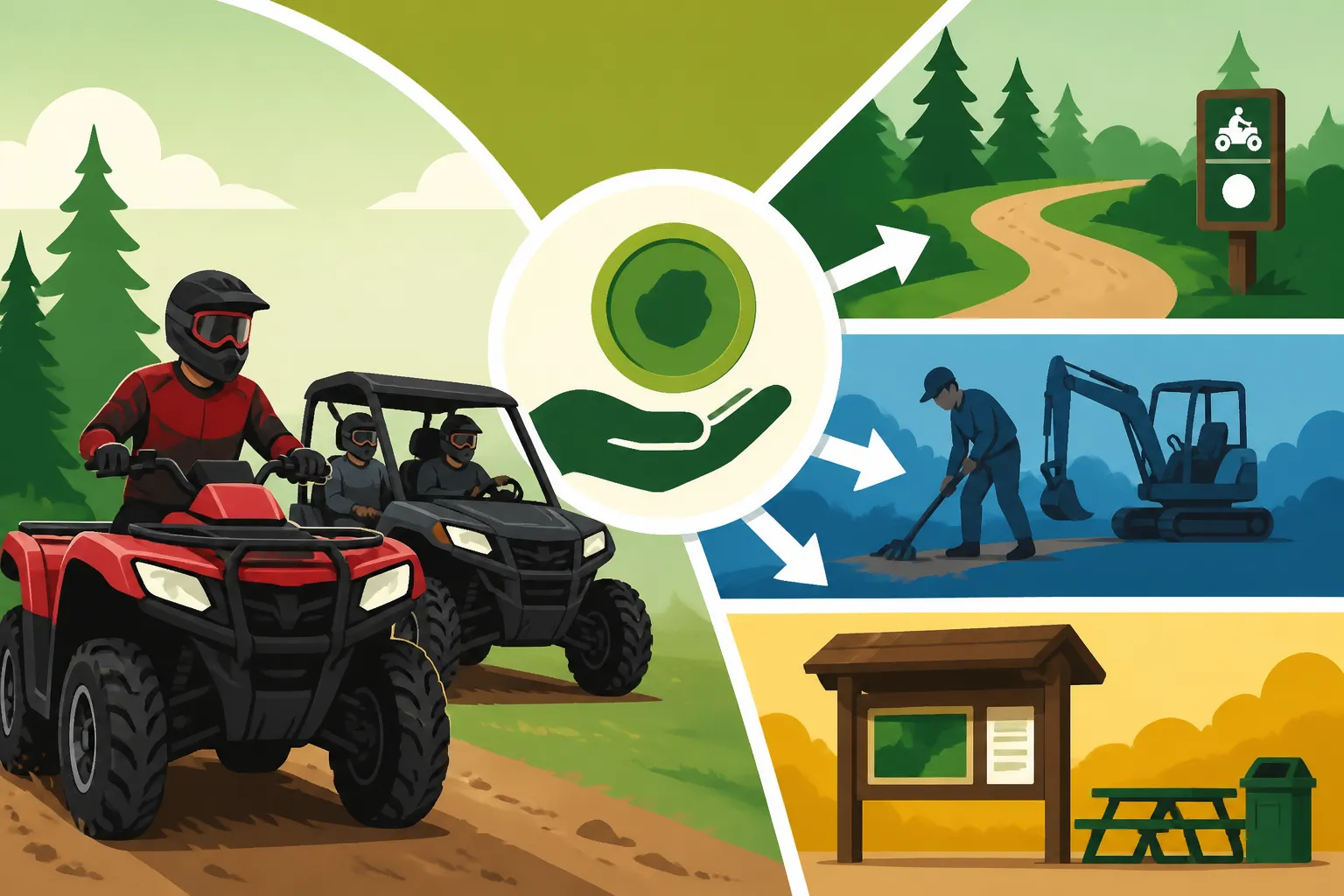
While the ORV registration fee isn't directly channeled into trail building or maintenance, it contributes to the overall legitimacy and framework that allows ORV riding to flourish in Ontario. A robust registration system helps to legitimize the activity, making it easier for clubs and organizations to advocate for more trails and riding opportunities. It demonstrates that ORV owners are identified and accountable, which can positively influence decisions made by municipalities and provincial bodies regarding access and land use.
Consider that the ability to track and identify vehicles helps to manage the ORV population and mitigate issues like theft, which in turn supports the industry and recreational opportunities. While other mechanisms, such as [The OFATV Permit and What It Costs in Ontario] contribute directly to trail maintenance, the foundational registration fee ensures that the machines operating on those trails are legally recognized. It’s about building a recognized and regulated community where all participants are accounted for within the legal parameters of the province.
Why Ontario's ORV Fee Differs from Snowmobile Renewals
It’s a question many powersports enthusiasts ask: "Why do snowmobilers pay an annual fee, but my ATV registration is only once?" This difference often causes confusion and can lead riders to wonder if they're missing something. The truth is, the two systems, while both regulating off-road recreational vehicles, operate under different legislative frameworks and funding models.
The "Forever" Plate Versus Annual Trail Permits
The most glaring difference is that your ORV registration fee provides you with a plate that remains with the machine for its lifetime in Ontario – a "forever" plate, as many call it. There is [No Annual Renewal for an Ontario ORV] permit itself. For snowmobiles, however, you pay an annual permit fee that includes a sticker which must be affixed to the machine each year. This annual snowmobile fee is often tied directly to trail funding and the operation of organized snowmobile clubs.
The core distinction lies in what each fee is primarily intended to support. The ORV registration fee is largely administrative, establishing the machine's identity. The snowmobile permit, on the other hand, is heavily geared towards funding the vast network of groomed snowmobile trails and the clubs that maintain them. This difference highlights varying historical approaches to funding and managing these distinct recreational activities, reflecting different priorities and logistical challenges for each.
Historical Context and Legislative Differences
The divergence in these fee structures stems from different historical legislative and operational models. [How Ontario ORV Registration Differs From a Snowmobile's] is rooted in how these activities evolved. Snowmobiling in Ontario developed with a strong, centralized club system that built and maintained extensive trail networks, necessitating an annual funding mechanism directly from riders. The annual permit essentially acts as a "trail pass" that also serves as proof of registration.
ORVs, while having organized trails through federations like OFATV, historically had a less centralized, province-wide trail system directly funded by a universal annual permit at the provincial registration level. The provincial ORV registration system focuses more on regulatory identification and less on direct, annual trail funding through a provincial fee. This means that while your ORV is perpetually registered, access to organized trails often requires a separate, annual trail permit purchased through a club or federation like OFATV.
The Impact on Trail Access and Funding Models
This difference in fee structure has a significant impact on how trails are funded and accessed. For ORV riders, while your machine is registered for life (administratively), if you wish to ride on the organized, maintained trails, you will need to purchase an [Ontario ATV Trail Permit Cost] from a club or federation. These permits are typically annual and are the primary source of funding for trail maintenance, signage, and club operations.
Here's a quick comparison:
| Feature | Ontario ORV Registration Fee | Ontario Snowmobile Permit Fee |
|---|---|---|
| Frequency | One-time per machine (for registration) | Annual renewal |
| Plate/Sticker | Permanent plate issued | Annual sticker issued with permit |
| Primary Purpose | Administrative identification, legal standing | Registration & direct trail funding |
| Direct Trail Funding | No direct allocation for provincial trails | Significant portion to OFSC trail network |
| Ownership Transfer | Fee does not reapply to new owner | Annual renewal required by new owner |
This table clearly illustrates why [Why Snowmobiles Pay a Trail Sticker and ORVs Do Not] is a matter of distinct funding philosophies and administrative approaches. Your ORV registration fee gets you the legal right to operate a registered machine, but a trail permit gets you access to maintained trails.
The Tangible Benefits for Ontario ORV Riders
While the "fee" aspect might feel like just another cost, the ORV registration actually provides significant, tangible benefits to riders. It's not just about ticking a bureaucratic box; it establishes legal standing, protects your investment, and simplifies various aspects of ORV ownership and use in Ontario.
Predictable Costs and Simplified Ownership
The one-time nature of the [Ontario ATV Registration Cost] means that once you’ve paid it, that particular administrative expense is off your plate for good, as long as you own that specific machine and it remains registered in Ontario. This brings a welcome predictability to your long-term ownership costs, eliminating annual renewal surprises that can crop up with other vehicles. It’s one less thing to budget for each year, which is a major convenience for many riders.
This simplified approach makes owning an ORV in Ontario less cumbersome from a registration standpoint. You don't have to remember annual renewal dates or worry about lapses in registration for the base permit. It allows you to focus your attention (and your wallet) on other aspects of ORV ownership, like maintenance, upgrades, and, if you ride organized trails, your annual [Ontario ATV Trail Permit Cost]. For many, this long-term stability is a clear advantage over systems that demand recurrent payments for the same administrative function.
A Foundation for Legal Riding and Machine Identification
The core benefit of paying your ORV registration fee is that it makes your machine legal to operate in Ontario. Without a valid [The Ontario Vehicle Permit Explained] and plate, your ATV or UTV is essentially an unregistered asset, which carries significant risks and fines if you're caught riding it on public lands or roads where permitted. The fee provides the official recognition that allows you to confidently use your ORV within provincial regulations.
Furthermore, this registration system is crucial for machine identification. Your unique VIN is linked to your name and address, which is invaluable in cases of theft or recovery. If your ORV is stolen, law enforcement can use the registration details to help track it down and verify ownership when it's found. This official record is a fundamental safeguard for your property, something you simply wouldn't have with an unregistered machine. Having that official record through ServiceOntario is a solid piece of evidence of your legitimate ownership.
Protecting Your Investment with Proper Documentation
Proper registration is also an essential component of protecting your financial investment in your ORV. When it comes time to sell your machine, a properly registered vehicle with a clear [Ontario ATV Registration Paperwork] makes the transaction smoother and instills confidence in potential buyers. It confirms that the machine has been legitimately owned and operated, and helps to avoid headaches for both buyer and seller. Without it, selling a machine can be much more difficult, potentially reducing its resale value significantly.
Having your ORV accurately documented in the provincial system is also beneficial for insurance purposes. Insurers typically require proof of registration to provide coverage, and the official permit serves as that proof. When dealing with ownership transfers, clear documentation is paramount. Services like LawDepot can help you generate a professional bill of sale, but having the official provincial registration details to accompany it solidifies the transaction and protects both parties involved. It's about ensuring a clear, legal chain of custody for your valuable asset.
The Consequences of Neglecting Your ORV Registration Fee
It might be tempting to skip the registration fee, especially if you plan to only ride on private property. However, this oversight comes with serious risks and potential repercussions that far outweigh any perceived savings. Operating an unregistered ORV in Ontario can lead to legal troubles, financial penalties, and significant headaches down the road.
Legal Repercussions and Fines
The most immediate consequence of not paying your ORV registration fee and therefore operating an unregistered machine is the risk of legal penalties. If you are caught riding an unregistered ATV or UTV on any public land, road (where permitted), or even on private land where it can be observed by authorities, you could face substantial fines. [Ontario Fines for Riding Without a Permit] can be steep, and ignorance of the law is generally not considered a valid defense. These fines are often much higher than the initial registration fee itself, making the decision to avoid registration a financially unwise one.
Beyond fines, an unregistered machine could be impounded, leading to further costs for towing and storage. Law enforcement takes ORV registration seriously as it's a critical component of ensuring accountability and safety within the recreational riding community. Even if you only intend to use your machine on your own property, transporting it on public roads (e.g., trailering it to a cottage) still requires it to be registered. Don't risk a run-in with the law over something as simple as proper registration.
Challenges with Selling or Transferring Ownership
Trying to sell an unregistered ORV in Ontario is an uphill battle, often met with suspicion and reduced interest from potential buyers. A buyer will want to ensure the machine they are purchasing is legitimate, hasn't been stolen, and can be legally registered in their name. If the machine has never been registered, or its registration is incomplete, the buyer will face the burden of initiating the process and potentially encountering unforeseen hurdles. This usually translates to a lower selling price for you, as the seller, or even an inability to find a buyer at all.
Furthermore, without a proper [Ontario ATV Registration Paperwork] to transfer, the process becomes significantly more complicated. You won't have the official permit to sign over, which is the standard procedure for [Transferring a Permit to a Buyer in Ontario]. This can require extra steps at ServiceOntario, possibly involving statutory declarations or a deeper investigation into the machine's history, especially if there's no clear chain of ownership established. Using a robust bill of sale from a source like LawDepot can help document the transaction, but it won't replace the official provincial registration process.
Insurance Implications for Unregistered Machines
Insurance companies typically require your ORV to be legally registered to provide coverage. If you're involved in an accident with an unregistered machine, your insurance policy could be nullified, leaving you personally liable for damages, injuries, or legal fees. Imagine a scenario where you cause an accident on a trail or a private road; without valid insurance (which requires valid registration), you could be facing a financial disaster.
Even if you have an insurance policy, neglecting the foundational registration could give your insurer grounds to deny a claim, arguing that the vehicle was not legally compliant at the time of the incident. This means that if your unregistered ORV is stolen or severely damaged, you might not receive any payout to cover your loss. The small initial fee for registration is a tiny investment compared to the potentially massive financial fallout of operating an unregistered and uninsured ORV.
Disclaimer
This article is for general informational purposes only and does not constitute professional advice. Laws, prices and regulations vary by location and change over time. Consult a qualified professional for guidance on your specific situation.