Ontario ATV Registration for a Cottage Machine
It's a common scenario in Ontario cottage country: you've got an ATV or UTV tucked away at the lake, perfect for zipping down the dirt road for supplies, hauling firewood, or just exploring the back forty of your own property. Many folks assume that because their machine mostly stays at the cottage, away from major highways or organized trails, it doesn't really need to be registered. This couldn't be further from the truth, and making this assumption can lead to a world of headaches. This guide will walk you through why even your beloved "cottage machine" needs proper Ontario registration and how to get it done.
The Myth of the "Cottage-Only" Exemption: Why Every ORV Needs Registration
Let's be real, the idea of a "cottage machine" being exempt from the usual rules is tempting. You might think, "It's just for private property," or "It only goes a few hundred feet on a quiet road." But the reality is, Ontario's rules for Off-Road Vehicles (ORVs) are quite clear, and they don't really have a special carve-out for your idyllic retreat. Understanding this is the first step to staying compliant and avoiding fines.
Understanding Ontario's Off-Road Vehicle Act
The Off-Road Vehicles Act is the backbone of ORV regulation in Ontario, and it applies broadly across the province. While it might seem counterintuitive for a machine used primarily on private land, the Act's reach is extensive. The moment your ATV or UTV's wheels touch any land that isn't exclusively yours and completely separated from public access—even an unassumed road allowance, a shared private lane, or a municipal road—you're operating in a regulated space. This means registration, and often insurance, becomes mandatory. This isn't just about catching people; it's about safety, accountability, and having a clear record of ownership for every machine.
Many cottage properties abut municipal roads, Crown Land, or even other private properties with shared access points. Even a quick jaunt across the gravel shoulder of a road to get from one part of your property to another can technically put you on public land. The Act doesn't make exceptions for how brief your public land use is. It's about the act of using it. Ignoring this can quickly turn a peaceful cottage ride into a legal issue, especially if you encounter a conservation officer or OPP patrol.
Beyond the By-law: Insurance and Ownership Proof
Beyond the legal requirement to register when using public land, there are immensely practical reasons tied to insurance and ownership proof. In Ontario, mandatory third-party liability insurance is required for all ORVs, regardless of where they are operated. Yes, even if your quad never leaves your own property, you need insurance. This is a huge one, because accidents happen, and if someone (or their property) is injured on your land by your unregistered and uninsured ATV, the financial and legal repercussions can be devastating. This coverage protects you from the potentially ruinous costs of a lawsuit if your machine causes damage or injury. [Ontario ATV Insurance Requirements] details this further.
Furthermore, having your machine registered provides indisputable proof of ownership. Let's say, heaven forbid, your cottage machine gets stolen. Without a valid [Ontario Vehicle Permit Explained] and a corresponding plate, proving it's yours to the police or your insurance company becomes incredibly difficult. Imagine trying to explain to the authorities that the unregistered quad with no official paperwork that just disappeared from your shed actually belongs to you. It's a nightmare scenario. A proper bill of sale is also critical in these situations. Resources like LawDepot offer templates for comprehensive bills of sale that can clearly document the transfer of ownership, even for older machines or those changing hands informally. This is your paper trail, and it’s invaluable for peace of mind.
Registering Your Cottage Machine: A Step-by-Step Guide
The good news is that registering your cottage ATV or UTV isn't an overly complex process, and it's a one-time fee in Ontario for the permit and plate (excluding retail sales tax). The peace of mind and legal protection it provides are absolutely worth the effort.
Gathering Your Essential Documents
Before you head out to ServiceOntario, it's crucial to gather all the necessary paperwork. This is where many people get tripped up, especially with older machines or those acquired through less formal means. At a minimum, you'll need:
-
Proof of Ownership: This is paramount. Ideally, this would be the previous owner's signed [Ontario Vehicle Permit Explained] (the green slip) or a manufacturer's certificate of origin if the machine is brand new. For a private sale, a comprehensive bill of sale is critical. Make sure it clearly states the buyer, seller, date of sale, purchase price, and the ORV's Vehicle Identification Number (VIN). If you don't have the original permit, a detailed bill of sale and perhaps a sworn affidavit might be accepted, but it's always best to have the permit. If you're creating a bill of sale yourself, online legal document services like LawDepot can provide robust, legally sound templates to ensure all necessary information is included, safeguarding both buyer and seller. For more details, check out [Ontario ATV Bill of Sale Requirements].
-
Personal Identification: Bring a valid Ontario driver's licence or other government-issued photo ID. This confirms your identity and ensures the permit is issued correctly.
-
Proof of Insurance: You'll need to show proof that you have the mandatory third-party liability insurance for your ORV. Your insurer will provide an insurance card or policy document for this purpose.
What if you've got an old machine, perhaps inherited or bought decades ago with no paperwork? This is where it gets tricky, but not impossible. You might need to provide a sworn affidavit attesting to ownership, possibly alongside other supporting documents like old repair receipts with the VIN, or even photos showing you with the machine over time. It's always best to call ServiceOntario ahead of time if your paperwork isn't straightforward to understand exactly what they'll accept in your unique situation.
The ServiceOntario Visit and What to Expect
Once your documents are in order, your next stop is a ServiceOntario centre. It's often a good idea to book an appointment online if your local office offers it, as this can save you a lot of waiting time. Walk-ins are usually possible, but be prepared for a queue, especially during peak times.
When you're at the counter, a clerk will review your documents. They'll confirm your identity, verify the ownership details of the ORV, and process the application for your Ontario Vehicle Permit and licence plate. You'll fill out a form that captures the ORV's details and your personal information. Be prepared to pay the one-time registration fee at this point. This fee covers the cost of issuing your permit and plate. You can find up-to-date figures for this fee under [Ontario ORV Permit Cost] and [Ontario ATV Licence Plate Cost]. Once processed, you'll receive your green vehicle permit slip and your new Ontario licence plate right there on the spot. This permit is your official proof that your ORV is registered in Ontario.
Retail Sales Tax: Don't Forget the 13 Percent
Ah, the ever-present retail sales tax (RST). This is often an area of confusion, especially with private sales. In Ontario, when you buy an ORV, whether new from a dealer or used from a private seller, you are generally required to pay 13% RST on the purchase price. For private sales, this tax is not paid to the seller; rather, it's paid directly to ServiceOntario when you register the machine. [13 Percent RST on an Ontario ATV] offers a detailed breakdown.
The amount of tax you pay will be based on the purchase price you declare on your bill of sale. ServiceOntario clerks have the discretion to challenge a declared price if it seems unusually low compared to market value, but generally, they accept what's on your legally binding bill of sale. So, if you bought it for $500, you pay RST on $500.
There are, however, some valuable exemptions to RST that are worth knowing about, particularly in a cottage context where machines often change hands within families or are inherited:
- Family Gift Exemption: If you receive an ORV as a bona fide gift from a close family member (spouse, parent, child, sibling, grandparent, grandchild), you might be exempt from RST. There are specific criteria and paperwork involved to prove it's a true gift, not a sale disguised as one. For more information, check out [The Family Gift Exemption in Ontario].
- Estate Transfer Exemption: If you inherit an ORV through a will or as part of an estate, it's generally exempt from RST. You'll need documentation like a death certificate and relevant probate papers. More details can be found in [Ontario's Estate Transfer Exemption].
- Farm-Use Exemption: If the ORV is used exclusively for farming activities, there can be an exemption. This is less common for typical cottage machines but might apply if your cottage includes significant agricultural land.
It's always best to be prepared for the RST payment and to understand any exemptions that might apply to your situation before you visit ServiceOntario.
Practical Considerations for Cottage Country Riders
Registering your cottage machine is a big step, but there are other practical elements to consider to ensure you're riding safely and legally in Ontario's beautiful cottage country.
Navigating Local By-laws and Trail Access
One of the biggest misconceptions about riding in cottage country is a blanket assumption about road access. While Ontario's Off-Road Vehicles Act provides a framework, individual municipalities—your cottage township, for example—have the power to create their own by-laws regarding ORV use on municipal roads. This means that what's legal in one township might be strictly prohibited in the next. Some municipalities have opened specific roads to ORVs, often to connect trails or provide access to services, while others have kept all roads closed. [Ontario Municipalities That Allow ATVs on Roads] is a helpful resource here.
Always, always check the local municipal by-laws for your specific cottage area. Don't rely on what your neighbour says or what you think you remember from last year. These rules can change. Riding on a closed road, even a quiet gravel lane near your cottage, can lead to significant fines. If you plan to use organized trails, like those maintained by the OFATV or local clubs, you'll also need a trail permit. This is separate from your vehicle registration and contributes to trail maintenance and insurance for the trail network.
Keeping Your Paperwork Safe and Accessible
Once you have your shiny new Ontario Vehicle Permit and licence plate, the responsibility is on you to ensure they're properly displayed and accessible. The licence plate needs to be securely mounted and clearly visible on the rear of your ATV or UTV. For ATVs, this typically means on the rear rack. For UTVs, it might be on a designated bracket or the tailgate. You can get tips on placement from [Ontario ORV Plates and Where They Mount]. It's a good idea to use a robust bracket to prevent it from rattling loose or getting damaged on rough trails.
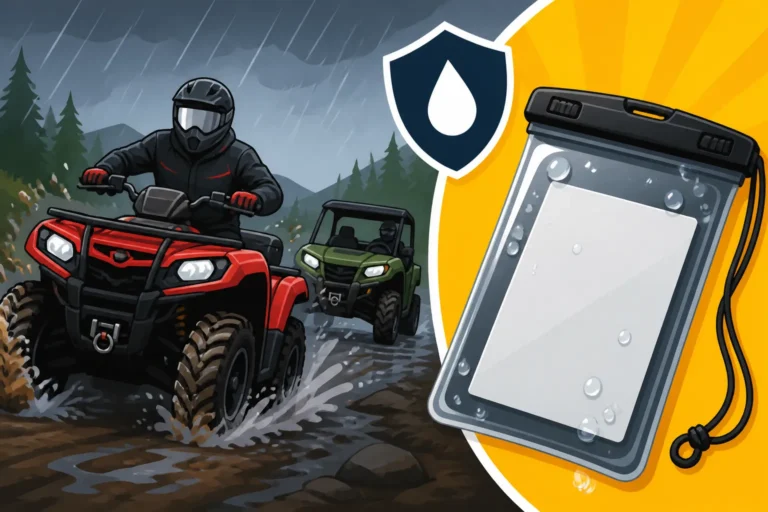
Your physical Ontario Vehicle Permit (the green slip) must be carried with you whenever you're operating the ORV off your private property. While a photocopy might sometimes suffice, the safest bet is to carry the original or a certified true copy. Many riders keep it in a waterproof bag or container in their glove box or a secure storage compartment. [Keeping Your ORV Permit Dry on a Wet Ride] offers great tips on protecting this important document from the elements and wear and tear that comes with off-road adventures. An officer can ask to see it, and not having it available can lead to a ticket.
Insurance: Your Cottage Machine's Best Friend
We touched on it earlier, but it bears repeating: insurance is non-negotiable. It's not just a legal requirement for riding on public land; it's a critical safety net that protects you and your family. Accidents happen, whether it's a collision with another ORV, damage to someone else's property, or even an injury to a passenger on your own machine. Without adequate insurance, you could face immense financial liability.
Make sure your policy covers all scenarios relevant to how you use your cottage machine. Does it cover you on organized trails? What about crossing municipal roads? Are there any exclusions for certain types of riding or specific locations? Talk to your insurance broker specifically about ORV coverage and explain how you intend to use the machine at the cottage. Don't just assume your home insurance or car insurance policy will magically cover your quad. Often, a separate ORV policy or an endorsement to an existing one is required. For more specific insights, read [Ontario Rules for a Machine Kept at a Cottage].
Avoiding Common Mistakes and Ensuring Compliance
Getting your cottage machine properly registered is a proactive step that will save you a lot of grief. But it's also important to understand the consequences of non-compliance and how to handle future ownership changes responsibly.
The Perils of Unregistered Riding
Operating an unregistered or uninsured ORV in Ontario, even for what seems like a harmless short distance, can lead to serious consequences. Imagine you're just taking a quick spin down your cottage road to visit a neighbour, and you're stopped by an OPP officer. The fines for operating an unregistered ORV are substantial, and operating without insurance can be even more severe, potentially leading to fines in the thousands of dollars, vehicle impoundment, and an increase in future insurance premiums. [Riding an Unregistered ATV in Ontario] highlights these risks clearly.
Beyond the immediate financial penalties, there's the long-term impact on your peace of mind and legal standing. If you're involved in an accident while riding an unregistered or uninsured machine, your ability to make a claim or defend against one will be severely hampered. Insurance companies may deny coverage, leaving you personally responsible for all damages and legal costs. It's a risk simply not worth taking, especially when the registration process is relatively simple and a one-time affair.
What to Do When Selling or Transferring a Cottage Machine
Life changes, and eventually, you might decide to sell your cottage machine, give it to a family member, or upgrade to a new model. When this happens, proper transfer of ownership is just as important as the initial registration.
When selling your ATV or UTV, you, as the seller, are responsible for signing over the Ontario Vehicle Permit to the buyer. This involves filling out the "transfer of ownership" section on the green permit slip, including the date of sale, the selling price, and your signature. This signed permit, along with a properly executed bill of sale (again, LawDepot can assist with a robust template for this), is what the buyer will use to register the machine in their name. Make sure you keep a copy of both the signed permit and the bill of sale for your own records.
The buyer then has a legal obligation to register the ORV in their name within six days of the purchase. Failure to do so can result in fines and other penalties if they're caught operating the machine before it's registered. [Six Days From Purchase in Ontario] emphasizes this deadline. It's a smooth process when both parties follow the steps, ensuring a clear chain of title and legal operation for the new owner. For a deeper dive into the process, refer to [Transferring a Permit to a Buyer in Ontario].
| Document/Requirement | Description | Key Action/Tip |
|---|---|---|
| Ontario Vehicle Permit | The green slip proving your ORV is registered. | Keep the original in a waterproof pouch; carry when riding off private property. |
| Licence Plate | Physical plate issued by ServiceOntario. | Mount securely on the rear, ensure visibility. |
| Proof of Ownership | Previous permit or bill of sale. | A detailed bill of sale (e.g., from LawDepot) is crucial for private sales. |
| Valid ID | Ontario driver's licence or other government ID. | Bring to ServiceOntario for registration. |
| Proof of Insurance | Mandatory third-party liability coverage. | Carry your insurance card; ensure coverage for all intended uses. |
| Retail Sales Tax (RST) | 13% tax on purchase price, paid at ServiceOntario (with exemptions). | Be prepared to pay; understand family gift/estate exemptions if applicable. |
| Municipal By-laws | Local rules for ORV use on roads. | Check specific by-laws for your cottage area before riding on roads. |
| Trail Permits | Required for organized OFATV or club trails. | Separate from registration; purchase from OFATV or local clubs as needed. |
Disclaimer
This article is for general informational purposes only and does not constitute professional advice. Laws, prices and regulations vary by location and change over time. Consult a qualified professional for guidance on your specific situation.