The Only Times You Pay ServiceOntario Again
It's easy to assume that once you've registered your ATV or UTV in Ontario, you're done with ServiceOntario payments for good. After all, unlike snowmobiles, ORVs don't have an annual renewal sticker. This common misconception can lead to frustrating surprises down the road. This guide will meticulously break down the specific, sometimes unexpected, scenarios where you'll find yourself reaching for your wallet at ServiceOntario after your initial ORV registration.
Ontario's "One-and-Done" ORV Registration: What It Means for Riders
Many Ontario riders breathe a sigh of relief after their initial trip to ServiceOntario to register their ATV or UTV. The beauty of the province's off-road vehicle system is its relative simplicity once the first hurdle is cleared. You get your permit, you get your plate, and you're good to hit the trails, right? Well, mostly. This initial transaction sets the stage for a long period of ownership without the typical annual fees associated with many other vehicles.
The Initial Registration Investment
When you first bring home a new-to-you ATV or UTV, whether it's factory fresh or a pre-loved machine, your first stop after the purchase (or within six days!) is typically ServiceOntario. This visit is where you officially register the machine in your name. This process involves paying a one-time fee for the [Ontario ATV Registration Cost], which covers the issuance of your [Ontario Vehicle Permit Explained] and the all-important licence plate. This initial payment is a foundational step in establishing legal ownership and ensuring your machine is ready for public land use. Think of it as your entry ticket into the world of Ontario ORV riding.
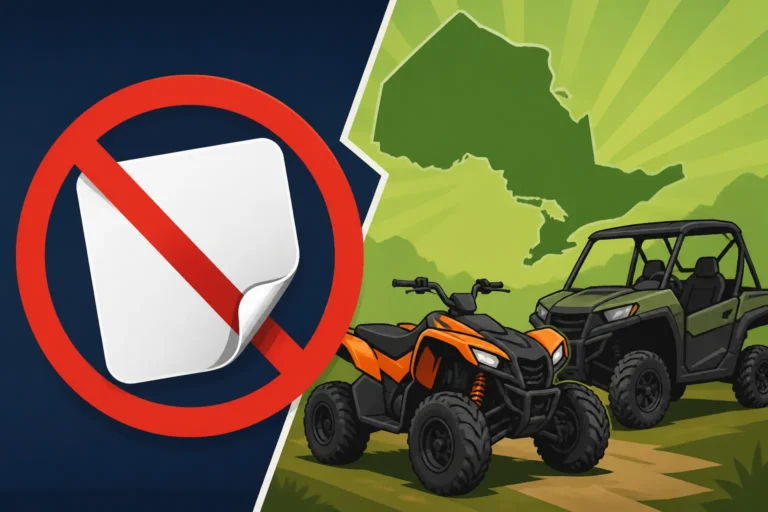
What's particularly appealing to many ORV enthusiasts is that this initial registration is largely a "one-time" investment in terms of the permit itself. There's no ongoing annual renewal fee for the registration permit for ATVs and UTVs in Ontario. Once you've paid that initial fee and received your permit and plate, you're not expected to return year after year just to keep your registration current. This differs significantly from how other recreational vehicles, like snowmobiles, are managed, which often require annual renewals and trail permits. You can read more about this distinction in [No Annual Renewal for an Ontario ORV].
Why No Annual Renewal?
The absence of an annual renewal for your ORV permit is a distinct feature of Ontario's off-road vehicle framework, and it's a point of frequent discussion among riders. Unlike snowmobiles, which have a provincial trail system largely funded through annual trail permits, the funding model for ATV and UTV trail networks often relies more on membership fees to organizations like the Ontario Federation of ATV Clubs (OFATV) for trail maintenance and development. This means the provincial government's ServiceOntario fee is primarily for the administrative act of registration and identification, rather than ongoing trail access or an annual revenue stream for general ORV infrastructure.
This "one-time" payment system streamlines the process for long-term owners, removing the recurring administrative burden and cost. It means you don't have to mark your calendar for a yearly trip to ServiceOntario or stress about an expired sticker on your plate. However, this simplicity can sometimes lead to complacency, making riders forget that "one-time" for the permit doesn't necessarily mean "never again" for all interactions and payments with ServiceOntario. Understanding [Why Snowmobiles Pay a Trail Sticker and ORVs Do Not] helps clarify this difference in approach.
The Specific Scenarios Where You Will Revisit ServiceOntario With Your Wallet
While the initial registration for your ORV is a one-time fee, there are several distinct circumstances that will require you to make another payment at ServiceOntario. These aren't annual renewals, but rather fees for replacement documents, re-registration under new ownership, or the payment of specific taxes. Being aware of these situations can save you from unexpected costs and delays.
Replacing a Lost, Stolen, or Damaged Plate
One of the most common reasons riders find themselves back at ServiceOntario, clutching their wallets, is the need to replace a lost, stolen, or damaged licence plate. Off-roading, by its very nature, can be tough on equipment. Plates can get bent in a rollover, torn off by brush, or simply vibrate loose and disappear somewhere on a long, bumpy trail. Unfortunately, a missing or unreadable plate isn't just an inconvenience; it's a compliance issue.
If your plate goes missing or becomes unreadable, you are legally required to obtain a replacement. This process involves visiting a ServiceOntario centre and paying a fee for a new plate. It's not a renewal, but a specific charge for the physical replacement. The cost is generally minimal compared to the initial registration, but it's still a payment you wouldn't have anticipated. Make sure you understand the process for [Replacing a Lost Ontario ORV Plate] and what [What a Replacement Plate Costs in Ontario] so you're not caught off guard. You'll typically need to explain the circumstances of the loss or damage, and they will issue you a new plate with a new number.
Replacing a Lost, Stolen, or Damaged Ontario Vehicle Permit
Just like your licence plate, your physical Ontario Vehicle Permit is an essential document that you need to keep safe and, in some cases, carry with you when riding. This small piece of paper is your proof of ownership and registration. Despite our best efforts, sometimes these documents get lost, damaged by moisture, or simply wear out from being folded and unfolded countless times. Think of it: getting caught in a sudden downpour, or having it slip out of a pocket on a rough trail – these things happen.
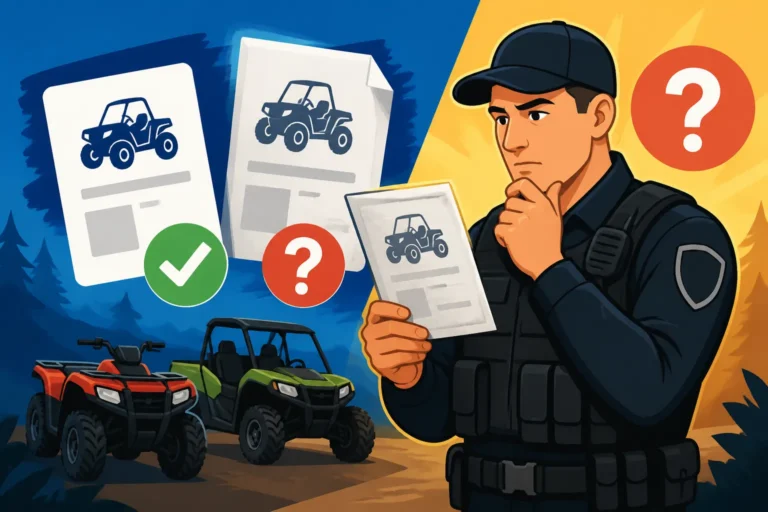
If your ORV permit is lost, stolen, or becomes unreadable, you will need to apply for a replacement at ServiceOntario. Much like the plate, there's a fee associated with the re-issuance of this official document. While it's tempting to just carry a photocopy, an officer might request to see the original, especially if there's any doubt about its authenticity. It's always best to have the original, or at least a certified true copy. For tips on how to safeguard your permit and what constitutes acceptable proof, check out [Keeping Your ORV Permit Dry on a Wet Ride] and [Carrying the Permit or a True Copy]. A replacement permit ensures all your documentation is in order, preventing potential headaches during a roadside or trailside stop.
Re-Registering a Machine After a Change of Ownership
This is perhaps the most significant scenario where you will "pay again" at ServiceOntario, and it's where many new buyers of used ATVs and UTVs get an unexpected shock. While the previous owner might have paid their one-time registration fee, you, as the new owner, must register the machine in your name. This isn't a transfer of the old permit; it's essentially a new initial registration process from your perspective, even for a machine that was previously registered in Ontario.
When you purchase a used ATV or UTV from a private seller, you are responsible for paying the Retail Sales Tax (RST) of 13% on the purchase price. This tax is paid directly to ServiceOntario when you go to register the machine in your name, not to the seller. This payment, along with the standard registration fee for the permit and plate (if a new one is issued), constitutes a substantial "pay again" moment. The province expects new owners to register their purchase within [Six Days From Purchase in Ontario], so don't delay. Understanding [13 Percent RST on an Ontario ATV] and [Retail Sales Tax on an Ontario Private Sale] is crucial for budgeting your used purchase. A clear, legally sound bill of sale, perhaps drafted using a template from a service like LawDepot, is essential to document the purchase price correctly for tax purposes.
Understanding the Costs and What They Cover
Knowing when you'll pay ServiceOntario again is one thing, but understanding what these payments cover helps demystify the process. While the initial registration gets you set up, subsequent payments are typically for administrative services, document replacements, or the collection of sales tax on transactions. These aren't arbitrary charges; they are part of the system designed to maintain proper vehicle records and fund provincial services.
Breakdown of Common Fees
To give you a clearer picture, here's a table summarizing the types of payments you might make to ServiceOntario regarding your ORV after the initial registration. Remember, exact figures can change, so always verify current rates directly with ServiceOntario before you visit.
| Item | What it is | Why you pay | Cost Type (Check ServiceOntario for current rates) |
|---|---|---|---|
| Initial Permit & Plate | First-time registration of an ORV | Establishes ownership, legalizes machine | One-time fee + Retail Sales Tax (RST) |
| Replacement Plate | New physical licence plate | Original lost, stolen, or severely damaged | Small administrative fee |
| Replacement Permit | New physical Ontario Vehicle Permit document | Original lost, stolen, or illegible | Small administrative fee |
| Retail Sales Tax (RST) | Provincial sales tax (currently 13%) | Paid when registering a used ORV purchased from a private seller | Based on purchase price or wholesale value |
These fees are largely administrative, covering the cost of processing your request, printing new documents or plates, and maintaining the vehicle registration database. They ensure that the records associated with your ORV are accurate and current, which is important for law enforcement and for proving ownership if you ever decide to sell the machine.
The Retail Sales Tax on Used Purchases
Let's dive a little deeper into the Retail Sales Tax, as this is often the most substantial "re-payment" for many riders. When you register a used ATV or UTV that you've purchased from a private seller, ServiceOntario acts as the collection agent for the provincial 13% RST. This isn't a fee for the registration itself, but rather a tax on the transaction. Many people, especially first-time used vehicle buyers, are unaware that this tax applies to private sales and must be paid at the ServiceOntario counter. It's a key part of [Ontario RST on an ATV Purchase].
It’s important to understand that the seller does not collect this tax from you. You, the buyer, are responsible for paying it directly to ServiceOntario when you complete the transfer of ownership. This is detailed in [Ontario RST Paid at the Counter, Not to the Seller]. The tax is calculated on the purchase price you declare on your bill of sale. To avoid any discrepancies or delays, it's wise to have a clear, professionally prepared bill of sale. Services like LawDepot can provide templates that help ensure all necessary information, including the agreed-upon price, is properly documented, making your ServiceOntario visit as smooth as possible. Without this, ServiceOntario might assess the tax based on the vehicle's wholesale value, which could be different from what you actually paid.
Proactive Steps to Minimize Future ServiceOntario Trips (and Costs!)
While some payments to ServiceOntario are unavoidable if circumstances dictate, there are many proactive steps you can take to minimize your chances of having to revisit the counter and spend more money. A little foresight and careful handling of your documents and plate can go a long way in preventing unnecessary fees and administrative hassle.
Safeguarding Your Documents and Plate
One of the easiest ways to avoid paying for replacement documents or plates is to simply take good care of the ones you already have. Your Ontario Vehicle Permit is a piece of paper, and like any paper document, it's vulnerable to the elements and wear and tear. Consider carrying it in a waterproof bag or a sealed plastic sleeve, especially when you're out on the trails where mud, water, and sweat are common. While a photocopy is convenient, always ensure you know where the original is stored safely, and only bring a copy on rides if you're prepared to explain to an officer that the original is secure elsewhere. You can learn more about this nuance in [Does a Photocopy of the Permit Satisfy an Officer?].
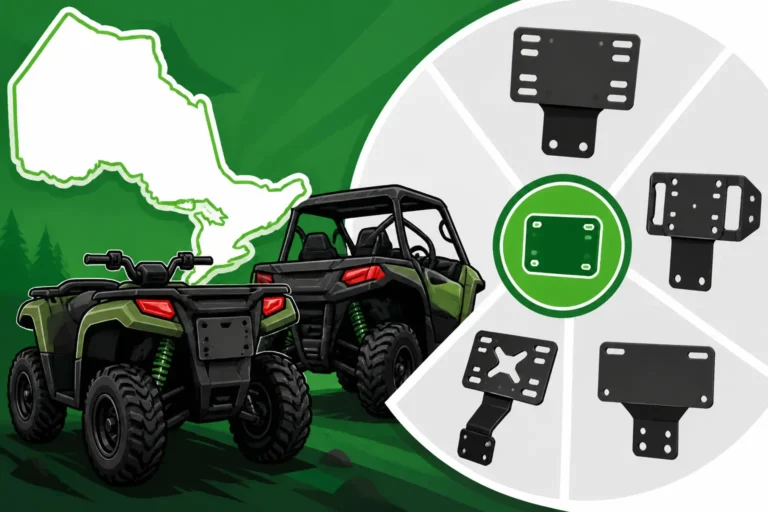
When it comes to your licence plate, prevention is key to avoiding a replacement fee. ORV plates are often mounted in exposed locations, making them susceptible to damage or loss on rugged terrain. Invest in a sturdy licence plate bracket that can withstand the vibrations and impacts of off-road riding. Many aftermarket options are designed to secure the plate more firmly than standard mounts, reducing the risk of it rattling loose or breaking off. Regularly check that your plate is securely fastened and free from obstructions like mud, which could make it unreadable. A quick check before each ride, especially after a particularly rough one, can save you a trip to ServiceOntario and the cost of a new plate. Consider tips from [Ontario ATV Plate Bracket Options] to better protect your plate.
Due Diligence When Buying Used
The biggest potential "pay again" scenario is buying a used ATV or UTV. The costs here can be substantial due to the Retail Sales Tax, so performing thorough due diligence is paramount. Before finalizing any purchase, ensure the seller can provide the original Ontario Vehicle Permit, as this is crucial for transferring ownership into your name. Without it, you could face significant hurdles and potential delays at ServiceOntario trying to prove rightful ownership. Always cross-reference the Vehicle Identification Number (VIN) on the permit with the VIN stamped on the machine itself to confirm they match. Tools like a VIN check can also help identify if the machine has been reported stolen or has any outstanding liens. Learn more about these vital checks in [Ontario ATV VIN Check Before Buying] and [Ontario ATV Lien Check Before Buying].
Beyond verifying the machine and its existing paperwork, it's critical to have a clear and comprehensive bill of sale. This document not only protects you and the seller but also provides the necessary proof of purchase price for ServiceOntario when calculating the Retail Sales Tax. A detailed bill of sale, perhaps generated using an online template from LawDepot, should include the full names and addresses of both parties, the date of sale, the purchase price, and a clear description of the ATV or UTV, including its VIN. Don't simply accept a handwritten note on a scrap of paper; proper documentation is your best defense against future issues and ensures you pay the correct amount of tax without ServiceOntario needing to assess a value for you. Remember that you are responsible for paying the RST, so factor that 13% into your total budget before you agree on a purchase price.
Disclaimer
This article is for general informational purposes only and does not constitute professional advice. Laws, prices and regulations vary by location and change over time. Consult a qualified professional for guidance on your specific situation.