Ontario ATV Lien Check Before Buying
Buying a used ATV or UTV in Ontario can be an exciting adventure, but nothing sours the deal faster than discovering a nasty surprise after you've handed over your hard-earned cash. One of the biggest silent threats is a hidden lien, which can turn your dream machine into a financial nightmare. This guide is here to walk you through exactly what an ATV lien check is, why it's absolutely crucial, and how to perform one effectively before you commit to that purchase.
What Exactly is a Lien and Why Should You Care?
Imagine falling head over heels for a shiny, used quad. You test ride it, it runs perfectly, and the price seems just right. You shake hands, pay the seller, and take your new-to-you machine home. A few months later, out of the blue, someone shows up claiming your ATV belongs to them because the person who sold it to you never finished paying off their loan. This, my friend, is the painful reality of a lien.
A lien, in its simplest form, is a legal claim against an asset – in this case, your potential ATV or UTV – that acts as security for a debt. It means that a creditor, like a bank or a credit union, has a right to that machine until a loan or other obligation is fully paid off. If the person who borrowed the money (the seller) defaults on their payments, the creditor can repossess the ATV, even if it's now in your possession. That's right, even if you bought it in good faith, you could lose both the ATV and the money you paid for it. This is why understanding [Buying a Used ATV in Ontario] is so important, and a lien check is a cornerstone of that process.
Understanding Different Types of Liens
Not all liens are created equal, though they all pose a risk to you as a buyer. The most common type you'll encounter with ATVs and UTVs is a "security interest" lien. This is typically registered when someone finances the purchase of the machine through a bank or a dealership. The lender registers their interest in the ATV with a provincial registry, essentially telling the world, "Hey, we own a piece of this until the loan is clear."
Another less common but equally problematic lien can arise from unpaid judgments. If the previous owner was sued and lost, and they haven't paid what they owe, the court might place a lien on their assets, including their off-road vehicle. There are also sometimes garage keeper's liens, where a repair shop might hold onto a vehicle until the repair bill is paid. Whatever the source, a lien means someone else has a financial claim on the machine, and until that claim is settled, you're buying a headache.
The Real-World Impact of a Hidden Lien
The impact of buying a machine with a hidden lien can be financially devastating and incredibly stressful. Picture this: you've spent a few thousand dollars on an ATV, planning epic weekend rides. Then, you try to register it and find out there's a lien. Or worse, you've been happily riding for months when the original lender tracks down their collateral and demands you surrender the machine. You've lost your money, you've lost the ATV, and you might have no recourse against the seller if they've disappeared or have no assets.
It's not just about losing the machine. A lien can also prevent you from registering the ATV in your name, selling it in the future, or even getting proper insurance coverage. It's a fundamental cloud over ownership. This is precisely why performing an [Ontario ATV VIN Check Before Buying] and a thorough lien search are non-negotiable steps. It's about protecting your investment and your peace of mind.
How to Perform an ATV Lien Check in Ontario
Alright, so you understand why you need to do a lien check. Now, let's talk about how. In Ontario, liens on personal property like ATVs are registered with the Personal Property Security Act (PPSA) registry. This is where you'll go to search for any registered claims against the machine you're considering. It's a straightforward process, but you need to pay attention to the details to ensure you get accurate results.
The Essential Information You'll Need
Before you even start the search, you need one crucial piece of information: the Vehicle Identification Number (VIN). The VIN is like the ATV's unique fingerprint – a 17-character code that identifies that specific machine. Make absolutely sure you get the correct VIN directly from the ATV itself, not just from the seller's documentation, as sometimes errors or intentional misrepresentations can occur on paperwork. It's usually stamped on the frame, often near the steering column, on a crossmember, or under the seat. Double-check it against any existing [Ontario ATV Registration Paperwork].
You'll also need to know the proper spelling of the seller's full legal name, as some searches can be performed by debtor name, though searching by VIN is generally more reliable for vehicles. If the seller is a business, you'll need the exact registered business name. Having both the VIN and the seller's name allows for a more comprehensive search.
Step-by-Step Lien Search Process
Performing a lien check in Ontario is typically done online through the ServiceOntario website, specifically the Personal Property Security Registration (PPSR) portal. Here's a general breakdown of the steps:
- Access the PPSR System: Go to the ServiceOntario website and navigate to their PPSR search section. You'll likely need to create an account or proceed as a guest.
- Choose Your Search Type: You'll typically want to select a "Personal Property Lien Search" or similar option. The key is to search for a lien against specific goods (the ATV).
- Enter the VIN: This is the most critical step. Carefully enter the 17-character VIN. Even a single typo can lead to an inaccurate search result, giving you a false sense of security.
- Consider Adding Debtor Name (Optional but Recommended): If the system allows, add the seller's full legal name. While the VIN is paramount for the vehicle itself, a name search can sometimes uncover broader financial claims against the individual, though these might not directly attach to the ATV.
- Pay the Search Fee: There's a small fee associated with performing a PPSR search. This is a minimal cost compared to the potential loss of buying a lien-encumbered machine.
- Review the Search Report: Once completed, the system will generate a report. This report will list any registered liens against the VIN you provided. It will show the creditor's name, the date the lien was registered, and a brief description of the collateral.
It's a process that usually takes just a few minutes online, but it provides invaluable protection. Don't skip it! Remember, for comprehensive protection beyond just the lien check, you'll also want to understand [Checks Before You Buy a Used Quad in Ontario].
What a Lien Search Report Tells You
When you get your PPSR search report, don't just glance at it. Read it carefully.
- No Results Found: This is the best-case scenario! It means there are no active, registered PPSA liens against that specific VIN in Ontario. You can breathe a sigh of relief on this front.
- Lien Results Found: If results appear, it means there's a registered security interest. The report will detail:
- Secured Party (Creditor): This is the lender who has a claim on the ATV. It could be a bank, credit union, or even a private individual or company.
- Debtor (Borrower): This should be the current or previous owner who took out the loan.
- Registration Date: When the lien was first filed.
- Collateral Description: This confirms that the lien is specifically against the ATV by its VIN.
If you find a lien, it's not necessarily the end of the world for the deal, but it means you absolutely cannot proceed without clarification. We'll cover what to do next in the following section. For structuring your agreement once you're clear, services like LawDepot can provide templates for a solid bill of sale or other legal documents, helping to ensure all parties are protected.
What to Do if a Lien is Discovered
Discovering a lien on a used ATV can feel like a punch to the gut, but don't panic. It's much better to find out now than after you've paid. This is your cue to hit the brakes and proceed with extreme caution. There are specific steps you need to take to protect yourself.
Engaging with the Seller
Your first step is to have a frank conversation with the seller. Present them with the lien search report. It's possible they're genuinely unaware, or they might be attempting to hide the debt. Their reaction will tell you a lot.
- If they're surprised: They might have forgotten about an old loan, or perhaps a previous owner registered a lien that was never properly discharged. They might be willing to work with you to resolve it.
- If they're evasive or defensive: This is a major red flag. If they try to downplay it, say it's "no big deal," or refuse to cooperate, it's usually best to walk away from the deal.
- If they acknowledge it and are cooperative: They should contact their lender (the secured party listed on the lien report) to get the exact outstanding balance.
Under no circumstances should you hand over any money until the lien is fully discharged. The seller is responsible for clearing the lien, not you.
Options for Clearing the Lien
If the seller is cooperative, there are a couple of ways this can be resolved:
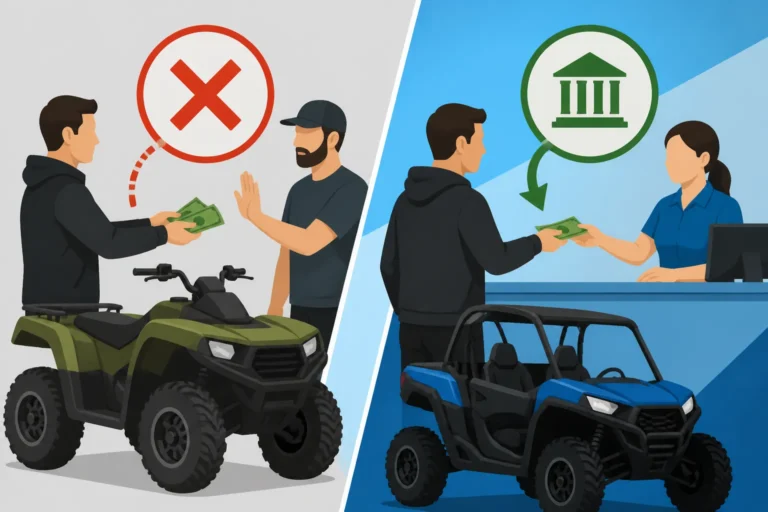
- Seller Pays Off the Lien Directly: The ideal scenario is that the seller pays the outstanding balance to their lender, and the lender then provides a "discharge statement" or "release of security interest." Once the lien is discharged, they should provide you with proof that it's been removed from the PPSR registry. You can then run another PPSR search yourself to verify.
- Paying the Lender Directly (with caution): In some cases, if the outstanding lien amount is less than your agreed-upon purchase price, you could arrange to pay the lender directly. For example, if the ATV is $5,000 and there's a $1,000 lien, you would pay $1,000 to the lender and $4,000 to the seller. This option requires extreme caution and meticulous documentation. You MUST get a written agreement with the seller AND the lender, clearly stating the amounts, who is paying whom, and that the lien will be immediately discharged upon receipt of your payment. You would want a professional, like a lawyer, to draft this kind of agreement. If you're thinking about creating robust legal documents for such a transaction, resources like LawDepot offer templates that can be customized to your specific needs, helping you formalize agreements and protect your interests.
Important Note: Even if you pay the lender directly, ensure the lien is legally discharged from the registry. A simple receipt of payment isn't enough; the lender must file the discharge with ServiceOntario.
The Consequences of Ignoring a Lien
Let's be blunt: ignoring a lien is a recipe for disaster. If you buy an ATV with an active lien and the original owner stops making payments, the lender has every right to come after the machine, even if it's sitting in your garage. You will lose the ATV, and you will not get your money back from the lender. Your only recourse would be to sue the seller, which can be a long, expensive, and often fruitless endeavor if the seller has no assets or has vanished.
The small fee and time it takes to do a lien check are an insignificant investment compared to the potential loss of thousands of dollars and the emotional stress of losing your new quad. When you consider the full picture, from [The Permit Versus a Title in Ontario] to financial liability, a lien check is an absolute must-do before any money changes hands.
Beyond the Lien Check: Other Essential Pre-Purchase Steps
While a lien check is incredibly important, it's just one piece of the puzzle when buying a used ATV or UTV in Ontario. To truly protect yourself and ensure a smooth ownership experience, you need to consider a few other critical steps before signing on the dotted line. Think of it as a comprehensive pre-purchase audit.
Verifying Ownership and Identity
Just because someone has an ATV in their garage doesn't mean they legally own it or have the right to sell it. Always insist on seeing the seller's [Ontario Vehicle Permit Explained] for the ATV. This permit, issued by ServiceOntario, identifies the registered owner. Compare the name on the permit with the seller's government-issued photo ID. If the names don't match, or if the seller claims they're selling it for a friend, walk away. You want to buy directly from the registered owner.
Additionally, make sure the VIN on the vehicle permit matches the VIN physically stamped on the ATV's frame. Discrepancies here could indicate a stolen machine or one that has been illegally altered. If the seller can't produce a permit, or if there are inconsistencies, it's a huge red flag. You need clear [Proving Ownership of an Ontario ATV].
The Importance of a Bill of Sale
Once you're satisfied with the lien check and ownership verification, a comprehensive [Ontario ATV Bill of Sale Requirements] is your next line of defense. This legal document formally records the transaction and protects both buyer and seller. A good bill of sale should include:
- The full legal names and addresses of both buyer and seller.
- A detailed description of the ATV/UTV, including make, model, year, and crucially, the VIN.
- The agreed-upon purchase price.
- The date of the sale.
- A statement that the vehicle is sold "as-is, where-is" (unless specific warranties are agreed upon, which is rare for private sales).
- A statement from the seller confirming that they are the legal owner and that the vehicle is free of all liens and encumbrances (after your lien check has come back clean, of course).
- Signatures of both parties, and ideally, a witness.
You can find templates for a robust bill of sale through resources like LawDepot, ensuring you don't miss any critical details that could save you headaches down the road.
Mechanical Inspection and Test Ride
Beyond the paperwork, don't forget the physical inspection! A lien-free machine with clear ownership is great, but not if it's a mechanical lemon.
- Visual Inspection: Look for signs of damage, rust, leaks, or poor repairs. Check tire condition, suspension components, and the overall fit and finish.
- Test Ride: Always insist on a test ride in a safe, appropriate area. Listen for unusual noises, feel for strange vibrations, check the brakes, steering, and transmission. Does it start easily? Does it idle smoothly? Does it shift gears without issue?
- Professional Inspection: If you're not mechanically inclined, or if it's a significant investment, consider having a qualified mechanic inspect the ATV. They can spot issues that a layperson might miss, potentially saving you from costly repairs later.
Taking all these steps might seem like a lot of work, but buying a used ATV or UTV is a big decision. Doing your due diligence ensures you're getting a safe, legally sound machine that you can enjoy for years to come without any hidden financial surprises lurking around the corner.
| Pre-Purchase Check | Purpose | Key Information/Action Needed | Potential Risk if Skipped |
|---|---|---|---|
| Lien Check | To confirm no outstanding debts against the ATV. | ATV VIN, seller's name, ServiceOntario PPSR search. | Loss of ATV and money if repo'd by creditor. |
| Ownership Verification | To ensure seller is legal owner with right to sell. | Ontario Vehicle Permit, seller's ID, matching VINs. | Buying a stolen machine or one without proper title. |
| Bill of Sale | Legal record of sale and conditions. | Full names, ATV details, price, lien-free statement, signatures. | Disputes over terms, no legal proof of purchase. |
| Mechanical Inspection | To assess machine's physical and mechanical condition. | Visual check, test ride, professional assessment. | Costly repairs, unsafe riding conditions. |
Disclaimer
This article is for general informational purposes only and does not constitute professional advice. Laws, prices and regulations vary by location and change over time. Consult a qualified professional for guidance on your specific situation.