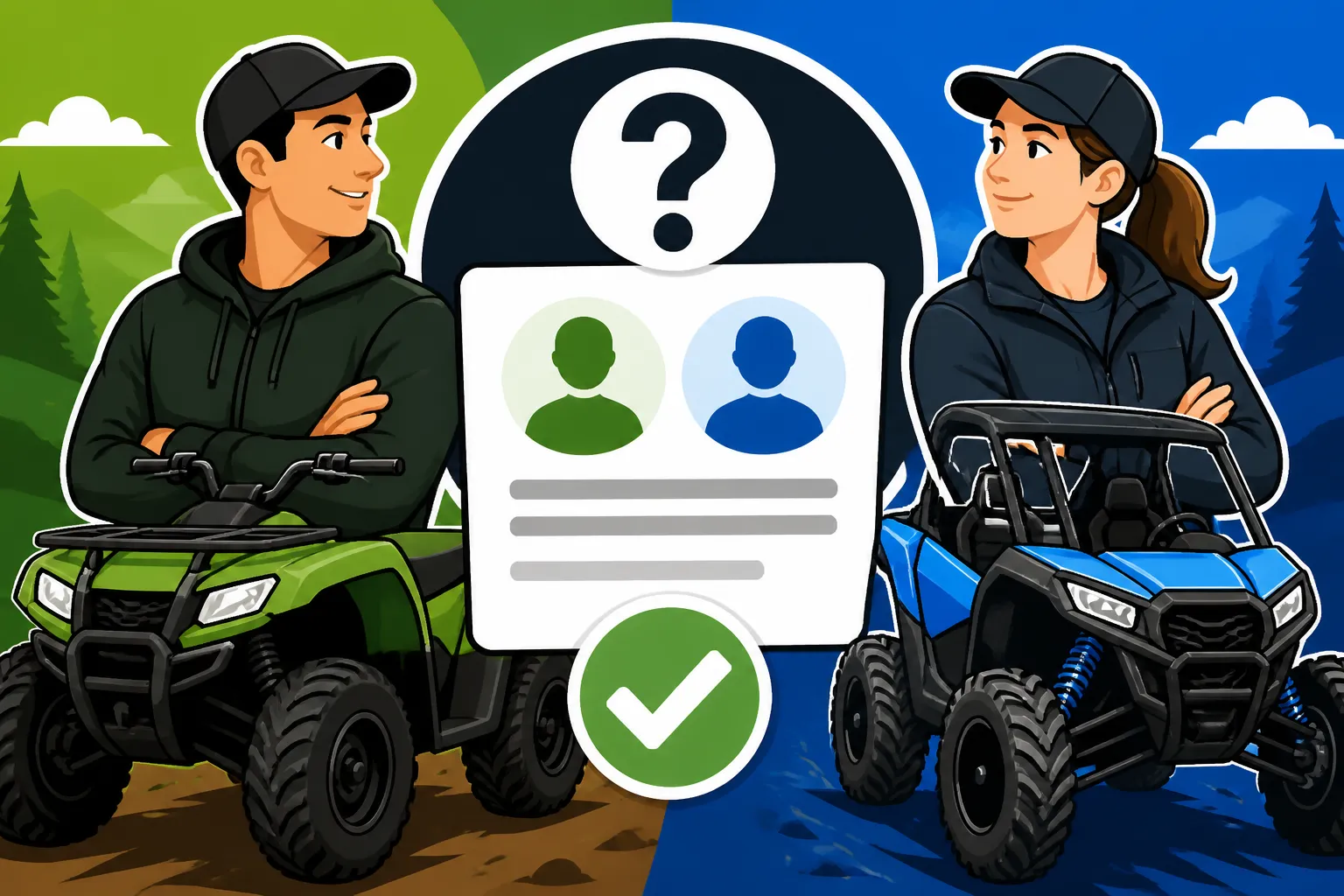
Can Two People Be Named on One ORV Permit?
It's a common question, and one that often leads to a fair bit of head-scratching when you're trying to figure out how to properly register your off-road vehicle (ORV) in Ontario, especially when you've pooled resources with a buddy or your spouse. Many folks assume that if two people own a quad or side-by-side, both names can simply go on the ownership document, just like they might for a house or a bank account. But the reality for an Ontario ORV permit is a little different, and it’s important to understand the specifics to avoid any headaches down the trail. This guide will delve into how Ontario handles ORV permits when multiple parties are involved in ownership.
The Core Question: Can Two People Be Named on One ORV Permit?
This is where the rubber meets the road, or perhaps more accurately, where the tire meets the trail dust. You’d think it would be straightforward, but the provincial regulations for off-road vehicles often operate on a "one owner, one permit" principle when it comes to the official registration document. This can definitely feel counterintuitive for many people, especially if you’re used to joint ownership for other assets.
The 'One Owner, One Permit' Reality in Ontario
In Ontario, when you register an off-road vehicle like an ATV, UTV, or dirt bike, the resulting Ontario Vehicle Permit is typically issued to a single individual or a legally recognized entity, such as a corporation. It's not designed to list multiple individual names directly on the face of the permit itself. This can be a source of frustration, particularly for couples who jointly purchase an ORV, or for groups of friends who go in on a machine together for a cottage property or group rides.
The reasoning behind this often boils down to legal liability and administrative simplicity for ServiceOntario. When there's a clear, single registered owner, it streamlines the process for everything from issuing fines to handling transfers of ownership. Imagine the complexity if multiple parties had to sign off on every single interaction with the province regarding that vehicle! While it might seem less flexible on the surface, this approach ensures a singular point of contact and responsibility for the ORV's registration. It's a system built for clarity, even if it doesn't always align with how real-life ownership is structured amongst friends and family. This single point of contact also makes it clearer for enforcement officers during a roadside check when they ask for [The Ontario Vehicle Permit Explained].
What the Ontario Vehicle Permit Actually Shows
When you look at an actual Ontario Vehicle Permit for an ORV, you'll see key sections dedicated to identifying the vehicle and its registered owner. There will be fields for the vehicle identification number (VIN), make, model, and year, of course. Crucially, there's a specific section for the "Owner" or "Registered Owner." This is where the name of the individual or the official name of the business or corporation that legally holds the permit will appear.
This permit serves as the primary proof of registration and, in many ways, proof of legal ownership for the purpose of operating the ORV on designated trails or permissible roads in Ontario. It's a crucial document that should be [Carrying the Permit or a True Copy] whenever you're out riding. While you and your co-owner might have a strong, shared understanding of who "owns" the machine, the permit itself will only reflect one official owner in the provincial records. This distinction is vital because, in the eyes of the law, the person whose name is on that permit bears the ultimate responsibility for that ORV's registration compliance.
Navigating Shared Ownership Without Joint Permits
So, if the permit only has one name, how do you handle a situation where two or more people truly own an ORV together? This is where the intricacies of personal agreements and, sometimes, formal legal documents come into play. It requires a bit more foresight than simply assuming the province will handle it.
The Registered Owner's Responsibilities and Powers
When one person's name is on the Ontario Vehicle Permit, that individual becomes the registered owner in the eyes of the province. This carries significant responsibilities. For example, any official correspondence from ServiceOntario regarding the ORV will go to this person. More importantly, this individual is ultimately responsible for ensuring the ORV is properly insured, maintained, and operated in accordance with provincial laws. If there are fines or legal issues related to the ORV's operation or registration, the registered owner is typically the first point of contact and liability.
Beyond responsibilities, the registered owner also holds certain powers. They are the one who can legally [Transferring a Permit to a Buyer in Ontario] or [Selling an ATV in Ontario] without requiring the explicit written consent of a co-owner, as far as ServiceOntario is concerned. This means that if you co-own a machine, but your name isn't on the permit, you could theoretically be left in a difficult position if the registered owner decides to sell the ORV without your agreement. This highlights why open communication and, ideally, formal agreements are absolutely essential when embarking on shared ORV ownership.
Formalizing Shared Ownership with Legal Agreements
Given that the Ontario Vehicle Permit won't list both of your names, it becomes incredibly important to formalize your shared ownership in another way. This is where legal agreements, distinct from the provincial registration, become indispensable. Think of a co-ownership agreement as your private contract detailing how you and your co-owner will manage your shared asset. This might sound overly formal for a recreational vehicle, but it can save a lot of heartache and potential disputes down the line.
Such an agreement should clearly outline each party's contribution to the purchase price, how maintenance costs and repairs will be split, who is responsible for insurance premiums, and how the ORV's usage will be scheduled. What happens if one person wants to sell their share? How will disputes be resolved? All these critical questions should be addressed upfront. For creating such documents, you might consider using online legal document services. For instance, platforms like LawDepot offer templates for co-ownership agreements or partnership agreements that can be customized to your specific situation. While these tools are helpful for drafting, for truly complex scenarios or significant investments, it's always wise to consult with a legal professional to ensure your agreement is legally sound and protects all parties involved. This written agreement, alongside your [Ontario ATV Bill of Sale Requirements], forms the true bedrock of your shared ownership.
Practical Implications for Riders and Enforcement
The 'one owner, one permit' rule has direct consequences for how you operate and insure your ORV, especially when multiple people are using it regularly. Understanding these practical implications can help you stay compliant and avoid unnecessary fines or headaches on the trail.
Who Needs to Carry the Permit (or a Copy)
While only one name appears on the permit, anyone operating the ORV must be able to produce the Ontario Vehicle Permit or a true copy upon request by a law enforcement officer. This is a crucial detail that many co-owners overlook. It doesn't matter if you're the registered owner or just borrowing the machine for a ride; if you're in the driver's seat, you need to have that documentation ready.
This means that if you and a friend co-own an ORV, and your friend is the registered owner, you, as the operator, still need to carry a copy of the permit. A clear, legible photocopy is generally acceptable. Just make sure it’s a true representation of the original. Getting caught without it can lead to fines, which is a frustration no one wants after a great day of riding. This also extends to the requirement for [Proving Ownership of an Ontario ATV] if questions arise during an inspection.
Insurance Considerations for Multiple Users
Insurance is another critical area where shared ownership demands careful attention. Even if only one person is listed as the registered owner on the permit, the insurance policy needs to reflect everyone who will be regularly operating the ORV. Failing to do so could lead to significant problems if there's an accident. Imagine a scenario where a co-owner, not listed on the insurance policy, has an incident. The insurer might deny the claim, leaving the registered owner—and potentially the co-owner—on the hook for damages and injuries.
It's paramount to be completely transparent with your insurance provider. When obtaining or updating your [Ontario ATV Insurance Requirements], ensure you list all individuals who will regularly drive the ORV. This might include your spouse, adult children, or business partners. While it might slightly affect your premium, it provides essential peace of mind and ensures proper coverage, which is invaluable. Discussing all potential operators with your insurance broker ensures you’re fully protected and compliant.
Common Scenarios and Workarounds
Let's look at some real-world situations where shared ORV usage is common and how the 'one owner, one permit' rule typically plays out, along with some practical workarounds.
The Family Quad at the Cottage
This is perhaps the most common scenario for shared ORV use in Ontario. A family purchases an ATV or side-by-side that will primarily be kept at the cottage and used by various family members. In this case, one adult family member (often the head of the household or the primary user) is designated as the registered owner on the Ontario Vehicle Permit.
For example, John and Mary own a beautiful cottage near Haliburton. They bought a quad that both of them, along with their adult children, will ride. John decides to put the permit in his name. This means John is the official registered owner. However, when Mary or their kids ride, they must carry a photocopy of that permit. The family also makes sure their insurance policy lists all licensed drivers who will be operating the quad. This setup allows the family to enjoy their machine while adhering to registration rules. It's a pragmatic approach to [Ontario Rules for a Machine Kept at a Cottage].
Business or Rental Fleet Ownership
When it comes to businesses that own multiple ORVs, such as tour operators or rental companies, the registration process handles multi-user scenarios a bit differently but effectively. In these cases, the ORVs are typically registered under the business's legal name, which acts as the single "owner" on the permits.
For instance, "Adventure Rides Inc." might own a fleet of ten side-by-sides. Each side-by-side will have an Ontario Vehicle Permit issued to "Adventure Rides Inc." This centralizes the ownership and responsibility to the corporation itself, rather than individual employees. While the business is the registered owner, individual riders (customers or guides) still need to adhere to all operator requirements, such as having the appropriate licence and carrying proof of the permit. This is a common practice for [Ontario Registration for a Rental Fleet], simplifying fleet management from a legal perspective.
Here's a quick overview of how ownership and usage generally work:
| Feature | Individual/Single Registered Owner | Shared Usage (Single Permit) |
|---|---|---|
| Ontario Vehicle Permit | Issued to one individual or entity | Issued to one individual or entity |
| Legal Ownership | Clear, single owner | Defined by private agreement (e.g., Bill of Sale) |
| Primary Responsibility | Registered owner | Registered owner (legally), shared by agreement (privately) |
| Transfer/Sale | Registered owner can initiate | Registered owner can initiate, but private agreement dictates terms |
| Insurance | Covers registered owner | Must list all regular operators to ensure coverage |
| Carrying Permit | Registered owner carries | Any operator must carry permit or a true copy |
| Dispute Resolution | N/A (single owner) | Governed by private co-ownership agreement |
In conclusion, while the Ontario Vehicle Permit system for ORVs typically names only one individual or entity as the registered owner, this doesn't preclude shared ownership in practice. What it does mean is that co-owners need to be proactive and ensure they have robust private agreements in place to define their rights and responsibilities. Clear communication, a well-drafted co-ownership agreement (perhaps with the help of resources like LawDepot), and a comprehensive insurance policy that covers all regular operators are your best tools for navigating shared ORV ownership successfully in Ontario. This approach helps ensure that everyone involved knows their role and can enjoy the trails without legal surprises.
Disclaimer
This article is for general informational purposes only and does not constitute professional advice. Laws, prices and regulations vary by location and change over time. Consult a qualified professional for guidance on your specific situation.