Riding an ATV on Ontario Roads
It’s a common scenario: you’ve got your ATV or UTV all shined up, your gear is ready, and you just want to get to the trails or even use the road for a short jaunt. But then the questions start swirling – Can I actually ride this thing on the road? What are the rules? Will I get a ticket? This guide is here to cut through the confusion and demystify the regulations for legally operating your off-road vehicle on public roads in Ontario, giving you the confidence to ride responsibly.
The Complex Web of Ontario's ORV Road Rules
Anyone who has tried to figure out Ontario's rules for riding an ATV or UTV on public roads knows it's rarely a straightforward answer. You might hear one thing from a buddy, another from a distant cousin, and something entirely different from a forum online. This patchwork of regulations can feel incredibly frustrating, making you second-guess every turn of the wheel.
Why It Feels So Confusing for Riders
Let’s be honest, Ontario’s rules for off-road vehicles (ORVs) on public roads aren't exactly laid out in a simple, easy-to-digest pamphlet. For many riders, the information seems scattered, sometimes contradictory, and often requires digging through provincial statutes and then cross-referencing with individual municipal bylaws. It’s not like registering your car, where the process is largely uniform across the province. Instead, you're dealing with different rules depending on the type of ORV you own, the specific road you want to use, and even the local township or city you're in. This complexity stems from a historical approach where ORVs were primarily seen as off-road machines, and integrating them into the existing road network has been a gradual, often localized, process. This can leave riders feeling like they're trying to hit a moving target, constantly unsure if their plans align with the latest regulations.
The confusion is compounded by the fact that rules can change, and what was permissible in one area might be strictly forbidden just a few kilometers down the road. You might ride legally through one municipality on an approved connector route, only to unknowingly cross into another where ORVs are entirely prohibited on roads. Without clear signage or a centralized, easily accessible database of all municipal bylaws, it’s a constant challenge for riders to stay on the right side of the law. This uncertainty not only takes away from the enjoyment of riding but also creates anxiety about potential fines or legal issues, making a simple trip feel like navigating a legal minefield.
Understanding the Classes of Off-Road Vehicles
Before you even think about hitting the pavement, it's crucial to understand how Ontario classifies different types of off-road vehicles. This isn't just bureaucratic jargon; these classifications directly impact where and how you can ride on public roads. Broadly speaking, the province differentiates between All-Terrain Vehicles (ATVs), Recreational Off-Highway Vehicles (ROVs), and Off-Road Motorcycles, each with its own set of rules, particularly concerning size, weight, and passenger capacity. Misunderstanding these distinctions can lead to serious legal repercussions, as a machine that looks similar to another might fall into an entirely different regulatory category.
An ATV, as defined by [The ATV Class Under Ontario Regulation 316/03], is generally a single-rider machine, though "two-up" ATVs designed for a driver and one passenger are also common. These vehicles typically have handlebars for steering and are built for a more active, dynamic riding style. They fall under the "Multi-purpose Off-Highway Vehicle" (MPV) class if they meet certain weight and width criteria. In contrast, an ROV, often referred to as a side-by-side or UTV, is more like a miniature car, featuring a steering wheel, foot pedals, and bucket or bench seating. These vehicles are generally larger, heavier, and designed to carry multiple passengers, and they fall under the [Ontario's ROV Class and Its Engine Cap] category, which has different width and weight limits.
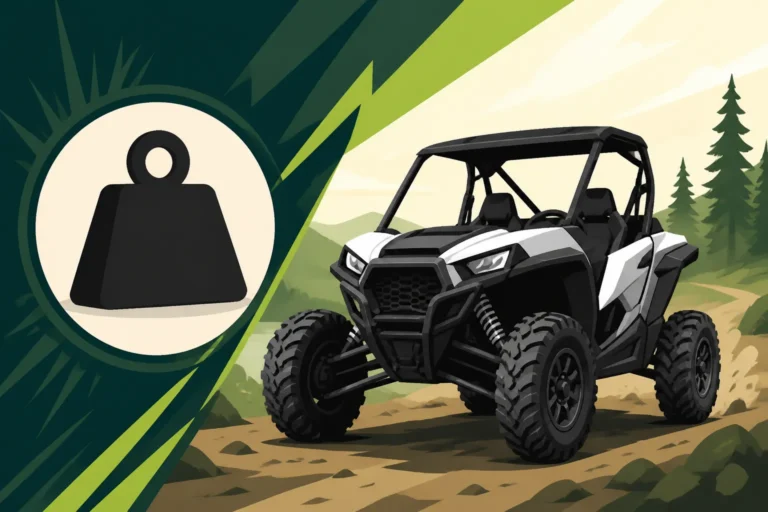
For example, an ATV is typically capped at a maximum width of 1.35 metres and a maximum weight of 610 kilograms to be considered an MPV under road-use regulations. A side-by-side, on the other hand, can be up to 2.03 metres wide and weigh up to 1,700 kilograms to qualify as an ROV. These distinctions are critical because a municipality might open its roads to ATVs but not ROVs, or vice-versa, based on these very specifications. Always know your machine's exact dimensions and classification. [Ontario's MPV Class and Its Weight Limit] outlines these specific limitations, highlighting why two seemingly similar vehicles might be treated completely differently under the law when it comes to road access.
The Evolution of Road Access for ORVs
The ability for off-road vehicles to use Ontario's public roads hasn't always been as it is today. Historically, ORVs were largely confined to private property, dedicated trails, or Crown land, with road use being heavily restricted or outright prohibited. This stance reflected a view that these machines were inherently unsafe for shared road environments, and there was a lack of clear regulatory framework to govern their integration. For many years, riders who dared to venture onto a paved road, even just to cross it, did so at significant legal risk, often facing fines and vehicle impoundment. This created a considerable barrier for riders looking to connect trail systems or access amenities from their off-road routes.
However, over time, a growing recognition of the economic and recreational benefits of ORV tourism, particularly in rural and northern communities, began to shift the provincial government's perspective. Off-road clubs and federations actively lobbied for changes, demonstrating how responsible road access could boost local economies by allowing riders to patronize gas stations, restaurants, and accommodations. This advocacy, combined with advancements in ORV technology making machines safer and more road-capable, led to amendments in the Off-Road Vehicles Act and related regulations. These changes introduced the framework that now allows municipalities to pass bylaws opening their roads to ORVs, effectively decentralizing much of the decision-making process.
This evolution has been a progressive, albeit sometimes slow, opening up of opportunities for riders. While it has introduced the complexity of municipal bylaws, it has also created thousands of kilometers of newly accessible roads for ORV users across the province. This means that older riders might recall a time when road riding was almost entirely forbidden, while newer riders are navigating a landscape where certain roads are explicitly designated for ORV use. Understanding this history helps contextualize the current regulations and underscores the importance of staying informed about local rules, as the trend towards more permissive road access continues to unfold, albeit with specific conditions and limitations in place.
Where You Can (and Can't) Ride on Ontario Roads
One of the most common questions among ATV and UTV enthusiasts in Ontario is, "Where exactly can I ride on the roads?" The answer is rarely simple, as it depends heavily on provincial regulations, the type of road, and crucially, local municipal bylaws. You can't just assume that if one town allows it, the next one will too.
The Crucial Role of Municipal Bylaws
This is arguably the most critical piece of the puzzle: your ability to ride an ORV on a municipal road in Ontario hinges almost entirely on whether the specific municipality has passed a bylaw to permit it. The province sets the overarching framework, but it empowers individual towns, townships, and cities to make the final decision for the roads under their jurisdiction. This means that a road that's perfectly legal for ORV use in one municipality might become instantly illegal the moment you cross an invisible boundary into the next, even if the road itself looks identical. It's a localized approach that demands careful research from every rider.
These bylaws specify which roads are open, what types of ORVs are allowed (ATV, ROV, etc.), and often include specific conditions such as speed limits, hours of operation, and even seasonal restrictions. For instance, some municipalities in cottage country might open specific roads to connect trails or allow access to services, but only during certain seasons or daylight hours. It's not uncommon for these bylaws to dictate whether you can ride on the paved surface, the shoulder, or even the ditch. This highlights why simply knowing the provincial rules isn't enough; you absolutely must [Checking a Township's ORV By-law] before planning your route. Ignoring this step is one of the quickest ways to receive a ticket and potentially have your machine impounded.
To effectively navigate this, riders need to be proactive. Before heading out, especially if exploring a new area, make it a habit to visit the municipality's official website, look for their ORV bylaw, or even call the municipal office directly. Websites like the Ontario Federation of ATV Clubs (OFATV) often provide resources and maps that highlight [Ontario Municipalities That Allow ATVs on Roads], but these resources should always be cross-referenced with the official municipal documents, as bylaws can be updated. Understanding and respecting these local rules isn't just about avoiding fines; it's about being a responsible rider and ensuring that ORV access remains a welcome sight in these communities.
Provincial Highways and Exceptions
Generally speaking, Ontario's major provincial highways, especially the 400-series freeways (like the 401 or QEW), are strictly off-limits to ATVs and UTVs. These highways are designed for high-speed vehicular traffic, and allowing slower-moving, open-air ORVs would pose significant safety risks to both ORV operators and other motorists. The speed differentials, lack of adequate shoulder space for ORVs, and the sheer volume of traffic make them an unsuitable and dangerous environment for off-road vehicles. This rule is firm and consistently enforced across the province, so planning any route that involves extended travel on these major arteries is a non-starter. [Ontario Highways Closed to ORVs] for good reason – public safety is paramount.
However, there are some very limited exceptions to this general prohibition, particularly for some secondary provincial highways, but these are often highly specific and depend on the highway's classification and local conditions. In some cases, parts of certain provincial highways might be designated under what's known as "Schedule B" of Ontario Regulation 316/03, which allows for ORV use on the travelled portion of the road or its shoulder. These are rare instances, usually in remote areas, where the highway serves as a crucial link for ORV trails or access to communities, and traffic volumes are very low. It's vital to remember that these are exceptions, not the rule, and specific signage will indicate where such use is permitted. Always confirm before you ride; never assume. [Schedule B and Ontario's Open Highways] are very specific to certain roads.
Beyond direct travel on provincial highways, ORVs are often permitted to cross certain provincial highways. This is a different scenario entirely, focusing on enabling riders to transition from one trail section to another or from a trail to a service road. When [Ontario ATV Rules for Crossing a Highway], strict conditions usually apply: you must do so at a right angle, yield to all traffic, cross at the nearest safe point, and often, the section of the highway must be within a municipality that has an ORV bylaw in effect. This allows riders to maintain their trail continuity without having to trailer their machines, but it requires extreme caution and adherence to all traffic laws.
Crossing Roads and Road Allowances
Understanding the difference between riding on a road and merely crossing it is critical for any Ontario ORV operator. While continuous travel along many roads may be restricted, the ability to cross a road is often far less constrained, provided it's done safely and legally. The purpose of crossing is typically to connect to another trail section, access private property, or reach a fuel station or service point. When crossing, you must yield to all vehicular traffic, cross at a right angle to the road, and do so at the nearest safe point. This brief interaction with the road is generally seen as necessary for the practical use of ORVs, distinct from using the road as a primary travel route.
Beyond established roads, Ontario also has a vast network of "road allowances" – strips of land, typically 66 feet wide, that were historically set aside for future roads but may never have been built or maintained as such. These can range from well-defined gravel paths to overgrown tracks or even unidentifiable stretches of wilderness. The rules for [Riding a Road Allowance] can be murky and depend heavily on whether the allowance has been "assumed" by the municipality. An assumed road allowance is effectively treated like any other municipal road, subject to local bylaws. If a bylaw allows ORVs on municipal roads, then an assumed road allowance in that municipality might also be open.
However, many road allowances remain "unopened" or "unassumed," meaning they are not maintained by the municipality and are often indistinguishable from Crown land or private property. Riding on [Unopened Road Allowances and Access] can be problematic. While some might argue these fall under general Crown land access rules, the legal status can be ambiguous, and trespassing charges could arise if the allowance crosses private property or is considered part of a protected area. It's always best to err on the side of caution. If in doubt about an unopened road allowance, try to confirm its status with the local municipality or avoid it altogether. The last thing you want is to find yourself in legal trouble over an ambiguous trail.
Equipping Your ORV for Road Legal Riding
Getting your ATV or UTV ready for road use in Ontario isn't just about having a permit; it's about making sure your machine meets specific safety and equipment standards. You can't just pull your trail-ready quad straight onto a municipal road and expect to be compliant. These requirements are in place to ensure your safety and the safety of other road users.
Mandatory Equipment for Road Use
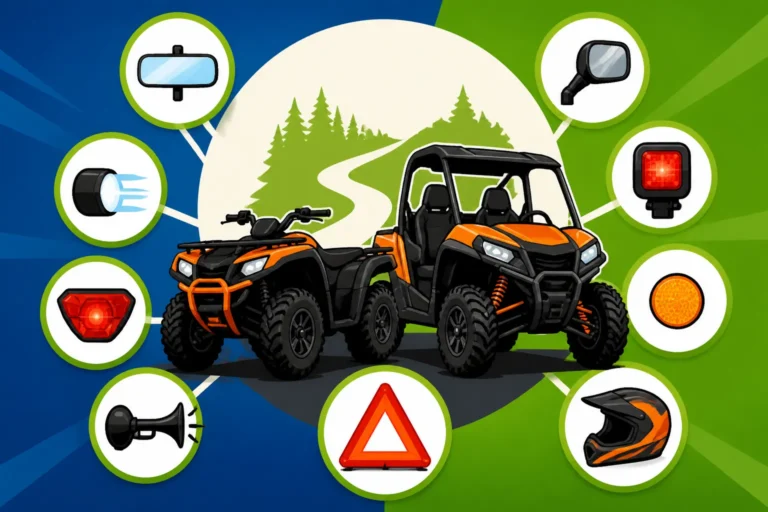
To be considered road-legal in Ontario, your ATV or UTV must be outfitted with specific equipment that goes beyond what’s necessary for purely off-road riding. This isn't just a suggestion; it's a legal requirement, and failing to meet these standards can result in fines and the inability to legally operate your machine on public roads. First and foremost, proper lighting is essential. This includes a working headlight that illuminates the road ahead, at least one red tail light that is visible from the rear, and working brake lights that activate when you apply the brakes. These lights must be operational at all times, especially if riding at dusk, dawn, or night. [Ontario ATV Lighting Requirements] are not optional for road use.
Beyond lighting, you'll need at least one mirror that provides a clear view of the roadway to the rear of your vehicle. While some off-road machines come with small mirrors, ensuring they are functional and provide adequate visibility is key. A working horn is also mandatory for signaling other drivers or pedestrians, adding an important layer of safety in shared road environments. Furthermore, your exhaust system must be equipped with a muffler that is in good working order and prevents excessive noise. Modified or aftermarket exhausts that are excessively loud are generally not permitted on public roads. [Ontario ATV Mirror Requirements] and [Ontario ATV Muffler Rules] are often overlooked but are critical components.
Finally, your tires must be in good condition, suitable for road use, and not excessively worn. While knobby off-road tires are great for mud, they must still be street-legal and not pose a hazard on paved surfaces. Many riders turn to aftermarket suppliers like SuperATV for accessories such as DOT-approved tires, larger mirrors, or integrated light bars that ensure compliance while maintaining off-road capability. When you're making these upgrades, it's wise to consider products designed for both durability and road legality to avoid having to swap components every time you transition between trail and road. Ensuring your machine meets all these requirements is a crucial step before you even think about leaving the yard.
Speed Limits and Road-Specific Restrictions
One of the most commonly misunderstood, and often frustrating, aspects of riding an ORV on Ontario roads is the strict adherence to specific speed limits. Unlike cars, where the posted limit is usually the maximum speed you can travel, ORVs have unique, lower speed caps that apply regardless of the road's posted speed limit for other vehicles. This distinction is crucial and often catches riders off guard, leading to unnecessary fines. It’s not about how fast your machine can go; it’s about how fast the law says it may go in a shared road environment.
Ontario Regulation 316/03, which governs ORV use on roads, sets out two primary speed limits. The first is 20 km/h, which applies when an ORV is being operated on a highway (road) where the posted speed limit for other vehicles is greater than 50 km/h. So, if you're on a rural road with a posted 80 km/h limit, your ATV or UTV is capped at 20 km/h. This is a significant reduction and often feels incredibly slow, but it's a safety measure designed to minimize the speed differential between ORVs and faster-moving traffic. The second limit is 50 km/h, which applies when the ORV is being operated on a highway (road) where the posted speed limit for other vehicles is 50 km/h or less. This means if you're on a residential street with a 40 km/h limit, your ORV is capped at 40 km/h, not 50 km/h. [Ontario's 20 and 50 km/h Speed Limits] are non-negotiable and apply even if other vehicles are moving much faster.
These speed restrictions are often the source of rider frustration, especially when trying to cover even short distances on open roads. It's important to remember that these rules are in place for safety, acknowledging that ORVs handle differently than cars on pavement and offer less protection in the event of a collision. Failing to observe these limits, even briefly, can result in tickets and compromise your safety. The 20 km/h rule on higher-speed roads, specifically, is a point of contention for many, but it is a legal requirement. Riders must fully grasp [Ontario's 20 km/h Rule on a 50 km/h Road] to avoid legal trouble and ensure safe operation in mixed-traffic environments.
Passenger and Roll-Over Protection Considerations
When it comes to carrying passengers on an ATV or UTV on Ontario roads, the rules are very specific and depend heavily on the design of your machine. This isn't a "one-size-fits-all" scenario, and ignoring these regulations can put both the driver and potential passengers at serious risk, along with incurring hefty fines. For single-rider ATVs, the name says it all: they are designed for one operator only. Attempting to carry a passenger on a single-rider ATV on a public road is illegal and extremely dangerous. These machines are not built to safely accommodate the weight distribution or provide proper handholds for a second person, making them unstable and difficult to control.
If you plan to carry a passenger on an ATV, you must use a "two-up" ATV specifically designed by the manufacturer for two occupants. These machines feature an extended seat, passenger footrests, and often grab handles for the passenger to hold onto securely. Even then, the passenger must also adhere to helmet laws and other safety requirements. For UTVs (side-by-sides), which are categorized as Recreational Off-Highway Vehicles (ROVs), the rules are generally more permissive regarding passengers because the machines are designed with multiple seats. However, you can only carry as many passengers as there are manufacturer-installed seating positions and seatbelts. [Ontario ATV Passenger Rules] are very clear on these distinctions.
Crucially, for ROVs, [Seat Belts and Occupant Protection in Ontario] are mandatory. Every occupant, including the driver, must wear a seatbelt, and the machine must be equipped with factory-installed roll-over protection structures (ROPS). This integrated cage system is designed to protect occupants in the event of a roll-over, a significant safety feature that differentiates ROVs from open-top ATVs. While ATVs are not explicitly required to have ROPS (though many riders consider aftermarket roll bars for added safety), the built-in [Roll-Over Protection on an An Ontario ROV] is a fundamental requirement for their road-legal status. Always ensure your machine is appropriately designed for the number of occupants you plan to carry and that all safety features are properly utilized.
Rider Requirements: Licences, Helmets, and Insurance
Beyond the machine itself, the person operating it also has several crucial responsibilities. You can’t just jump on an ATV or UTV and hit the road in Ontario; you need to be properly licensed, equipped with the right safety gear, and have adequate insurance coverage. These aren't suggestions; they are legal necessities designed to ensure the safety of all road users.
The Right Licence for Road Riding
This is a point where many aspiring ORV road riders get tripped up: you cannot operate an ATV or UTV on an open road in Ontario without a valid driver's licence. It's not enough to simply have an ORV permit; you need a licence that qualifies you to operate a motor vehicle on public roads. Specifically, you must hold at least a G2 or M2 licence. This means that a G1 or M1 learner's permit is explicitly not sufficient for road use. The provincial government views the operation of an ORV on public roads as requiring the same level of driving competence and knowledge as operating a car or motorcycle.
The requirement for a G2 or M2 licence underscores the responsibility associated with sharing public roads with other vehicles. A G2 licence indicates that you have passed the initial driving tests and gained some supervised driving experience, while an M2 is the equivalent for motorcycles. These licences signify a basic understanding of road rules, traffic signs, and safe driving practices. If you only possess a G1 [Can You Ride an ATV in Ontario With a G1?] for road use? The answer is a clear no, as G1 licence holders are restricted from operating vehicles on roads without specific supervision and conditions that do not apply to ORVs. This means if you're a new driver or only have a learner's permit, your road riding options for an ORV are currently non-existent.
It's also important to remember that your licence must be valid and not suspended. Operating any motor vehicle, including an ORV, on a public road with a suspended licence can lead to severe penalties, including further licence suspension, significant fines, and even vehicle impoundment. Always carry your valid driver's licence with you when riding on public roads, as law enforcement officers will certainly ask to see it during a roadside check. Understanding [The Licence Ontario Requires on a Road] and specifically [Ontario's G2 and M2 Licence Requirement] is fundamental to legal and responsible ORV operation.
Mandatory Helmet Regulations
Just as with motorcycles, wearing an approved helmet is absolutely mandatory for both the driver and any passengers when riding an ATV or UTV on Ontario roads. This isn't a piece of advice; it's a non-negotiable legal requirement under the Highway Traffic Act and the Off-Road Vehicles Act. The helmet must be designed for motorcycle use, meet recognized safety standards (such as DOT, Snell, ECE, or CSA), and must be properly secured with the chin strap fastened. Wearing a helmet is perhaps the single most important safety measure you can take, offering vital protection in the event of a fall or collision.
The distinction here is critical: simply any head covering won't do. The helmet must be an [Approved Motorcycle Helmets in Ontario], meaning it has passed rigorous testing for impact protection and provides adequate coverage for the head. Novelty helmets or bicycle helmets, while offering some protection, do not meet the legal standards for ORV road use. Riders often find comfort in their off-road specific helmets, and thankfully, most dedicated off-road helmets designed for powersports meet the necessary safety certifications for road use, as long as they carry the proper safety markings. Always double-check your helmet's certifications to ensure compliance.
Furthermore, the chin strap is not just for show; it must be securely fastened. An unfastened or loosely fastened chin strap can render even the best helmet useless in a crash, as it could easily come off your head. Police officers are trained to check for proper helmet use, and an undone chin strap is a common reason for a stop and a ticket, even if you are otherwise compliant. [Chin Straps and Ontario Enforcement] is real, and it's for your safety. Regardless of how short the distance, or how low the speed, if you are on an open road, the helmet goes on, and the strap gets fastened. This is a fundamental aspect of [Helmet Rules for Ontario Riders] and is strictly enforced.
Crucial Insurance Coverage
Operating an ATV or UTV on public roads in Ontario without valid insurance is not just risky; it is illegal and carries severe penalties. Just like cars, all ORVs using public roads must be covered by a motor vehicle liability policy. This insurance protects you financially in the event of an accident, covering damages to property and injuries to others, up to the policy limits. Without it, you could be personally liable for potentially enormous costs, which could lead to financial ruin. [Ontario's Mandatory ORV Insurance] is a cornerstone of responsible powersports operation.
Many riders, especially those who primarily ride off-road, might mistakenly believe that their homeowner's policy or existing auto insurance covers their ORV. While some policies might offer limited coverage for private property use, they almost universally do not extend to liability for road use without a specific endorsement or a dedicated ORV policy. It is crucial to confirm with your insurance provider that your policy explicitly covers your ATV or UTV for operation on public roads in Ontario. You need a valid [The Motor Vehicle Liability Policy Ontario Wants] from a licensed insurer.
The penalties for riding an ORV uninsured on a public road in Ontario are substantial. They can include significant fines (often in the thousands of dollars), vehicle impoundment, and even licence suspension. These penalties are designed to deter uninsured driving and ensure that all road users are adequately protected. Always carry proof of insurance with you, either a physical copy of your insurance card or an electronic version on your phone, as you will be required to present it during a roadside stop. [Ontario Fines for No ATV Insurance] are not to be taken lightly; checking your coverage is just as important as checking your oil before a ride.
Navigating Specific Road Scenarios
Understanding the general rules is one thing, but applying them to specific real-world scenarios you might encounter on your ride is where the rubber meets the road (literally!). Ontario has specific guidelines for how ORVs interact with various parts of the road infrastructure and different times of day.
Riding Shoulders, Ditches, and Sidewalks
The question of where exactly you can position your ORV on a municipal road—be it the main lane, the shoulder, or the ditch—is highly dependent on the local bylaw and provincial regulations. Generally, if a municipality has opened a road to ORVs, the bylaw will specify if you must ride on the paved surface, the shoulder, or even in the adjacent ditch. It’s rarely a universal rule, making local research absolutely paramount. In many cases, if a road is opened, you're expected to ride as far to the right as practicable, much like a cyclist, and in some instances, bylaws might direct you to use the shoulder or a specific lane if designated. [Ontario ATV Rules for Riding a Shoulder] are not consistently applied across all municipalities, necessitating a detailed check of local ordinances.
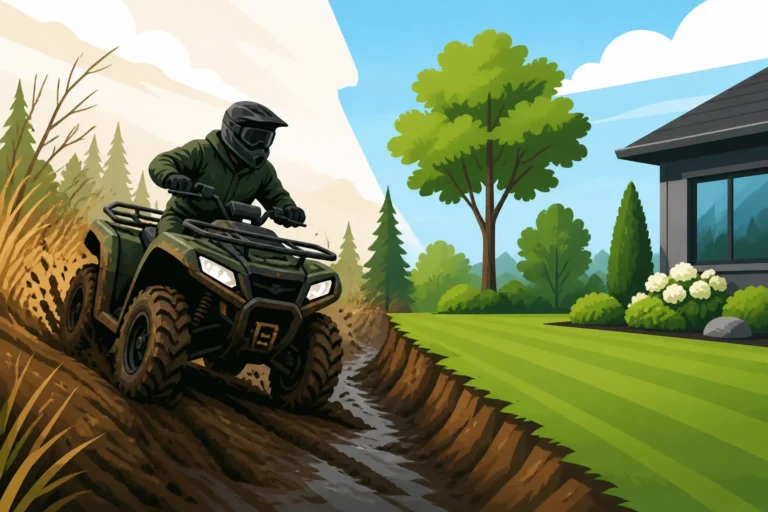
Riding in the ditch is another common point of confusion. While some bylaws might allow for ditch riding in specific circumstances (e.g., to bypass a difficult section or access private property), it is generally not permitted as a continuous travel method on public road allowances. Ditches often contain hidden hazards, vary in depth, and can be dangerous due to proximity to culverts, signs, or other obstacles. Furthermore, a ditch is often considered part of the road allowance, and rules for road allowances apply. [Ontario ATV Rules for Riding a Ditch] typically involve strict conditions, such as riding on the farthest right side and only for specific purposes like crossing or accessing a property entrance, rather than extended travel. This is particularly true where ditches are deep or close to active traffic lanes.
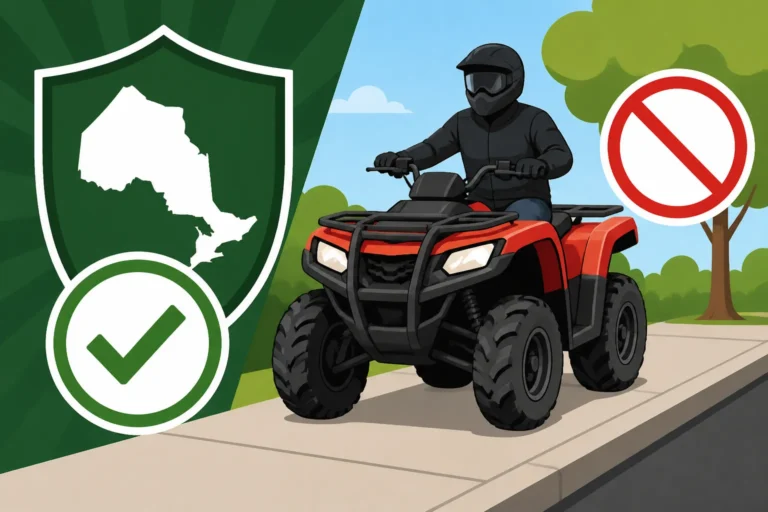
What is almost universally prohibited is riding an ATV or UTV on a sidewalk. Sidewalks are designed exclusively for pedestrian traffic, and operating a motor vehicle, including an ORV, on them poses a significant danger to walkers, runners, and children. It can also damage the infrastructure. Therefore, [Ontario ATV Rules for Riding a Sidewalk] are clear: don't do it. Violating this rule is not only illegal but also incredibly reckless and can lead to serious accidents and hefty fines. Always keep your ORV off pedestrian-designated areas when on public roads.
Riding at Night and Other Time Restrictions
Operating an ATV or UTV on Ontario roads at night, or even during periods of reduced visibility, comes with heightened responsibilities and specific equipment requirements. While your ORV must always have functional headlights, tail lights, and brake lights for any road use, riding after dark demands that these lights are fully effective and well-maintained. This includes ensuring your headlights are properly aimed and sufficiently bright to illuminate the road ahead, and that your tail lights are clearly visible from a significant distance to alert following traffic. Visibility is drastically reduced at night, making it imperative that your machine is seen by others, and you can clearly see your path. [Ontario ATV Rules for Riding at Night] heavily emphasize illumination and visibility, often requiring a higher standard than daytime operation.
Beyond equipment, some municipalities impose additional time restrictions on ORV road use. While provincial rules allow for night riding if the vehicle is properly equipped, local bylaws can override this. It’s not uncommon for a municipality to restrict ORV access to certain roads to daylight hours only, or to specific windows of time (e.g., "dawn to dusk" or certain hours on weekdays and weekends). These restrictions are often put in place to address noise concerns from residents, particularly in more populated areas, or for safety reasons during periods of high traffic or low visibility.
Therefore, even if your machine is fully equipped for night riding, you must still consult the local bylaw to confirm if any [Seasonal and Hourly Limits a Municipality May Set] apply to your chosen route. Ignoring these time limits, even inadvertently, could result in a ticket and sour the experience. Always check the specific municipal bylaw for the roads you plan to use, not just for general ORV permission, but also for any time-of-day or seasonal restrictions that might be in effect, particularly for night rides.
Dealing with Law Enforcement Roadside
Encountering a police officer during an ORV ride on an Ontario road is a distinct possibility, and knowing how to respond is crucial for a smooth interaction. Officers conduct roadside checks to ensure compliance with provincial and municipal regulations, primarily for safety and order. When an officer signals you to stop, do so safely and promptly. Pull over to the right side of the road, turn off your engine, and keep your hands visible. Being polite and cooperative goes a long way in ensuring a positive interaction.
During such a stop, the officer will typically check for several key documents and aspects of your operation. They will first ask for your driver’s licence (G2 or M2 minimum), your ORV permit (registration), and proof of insurance. Ensure you have these documents readily accessible. Many riders choose to carry their [Keeping Your ORV Permit Dry on a Wet Ride] in a waterproof case or a sealed bag in their riding gear to protect it from the elements. While a photocopy of the permit might be acceptable in some instances, having the original or a true copy is always the safest bet. [What an Ontario Officer Checks Roadside] also includes the condition of your machine and your helmet use.
Beyond paperwork, the officer will assess your machine’s equipment to ensure it meets road-legal standards, including working lights, mirrors, horn, and a proper muffler. They will also verify that you and any passengers are wearing approved helmets with chin straps fastened. Lastly, they will confirm you are riding on a road that is explicitly opened to ORVs by municipal bylaw and that you are adhering to all other conditions, such as speed limits or time restrictions. Being prepared with all your documentation, ensuring your machine is compliant, and maintaining a respectful attitude are key to a quick and hassle-free roadside check. Remember, [Carrying the Permit or a True Copy] is your responsibility.
Practical Tips for Planning Your Road Route
Successful and legal ORV road riding in Ontario isn't just about knowing the rules; it's about smart planning. A little preparation goes a long way in preventing headaches, fines, and even dangerous situations, ensuring your ride is enjoyable and stress-free.
Researching Open Roads and By-laws
The absolute cornerstone of any legal ORV road ride in Ontario is thorough research of the specific roads and local bylaws you plan to use. This isn't a step you can skip; guessing or relying on outdated information is a recipe for trouble. Every municipality has the power to open or close its roads to ORVs, and these bylaws are often very detailed, specifying not just which roads, but also the types of ORVs allowed, speed limits, operating hours, and even whether you can use the shoulder or ditch. Failing to [Checking a Township's ORV By-law] can lead to riding illegally, which could result in fines, impoundment, or even accidents.
Start your research by identifying the municipalities your planned route will traverse. Then, visit each municipality's official website. Look for sections related to bylaws, transportation, or recreation, and search specifically for "Off-Road Vehicle bylaw" or "ORV bylaw." Many municipalities that have embraced ORV tourism will prominently display this information. If you can't find it online, don't hesitate to call the municipal clerk's office directly. Organizations like the Ontario Federation of ATV Clubs (OFATV) also provide valuable resources, including maps and lists of ORV-friendly municipalities, but always use these as a starting point and confirm with official municipal sources.
Remember that bylaws can change, so even if you've ridden an area before, it's wise to do a quick check for updates. Some municipalities, particularly those with active trail clubs, are keen to publish their bylaws and highlight how [How an Ontario Municipality Opts In] to ORV use, often with maps showing open roads. This proactive approach makes it easier for riders to comply. Taking the time to do this research not only keeps you legal but also helps you plan the most efficient and enjoyable route, connecting trails and services seamlessly.
Staging Areas and Connecting Trails
For most ORV riders, using Ontario roads isn't about long-distance highway cruising; it's about strategically connecting trail sections or getting from a staging area to a trailhead or local services. Roads often serve as vital links, allowing riders to extend their range, access fuel, food, or accommodation, and avoid the need to trailer their machines for short distances. Planning your route with this in mind means identifying safe and legal staging areas where you can unload your truck and trailer, and then mapping out the shortest, most compliant road sections to reach your desired trail network.
When looking for staging areas, consider designated public parking lots, specific trail-side parking provided by local clubs, or arrangements made with local businesses. Always ensure your truck and trailer are parked legally and not obstructing traffic or private access. From there, your road route will typically be a short, carefully chosen segment designed to bridge gaps. This might involve riding a few kilometers on an open municipal road to reach the next section of the OFATV trail system or to get to a gas station in a small town. This is where the ability to use specific road sections, even with the speed restrictions, becomes incredibly valuable.
Riders can also utilize various products from companies like SuperATV, such as cargo boxes, racks, or even fuel cans designed to mount securely on their ORVs. These accessories are perfect for mixed-use rides, ensuring your gear, supplies, and any extra fuel remain safe and secure as you transition between rugged trails and paved roads. Having these practical solutions on your machine means you're prepared for whatever the ride throws at you, whether it's navigating an urban street or tackling a challenging off-road segment. Efficient staging and smart use of road connectors are key to maximizing your riding experience without the constant hassle of trailering.
Rider Etiquette and Public Perception
Riding an ATV or UTV on public roads in Ontario is a privilege, not an inherent right, and maintaining that privilege largely depends on the collective behavior of the ORV community. Every time you ride on a municipal road, you are an ambassador for the sport. Responsible rider etiquette plays a crucial role in shaping public perception and influencing whether more municipalities choose to open their roads to ORVs or tighten existing restrictions. A few negative experiences with noisy or reckless riders can quickly turn local residents and councils against ORV access, jeopardizing opportunities for everyone.
Therefore, it's vital to prioritize respectful and mindful riding practices. Keep your speed to the legal limits (20 or 50 km/h, remember!), even if the road feels open and clear. Avoid excessive noise by ensuring your muffler is in good working order and not modified to be louder than stock. When passing homes, farms, or other road users, reduce your speed further and minimize engine noise. Be courteous to pedestrians, cyclists, and other drivers; yield the right-of-way, give plenty of space, and offer a friendly wave. Excessive dust generation on gravel roads or mud splashing from a puddle can also create negative impressions, so try to mitigate these effects where possible.
Operating your ORV quietly and respectfully contributes significantly to building positive relationships with communities and residents. Many municipalities have chosen to open their roads because of the economic benefits ORV tourism brings, but this goodwill can quickly erode if local residents feel their quality of life is negatively impacted. By demonstrating responsible and considerate behavior, ORV riders can help ensure continued and even expanded access to roads, creating a more welcoming environment for the sport across Ontario. Remember, you are part of a larger community, and your actions reflect on all riders.
| Feature | ATV (All-Terrain Vehicle) | ROV (Recreational Off-Highway Vehicle – UTV/Side-by-Side) |
|---|---|---|
| Weight Limit | Up to 610 kg (MPV class) | Up to 1,700 kg (ROV class) |
| Width Limit | Up to 1.35 metres (MPV class) | Up to 2.03 metres (ROV class) |
| Passengers | Single-rider ATVs cannot carry passengers on roads; two-up ATVs can if designed for it. | Can carry passengers up to the manufacturer's design capacity. Must have seatbelts. |
| Roll-Over Protection | Not required (though good practice for safety). | Mandatory (usually built-in ROPS). |
| Steering | Handlebars | Steering wheel |
| Equipment | Lights, horn, muffler, mirrors, tires, permit, insurance | Lights, horn, muffler, mirrors, tires, permit, insurance, seatbelts |
| Licence | Minimum G2 or M2 | Minimum G2 or M2 |
| Helmet | Mandatory for driver and passenger | Mandatory for driver and passenger |
Disclaimer
This article is for general informational purposes only and does not constitute professional advice. Laws, prices and regulations vary by location and change over time. Consult a qualified professional for guidance on your specific situation.