Ontario ATV Rules for Riding a Sidewalk
It’s a common frustration for many ATV and UTV owners in Ontario: you need to get from point A to point B, maybe just a short distance, and the paved road feels daunting or perhaps even illegal. You might glance at that empty sidewalk, thinking it’s a safer, quicker option, especially if you’re just trying to get to a trail or a friend’s property. But taking that shortcut onto a sidewalk with your off-road vehicle can lead to serious trouble, not to mention putting pedestrians at risk. This guide will walk you through exactly why sidewalks are off-limits for ATVs and UTVs in Ontario, where you can legally ride, and what could happen if you choose to break the rules.
Why Sidewalks Are Strictly Off-Limits for ATVs and UTVs
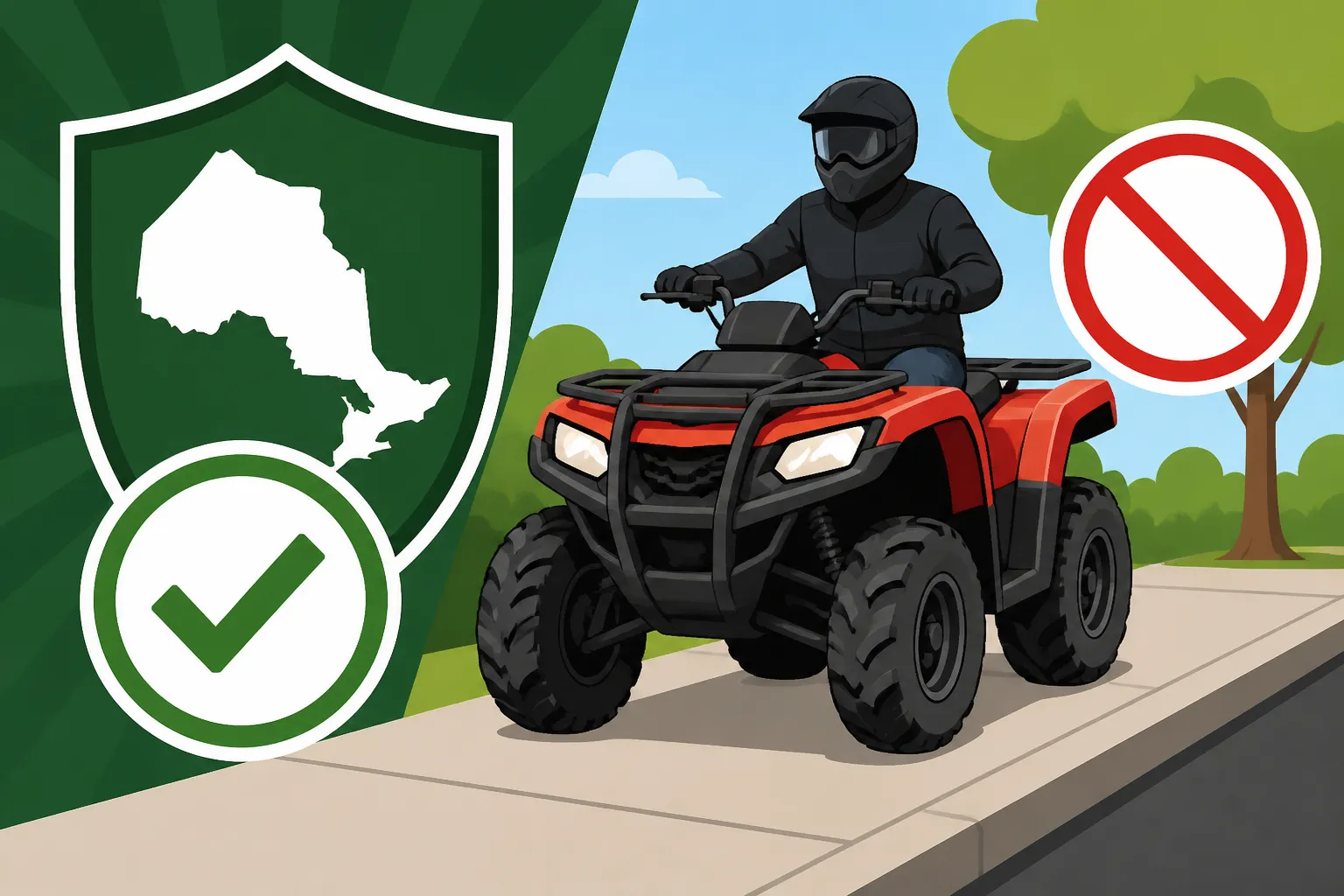
Let's be absolutely clear from the outset: riding an ATV or UTV on a sidewalk in Ontario is illegal. Period. It's not a grey area, and there are no special circumstances where it becomes permissible. While the idea of a quick, quiet route away from traffic might seem appealing, sidewalks are designated spaces for pedestrians, and introducing a motorized vehicle, especially one as robust as an ATV or UTV, creates immediate and serious hazards.
The Law's Perspective: Protecting Pedestrians
The primary reason sidewalks are off-limits is public safety. Sidewalks are part of the 'highway' in a broad legal sense under Ontario's Highway Traffic Act, but they are specifically reserved for foot traffic. When you operate an off-road vehicle on a sidewalk, you're not just bending a rule; you're directly contravening the purpose of that public space. Imagine a child running out from behind a bush or an elderly person with a walker—the speed, weight, and blind spots of an ATV or UTV make them inherently dangerous in such close quarters with pedestrians. The law is designed to protect vulnerable road users, and that includes those walking.
You might argue that you’d go slowly, or that the sidewalk is deserted. However, laws are made to cover all scenarios, not just ideal ones. The potential for a serious accident, injury, or even a fatality is simply too high. This isn't like riding your bike on the sidewalk, where children are often permitted; an ATV or UTV is a powerful machine, and its presence on a sidewalk immediately escalates the risk dramatically for everyone involved.
Vehicle Design Versus Pedestrian Spaces
Think about the design of your ATV or UTV. These machines, whether you’re riding a nimble sport quad or a utility side-by-side with aftermarket upgrades from a company like SuperATV, are built for rugged terrain, trails, and sometimes, designated roadways. They have aggressive tires, powerful engines, and a suspension designed to absorb impacts from rocks and roots, not to glide silently past storefronts. This design makes them unsuitable for the smooth, narrow confines of a sidewalk.
The width of most ATVs and certainly UTVs also makes navigating a sidewalk impossible without veering into private property or putting the machine at an awkward angle that increases instability. There’s often no room to pass a pedestrian safely, forcing them off the sidewalk into traffic or onto private lawns. This creates a very confrontational and dangerous situation, completely contrary to the respectful sharing of public spaces that Ontario law tries to promote.
Penalties and Risks for Riding on a Sidewalk
Ignoring the rules about riding on sidewalks comes with a hefty price, both legally and financially. It’s not just a slap on the wrist; there can be significant fines, potential damage to your vehicle, and even more severe legal repercussions if an accident occurs.
Fines and Charges from Law Enforcement
If you’re caught riding your ATV or UTV on a sidewalk in Ontario, you can expect to be stopped by law enforcement. The charges could fall under various sections of the Highway Traffic Act or even municipal bylaws that specifically prohibit motorized vehicles on sidewalks. Fines can be substantial, often in the hundreds of dollars, and accumulate quickly if multiple infractions are noted, such as not having a valid [Ontario ATV Trail Permit Cost] or proper insurance.
Beyond the initial fine, you could also face charges for careless driving if your actions are deemed reckless, which carries even higher penalties, demerit points, and could even impact your ability to drive other vehicles. It's important to remember that police officers have the discretion to issue charges based on their assessment of the situation, and riding a heavy, powerful machine where pedestrians are expected to be certainly wouldn't be looked upon favourably.
Insurance Implications and Liability
This is where things can get truly devastating. Your ATV or UTV insurance policy is designed to cover you for legitimate use, typically on trails, private property with permission, or legally designated roads. Riding on a sidewalk falls squarely outside of what most, if not all, insurance policies would consider "legal operation." If you cause an accident while riding on a sidewalk, your insurance company could deny your claim entirely. This means you would be personally responsible for all damages, injuries, and legal fees.
Imagine hitting a pedestrian, even at a low speed, or causing damage to private property like a fence or garden wall. The costs associated with medical bills, property repair, and potential lawsuits could be astronomical, easily reaching tens or hundreds of thousands of dollars. An ATV, even if it has robust protection from a company like SuperATV, won't save you from the financial fallout of an uninsured accident on a sidewalk. It’s a gamble that simply isn't worth the perceived convenience of a shortcut.
Where ATVs and UTVs Can Legally Ride in Ontario
Given that sidewalks are a definite no-go, it’s crucial for every ATV and UTV owner in Ontario to understand where they can legally and safely operate their machines. The province offers a wide array of legitimate riding opportunities, from dedicated trails to specific municipal roads, all within a framework designed to ensure safety and responsible use.
Designated Trails and Crown Land
Ontario boasts an extensive network of off-road trails managed by organizations like the OFATV (Ontario Federation of ATV Clubs) and EOTA (Eastern Ontario Trails Alliance). These trails are specifically designed for off-road vehicles, offering varying levels of challenge and scenery. To ride on these organized trails, you'll typically need to purchase an [Ontario ATV Trail Permits Explained], which helps fund trail maintenance and insurance for the network. This is the safest and most enjoyable way to experience off-road riding in the province, as the trails are maintained, marked, and monitored.
Additionally, certain areas of Crown Land in Ontario are open to ATVs and UTVs under the "free use" policy of the Public Lands Act, provided there are no specific restrictions or closures in place. Riders must always be diligent in confirming the status of Crown Land before heading out, as rules can change, and sensitive environmental areas are often off-limits. Riding on Crown Land still requires your machine to be registered and insured, and you must adhere to all environmental regulations, such as staying on existing trails and not disturbing wildlife.
Permitted Municipal Roads
While most roads are off-limits for ATVs and UTVs, many municipalities across Ontario have passed bylaws that allow these vehicles on specific municipal roads or sections of roads. This is generally done to connect trail systems, allow access to services, or enable riders to get from their homes to a trailhead. These roads will usually have signage indicating that ORVs are permitted. It's vital to check local bylaws, as rules can vary greatly from one town or township to the next. For instance, some roads may have speed restrictions or specific hours of operation for ORVs.
When riding on these designated roads, your ATV or UTV must meet specific equipment requirements to be considered "road legal." This includes proper lighting, mirrors, and often a visible license plate. You'll also need a valid driver's license (at least a G2 or M2 for most machines) and current [Ontario ATV Insurance Requirements]. Always be aware of other traffic and share the road respectfully.
Navigating the Rules: When in Doubt, Check
Understanding the regulations governing ATV and UTV use in Ontario can sometimes feel like a maze, but it’s a necessary part of being a responsible rider. There's a clear distinction between where you can safely and legally enjoy your machine and areas that are simply out of bounds.
Table of Permitted vs. Prohibited Riding Areas
To help clarify, here's a quick overview of common areas and their legal status for ATVs and UTVs in Ontario:
| Location Type | Legal for ATVs/UTVs? | Key Considerations |
|---|---|---|
| Sidewalks | No | Designated for pedestrians. High risk of injury, significant fines, insurance invalidation. |
| Dedicated ORV Trails | Yes | Requires an [Ontario ATV Trail Permit Cost]. Maintained, signed, and insured. Best experience. |
| Designated Municipal Roads | Yes (with caveats) | Check local bylaws. Requires road-legal equipment (lights, mirrors), valid license (G2/M2), insurance. Often used to connect trails. |
| Crown Land | Yes (with caveats) | "Free use" under Public Lands Act, but always verify local restrictions and environmental sensitivities. Must be registered and insured. |
| Private Property | Yes | Only with explicit permission from the landowner. Trespassing laws apply if no permission. |
| Provincial Parks | No | Generally prohibited, as they are protected natural spaces. |
| Rail Trails (Converted) | Yes (with caveats) | Many rail trails are part of the OFATV or EOTA network; permit required. Others may be restricted to non-motorized use; always check signage. |
| Highway Shoulders/Ditches | Yes (with caveats) | [Ontario ATV Rules for Riding a Ditch] allows riding in unmaintained portions of ditches adjacent to highways, but not on the paved shoulder or within the travelled portion of the road itself. Specific rules apply. |
Always Prioritize Safety and Legality
Before every ride, take a moment to confirm your route and the regulations that apply to it. Ignorance of the law is never an excuse, and in the world of ATV and UTV riding, the consequences can be severe. Equip your machine properly for wherever you plan to ride, whether it’s with enhanced suspension for tough trails or proper lighting for a short jaunt on an approved road. Accessories from brands like SuperATV can significantly improve your machine's performance and safety for legitimate riding, but they can't change where it's legal to operate.
If you’re unsure about a specific road or area, the best course of action is always to inquire with the local municipality or the relevant trail organization. They can provide up-to-date information on bylaws and restrictions. Being a responsible rider means respecting the law, protecting the environment, and ensuring the safety of yourself and everyone else, whether they're on foot, in a car, or on another ORV. Stick to the trails and approved roads, and you'll keep yourself out of trouble and ensure the future of ATV and UTV riding in Ontario.
Disclaimer
This article is for general informational purposes only and does not constitute professional advice. Laws, prices and regulations vary by location and change over time. Consult a qualified professional for guidance on your specific situation.