What an Ontario Officer Checks Roadside
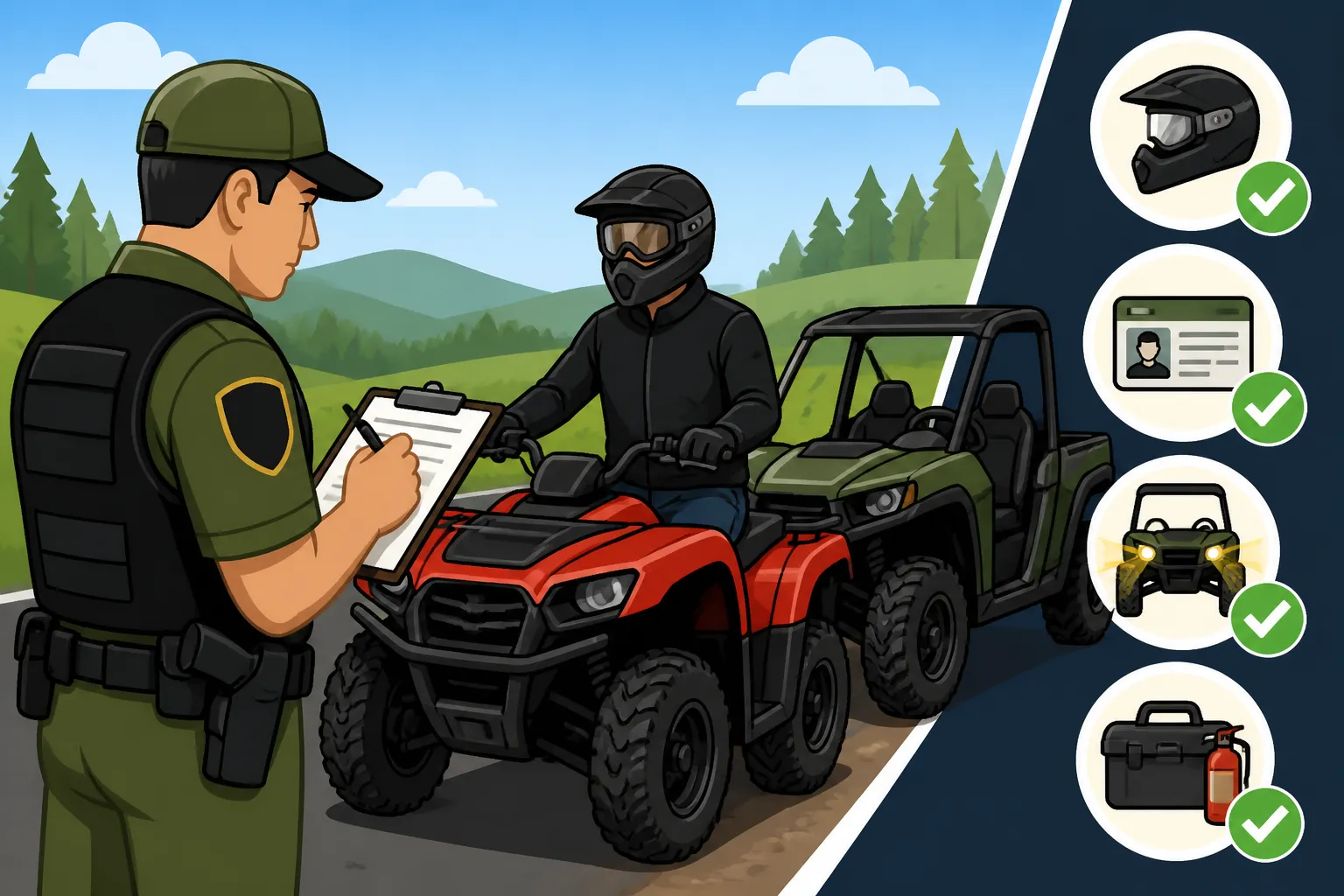
Picture this: you're out enjoying a fantastic ride on your ATV or UTV, soaking in the Ontario scenery, maybe hitting a municipal road to connect trails, when suddenly, you see those flashing lights in your rearview. Your heart might do a little skip-beat. It's a scenario many of us dread, but knowing exactly what an Ontario officer is looking for can turn that anxiety into confidence. This guide will walk you through every common check an Ontario Provincial Police (OPP) officer, municipal police, or even a Conservation Officer might perform during a roadside stop, giving you the peace of mind to ride responsibly and legally.
Why Roadside Stops Happen for ORVs in Ontario
It's not always about doing something wrong; sometimes, it's just about ensuring everyone is riding safely and legally. Roadside stops for Off-Road Vehicles (ORVs) in Ontario are a crucial part of maintaining safety on trails and shared roads, and officers have a few reasons for pulling riders over.
Visible Infractions
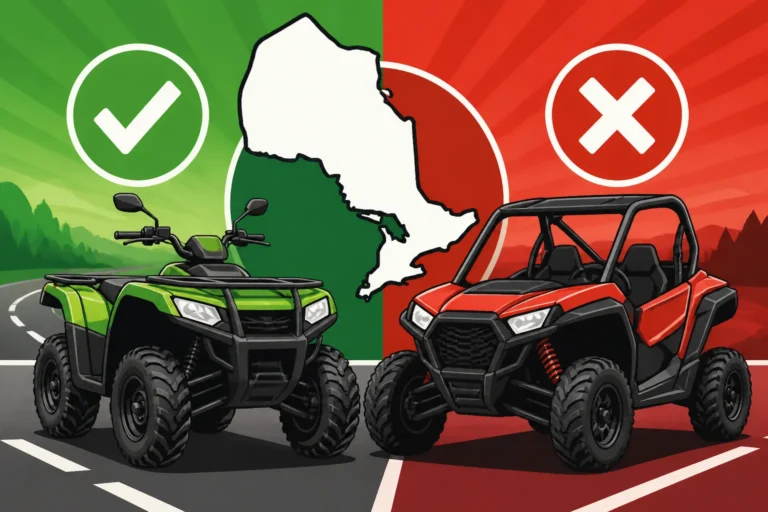
Sometimes, an officer spots something that's immediately obvious, prompting them to initiate a stop. This could be anything from a missing licence plate to riding where you absolutely shouldn't be. For example, if you're tearing down a major highway that's clearly marked as off-limits to ORVs, you can bet you'll get pulled over. Similarly, if your ORV plate is caked in so much mud it's unreadable, or if it's missing entirely, that's a straightforward reason for a stop. Officers are trained to spot these visual cues from a distance, and they act quickly to address potential safety hazards or legal breaches. It’s often these simple, observable details that lead to the initial interaction.
Another common visible infraction might be an ORV that appears heavily modified in a way that suggests it might not be roadworthy or compliant with Ontario's regulations. Think about machines that look excessively wide, have huge, aggressive tires that might not be suitable for pavement, or an exhaust system that's clearly louder than legal limits. While some modifications are fine and even enhance safety, others can draw unwanted attention. The officer isn't just looking for blatant disregard for the rules; they're also looking for anything that suggests the machine might be unsafe for the conditions it's being operated in, especially when venturing onto municipal roads. They're trying to prevent accidents before they happen.
Proactive Enforcement
Beyond visible infractions, officers also conduct proactive enforcement. This means they might set up checkpoints on popular trails, near known road crossings, or at the entrances to Crown land access points. These stops aren't usually in response to a specific observed violation but are rather general compliance checks. They want to ensure that riders are properly licensed, that their machines are registered and insured, and that they're operating in accordance with all applicable laws. It's similar to how they might conduct RIDE programs for cars. The goal here is broad-based safety and regulation adherence across the ORV community. This is especially true during peak riding seasons or in areas known for heavy ORV traffic.
These proactive patrols also help officers gather information about common issues and educate riders. Imagine an officer stationed at a popular staging area near a network of trails. They might pull over every fifth rider, not because that rider did anything wrong, but simply to perform a routine check. This helps them identify trends, like a sudden increase in unregistered machines or riders without proper helmets. It's a way for law enforcement to maintain a visible presence, deter potential infractions, and ensure that the ORV community remains safe and responsible. They understand that most riders are law-abiding, but these checks are essential for everyone's safety, including other trail users and residents of communities that have opened their roads to ORVs. What an Ontario Officer Checks Roadside covers this in detail.
Your Documentation: What to Have Ready
When an officer approaches your ORV, the first thing they're typically going to ask for is your paperwork. Having everything readily accessible, dry, and in order can make the stop quick and stress-free. There's nothing worse than fumbling through muddy pockets or a wet backpack for a soggy piece of paper.
The Ontario ORV Permit and Ownership
This is your vehicle's proof of registration, essentially its birth certificate and current ID. Every ATV, UTV, or dirt bike operated on Ontario roads or Crown land (unless specifically exempted, like farm machinery strictly on private property) needs to be registered with ServiceOntario. The permit is a crucial document that proves you are the legal owner or operator of the machine. An officer will check the permit to ensure the VIN (Vehicle Identification Number) matches your machine, that the permit is valid, and that it's issued in the name of the person operating or accompanying the machine. If you're riding a borrowed machine, you should still have a copy of the owner's permit. Remember, Ontario does not issue annual renewal stickers for ORVs, so don't worry about that, but the permit itself must be current and reflect accurate ownership. [The Ontario Vehicle Permit Explained] goes into further detail about this vital document.
Consider carrying a waterproof holder for your permit, maybe even a laminated copy, to protect it from the elements. While the original is always best, a true copy (like a high-quality photocopy) is generally acceptable as long as it's clear and legible. An officer needs to confirm that your machine is legally allowed on the trails or roads you're using. If the permit indicates a different owner, be prepared to explain the situation, perhaps with a bill of sale or a letter of permission from the owner if you're borrowing the machine. They're looking for legitimate ownership and registration to prevent theft and ensure accountability. This is especially important for [Buying a Used ATV in Ontario] where ensuring the permit matches the seller is crucial.
Proof of Insurance
Just like your car, your ORV absolutely needs insurance, even if you only ride off-road. Ontario mandates a minimum amount of third-party liability insurance for all ORVs. An officer will ask for your proof of insurance, which is typically an insurance card issued by your provider. This card will show your policy number, the effective dates of coverage, and details about the insured vehicle. Riding without proper insurance is a serious offence in Ontario and can lead to significant fines, so this isn't something to gamble with. [Ontario's Mandatory ORV Insurance] highlights the necessity of this coverage.
Make sure your insurance card is current and easily accessible. Many riders keep it in the same waterproof pouch as their ORV permit. Officers are looking for active coverage that meets Ontario's requirements. They're ensuring that should an accident occur, there's a safety net for any damages or injuries caused to others. An expired insurance card or one that doesn't clearly list your ORV can lead to questions and potential tickets. It’s not just about compliance; it’s about protecting yourself and others on the trail and road.
Your Driver's Licence
Operating an ORV in Ontario requires a valid driver's licence. If you're riding on private property and not accessing any public roads or Crown land, a licence isn't strictly necessary. However, if you're riding anywhere that falls under the Off-Road Vehicles Act, which includes most trails and any municipal roads, you need to have your licence with you. For riding an ORV on a municipal road that has been opened to ORV traffic, you must hold at least a G2 or M2 licence. A G1 or M1 learner's permit is not sufficient for road use. [Ontario's G2 and M2 Licence Requirement] explains these rules in more detail.
The officer will check your licence to confirm your identity, your eligibility to operate a motor vehicle, and that your licence is valid and not suspended. They'll also check for any endorsements or restrictions that might apply. For example, if you have an "L" condition for eyeglasses, you must be wearing them while riding. It's not just about having a piece of plastic; it's about proving you're legally qualified to be in control of the machine. Ensuring you have the correct class of licence for the type of riding you're doing is paramount to avoiding fines and ensuring your legal right to operate.
Machine Compliance: Safety Equipment and Legal Requirements
Beyond your paperwork, officers will thoroughly inspect your ORV to ensure it meets Ontario's safety and equipment standards, especially if you're operating on public roads. These checks are designed to prevent accidents and ensure your machine doesn't pose a hazard to yourself or others.
Lighting, Mirrors, and Horn
If you're operating your ORV on a municipal road, it must be equipped with certain road-specific safety features. This includes an operational headlight and tail light, which must be illuminated. Many ATVs and UTVs come with these standard, but officers will verify they are working correctly. You'll also need at least one rearview mirror, typically mounted on the left side, providing a clear view of traffic behind you. A horn is also a mandatory piece of equipment for road use, to signal your presence to other vehicles or pedestrians. These are not optional extras; they are fundamental requirements for safe and legal road operation in Ontario. Imagine trying to make a lane change without knowing what's behind you, or navigate a blind corner without a horn – these items are critical safety tools.
These requirements ensure that your ORV can be seen and heard by other road users, greatly reducing the risk of collisions. It’s not uncommon for officers to conduct a quick visual inspection of these items, or even ask you to demonstrate their functionality during a stop. If your headlight is burnt out, your mirror is broken, or your horn is silent, you could be facing a ticket. Riders often forget about the horn, especially if they primarily ride trails, but on roads, it's just as important as on a car. Keeping these components in good working order should be part of your pre-ride check, especially before you leave private property for a road or trail.
Tires, Brakes, and Exhaust
An officer will also assess the overall roadworthiness of your ORV, paying close attention to critical components like tires, brakes, and the exhaust system. Your tires should be in good condition, with sufficient tread depth and no visible damage that could compromise their integrity. While aggressive off-road tires are common, they must still be safe for road use and not excessively worn. As for brakes, they must be fully functional, both front and rear, allowing you to stop safely and effectively. An officer might even ask you to demonstrate your brakes. A common issue here is brake fade or poor adjustment.
The exhaust system is another point of inspection. It must be securely attached, free of leaks, and not excessively loud. Ontario has regulations concerning muffler noise levels. Aftermarket exhaust systems are popular for their performance benefits, but if yours is significantly louder than a stock exhaust, it could attract attention and result in a fine. This isn't just about noise pollution; an improperly functioning exhaust can also be a fire hazard or indicate a poorly maintained engine. [Ontario ATV Muffler Rules] provides more clarity on what is considered acceptable. Many aftermarket parts providers like SuperATV offer compliant exhaust options or accessories designed to help meet these standards, so it's worth researching if you've modified your machine.
Modifications and Width/Weight Limits
Ontario has specific regulations regarding the dimensions of ORVs that can be operated on municipal roads. For instance, the maximum width for an ORV on an opened road is 2.03 metres (approximately 80 inches). While many ATVs fit easily within this, some larger side-by-sides, particularly those with wide stance kits or specific SuperATV aftermarket suspension modifications, might exceed this limit. Officers are aware of these dimensions and can quickly eyeball if a machine appears to be wider than legally allowed. Similarly, there are weight limits depending on the ORV class (e.g., MPVs over 450 kg but under 1,700 kg, ROVs under 1,000 kg).
Any modifications you've made to your ORV, especially those that alter its size, weight, or basic safety features, will be scrutinized. Lift kits, oversized tires that extend beyond the fenders, or custom bumpers need to be considered carefully in relation to provincial regulations. It's essential to understand that while an upgrade might enhance off-road performance, it could unintentionally make your machine non-compliant for road use. Always check the Off-Road Vehicles Act and relevant regulations before making significant modifications, especially if you plan to use your ORV on any public roads. Ignorance of the law is not a defence, and these details can easily lead to a ticket.
Rider Compliance: Helmets, Passengers, and Age Limits
Beyond the machine itself, an officer will also ensure that you, and any passengers, are complying with Ontario's rules for ORV operation, which are designed to protect everyone on board.
Approved Helmets and Chin Straps
This is a non-negotiable. Anyone riding or being carried on an ORV in Ontario, whether on a trail, Crown land, or a municipal road, must wear an approved motorcycle helmet. This isn't just a suggestion; it's a fundamental safety law. The helmet must be securely fastened with the chin strap properly done up. An officer will look for a helmet that meets recognized safety standards (e.g., DOT, Snell, ECE certifications, often indicated by a sticker on the helmet). A novelty helmet that doesn't meet these standards is simply not good enough and can result in a fine.
Officers are particularly diligent about helmet checks because head injuries are among the most severe risks in an ORV accident. They'll ensure the helmet fits correctly, isn't damaged, and is worn as intended. If your chin strap is dangling or the helmet looks like it would fly off in a minor bump, you can expect to be pulled over. It's a quick visual check, but it carries significant weight. Always invest in a good quality, approved helmet and make sure it's worn properly every single time you ride. Your life literally depends on it. [Ontario ATV Helmet Law] confirms these strict requirements.
Passenger Rules
Ontario has very specific rules about carrying passengers on ORVs, which depend on the design of your machine. A single-rider ATV (designed for one person) cannot legally carry a passenger on any public land or road, even if you try to squeeze someone on behind you. If your ATV is specifically designed for two riders (often called a "two-up" or "tandem" ATV), it will have a longer seat, separate footrests for the passenger, and often grab handles. Only then can you legally carry a passenger. Side-by-sides (ROVs), which are designed with multiple seats and seat belts, can carry as many passengers as there are designated seating positions, provided each passenger is properly buckled in.
An officer will quickly assess your machine's design and how many people are on it. If you're on a single-rider quad with a passenger, you'll be stopped. They'll also check that any passengers, especially children, are of an appropriate age and size to safely ride as a passenger, with their feet reaching the footrests and able to hold on securely. The safety of passengers is paramount, and these rules are in place to prevent serious injuries. Always be clear on your machine's design capacity before you invite someone for a ride. [Ontario ATV Passenger Rules] outlines the specifics.
Minimum Age and Supervision
The age of the operator is another critical factor an officer will check. In Ontario, you must be at least 12 years old to operate an ORV off private property. If you're between 12 and 16, you must be supervised by an adult (16 years or older) and complete an approved safety course if riding anywhere other than private property. For operating an ORV on a municipal road, the minimum age is 16, and as mentioned, you need at least a G2 or M2 licence. There are no exceptions for riding on Crown land or OFATV trails when it comes to the minimum age and, in many cases, supervision for younger riders.
An officer will typically ask for the operator's age and, if they appear young, will inquire about supervision and safety training. If a child under 12 is found operating an ORV on public land, or a teenager is unsupervised or unlicensed when they should be, the adult responsible could face significant fines. These rules are fundamental to ensuring that operators have the necessary physical and mental maturity, as well as the training, to handle these powerful machines safely. Protecting young riders is a high priority for law enforcement, and they take these age and supervision rules very seriously. [Ontario's Off-Road Minimum Age of Twelve] further details the regulations.
Road Use Rules: Where and How You're Riding
Operating an ORV on municipal roads in Ontario isn't a free-for-all; it's a privilege governed by strict rules. Officers often focus on where and how you're operating your machine when you're pulled over on a road.
Approved Roads and By-laws
One of the most common reasons for a roadside stop on a municipal road is riding on a road that simply isn't open to ORVs. Not all municipal roads in Ontario permit ORV use. Municipalities have the authority to pass by-laws to open specific roads within their jurisdiction, but they are not obligated to do so. If a road isn't explicitly opened by by-law, it's illegal to ride your ORV on it. This creates a patchwork of open and closed roads across the province, which can be confusing for riders. Officers are well-versed in the local by-laws and will know immediately if you're on a road where you shouldn't be.
An officer will typically ask you where you're coming from and where you're going, trying to understand your route. If you're found on a prohibited road, you could face a fine for illegal operation. It's crucial for riders to do their homework before venturing onto municipal roads. Check the local municipal website or the Ontario Federation of ATV Clubs (OFATV) resources, which often list communities with open road by-laws. Don't assume that just because an ORV-friendly trail is nearby, all connecting roads are open. Ignorance of a specific by-law is not a valid defence. [Checking a Township's ORV By-law] is an essential step before any ride.
Speed Limits and Road Positioning
Even on roads that are open to ORVs, there are specific rules about how you must operate your machine. Speed limits are typically lower for ORVs than for other vehicles. On roads with a posted speed limit of 50 km/h or less, ORVs are restricted to a maximum speed of 20 km/h. On roads with a posted speed limit greater than 50 km/h, ORVs are restricted to a maximum speed of 50 km/h. These speed limits are much lower than typical car speeds and are strictly enforced to ensure safety.
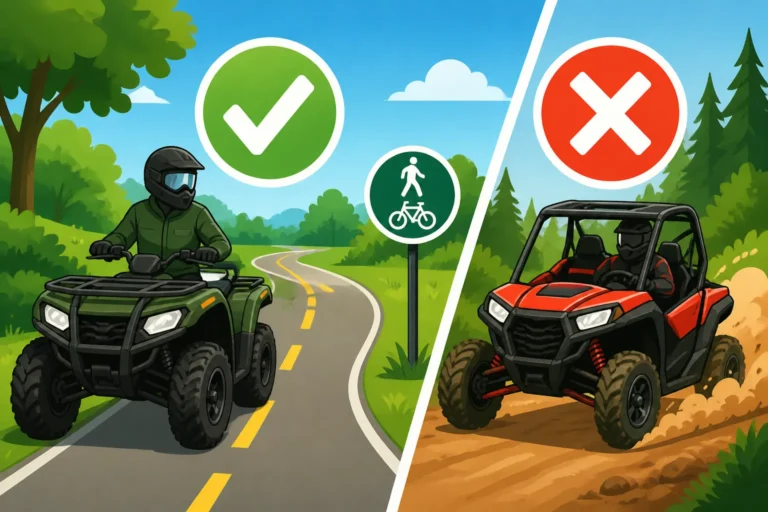
Officers will also observe your road positioning. ORVs must generally ride on the right-hand shoulder of the road, if one exists and is safe to use. If there's no shoulder or it's unsafe, you must ride as close to the right-hand side of the roadway as possible. You are generally prohibited from riding on sidewalks, bike paths, or ditches unless specifically permitted by local by-law. Weaving in and out of traffic, riding in the middle of a lane, or exceeding the posted ORV speed limits are all grounds for a roadside stop and potential fines. They want to see you operating your machine safely and predictably, just like any other vehicle on the road. [Ontario ATV Speed Limit on Roads] provides specific details on these limits.
Impaired Driving and Open Alcohol
This is perhaps the most serious check an officer will perform. Operating an ORV while impaired by alcohol or drugs is just as illegal and dangerous as impaired driving in a car, and the consequences are just as severe. Ontario has a zero-tolerance policy for impaired driving, and this extends to ATVs, UTVs, and dirt bikes, whether you're on a road, a trail, or even private property (if accessible to the public). An officer will be looking for signs of impairment, such as slurred speech, unsteady gait, or the smell of alcohol, and will administer roadside sobriety tests if they have reasonable grounds to suspect impairment.
Similarly, having open containers of alcohol on your ORV, or consuming alcohol while operating it, is illegal. All passengers must also comply with open container laws. An officer will check for any visible alcohol containers and may conduct a search if they suspect there is alcohol present. The fines, licence suspensions, and legal repercussions for impaired ORV operation are extremely severe, potentially leading to criminal charges and long-term consequences. This is one area where there is absolutely no leniency. Always ride sober, and keep any alcoholic beverages securely stored and unopened until you've stopped riding for the day. [Ontario ATV Impaired Driving Rules] emphasizes the strictness of these laws.
Consequences of Non-Compliance: What Happens Next
Getting pulled over for an ORV infraction isn't just an inconvenience; it can lead to a range of consequences, from minor fines to serious legal trouble. Understanding these outcomes underscores the importance of staying compliant.
Fines and Penalties
For most minor infractions, such as riding without an approved helmet, exceeding the ORV speed limit on a road, or failing to carry your permit, you'll likely receive a Provincial Offences Act (POA) ticket. These tickets come with set fines, and while they might seem like a nuisance, they can quickly add up. For example, riding without valid insurance can lead to a substantial fine, easily in the thousands, for a first offense. Repeat offenders face even higher penalties. These fines are designed to deter non-compliance and fund various safety initiatives. It's not just about the immediate financial hit; accumulating several tickets can also affect your driving record and potentially your insurance rates for other vehicles.
Consider the cumulative effect: a ticket for an unreadable plate, another for riding on a closed road, and a third for having a non-compliant exhaust. Suddenly, a fun day of riding turns into a very expensive lesson. These fines aren't handed out lightly; they're a direct consequence of failing to meet the standards set out in the Off-Road Vehicles Act and other relevant statutes. It's much cheaper and less stressful to ensure all your documentation is in order, your machine is properly equipped, and you're aware of where and how you can ride before you head out. [Ontario ATV Registration Fines] gives a good overview of the financial implications.
Machine Impoundment and Licence Suspension
For more serious offences, especially those related to impaired driving, operating an unregistered or uninsured vehicle, or repeated infractions, an officer has the authority to impound your ORV on the spot. This means your machine will be towed away, and you'll be responsible for all towing and storage fees, which can quickly become exorbitant. Retrieving an impounded ORV is a costly and time-consuming process, and it often requires you to prove that the underlying issues (like lack of registration or insurance) have been resolved.
Beyond impoundment, severe infractions can also lead to a suspension of your driver's licence, not just for operating an ORV but for all motor vehicles. Impaired driving, for instance, carries an automatic licence suspension, even if you were operating your ORV off-road. A licence suspension can have profound impacts on your daily life, affecting your ability to commute, work, and conduct everyday tasks. These penalties are designed to remove dangerous operators from public trails and roads and to send a strong message about the seriousness of the offence. The loss of your machine and your driving privileges are significant deterrents.
Protecting Yourself: The Importance of Knowing the Rules
The best defence against roadside stops leading to tickets or worse is simply knowing and following the rules. It's a bit of a cliché, but it's true: "An ounce of prevention is worth a pound of cure." Take the time to understand the Off-Road Vehicles Act, familiarize yourself with local municipal by-laws, and regularly check your ORV for compliance. This includes ensuring your registration is current, your insurance is valid, and all your safety equipment (like helmets, lights, and mirrors) is in good working order.
Engage with your local ORV clubs and federations, like the OFATV. They are excellent resources for trail conditions, by-law updates, and general riding advice. They also advocate for riders and work to expand safe riding opportunities. Investing in an approved safety course, even if not mandatory for experienced riders, can also refresh your knowledge and reinforce safe riding practices. Ultimately, being a responsible and informed rider not only keeps you safe but also contributes positively to the ORV community, helping to ensure that we all continue to enjoy the fantastic riding opportunities Ontario has to offer. Make it a habit to perform thorough [Checks Before You Buy a Used Quad in Ontario] and before every ride, and you'll find your roadside interactions far more positive.
Summary of ORV Roadside Checks in Ontario
To help you remember the key points, here’s a quick summary of what an Ontario officer typically checks during a roadside stop for an ORV.
| Category | Specific Checks | Key Compliance Requirement |
|---|---|---|
| Documentation | Valid Ontario ORV Permit | Proof of current registration and ownership |
| Proof of Insurance | Valid third-party liability insurance card | |
| Valid Driver's Licence (G2/M2 for road use) | Legal qualification to operate a motor vehicle | |
| Machine | Operational Headlight & Tail Light | Must be working for road and night use |
| Rearview Mirror (at least one, left side) | Clear view to the rear for road safety | |
| Horn | Functional for signaling on roads | |
| Tires, Brakes, Exhaust | Good condition, functional, and compliant noise levels | |
| Width/Weight Compliance (e.g., max 2.03m width) | Machine dimensions within legal limits for road use | |
| General Roadworthiness (no obvious hazards) | Machine is safe to operate on public roads | |
| Rider | Approved Motorcycle Helmet | Meets safety standards, securely fastened |
| Passenger Compliance | Appropriate machine design (two-up), proper seating | |
| Minimum Age & Supervision (12+ off-road, 16+ on-road) | Operator meets legal age and supervision requirements | |
| Operation | Approved Roads & By-laws | Riding only where permitted by municipal by-law |
| Speed Limits (20 km/h or 50 km/h depending on road) | Adherence to specific ORV speed regulations | |
| Road Positioning (right shoulder/side of road) | Riding safely and predictably | |
| Impaired Driving/Open Alcohol | Zero tolerance for impairment or open containers |
This table provides a concise overview, but remember that each point has detailed regulations behind it. Staying informed and prepared is your best strategy for a smooth and enjoyable ride across Ontario.
Disclaimer
This article is for general informational purposes only and does not constitute professional advice. Laws, prices and regulations vary by location and change over time. Consult a qualified professional for guidance on your specific situation.