Strong Township’s ORV By-law
It can feel like navigating a maze trying to understand where you can legally and safely ride your ATV or UTV on municipal roads in Ontario, with rules changing from one township to the next. This comprehensive guide will break down Strong Township's specific Off-Road Vehicle (ORV) By-law, helping you understand the regulations, plan your rides, and ensure you stay on the right side of the law while exploring the beautiful Almaguin Highlands.
Understanding the Strong Township ORV By-law
When you own an ATV or UTV in Ontario, you quickly learn that while the province sets a baseline for off-road vehicle operation, it's often the local municipalities that have the final say on where you can actually ride on their roads. This patchwork of regulations can be incredibly confusing for riders who just want to enjoy their machines responsibly. Strong Township, like many others in the region, has established its own by-law to balance the desire for recreational riding with community safety and peace.
The Strong Township ORV By-law exists primarily to designate specific municipal roads where ATVs and UTVs are permitted, as well as to outline the conditions under which they can be operated. It's not about prohibiting riding entirely, but rather creating a structured environment. This means you can't just assume every road is open to your ORV, even if it's a quiet backroad. The by-law provides clarity, which, once you understand it, makes planning your adventure much easier and safer. It's all about ensuring everyone—riders, residents, and other road users—can coexist without unnecessary conflict or risk.
The Why Behind Local ORV Rules
Think about it from a township's perspective: they need to consider everything from road wear and tear to noise complaints, and the safety of pedestrians and cyclists. What works for a remote logging road deep in the bush might not be appropriate for a residential street where children play. Local by-laws, like Strong Township's, are developed through a consultation process that tries to address these diverse concerns. They aim to provide access to trails and local amenities for riders, while also protecting the quality of life for residents and minimizing potential hazards.
For riders, this often means specific routes are designated, perhaps connecting trails or allowing access to gas stations and local businesses. These local rules fill in the gaps left by provincial legislation, tailoring ORV use to the unique geography and community needs of places like Strong Township. It's a pragmatic approach to integrate ORVs into the local infrastructure without causing undue disruption. The goal isn't to be a roadblock to your fun, but to create a predictable and safe framework for everyone.
Key Definitions and Machine Types Covered
The Strong Township by-law typically uses definitions that align with the provincial Off-Road Vehicles Act. This means when the by-law mentions an "ORV," it's generally referring to what the province calls an off-road vehicle. This includes common types like ATVs (all-terrain vehicles), often called quads, and UTVs (utility terrain vehicles), also known as side-by-sides. It’s important to remember that these terms are not interchangeable in the eyes of the law, as there are often specific weight and width limits that determine how a machine is classified and, consequently, where and how it can be operated.
For example, a traditional single-rider ATV falls into one category, while a large, multi-passenger side-by-side might be classified differently due to its dimensions and weight. These distinctions can affect everything from the roads they can use to the speed limits they must observe. The by-law won't usually distinguish between different engine sizes or brands like Honda, Polaris, or Can-Am, but rather the broad classification of the machine itself. Therefore, before heading out, it's crucial to know exactly how your particular machine is classified under provincial regulations, as this forms the foundation for how it's treated under any municipal by-law. You can find more details on general rules in [Ontario ATV Rules on a Municipal Road].
The Spirit of the By-law: Balancing Access and Community
At its heart, Strong Township’s ORV By-law seeks to strike a delicate balance. On one hand, the township recognizes the economic and recreational benefits that ORV use can bring, especially in areas with vast natural landscapes and strong outdoor tourism. Many residents and visitors enjoy exploring the region on their machines, and local businesses benefit from their presence. On the other hand, there's a responsibility to ensure public safety, minimize environmental impact, and maintain the peaceful enjoyment of property for all residents.
This balance is reflected in the specific clauses of the by-law, which might allow ORV access on certain roads while prohibiting it on others, or set specific hours of operation. It’s about creating designated corridors for riders, often linking to larger trail systems, while protecting sensitive areas or high-traffic residential zones. Riders who understand this underlying philosophy are better equipped to be good stewards of the trails and roads, fostering a positive relationship between the ORV community and the township itself. It encourages responsible riding, where courtesy and awareness of others are just as important as knowing the legal speed limit.
Where You Can (and Can't) Ride in Strong Township
One of the biggest headaches for any ORV rider is figuring out the exact geography of allowed riding areas. It’s not enough to know there’s a by-law; you need to know which specific roads are open and which are strictly off-limits. Strong Township's by-law will clearly delineate these areas, and it’s your responsibility as a rider to be familiar with them. Ignoring these designations isn't just a minor oversight; it can lead to fines and strained relations with the local community.
Generally, townships tend to open specific roads that are less travelled, provide crucial links to trail networks, or offer access to necessary services like fuel and food. They often avoid opening main arterial roads or residential streets unless absolutely necessary. Having a map, either digital or physical, that clearly marks these permitted routes is invaluable. Never assume that just because a road looks quiet, it’s fair game for your ORV. Always check the official by-law map or description.
Designated Roads for ORV Use
The Strong Township ORV By-law specifies the particular roads where ATVs and UTVs are permitted. These are usually public roads maintained by the township and are chosen strategically to facilitate safe travel and connection to regional trail systems without causing excessive disturbance. For instance, the by-law might list specific concession roads or municipal roads that act as connectors. These roads are typically chosen because they have lower traffic volumes, offer better sightlines, or are already part of an established ORV route network.
When planning your ride, you should consult the most current version of the by-law, which is usually available on the Strong Township municipal website. Look for an appendix or a schedule within the by-law that lists the permitted roads by name. Sometimes, maps are provided, which can be even more helpful for visualization. It's a good idea to cross-reference this with your own GPS or mapping app to ensure you stay on the designated path. Riding on these designated roads is your privilege, and adhering to the rules ensures continued access for all.
Areas Off-Limits to Riders
Just as important as knowing where you can ride is understanding where you absolutely cannot. The Strong Township by-law will explicitly state these prohibited areas. This might include provincial highways (like parts of Highway 11 or 124, even if they pass through the township, as these are governed by provincial rather than municipal rules), private roads, or sensitive environmental areas. In residential zones, access is typically restricted to minimize noise, dust, and safety concerns for families and children.
Riding off the designated roads, onto private property without permission, or into prohibited areas can result in significant fines and potentially even having your machine impounded. It’s not uncommon for local residents to be vigilant about ORV use in their area, and they won’t hesitate to report violations. Always respect "No Trespassing" signs and assume private land is off-limits unless you have explicit permission from the landowner. Awareness and respect are key to enjoying your ride without incident.
Connecting to the Larger Trail Network
A significant benefit of municipal ORV by-laws like Strong Township's is their role in linking local roads to the broader network of organized trails, such as those maintained by the Ontario Federation of ATV Clubs (OFATV) or other regional clubs. These designated municipal roads often serve as crucial arteries, allowing riders to legally access trailheads, reach staging areas, or connect between different sections of a larger system without having to trailer their machines for short distances.
Imagine being able to ride directly from your cottage or a local gas station, perhaps after filling up your SuperATV fuel caddy, onto a township road that leads you straight to an OFATV trail system. This seamless connection enhances the riding experience significantly, making the region more attractive to ORV tourists and allowing local enthusiasts greater freedom. It's important to remember that while the township road might get you to the trail, you'll likely need an OFATV permit to ride on the club trails themselves. These by-laws are often created in consultation with local trail clubs to ensure these vital connections exist and are clearly understood by all riders. You can learn more about finding these trails in [Where to Ride an ATV in Ontario].
Operating Your ORV Safely and Legally
Once you know where you can ride, the next crucial step is understanding how to do so legally and safely. Strong Township's by-law will complement provincial regulations, adding specific conditions that must be met when operating your ATV or UTV on their roads. These rules are designed to protect you, your passengers, and other road users. Ignoring them can lead to serious consequences, not just legally, but also in terms of potential accidents.
It’s about more than just having a machine that starts; it’s about having a machine that’s properly equipped, being a licensed and responsible operator, and adhering to the specific rules of the road. Think of it as driving a car – you wouldn't just jump in and go without a license, insurance, and knowing the speed limits. The same diligent approach is required for ORVs on public roads.
Essential Equipment and Vehicle Requirements
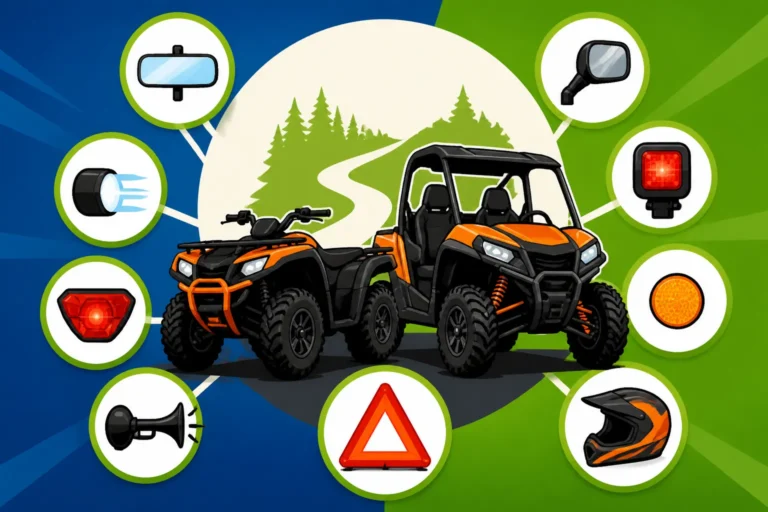
Before you even think about putting a tire on a designated road in Strong Township, your ORV must meet specific equipment requirements. These are largely dictated by provincial law but are reinforced by municipal by-laws. We're talking about essentials like proper headlights and taillights, brake lights, and a working horn. If you're riding after dusk or before dawn, these lights are absolutely mandatory for visibility. Many riders also add turn signals, even if not strictly required by law for all ORV types, as they significantly improve safety on shared roads.
Your machine must also have a functional muffler to keep noise levels down – excessive noise is a common complaint from residents. While not always a specific by-law item, good tires and brakes are paramount for safety on asphalt or gravel roads. Furthermore, an [Ontario ORV Plates and Where They Mount] is a must-have for identification. Some riders look to aftermarket accessories from companies like SuperATV for enhanced lighting kits, mirrors, or winches that can improve both safety and utility, ensuring their machine is not only road-legal but also well-prepared for any situation. Remember, the goal is to be seen and heard appropriately, and to have full control of your machine at all times.
Licensing, Age, and Passenger Rules
Your ability to ride an ORV on Strong Township roads hinges on your licensing and age. In Ontario, generally, you need at least a G2 or M2 driver's license to operate an ORV on municipal roads. A G1 or M1 is usually not sufficient for solo road riding. This requirement ensures that operators have a basic understanding of road rules and defensive driving. While the by-law might not explicitly restate these provincial license requirements, they are inherently tied to legal road use. Learn more about this in [Ontario ATV Licence Requirements].
When it comes to passengers, rules are strict. If your ATV is designed for a single rider, you cannot carry a passenger. If it’s a two-up model, it must be specifically designed and designated by the manufacturer to carry a passenger, with a proper second seat and footrests. For UTVs (side-by-sides), passengers must be seated with a functioning seatbelt, and the machine must have adequate occupant protection. Age restrictions also apply; generally, minors riding as passengers on the road must meet certain age and height requirements to use the safety restraints effectively. For detailed provincial age rules, refer to [Ontario's Off-Road Minimum Age of Twelve]. These rules aren't arbitrary; they are critical for preventing serious injuries in the event of an accident.
Speed Limits and Time Restrictions
Speed limits are absolutely non-negotiable on Strong Township roads. The provincial rules dictate that ORVs generally must not exceed 20 km/h on roads where the posted limit is 50 km/h or less, and 50 km/h on roads where the posted limit is higher than 50 km/h. This is a critical distinction that many riders overlook. Always pay attention to the posted speed limits for other vehicles, as that will determine your maximum ORV speed. Strong Township’s by-law will reinforce these limits, and local enforcement will be watching for violations. Exceeding these limits is not only illegal but extremely dangerous, especially given the handling characteristics of ORVs compared to cars. You can find more information on this in [Ontario ATV Speed Limit on Roads].
Beyond speed, some municipal by-laws also include time restrictions for ORV operation on roads. This might mean that riding is only permitted during daylight hours or specific periods (e.g., from dawn until dusk), or that there are quiet hours where ORV use is prohibited to minimize noise for residents. Always check the specific by-law for any mention of hours of operation. These restrictions are put in place to maintain community peace and ensure that ORV noise doesn't disturb residents during quiet periods.
What Happens If You Don't Follow the Rules
Nobody wants to get a ticket, especially when you're out trying to enjoy a ride. But the reality is that breaking the Strong Township ORV By-law, or any provincial ORV regulation, carries real consequences. These aren't just minor slaps on the wrist; they can range from significant fines to the impoundment of your machine, and even legal action in more serious cases. Understanding the potential repercussions is a strong motivator to ensure you're always riding legally and responsibly.
The local police, by-law enforcement officers, and sometimes even OPP, are authorized to enforce these rules. They are not just looking for reckless behaviour; they are also ensuring compliance with basic requirements like proper registration, insurance, and helmet use. It's far better to spend a bit of time understanding the rules beforehand than to face the headache and expense of a fine later on.
Common Infractions and Potential Fines
There are several common ways riders can inadvertently (or intentionally) violate ORV by-laws and provincial regulations, leading to fines. Some of the most frequent infractions include:
- Riding on Prohibited Roads: Operating your ORV on streets or areas not designated for ORV use.
- Exceeding Speed Limits: Going too fast on designated roads, especially the lower limits for ORVs.
- No Insurance or Registration: Riding without valid [Ontario ATV Insurance Requirement] or a current [Registering an ATV in Ontario]. These are non-negotiable.
- Improper Equipment: Lacking required lights, mirrors, or having an excessively loud muffler.
- Helmet Violations: Not wearing an approved helmet, or wearing one improperly (e.g., chin strap undone). Check [Ontario ATV Helmet Law] for details.
- Age or Licensing Violations: A rider being too young, or not possessing the correct class of driver's license.
- Carrying Unauthorized Passengers: Having a passenger on a single-rider ATV, or too many passengers in a UTV.
The fines for these infractions can be substantial, often hundreds of dollars per offense. Imagine getting stopped for riding on a prohibited road and then being ticketed again for not having insurance, and perhaps a third ticket for an improper helmet. These costs add up quickly, making a fun day out a very expensive mistake.
Enforcement by Local Authorities
In Strong Township, enforcement of the ORV By-law typically falls to the Ontario Provincial Police (OPP) or designated municipal by-law enforcement officers. These authorities have the power to stop ORVs, request documentation (like your license, registration, and proof of insurance), and issue tickets for violations. They are often quite familiar with the local by-law and patrol areas where ORV use is common, or where complaints have been received.
It’s not uncommon for officers to conduct roadside checks, especially during peak riding seasons or in areas known for high ORV traffic. Their goal isn't just to issue tickets, but also to educate riders and ensure public safety. A polite and cooperative attitude goes a long way if you are stopped. Always have your documents readily accessible and be prepared to show them. Remember that an officer might also conduct checks on the condition of your machine, looking for modifications that make it unsafe or non-compliant. If you are ever caught riding an [Riding an Unregistered ATV in Ontario], expect significant repercussions.
The Importance of Responsible Riding
Ultimately, the best way to avoid fines and ensure continued access to riding areas in Strong Township is to practice responsible riding. This means not just following the letter of the law, but also embracing the spirit of courtesy and environmental stewardship. When you ride responsibly, you become an ambassador for the entire ORV community, helping to foster a positive image and encourage greater acceptance of ORV use.
Responsible riding includes:
- Staying on Designated Trails and Roads: No shortcuts across private property or prohibited natural areas.
- Controlling Your Speed: Always ride at a safe speed appropriate for the conditions and the specific road.
- Minimizing Noise: Avoid revving your engine unnecessarily, especially near residential areas.
- Yielding to Others: Be courteous to pedestrians, cyclists, and other vehicles.
- Respecting Wildlife and the Environment: Don't litter, damage vegetation, or harass animals.
- Being Prepared: Carry appropriate safety gear, a first-aid kit, and a basic repair kit.
- Riding Sober: Never operate an ORV under the influence of alcohol or drugs.
By choosing to ride responsibly, you contribute to the sustainability of ORV recreation in Strong Township and ensure that future generations of riders will also have opportunities to enjoy the sport. It's a collective responsibility that benefits everyone.
Planning Your Ride in Strong Township
A successful and enjoyable ORV outing doesn't just happen; it's carefully planned. This is especially true when navigating municipal roads, where rules can be specific and sometimes change. Taking the time to plan your route, understand the local nuances, and prepare your machine can make the difference between a fantastic day and a frustrating one. Think of it as mapping out an adventure where you want to minimize unexpected detours or legal surprises.
Preparation is key, not just for safety, but also for maximizing your enjoyment. Knowing where you're going, what to expect, and that you're fully compliant with all regulations allows you to relax and truly appreciate the ride. It's about being proactive rather than reactive, especially in an area like Strong Township where local rules govern road access.
Checking By-law Updates and Resources
Municipal by-laws are not set in stone; they can be amended or updated. Before any ride, especially if it's been a while since you last consulted the rules, make it a habit to check the Strong Township municipal website for the most current version of their ORV By-law. Local townships often post announcements about changes, public consultations, or specific temporary closures that might impact your ride. This proactive step can save you a lot of grief.
Additionally, many townships or local tourism boards provide maps specifically for ORV use, which will clearly mark the designated roads. These resources are invaluable. You might also find information through local ORV clubs, as they often work closely with municipalities and are a great source of up-to-date information about trail conditions, open roads, and any local events. Being informed is your first line of defense against accidentally breaking a rule.
Mapping Your Route and Staging Areas
Once you've confirmed the current by-law, the next step is to meticulously plan your route. Use a combination of digital maps (like GPS apps) and, if available, official township or club maps to trace your path. Identify the exact roads you intend to use and ensure they are all designated for ORV traffic. If you're connecting to an organized trail system, plan how you'll transition from the municipal road to the trail and where you might purchase the necessary trail pass.
Consider where you'll be staging your ride. If you're trailering your ORV to Strong Township, identify designated parking areas or staging lots where you can safely unload your machine and park your truck and trailer. Many townships or trail clubs have specific staging areas that are ORV-friendly. Avoid parking in residential areas or blocking access for others. Planning your fuel stops and potential refreshment breaks is also a good idea, especially if you're venturing into more remote areas, ensuring you're not left stranded.
Respecting Private Property and Trail Etiquette
A crucial, yet often overlooked, aspect of planning is ensuring you understand and respect private property boundaries. Strong Township, like many rural areas, has a mix of public and private land. Just because a field looks open doesn't mean it's public. Always assume land is private unless clearly marked otherwise, or unless you have explicit permission from the landowner. Trespassing is a serious offense and damages the reputation of all riders.
Furthermore, practicing good trail etiquette is essential, whether you're on a municipal road or a designated trail. This includes:
- Reducing Speed in Congested Areas: Slow down when passing homes, other users, or wildlife.
- Keeping Right: Always stay to the right side of the road or trail.
- Giving Way: Yield to oncoming traffic, and be mindful of slower riders.
- Packing It In, Packing It Out: Leave no trace. Take all your garbage with you.
- Being Prepared for Others: Understand that you might encounter hikers, cyclists, or even horseback riders on multi-use trails or roads. Be courteous and share the space.
By adhering to these principles, you not only ensure your own legal and safe enjoyment of Strong Township's riding opportunities but also contribute to a positive relationship with the community and help preserve access for everyone.
Here's a quick overview of key rules for ORV road use in Strong Township, keeping in mind specific by-law details can vary:
| Category | General Provincial/By-law Rule (Strong Township) |
|---|---|
| Permitted Roads | Specific municipal roads designated by by-law. Always check Strong Township's official by-law for a list or map. Excludes provincial highways, private roads, and generally residential areas unless specified. |
| Speed Limits | Max 20 km/h where posted limit is 50 km/h or less. Max 50 km/h where posted limit is higher than 50 km/h. Always adhere to posted road signs. |
| Operating Hours | Typically dawn to dusk, or specific hours outlined in the by-law. Check by-law for any quiet hours or specific time restrictions. |
| Licensing | Minimum G2 or M2 driver's license required for road operation. G1/M1 generally insufficient. |
| Insurance | Mandatory Motor Vehicle Liability Policy. Must carry proof of valid insurance. |
| Registration | ORV must be registered with ServiceOntario and have a valid [Ontario ORV Plates and Where They Mount] displayed. Must carry valid permit. |
| Helmet | Approved motorcycle helmet mandatory for all operators and passengers. Chin strap must be fastened. |
| Passengers | Only on machines specifically designed by the manufacturer for multiple riders (e.g., two-up ATV, multi-seat UTV). All passengers must have proper seating and restraints (e.g., seatbelts in UTVs). |
| Equipment | Headlights, taillights, brake lights, muffler, horn, and at least one mirror (for road use). Tires must be in good condition. |
| Machine Type/Size | Must meet provincial definitions for ORVs, MPVs, ROVs, or Off-Road Motorcycles. Width and weight limits apply to certain road classes (e.g., MPV class has a weight limit of 450 kg, ROV class has a max width of 2.03m). For instance, a wider [Ontario ATV Width Limit for Road Use] might be restricted. |
This article is for general informational purposes only and does not constitute professional advice. Laws, prices and regulations vary by location and change over time. Consult a qualified professional for guidance on your specific situation.