Ontario ATV Rules for an Electric Machine
There's a buzz building in the off-road world, and it's not from a roaring gas engine – it's the quiet hum of electric ATVs and UTVs. Many riders are naturally curious about these newer machines, especially when it comes to riding them on Ontario roads. It's a valid question, because while electric vehicles are becoming more common on our highways, the rules for their off-road counterparts on public roads can feel a bit murky. This guide will help clarify how Ontario's existing regulations apply to electric off-road vehicles, ensuring you understand what it takes to legally hit the trails or permitted roads with your electric machine.
How Ontario Classifies Electric Off-Road Vehicles
When we talk about off-road vehicles (ORVs) in Ontario, our regulations typically refer to three main classes: ATVs, ROVs (Recreational Off-Highway Vehicles, like side-by-sides), and Off-Road Motorcycles. The key challenge with electric machines is how they fit into these classifications, which were largely established with gasoline-powered engines in mind. It's not always a straightforward switch from horsepower to kilowatts.
Understanding Ontario's Off-Road Vehicle Classes
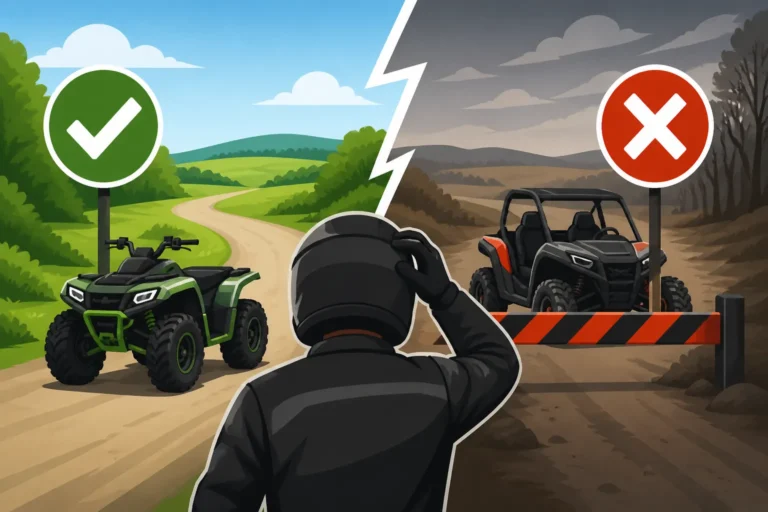
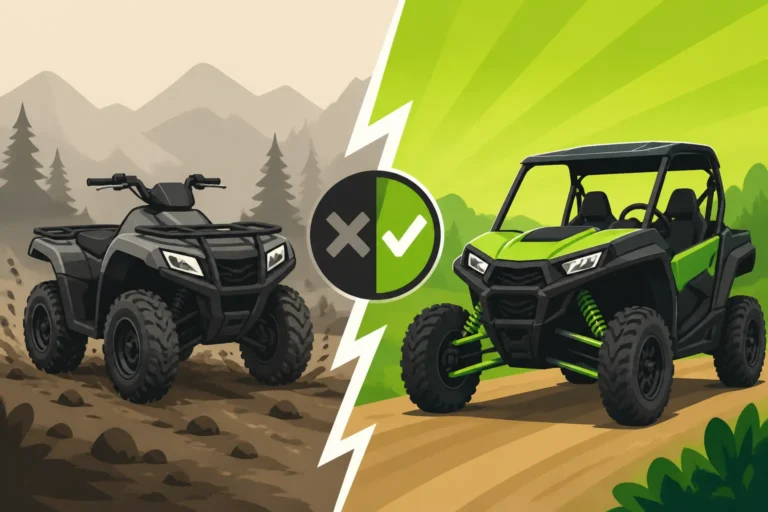
Ontario Regulation 316/03, which governs ORVs, defines these classes based on various characteristics, including weight, width, and whether they're designed to be straddled or ridden with a steering wheel. For example, an "all-terrain vehicle" (ATV) is generally a three-wheeled or four-wheeled motor vehicle that is designed to be ridden by the operator straddling it. They have handlebars for steering, and are not designed for farm use or primarily for competition.
Then we have "recreational off-highway vehicles" (ROVs), which most folks know as side-by-sides or UTVs. These are typically larger, have a steering wheel, bucket seats, and often roll-over protection structures. They also have specific weight and width limits under the regulations, usually capping out at 2.03 metres (about 80 inches) in width and 1,700 kilograms (around 3,747 pounds) in weight. Off-road motorcycles are, well, motorcycles designed for off-road use. These distinctions are crucial because they dictate everything from helmet requirements to where you can actually ride. You can read more about [The ATV Class Under Ontario Regulation 316/03] and [Ontario's MPV Class and Its Weight Limit] if you want to dive deeper into the specific definitions.
Where Electric Powertrains Fit into Existing Rules
This is where it gets interesting for electric ORVs. Our regulations refer to "motor vehicles" and often "engines" or "motor power." An electric motor certainly provides motor power, but it doesn't have "engine displacement" in cubic centimetres like a traditional gas engine. However, the intent of the law is to regulate the vehicle itself based on its physical characteristics and how it operates, rather than solely on its fuel source.
So, for an electric ATV, if it's designed to be straddled, has handlebars, and meets the general dimensions of an ATV, it's generally treated as an ATV. Similarly, an electric side-by-side that meets the weight and width limits of an ROV would fall into that category. The regulations don't specifically exclude electric motors from these definitions. Therefore, an electric ORV is essentially viewed through the lens of its traditional gasoline-powered counterpart. It must still meet all the same physical requirements for its class, even if its propulsion system is different. This means if you’ve got an electric quad, it’s going to be treated like any other quad when it comes to things like registration and road use.
Road Riding Rules: Are Electric ORVs Street Legal in Ontario?
The core question for many electric ORV owners is whether they can legally ride these machines on Ontario's roads. The short answer is: yes, but under the same strict conditions and limitations that apply to gasoline-powered ATVs and UTVs. Ontario's rules for ORVs on roads are quite specific and do not generally differentiate based on the power source.
General Requirements for ORVs on Ontario Roads
To legally ride any ORV on a permitted public road in Ontario, you must comply with a laundry list of requirements. This isn't just a suggestion; it's the law, and enforcement can be quite strict. Here’s a rundown of what’s typically required:
- Registration and Plate: Your electric ORV must be registered with ServiceOntario, and you need to display a valid licence plate. This is no different from a gas-powered machine. You'll need to know about [Ontario ORV Plates and Where They Mount].
- Insurance: Mandatory motor vehicle liability insurance is a must. You cannot ride on any public road without it, and often, insurance is a prerequisite for registration. Check out [Ontario ATV Insurance Requirements].
- Licence: The operator must hold at least a G2 or M2 class driver's licence. A G1 or M1 learner's permit is not sufficient for road use. It's important to understand [Ontario's G2 and M2 Licence Requirement].
- Helmet: An approved motorcycle helmet, properly fastened, is mandatory for all operators and passengers. This is a non-negotiable safety item. We often hear questions about [Ontario ATV Helmet Law].
- Equipment: The ORV must be equipped with specific safety features, including working headlights, taillights, brake lights, at least one mirror (on the left side), and a horn. Many aftermarket suppliers like SuperATV offer excellent lighting kits and mirrors that ensure your machine meets these safety standards, regardless of whether it's electric or gas.
- Speed Limits: On roads where ORVs are permitted, there are strict speed limits: 20 km/h on roads with a posted speed limit of 50 km/h or less, and 50 km/h on roads with a posted speed limit greater than 50 km/h.
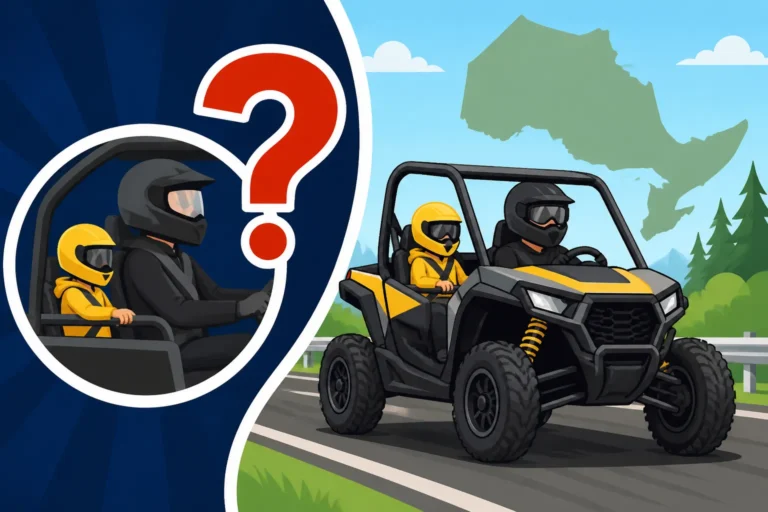
- Seating: Passengers can only be carried if the ORV is specifically designed by the manufacturer to carry more than one person and is equipped with a designated seat for each passenger.
- Road Types: ORVs are generally allowed only on roads where municipalities have passed specific bylaws to open them. Provincial highways and 400-series highways are almost always off-limits. You'll want to review [Ontario Municipalities That Allow ATVs on Roads].
Challenges and Considerations for Electric ORVs
While the general rules apply, electric ORVs do present some unique considerations, mostly related to how existing regulations were phrased:
- "Muffler" Requirements: Some parts of the Highway Traffic Act or Off-Road Vehicles Act refer to mufflers. Clearly, an electric ORV doesn't have an exhaust or a muffler in the traditional sense. However, the intent behind muffler laws is typically about noise reduction. Electric ORVs are inherently quiet, which is one of their major appeals. It's generally understood that since they produce minimal noise, they inherently comply with the spirit of these regulations, even if the literal term "muffler" doesn't apply. You won't be fitting a SuperATV exhaust system to an electric machine, for example!
- Weight: Some larger, heavier electric UTVs, especially those with substantial battery packs, might push closer to the ROV weight limit of 1,700 kilograms. It's crucial to know the curb weight of your specific electric machine to ensure it falls within the class definition if you plan on road use.
- Range Anxiety and Charging: While not a legal requirement, practical considerations like battery range and the availability of charging stations are significant for electric ORV owners planning road trips or longer rides that involve public roads. Unlike a gas station every few kilometres, charging infrastructure in remote trail areas might be sparse.
Municipal Bylaws and Electric ORVs
The ability to ride an electric ORV on a public road hinges almost entirely on local municipal bylaws. Ontario operates on an "opt-in" system, meaning a municipality must pass a bylaw to open its roads to ORVs. If no bylaw exists, or if it specifically prohibits ORVs, then you cannot ride there, regardless of whether your machine is electric or gas-powered.
It's vital to check the specific bylaws for any municipality you plan to ride in. Some bylaws might specify particular roads, hours of operation, or even classes of ORVs permitted. They rarely distinguish between electric and gasoline-powered machines, treating them simply as "ORVs." However, if a bylaw has unique conditions for sound emissions, the quiet nature of an electric ORV could be an advantage. You can learn more about [Checking a Township's ORV By-law].
Registration, Insurance, and Licensing for Electric ORVs
Navigating the administrative side of ORV ownership in Ontario – registration, insurance, and licensing – can sometimes feel like a maze. For electric machines, the good news is that these processes generally mirror those for their gasoline-powered brethren. The province focuses on the vehicle type (ATV, ROV, etc.) rather than its power source for these fundamental requirements.
Registering an Electric ORV with ServiceOntario
The first step to legal operation, whether on designated roads or even some trails, is getting your electric ORV registered. This process is handled through ServiceOntario centres. You'll typically need to provide:
- Proof of Ownership: This is usually your bill of sale, especially if you're the first owner or it's a new purchase. For used machines, the previous owner's permit is key. Even for an electric ORV, you need to prove you legally own it. If you're buying a used electric machine, you'll still want to perform checks like [Ontario ATV VIN Check Before Buying] and [Ontario ATV Lien Check Before Buying].
- Ontario Vehicle Permit Application: You'll fill out the necessary paperwork.
- Retail Sales Tax (RST): Unless you qualify for an exemption (like a family gift or farm use), you'll pay 13% RST on the purchase price. This applies equally to electric and gasoline ORVs. You can read more about [13 Percent RST on an Ontario ATV].
- Registration Fee: There is a one-time fee for the permit and plate. Unlike snowmobiles, ORVs in Ontario do not have an annual registration renewal fee. This is a common point of confusion, and you can find out more by reading [No Annual Renewal for an Ontario ORV].
Once registered, you'll receive an Ontario Vehicle Permit (formerly called a green ownership permit) and a licence plate. The permit identifies your specific machine, much like a car's ownership. The plate must be securely mounted and visible on your ORV. Many riders use robust aftermarket plate mounts, perhaps even from SuperATV, to ensure their plate doesn't get lost or damaged on rough trails.
Insurance for an Electric Machine
Just like any other motor vehicle used in Ontario, an electric ORV requires mandatory liability insurance if it's going to be operated anywhere other than on your own private property. This means if you plan to ride it on public roads (where permitted), Crown Land, or organized trail networks, you absolutely need insurance.
Finding insurance for an electric ORV should be similar to finding it for a gasoline ORV. Insurance companies typically classify policies based on the type of machine (ATV, UTV, etc.), its value, and how it will be used (e.g., trail riding, limited road use). Key things to consider:
- Liability Coverage: This is the minimum legal requirement and protects you against claims if you cause injury or damage to others or their property.
- Collision and Comprehensive: These optional coverages protect your own machine from damage or theft. Given the newer technology and potentially higher cost of some electric ORVs, this might be a worthwhile investment.
- Broker Specialization: Not all insurance brokers handle ORV policies. It's often best to seek out a broker who specializes in recreational vehicles or who is familiar with off-road insurance. They can help you find the best coverage options for your electric machine. [Insurance and Ontario ORV Registration] provides a deeper dive into this.
Licensing Requirements for Road Use
If your electric ORV is permitted on a public road by a municipal bylaw, the operator must hold the appropriate class of driver's licence. For most ATVs and UTVs (ROVs), this means a minimum of a G2 or M2 licence.
- G2 Licence: This is the second stage of Ontario's graduated licensing system for cars. If you have a G2 or full G licence, you can operate an ORV on a road where permitted.
- M2 Licence: This is the second stage of Ontario's graduated licensing system for motorcycles. If you have an M2 or full M licence, you are also permitted to operate an ORV on a road.
- G1/M1 Not Sufficient: Learners' permits (G1 or M1) do not permit you to operate an ORV on a public road, even if it's supervised.
This licensing requirement is another aspect that treats electric ORVs identically to their internal combustion engine counterparts. The focus is on ensuring the operator has demonstrated a baseline level of driving competency on public roads. You can find out more about [Ontario ATV Licence Requirements].
| Feature | Gasoline ORV | Electric ORV | Comments |
|---|---|---|---|
| Registration | Required, one-time fee, no annual renewal | Required, one-time fee, no annual renewal | Process is identical; focus on vehicle type. |
| Licence Plate | Required, must be displayed | Required, must be displayed | No difference; ensure it's securely mounted. |
| Insurance | Mandatory for public road/trail use | Mandatory for public road/trail use | Identical liability requirements. |
| Driver's Licence | G2/M2 minimum for road use | G2/M2 minimum for road use | No difference in licensing for operation. |
| Helmet | Mandatory for operator/passenger on roads | Mandatory for operator/passenger on roads | Universal safety requirement. |
| Lights/Mirrors/Horn | Required for road use | Required for road use | Aftermarket options like those from SuperATV can ensure compliance. |
| Speed Limits | 20/50 km/h on permitted roads | 20/50 km/h on permitted roads | Speed restrictions apply equally. |
| Muffler Requirement | Explicitly required for noise control | Not applicable, but quietness is an advantage | Electric ORVs inherently meet the spirit of noise rules. |
| Fueling/Charging | Gas stations widely available | Charging infrastructure less common in trail areas | A practical consideration for longer rides. |
The Future of Electric ORVs and Ontario Regulations
The landscape for off-road vehicles is constantly evolving, and the rise of electric machines is a significant part of that. While Ontario's current regulations are generally adaptable enough to include electric ATVs and UTVs, it's fair to anticipate that specific discussions and potential adjustments might arise as these vehicles become more prevalent.
Emerging Trends and Technology
Electric ORVs are rapidly improving in terms of battery range, power output, and charging speed. We're seeing models emerge with performance comparable, or even superior, to their gas counterparts, particularly in terms of instant torque.
- Battery Technology: Advances in lithium-ion batteries are leading to longer ranges and faster charging times, addressing some of the earlier "range anxiety" concerns.
- Performance: Electric motors deliver immediate torque, which can be a huge advantage for climbing hills or navigating tricky terrain.
- Charging Infrastructure: While still nascent in remote areas, the growth of charging stations in towns and at trailheads will be crucial for broader adoption. Some forward-thinking trail associations might even start installing charging points.
- Quiet Operation: The near-silent operation is a major draw for many, reducing noise pollution for riders and wildlife, and making for a more peaceful trail experience.
Potential Regulatory Changes for Electric ORVs
As electric ORVs become more common, it's possible that Ontario's regulations might evolve to address them specifically, rather than just subsuming them under existing gas-powered definitions. These changes could include:
- Specific Definitions: The province might introduce clearer definitions for "electric off-road vehicles" to avoid ambiguity around terms like "engine" or "muffler."
- Weight Class Adjustments: If battery technology significantly increases the weight of electric ORVs, there might be discussions about adjusting weight limits for ROV classifications to accommodate them without unfairly restricting their use.
- Environmental Incentives: While not directly related to road use, future policies might include incentives for purchasing electric ORVs, aligning with broader environmental goals.
- Noise Regulations: Although electric ORVs are quiet, there could be discussions about minimum sound requirements (e.g., a pedestrian warning sound) for safety in certain environments, similar to what's being explored for electric cars.
These potential changes would likely be a response to the market, ensuring that regulations keep pace with technological advancements while maintaining safety and public interest.
Community and Environmental Impact of Electric Riding
The appeal of electric ORVs goes beyond just the novelty of new technology; it taps into significant community and environmental benefits.
- Reduced Emissions: Electric ORVs produce zero tailpipe emissions, contributing to cleaner air, especially in sensitive natural environments. This is a big win for conservation.
- Quieter Trails: The significantly reduced noise levels are a huge benefit. They allow riders to enjoy the sounds of nature more, minimize disturbance to wildlife, and lessen noise complaints from residents near trails. This can foster better relationships between riders and other trail users (hikers, cyclists) and local communities.
- Sustainable Recreation: For many, choosing an electric ORV is a step towards more sustainable recreational practices, aligning personal enjoyment with environmental responsibility.
- New Riding Experiences: The unique power delivery and quietness offer a different, often more immersive, riding experience that appeals to a new generation of off-road enthusiasts.
While electric ORVs still operate under the same framework as their gas-powered cousins when it comes to road legality and provincial regulations, their growth is undeniable. Understanding these rules, staying informed about potential changes, and appreciating the benefits they bring will allow riders to make the most of this exciting evolution in the off-road world. It's a journey, and with proper preparation, your electric machine can be a fantastic way to explore Ontario's diverse landscapes.
Disclaimer
This article is for general informational purposes only and does not constitute professional advice. Laws, prices and regulations vary by location and change over time. Consult a qualified professional for guidance on your specific situation.