Sharing VMUTS With Hikers and Cyclists
A ride on the Voyageur Multi-Use Trail can put ATVs and UTVs on the same route as hikers and cyclists, sometimes around a blind bend or a narrow section of trail. That can feel awkward if you are unsure who should yield or how much space to leave. This guide explains practical ways to share VMUTS safely and courteously.
What sharing the Voyageur Multi-Use Trail means
Expect different kinds of trail users
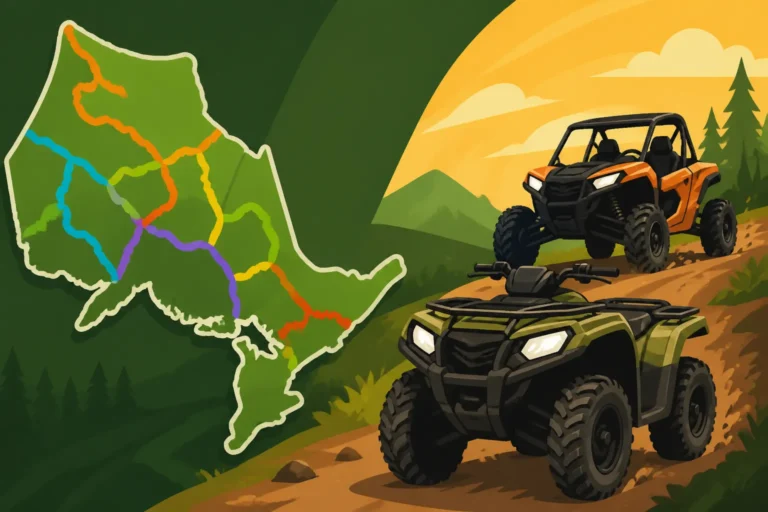
The Voyageur Multi-Use Trail System, commonly called VMUTS, is a network in the Mattawa area used by off-road vehicle riders and other outdoor users. Depending on the route and conditions, you may encounter hikers, cyclists, other motorized riders, or people travelling at a much slower pace. Do not assume every section has the same traffic, width, surface, or visibility.
That mix changes how you ride. A cyclist may approach quietly and quickly from behind, while hikers may be spread across the trail or walking with a dog. A family on foot might be listening to conversation rather than watching for an approaching machine. The person you meet may not know how wide your side-by-side is or how much room you need to stop.
Treat every encounter as a reason to slow down and communicate, not as an inconvenience. The shared route is more enjoyable when everyone has time to react. Before setting out, learn how the route fits into the wider local network through [Ontario's Voyageur Multi-Use Trail at Mattawa] and [Riding the Voyageur Multi-Use Trail].
Check the route before you ride
A multi-use trail does not mean every segment is open to every user at all times. A route can include different surfaces, narrow passages, local restrictions, temporary closures, or connecting sections with different rules. Check the relevant trail information before departure, then follow signs and directions on the ground. If a map and a posted closure appear to conflict, do not ride past the closure just because your device still shows a line.
Plan around the people who may be using the route, too. A weekend, holiday, or popular staging area may bring more mixed traffic than a quiet weekday. If you are travelling with a group, agree on a pace that leaves room to stop, and make sure the lead rider knows the route. If you are exploring an unfamiliar section, review [Ontario Trail Conditions Before You Ride] and [Trail Closures to Check First] before heading out.
Digital navigation can help you understand where you are, but it is not a substitute for local signs or current trail information. Some riders use onX Offroad to review a route and keep their position visible while riding. Check that the map information suits the area and trip, and carry a backup way to navigate in case your phone loses power, signal, or access to the map.
How to approach hikers and cyclists
Slow down early and make your presence clear
The safest time to reduce speed is before you reach another trail user, not once you are already beside them. Ease off the throttle as soon as you see someone ahead, hear voices, or approach a bend where sightlines are limited. On loose gravel, mud, or uneven ground, braking suddenly can make the machine harder to control and may throw debris toward people nearby.
Approach steadily and predictably. Avoid revving the engine to announce yourself, accelerating to get past quickly, or assuming the other person has seen you. A calm greeting or a brief, non-startling signal can help, but leave enough distance for the hiker or cyclist to understand what you intend to do. If they look uncertain, stop and give them time.
Dust and noise can make an encounter unpleasant even when nobody is in immediate danger. Slow down enough to reduce the dust cloud, especially when the trail is dry and a group is walking close together. If you are riding a UTV, remember that its size and engine sound may feel imposing to someone on foot. A considerate pace makes the same machine seem far less threatening.
Pass only when there is room and everyone understands
Do not squeeze past a hiker or cyclist on a narrow trail simply because there is technically space for the machine. Wait for a wider, stable area where you can pass without pushing someone toward a steep edge, soft shoulder, ditch, or vegetation. If you cannot see a safe passing spot ahead, stop and ask whether the person would prefer to move to a suitable place.
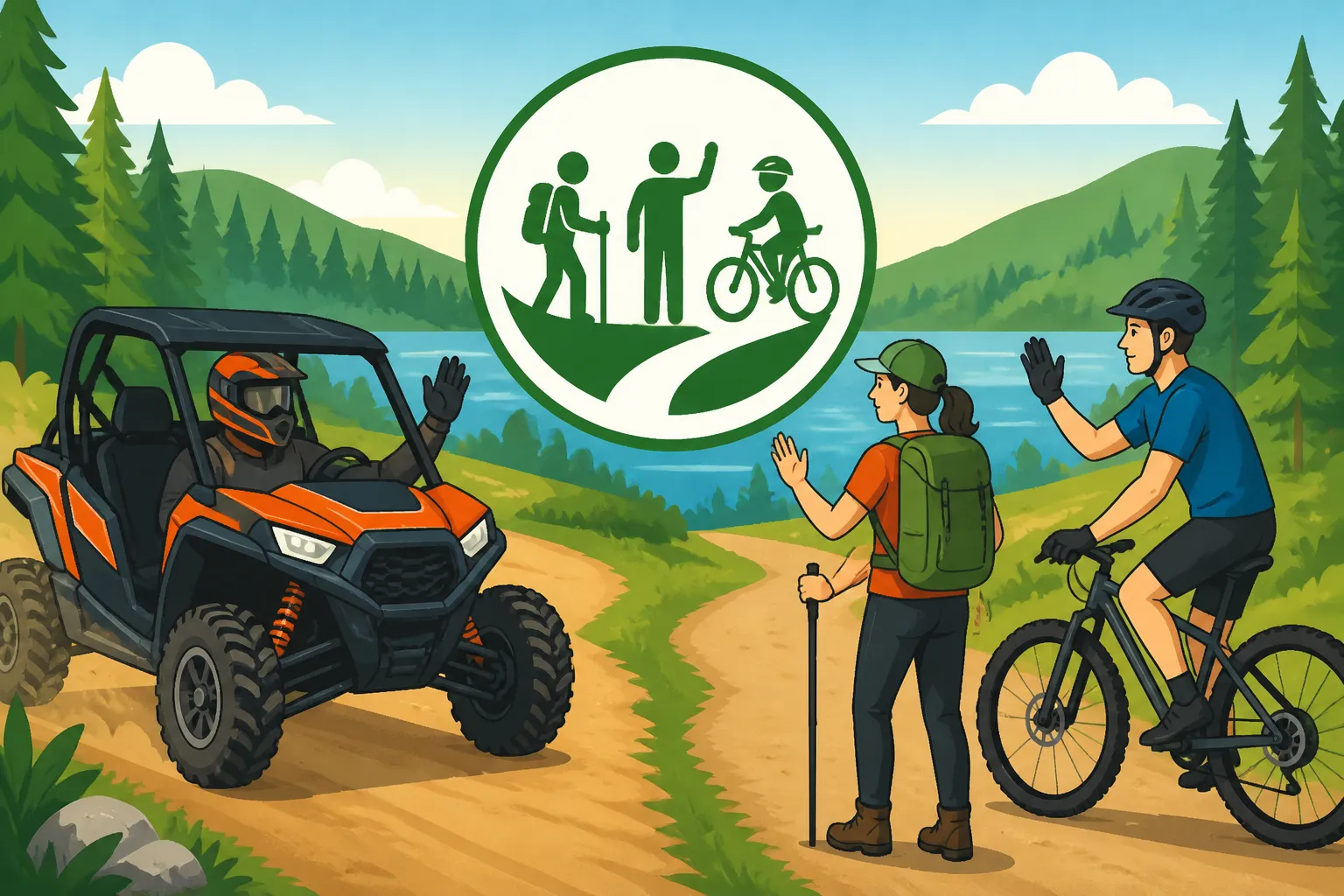
A useful encounter is simple: slow down, make eye contact if practical, give a friendly greeting, and wait for a clear indication that the other user is comfortable with you proceeding. Do not assume that silence means they have heard you or know which side you plan to use. Keep your machine straight and controlled, and leave as much room as the trail allows.
If the trail is too tight or the terrain is awkward, waiting is usually the better choice. A few seconds of patience is easier than trying to reverse a wide UTV on a slope or repair a strained interaction after a close pass. If you are riding with a group, let the hikers or cyclists clear the pinch point before the whole group moves through.
| Situation | Safer response |
|---|---|
| Hikers ahead on a narrow section | Slow down early and wait for a suitable place to pass |
| Cyclist approaching from behind | Check mirrors or surroundings, keep a predictable line, and avoid sudden moves |
| Blind bend or crest | Reduce speed enough to stop within the visible trail |
| Dusty, dry surface | Ease off and allow dust to settle before passing |
| Hiker with a dog | Stop or move slowly only when the handler has control and the path is clear |
| No safe passing area | Wait rather than forcing a pass |
Safe habits for mixed-use riding
Ride at a speed that matches what you can see
A trail’s posted or permitted speed is not a promise that it is safe to travel that fast in every condition. Your practical speed should allow you to stop within the distance you can see. That matters on VMUTS where bends, hills, trees, washouts, and other trail users can limit your view.
Keep extra room between machines. If the rider in front stops for hikers, a cyclist, or an unexpected obstacle, you need enough space to slow without swerving. On a group ride, brief the riders behind you before narrow or busy stretches, and avoid pressuring the lead rider to keep moving when the trail calls for a pause.
A navigation app can help with orientation, but it cannot tell you that a person is just beyond a blind corner. Riders who use onX Offroad should still look up, read the terrain, and follow local markers rather than focusing on the screen. Review [Following Club Trail Markers] before relying on a digital route alone.
Keep the trail and its edges in good shape
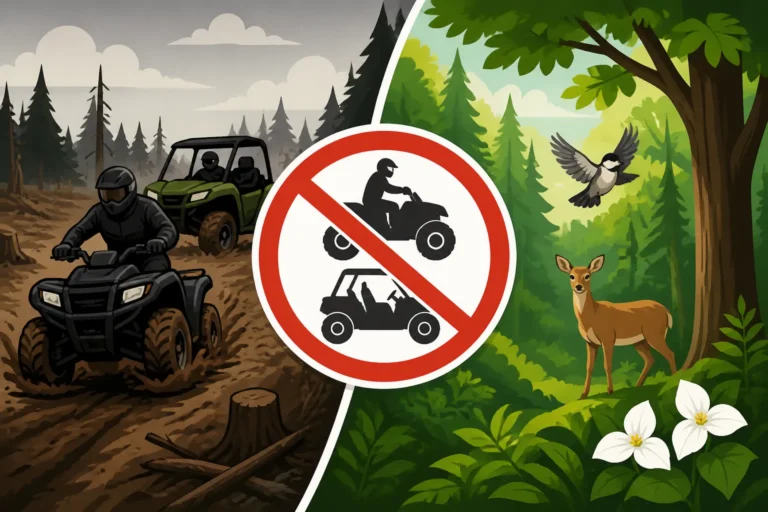
Passing off the trail can damage vegetation, widen the route, and create new ruts. It may also put you onto unstable ground or into an area where riding is not allowed. Stay on the designated route and use an established wider section for passing. If there is no safe way to get by, wait rather than making a new track around another user.
Mud and standing water deserve particular care. A bypass around a wet spot can quickly turn into a wider scar, especially when several machines follow the same line. If conditions are poor, slow down and avoid aggressive acceleration that spins tires or sends dirt toward people nearby. Trail condition matters to hikers and cyclists as well as motorized users: a damaged section can become harder for everyone to cross.
Pack out what you bring in, and do not leave litter, broken parts, or food scraps at a stopping spot. A clean trail is a basic courtesy, but it also helps keep wildlife from being drawn to places where people gather. Good shared-use habits are part of following [Ontario Rules for Riding Off the Trail] and respecting the route as a place used by more than one kind of traveller.
Plan for a smoother shared-trail ride
Set expectations with your group before departure
A group ride is easier to manage when everyone knows the basic plan before the machines start moving. Agree that riders will slow down near other trail users, keep a sensible gap, and stop at a safe location if the group becomes separated. Choose a lead rider who knows the route and a sweep rider who can notice if someone falls behind.
Talk through hand signals or simple verbal cues, especially if engine noise makes conversation difficult. A rider who spots hikers ahead should alert the rest of the group early enough for the line of machines to slow gradually. Avoid bunching up at a narrow crossing or crowding people who are trying to pass.
If someone in the group is new to off-road riding, explain that sharing the trail is not a race. Give them time to practise smooth braking and controlled starts before entering busier sections. When you use onX Offroad to review the route together, identify likely stopping points and places where the group can pull over without blocking the trail.
Be ready to change plans
Trail use and conditions can change during the day. A route that felt quiet in the morning may be busier later, and rain can make a surface slippery or soft. If a section is closed, crowded, or uncomfortable for your group, turn around or choose an appropriate alternative rather than trying to push through. Checking [Getting Lost Between Two Club Areas] can also help you think ahead about route transitions and navigation when riding beyond familiar ground.
Carry enough water, basic repair items, and a charged phone or other navigation backup for your outing. Tell someone where you plan to ride and when you expect to return, particularly if you are exploring remote sections. Use onX Offroad or another map tool as one part of your plan, not as the entire safety plan; keep track of trail markers and be prepared to retrace your route if needed.
If an encounter becomes tense, keep your voice calm and give people space. Do not argue on the trail or try to force a pass. Move to a safe place, let the other user continue, and carry on once the route is clear. A courteous pause can prevent a small misunderstanding from spoiling the day for everyone.
Disclaimer
This article is for general informational purposes only and does not constitute professional advice. Laws, prices and regulations vary by location and change over time. Consult a qualified professional for guidance on your specific situation.