Why Every Rider Needs a Ganaraska Forest Day Pass
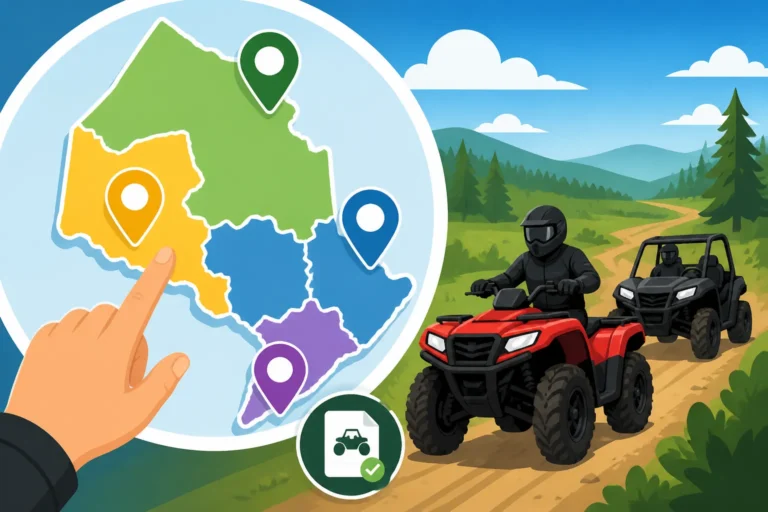
A Ganaraska Forest ride can go sideways before the first trail if you arrive without the right access pass, park in the wrong place, or assume every section is open to motorized vehicles. This guide explains when a day pass is needed, what to check before you leave, and how to ride responsibly in the forest.
What a Ganaraska Forest day pass does
It confirms your permission to ride
A day pass is your authorization to use the forest for a ride on the day it applies to. It is not the same as your ATV or UTV registration, insurance, or an Ontario trail permit. Those documents and permissions serve different purposes, and one should not be treated as a replacement for another.
That distinction matters when you’re planning a quick outing. A rider may have a registered machine and be fully insured, yet still need a separate pass to use the Ganaraska Forest. Likewise, having a pass does not automatically mean every trail, entrance, or forest section is open to your vehicle. Check the access conditions and the pass requirements before heading out.
If you ride often, compare the day-use option with any annual access option available for your intended use. A rider whose plans change from a single Saturday to several visits may find a different type of pass suits them better. Start with [Ganaraska Forest Fees for Ontario Riders] and confirm what each option covers before paying.
It helps support managed access
A pass is not just a formality at the trailhead. Managed access helps the forest operator oversee recreational use, maintain facilities, communicate rules, and protect the places where motorized riding is allowed. Those details are easy to overlook when all you want is a day on the trails, but they help keep the riding area available and usable.
The forest is not an unrestricted, open-to-everyone riding zone. Access is organized, and permitted use can depend on where you enter, when you visit, and what kind of activity you plan to do. A pass should be treated as part of your ride planning—not something to sort out only if you happen to see a sign or meet a staff member.
Don’t assume one person’s pass covers everyone in the group, or that a vehicle pass and a rider pass mean the same thing. Read the current instructions for the pass you’re buying, especially when bringing passengers, children, or multiple machines. The right answer can depend on the pass type and the forest’s rules for that visit.
Check your pass and access plan before leaving home
Match the pass to your group and vehicle
Before purchasing, work out who is riding, who is driving, and what vehicles are coming. If you’re towing an ATV or UTV to the forest, separate the question of where the tow vehicle can park from the question of who is authorized to ride. Parking arrangements and riding access may have different requirements. Check [Ganaraska Forest Parking Passes for Tow Vehicles] rather than assuming a riding pass automatically covers the truck and trailer.
Families should be especially careful about age-related rules and pass categories. A young passenger may not need the same authorization as a youth operator, and a child riding a machine is not in the same situation as an adult accompanying them. Review the details in [Youth Rates in the Ganaraska Forest] and confirm any age or supervision rules that apply to your plans.
A useful pre-purchase checklist is:
| What to confirm | Why it matters |
|---|---|
| Which pass is valid for your visit | A day-use pass and an annual option may have different conditions |
| Who needs a pass | Group size, passenger status, and youth rules may affect what to buy |
| Whether parking is covered | Tow vehicles and trailers may have separate parking instructions |
| Where motorized riding is allowed | Forest sections and trails do not all have the same access |
| The date and hours of access | Seasonal schedules and daily operating rules can affect your ride |
| What proof to carry or display | Be ready to show the pass as directed by the forest operator |
Save your confirmation or other proof in a place you can access at the trailhead. If the pass instructions require a display method, follow it exactly. A pass sitting in an inbox that you can’t open where there is poor reception is not much help when you need to demonstrate that you have permission.
Check the season, hours, and closures
A day pass is not a promise that the forest will be open for motorized riding on every date. Seasonal schedules, trail conditions, maintenance, special events, or temporary closures may affect access. This is particularly important in spring, when soft ground can be damaged by early riding and clubs or land managers may limit use while trails recover.
Before you go, check [The Ganaraska Motorized Season in Ontario] and look for current notices about the specific area you plan to visit. If you are planning around daylight, don’t assume you can arrive late and make up time after dark. Review [Dawn to Dusk in the Ganaraska Forest] and leave enough time to finish your ride and return to the parking area within the permitted hours.
Weather can change a route quickly. A trail that seemed straightforward on a dry day may become slippery, deeply rutted, or difficult to navigate after rain. Check [Ontario Trail Conditions Before You Ride], and be prepared to change your route—or postpone the outing—if conditions are poor. A paid pass does not make a closed or unsafe trail appropriate to ride.
Know where you can ride in the Ganaraska Forest
Use the motorized areas designated for your activity
The Ganaraska Forest includes different areas, and their access rules are not interchangeable. Riders should identify the authorized motorized riding area before unloading rather than following another vehicle or assuming the nearest trail is open to ATVs and UTVs.
For example, consult [Riding the Ganaraska West Forest] and [Riding the Ganaraska East Forest] when deciding where to begin. Check maps and signs at the entrance, and stay on routes designated for your vehicle and activity. If a trail is marked closed, restricted, or intended for another use, don’t treat the marking as optional.
A particularly important point is that not every part of the forest is open to motorized use. [Why the Central Forest Bans Motors] explains why riders should not assume that a pass gives them permission to ride through the central section. Plan a route that stays within the areas and trails authorized for your ride.
Use maps as support, not as permission
A navigation app can be useful when you’re trying to keep track of turns, locate your starting point, or avoid losing your way after a fork. Apps such as onX Offroad can help you organize a route and review mapped information before setting out. Download the information you’ll need before leaving home, since a phone signal can be unreliable in wooded areas.
But a line on an app is not proof that a trail is currently open or that motorized riding is allowed there. Map data may not reflect a recent closure, a seasonal restriction, or a sign posted at the trail. Use official forest information and on-site signs as your authority, and treat onX Offroad as a navigation aid rather than a substitute for permission.
Before the ride, zoom in on your planned route and note the entrance, parking area, and a few landmarks. Tell your group where you intend to go, especially if riders are travelling at different speeds. If you turn around because a route is blocked or conditions deteriorate, regroup somewhere safe rather than continuing onto an unfamiliar trail to “see where it goes.”
Make the day pass part of a safer ride
Arrive prepared for the trailhead
A smooth ride starts before the machines come off the trailer. Confirm the pass is valid for the date, review where to park, and make sure each rider knows which forest area is the destination. If you are unsure where ORVs should be left, check [Where ORVs Park at the Ganaraska Forest Centre] and follow posted directions rather than using an unmarked shoulder or blocking access.
Bring the documents and equipment required for your ride, and check that your machine is in suitable condition. A loose plate, low tire pressure, weak battery, or missing basic tool can turn a short outing into a frustrating one. Carry water, weather-appropriate clothing, a charged phone, and a way to communicate with the rest of your group. For longer rides, agree on a meeting point in case someone takes a wrong turn.
Keep your pass proof accessible, but don’t let paperwork distract you from riding safely. At the entrance, stop and read the signs. Confirm that you are in the right place and that your planned route is open. If staff or posted instructions direct you elsewhere, adjust the plan before unloading or setting off.
Respect closures and other forest users
The forest is a shared outdoor space. You may encounter hikers, cyclists, horseback riders, other motorized users, or people working in the area. Slow down where visibility is limited, give other users room, and avoid aggressive acceleration or unnecessary noise. Stay on the marked route instead of creating a shortcut around mud, puddles, or a closed section.
If you find a closure, turn around. Riding around a barrier or taking an unmarked bypass can damage the ground and create new routes that other riders may mistake for approved trails. It can also put you somewhere your pass does not authorize you to ride. The same principle applies after heavy rain: if a trail is deteriorating under your tires, choosing another route is better than leaving deep ruts for the next visitor.
When the ride is over, follow the parking and exit instructions, secure your machine for the trip home, and check that you have not left litter or equipment behind. A day pass provides access under the forest’s conditions; responsible behaviour helps protect that opportunity for the next rider. For an outing that feels relaxed rather than rushed, do the checks at home, arrive with a clear route, and leave room in the schedule to adapt.
Disclaimer
This article is for general informational purposes only and does not constitute professional advice. Laws, prices and regulations vary by location and change over time. Consult a qualified professional for guidance on your specific situation.