Bears on a Northern Trail
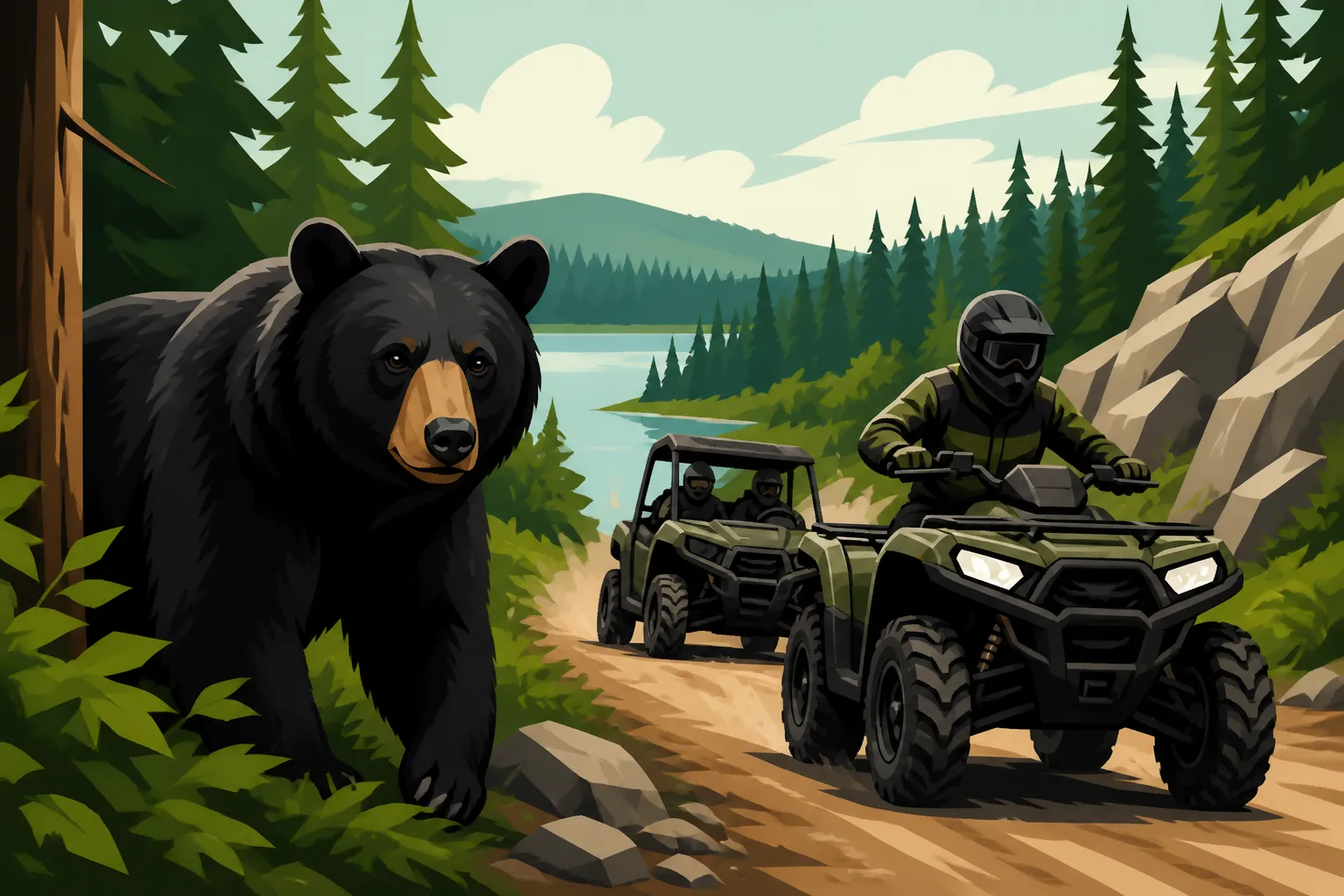
A bear on an Ontario trail can turn a relaxed ride into a tense one in seconds, especially when trees, bends and engine noise limit how much warning you get. Most bears want to avoid people, but riders still need a calm plan. This guide explains how to reduce surprise encounters, what to do if you see a bear, and how to prepare for remote northern routes.
Why bear encounters happen on northern ATV trails
Bears share the landscape with riders
Northern Ontario’s forests, wetlands and trail corridors are bear habitat. You may spot a black bear near Algoma, around Timmins, or on routes farther north and west of Lake Superior. A trail can also pass through feeding areas or connect patches of cover that bears use to move around. Seeing a bear does not necessarily mean it is looking for people or approaching your machine.
The risk often comes down to surprise and distance. A bear may be feeding, travelling, or tending to cubs when a quad or side-by-side appears around a bend. Brush can hide an animal until you are close, and a helmet, wind and engine noise can make it harder to hear movement. That is why slowing down where sightlines are short matters just as much as knowing what to do after a sighting.
Northern trail towns make useful starting points for exploring large, varied riding areas, but routes can quickly lead into places with fewer people and less cell coverage. Before heading out, check the local club’s trail information and plan the day with the remoteness of the route in mind. Ontario’s Northern Trail Towns offers a useful starting point for thinking about where you’ll ride and what kind of trip you’re planning.
Why bears may be near a trail
Bears use the landscape for food, water and travel. A trail may pass through berry patches, wetlands, forest edges or other places where food is available. A bear might also be near a trail because it is moving between areas, not because it has learned to associate riders with food.
Food and garbage left at a staging area or campsite can create a different problem by attracting wildlife to places where people stop. Keep snacks, coolers and food waste secured rather than leaving them open beside a parked machine. If you’re camping along a route, follow the site’s food-storage rules and leave the area clean when you go.
Cubs are a particular reason to give a bear extra room. A mother bear may react defensively if she thinks her cubs are at risk, even when a rider has no intention of approaching them. Never move closer to get a better look, and don’t ride between a bear and cubs. If you see a cub, assume the mother may be nearby and calmly create distance.
How to lower the chance of a close encounter
Ride at a pace that lets you react
Speed can shrink the time you have to respond when a bear appears around a blind corner. Ease off on narrow trails, in dense brush, near bends, and wherever the trail crests a hill or dips out of view. Keep enough space between machines that the first rider can slow down without the next rider crowding them.
Make your presence known in a natural way as you ride. Conversation between riders and ordinary engine noise can help prevent an animal from being startled, but don’t assume noise guarantees a bear will move away. A bear focused on food or hidden by vegetation may not notice you until you’re relatively close. Avoid deliberately chasing wildlife, revving at it, or using your machine to push it off the trail.
Good route planning helps too. Check trail conditions before setting out, especially after heavy rain or other changes that could affect visibility and travel time. Ontario Trail Conditions Before You Ride can help you build that check into your preparation. If you use onX Offroad to review a route, treat it as one planning aid—not a substitute for current local trail information, signage or club guidance.
Prepare for stretches without reliable service
A remote route can make an unexpected stop more complicated. Before leaving, share your planned route and expected return time with someone who is not riding with you. Agree on what they should do if they don’t hear from you. Carry the basics for an unplanned delay, such as water, suitable clothing, first aid supplies and a way to communicate when mobile service is absent.
Mobile coverage can change from one stretch to the next, and a map app cannot guarantee you’ll have a signal when you need it. Check coverage expectations before you go, and download any maps you’ll need while you still have service. Ontario Trails With Cell Coverage and Cell Dead Zones in the North can help you think through connectivity as part of route choice. Riders heading into especially remote areas may also want to consider a satellite communication device; Satellite Messengers for Remote Riding covers that planning question.
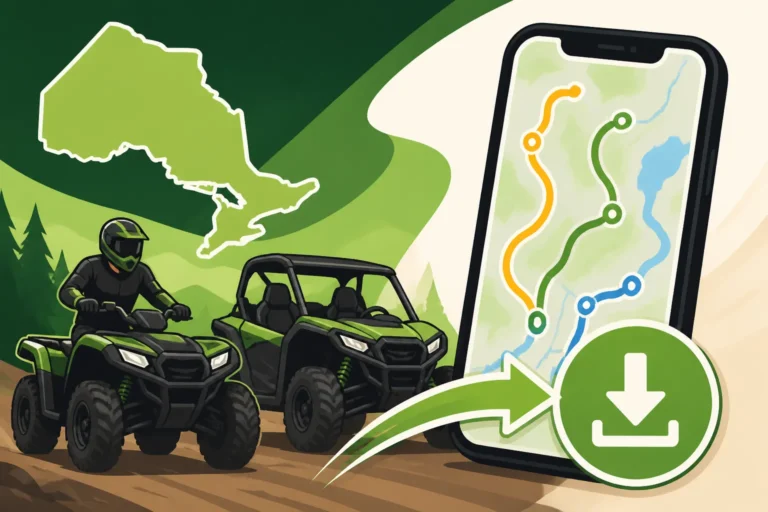
If you use onX Offroad, save or download the route information you need before losing reception and make sure you know how to read it offline. Keep a second navigation option or a paper map when the route is unfamiliar. Whatever tools you carry, tell your group the route plan before the ride begins rather than relying on everyone to discover the same details on a phone screen.
| Before the ride | Why it matters |
|---|---|
| Check local trail updates and closures | Detours and changing conditions can affect where you travel |
| Share your route and return plan | Someone outside the group knows where to look if you’re overdue |
| Download route information | Phone service may disappear outside town |
| Secure food and garbage | Food odours can draw wildlife toward stops or campsites |
| Carry communication and basic emergency supplies | A delay is harder to manage far from help |
| Discuss a bear response with the group | Riders can react calmly instead of making conflicting moves |
What to do if you see a bear
If the bear is at a distance
If you see a bear well ahead, slow down and stop at a safe distance. Don’t approach, surround it, or try to get a close photo. Give it an open route to move away. If it remains near the trail, wait quietly if there’s room to do so, or turn back and choose another route. Don’t ride toward it to make it leave.
Tell other riders in your group what you’ve seen and where the bear is. Keep the group together and avoid making sudden movements. If the bear moves away, give it time and space before continuing; don’t follow it into the woods. A calm retreat is usually a better choice than trying to pass close by.
When planning an unfamiliar area, think about how you’ll handle a blocked trail before you reach one. An offline route map can help you understand where a safe turn-around or alternate route may be, but the map should not persuade you to squeeze past a bear. OnX Offroad can be useful for reviewing route options in advance, while local signs and current club information remain important on the ground.
If the bear is close or approaches
Stay calm, keep the bear in view and avoid running. Speak in a steady, firm voice so the bear can identify you as human. If you’re with other riders, stay together and make yourselves appear larger without advancing. Slowly back away when you can, leaving the bear a clear escape route. Don’t turn your back or try to ride directly past it.
If the bear follows, stop and continue to appear non-threatening but assertive. A defensive bear may be reacting to surprise, cubs or a perceived threat; give it room and don’t corner it. Bear spray, where carried, should be accessible rather than buried in luggage, and riders should know how to use it before an emergency. Follow the product instructions and local guidance, and don’t treat it as a reason to get closer to wildlife.
If a black bear makes contact in an attack, fight back rather than playing dead. Use whatever is available to defend yourself and focus on the bear’s face and muzzle. The right response can depend on what the bear is doing, so prevention, distance and a calm retreat are the priorities. For more general wildlife awareness on evening routes, Moose on a Trail at Dusk is a useful reminder that bears aren’t the only animals that can appear with little warning.
After a sighting and planning a safer ride
When to report a bear
A bear sighting does not automatically mean there is an immediate public-safety emergency. But a bear that is acting unusually, repeatedly approaching people, entering a populated area, or creating an immediate danger should be reported through the appropriate local or provincial wildlife channels. If anyone is in immediate danger, contact emergency services.
When reporting, stick to useful details: the location, time, direction of travel, what the bear was doing, and whether cubs were present. Avoid approaching to get a closer look or collecting information that puts you at risk. If you’re on a club trail, you can also notify the local club so other riders can make informed decisions, while recognizing that a club notification is not a substitute for an urgent safety report.
After a close encounter, give the area space and let your group settle before continuing. Check that everyone is accounted for and uninjured, then decide whether to turn back or use a safe alternate route. Don’t return to the spot to look for the bear. If a machine has been stopped near food or garbage, secure those items before you move on.
Make wildlife awareness part of the ride plan
A safer ride is built from several small decisions: choose a route that fits your group, check for closures, carry the supplies you’ll need, and agree on how you’ll respond to wildlife. If you’re riding during hunting season, review local conditions and be especially deliberate about staying on authorized trails and following posted guidance. Ontario Riding in Hunting Season offers additional context for planning around seasonal activity.
Before leaving the staging area, make sure everyone knows the plan for a bear sighting: stop at a safe distance, keep the group together, don’t approach, and leave room for the animal to move away. Decide who will communicate with the group and who will manage navigation if you need to turn around. That conversation may feel unnecessary on a quiet morning, but it is much easier than trying to coordinate while startled.
Finally, choose information sources according to what they can tell you. Club updates and signs help with trail access and conditions; maps help with route planning; a communication device helps when mobile service is unavailable. OnX Offroad may support offline route preparation, but no map can show you where a bear is at a particular moment. Treat wildlife as unpredictable, give it room, and be ready to change the ride rather than force a pass.
Disclaimer
This article is for general informational purposes only and does not constitute professional advice. Laws, prices and regulations vary by location and change over time. Consult a qualified professional for guidance on your specific situation.