Why Clubs Rest Trails in April
April can look like perfect riding weather in Ontario: the snow is retreating, the sun is out, and your machine is ready to go. But trails can still be soft and waterlogged beneath the surface. This guide explains why clubs pause riding, how early traffic damages trails, and what to check before planning a spring ride.
Why Ontario ATV clubs rest trails in April
The ground can be soft even when the trail looks dry
A trail may appear firm on top while the soil underneath is still saturated from melting snow and spring rain. As the ground thaws, water fills spaces in the soil and weakens its ability to support the weight of an ATV or UTV. A sunny afternoon can dry the surface without making the deeper trail bed ready for traffic.
That mismatch is one reason April riding can leave damage that is not obvious until later. A machine may press through a thin, dry crust and sink into softer ground below it. Tires then push soil aside, compact the trail, or carve ruts that direct water into the riding line.
The risk is not identical across Ontario. A shaded trail near North Bay may remain frozen or wet after a south-facing route near London has dried out. Even within one trail system, a gravel section, a low-lying wooded stretch, and a sunny ridge can be in very different condition. Clubs often make decisions for the whole route they manage, not just the section that looks ready from the staging area.
Freeze-thaw cycles make spring trails unpredictable
Spring weather often swings between freezing nights and warmer days. Water can seep into the trail, freeze, expand, and loosen the soil. When it thaws again, the surface may be weak or uneven. Repeated cycles can make a trail vulnerable even when there has been no heavy rain.
The problem is especially noticeable where water collects: low spots, shaded hollows, creek approaches, and poorly drained sections. A rider can cross a firm stretch and suddenly find a soft patch where the tires churn the soil. Turning around or trying to skirt the puddle can widen the trail and damage vegetation along the edge.
This is why a trail’s appearance on one day is not a reliable promise that it will stay rideable. A warm spell can be followed by rain, overnight frost, or another thaw. Ontario clubs may use seasonal closures to give trails time to drain and firm up rather than reopening each section every time the weather briefly improves. For a broader look at how changing conditions affect access, see Ontario Riding Seasons and Club Closures.
Clubs are protecting more than the trail surface
A spring closure is not simply about keeping mud off machines. Trail damage can affect drainage, safety, and the surrounding land. Ruts may trap water, wash out soil, or redirect runoff toward a stream or wetland. A damaged section may also become harder for emergency responders or maintenance crews to navigate.
There is a practical cost, too. Many club trails depend on volunteers who clear debris, repair drainage, maintain signs, and address erosion. If early traffic creates avoidable repairs, volunteers may need to spend time fixing damage instead of improving other sections of the network.
Clubs also have to consider land access. A route can cross private property, municipal land, or other areas governed by specific permissions. Persistent damage can strain relationships with landowners and local partners. Resting the trail is one way clubs try to keep access sustainable for the rest of the season. The link between early riding and lasting trail wear is explored further in Trail Damage From Early Riding.
What early riding does to an ATV trail
Ruts can change how water moves
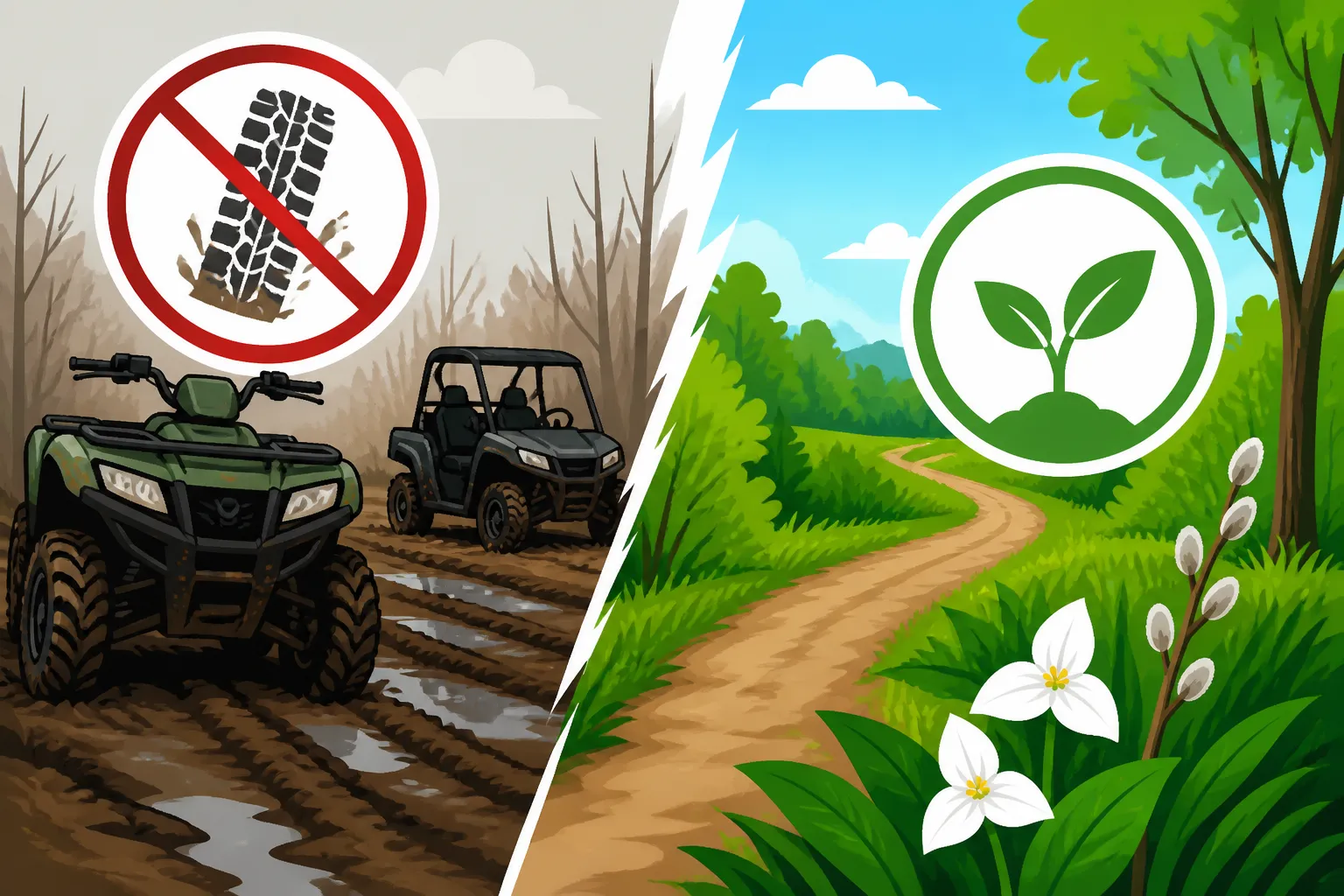
A rut is more than an untidy mark in the mud. Once tires create a groove, water can follow it downhill instead of draining across the trail in a controlled way. That flow may deepen the rut, carry soil away, or leave a section boggy long after the surrounding ground has dried.
Riders sometimes try to avoid a muddy rut by steering around it. That can create a second track beside the original one, gradually widening the trail. If enough riders do this, vegetation gets crushed and the usable trail becomes broader and less stable. A small wet patch can turn into a larger repair job.
For example, imagine a low section in a wooded trail near Bancroft. One rider pushes through and leaves two deep tracks. The next rider avoids them by riding along the shoulder. After repeated passes, the original line holds water while the shoulder has also been disturbed. A club may then need to reshape the surface or redirect drainage before the route is safe to reopen.
Mud does not always mean a trail is ready for traffic
It is tempting to think that a capable machine can handle whatever mud the trail offers. But a machine’s ability to move through a wet section is different from the trail’s ability to recover from that traffic. Deep tread, added weight, and repeated passes can churn soft ground, even if the rider makes it through without getting stuck.
Trying to power through can also create safety problems. A machine may slide, lose traction, or become stuck in a place where turning around is difficult. Riders who stop to assist may further disturb the trail, and a recovery can be complicated if the ground cannot support a truck or other equipment.
If a club has closed a trail, a rider should not treat visible tracks, an open gate, or a passable-looking section as permission to ride. Signs may be missing or temporarily obscured, and access rules can apply to an entire route even where one portion seems dry. Check the club’s latest notices and use Ontario Trail Closures to Check First as a reminder to confirm access before setting out.
Damage can last well beyond the wet week
A trail that is heavily rutted in April may not return to good condition simply because the weather improves. Repairs can require filling and grading, restoring drainage, replacing signs, or waiting for the surface to stabilize. Until then, damage can make the route unpleasant or unsafe for riders later in the season.
Repeated early traffic can also make a trail more vulnerable during the next storm. A compacted or uneven surface may shed water differently, while exposed soil can erode. The effects are not always dramatic or immediate, which is why a rider may feel that one pass “didn’t hurt anything” even though many passes can add up.
Respecting a closure is a way to protect the riding opportunity you want later. If a route is officially closed, choose another activity rather than looking for an unofficial way around it. For more on how rainfall and surface conditions affect access, see Ontario Trail Conditions After Rain and Ontario Riding After Spring Thaw.
How clubs decide when trails can reopen
Reopening depends on conditions, not just the calendar
There is no single April date that makes every Ontario trail ready. Clubs may consider ground firmness, drainage, recent rainfall, snowmelt, the condition of bridges or culverts, and whether maintenance work is complete. A trail that dries quickly in one area may remain unsafe in a shaded or low-lying section.
The decision can also depend on the club’s capacity to inspect and maintain its routes. Volunteers may need time to check for washouts, fallen trees, damaged signs, or water flowing across the trail. If the network includes many kilometres, reopening is not necessarily as simple as checking one access point.
Some clubs set seasonal closure periods, while others make announcements based on observed conditions or route-specific maintenance. That is why it helps to read the latest notice from the club responsible for the trail rather than relying on last year’s opening date or a friend’s report from another area. Ontario Clubs That Reopen May First offers a related look at how reopening schedules can work.
Local closures can differ across nearby areas
Ontario’s riding regions have different weather, soils, elevations, and trail layouts. A route near the shore of Lake Ontario may dry earlier than a shaded interior trail. Northern systems can have lingering snow or frozen ground while southern trails are already seeing warm, wet conditions. Even neighbouring club areas can reach rideable conditions at different times.
A club’s closure may also apply to only part of its network. Some sections may be affected by water, logging, maintenance, or land-access concerns, while others are in better shape. Still, riders should not assume that an apparently open segment can be reached legally by crossing a closed one. Confirm the route and access points with the club before leaving home.
Digital maps can help with planning, especially when you are comparing trail options or saving navigation details. onX Offroad may be useful as a supplemental planning tool, but it should not replace the responsible club’s closure notices or posted signs. Use onX Offroad to help orient yourself, then confirm that the specific trail is open through an official club channel. That extra check can save a long drive to a closed staging area.
A trail status update is more useful than a photo
A photograph can show a dry section at one moment, but it cannot tell you whether the full route is open, whether access has changed, or whether conditions have worsened since the picture was taken. A recent club update is more useful because it can include route-specific information and explain the reason for a closure.
Before heading out, check the club’s website or social channels, look for posted notices at staging areas, and confirm which trail permit or access rules apply. If you use a mapping app, download or save useful information before entering an area with weak service. onX Offroad can support offline trip planning where its available map features suit your route, but the official trail status still needs to come from the club that manages access.
A sensible spring checklist includes:
- Identify the club or organization responsible for the trail.
- Check its latest closure and reopening notices on the day you plan to ride.
- Confirm that your intended access point and connecting routes are open.
- Review trail conditions and recent weather, not just the forecast.
- Have a backup plan in case the route is closed or conditions change.
- Turn around if you encounter a closure sign or unexpectedly soft ground.
For a more detailed pre-ride routine, see Ontario Trail Conditions Before You Ride.
What to do while trails are resting
Use April to plan a better ride
A closure does not have to mean losing the whole month to guesswork. Use the downtime to choose a destination, check the route’s access requirements, and make sure your machine is ready for the season. You can also contact a club or review its updates to understand when it expects to assess conditions again.
If your preferred trail system is still closed, avoid treating another club’s open status as proof that the nearby network is ready. Conditions and permissions can change from one area to the next. Confirm the exact route, and make sure any road connections or private-land crossings are permitted before travelling.
Planning tools can help you compare routes, keep notes, and prepare for limited cell coverage. onX Offroad may help with navigation preparation, but always pair app-based planning with current club information and signs on the ground. A saved route is not authorization to ride a closed trail.
Keep the trail narrow and leave wet sections alone
Once trails reopen, ride within the marked route and avoid widening it to get around a puddle. If a section looks too soft, do not assume that riding through once will be harmless. Turning back is often better than leaving ruts that other riders will follow or deepen.
Follow posted directions, stay off closed connectors, and give maintenance crews room to work. If you see a washout, fallen tree, or damaged sign, report it to the organization responsible for the trail rather than attempting an unsafe repair yourself. Good reports can help clubs prioritize repairs and communicate conditions to other riders.
The goal is not to avoid every muddy patch forever. It is to let trails recover when they are most vulnerable and use them responsibly once they are open. That small pause in spring helps protect the surface, the volunteers’ work, and the access riders rely on for the rest of the season.
Disclaimer
This article is for general informational purposes only and does not constitute professional advice. Laws, prices and regulations vary by location and change over time. Consult a qualified professional for guidance on your specific situation.