Volunteers Who Cut the Trail You Ride
A trail that looks effortless from the seat of a quad may have taken hours of volunteer work to make rideable. Riders often notice a fallen branch or a muddy rut only when it slows them down, but clearing and maintaining an Ontario trail involves planning, permission, safety, and ongoing care. This guide explains what trail volunteers do, how riders can help, and why respecting closures matters.
What trail volunteers do before and after you ride
Trail work is more than clearing branches
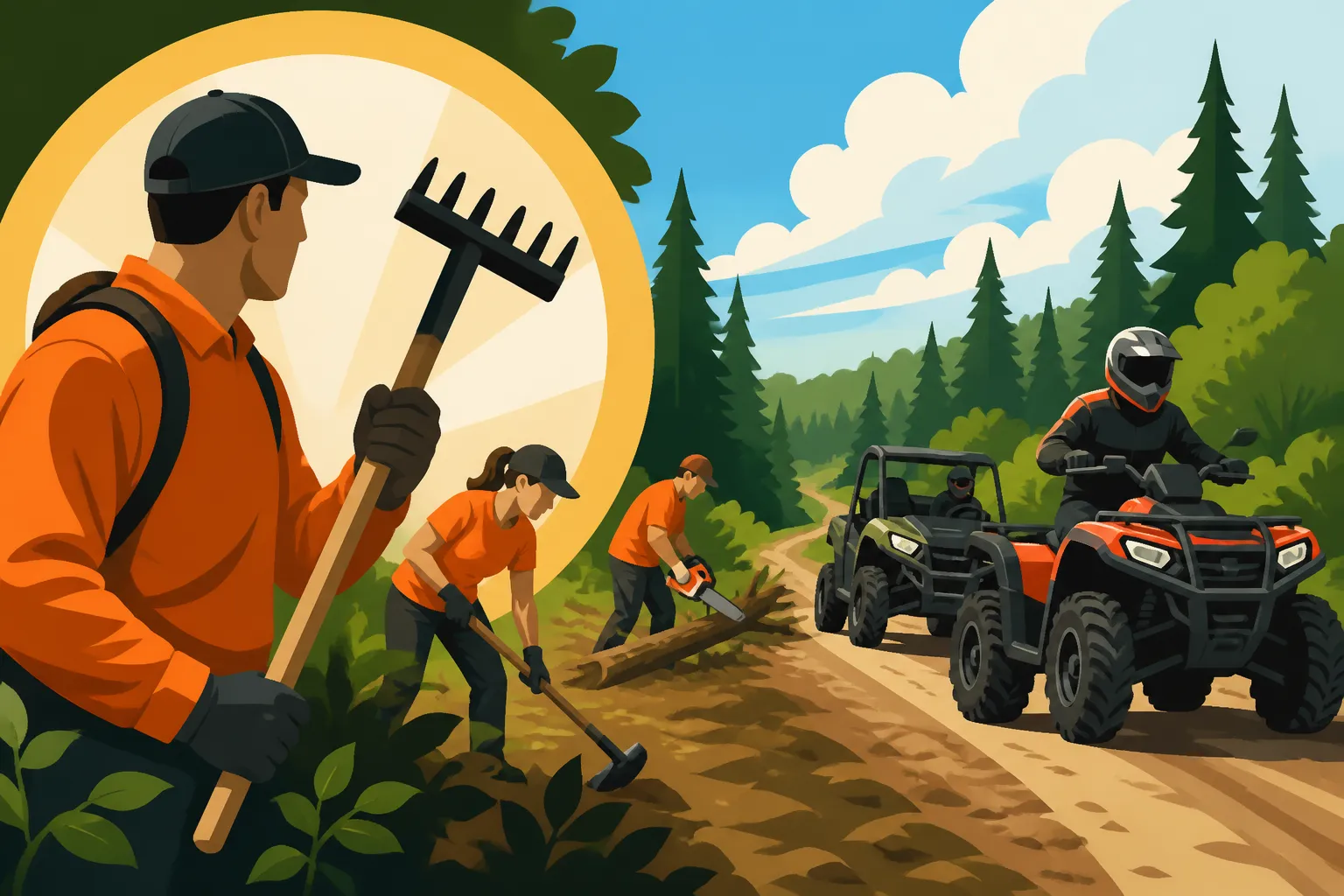
When riders talk about volunteers “cutting a trail,” they often mean clearing brush and fallen limbs from an existing route. But maintaining a trail can involve much more: checking the route, removing hazards, improving drainage, repairing signs, and reporting damage that needs a larger crew or special equipment.
The work usually starts with observation. A volunteer may walk or ride an authorized section and note a tree across the trail, a washed-out crossing, missing signage, or a spot where water is collecting. Small jobs may be manageable for a trained volunteer. A damaged bridge, unstable bank, or blocked route that crosses private land may require club coordination, landowner permission, or professional help.
The exact work depends on the trail and the organization responsible for it. A route through a forested area can need different attention from a rail trail or a path crossing a wet section. In every case, the goal is not simply to make the trail faster or wider. It is to keep an authorized route usable while limiting damage to the land around it.
That effort is one reason a marked route can feel very different from an unofficial track through the bush. Groups connected to Ontario’s OFATV Trail Network may coordinate trail access and maintenance across participating areas, but riders should check the rules and conditions for the specific club or trail they plan to use.
Maintenance is seasonal, not a one-time job
A trail can change quickly. A storm may drop branches across a route. Heavy rain can soften soil or expose a rut that was barely noticeable a week earlier. In spring, thawing ground may be especially vulnerable to damage from tires, even when a section appears dry at first glance.
That is why trail maintenance involves repeated checks rather than one big cleanup. Volunteers may need to revisit a section after bad weather, check whether a sign is still visible, or report a new washout. A route that was clear on one ride can be hazardous or closed on the next.
Closures can feel frustrating when you have driven a long way to reach a trailhead. Still, riding around a barrier or making a new path beside a muddy section can turn a manageable maintenance issue into lasting damage. Check Ontario Trail Closures to Check First and Ontario Trail Conditions After Rain before heading out, especially after a storm or during the spring thaw.
| Trail issue | Why volunteers or clubs may respond | What riders should do |
|---|---|---|
| Branches or a fallen tree | The obstacle may block passage or create a safety hazard | Do not assume it is safe to move; report it through the club’s preferred channel |
| Soft or waterlogged ground | Tires can deepen ruts and widen the damaged area | Turn back if the route is closed or visibly vulnerable |
| Missing or damaged marker | Riders may lose the route or take an unauthorized turn | Use an official map and report the missing marker |
| Damaged bridge or crossing | The structure may be unsafe or need specialized repair | Do not cross if it looks compromised |
| Maintenance closure | Workers may be using tools or the trail may need time to recover | Respect the closure and choose another open route |
Why responsible trail care depends on riders too
Staying on the marked route protects the work
A trail marker is not decoration. It helps riders follow an approved route and avoid wandering onto private land, sensitive areas, or sections that are not open to motorized use. When a turn is missed, it can be tempting to make a short detour through the trees and rejoin the trail farther ahead. That shortcut can become a new, unauthorized track—one that volunteers may later have to block or repair.
Take a moment to check the route before you ride, then pay attention to markers at junctions. A saved map can help, but it should complement official trail information rather than replace it. If you use a navigation app such as onX Offroad, compare what you see on-screen with the club’s current route information and posted signs. Digital map details can be useful for orientation, but they do not grant permission to ride a closed or unmarked route.
If you are unsure whether a path is part of the authorized trail, stop somewhere safe and check. Following Club Trail Markers and Reading a Club Trail Map can help you understand how to stay on the intended route. It is a simple habit that makes a real difference when many riders share the same network.
Mud, noise, and trail sharing affect the whole route
A muddy stretch can look like an invitation to open the throttle, but spinning tires may deepen ruts and push water and soil into nearby areas. If the surface is soft, turn around rather than trying to power through or widen the trail to find a firmer line. A volunteer may be able to address drainage or report the damage, but repeated traffic can make the problem much harder to manage.
Respecting other trail users matters, too. Some Ontario routes are shared with hikers, cyclists, snowmobilers, or other permitted users, depending on the location and season. Slow down when approaching people, give them room, and follow posted rules. If you encounter maintenance crews, stop when safe and wait for clear direction rather than riding around equipment or entering a work area.
Trail etiquette also includes keeping noise and conduct in check near homes, farms, and communities. Poor behavior can affect access for everyone, not just the rider responsible. Ontario Trail Etiquette With Snowmobilers offers a useful reminder that shared routes work best when users give one another space and follow local expectations.
How to help trail volunteers without creating extra work
Report problems clearly and safely
A useful report gives the club enough information to locate the issue. Note the trail name or nearby junction, describe what you saw, and include a landmark if you can identify one. If your device records a location, share it only through the club’s preferred reporting method. A photograph taken from a safe place may also help explain whether the issue is a small branch, a blocked crossing, or a larger hazard.
Do not stop in a blind corner or stand where another rider may come around unexpectedly. If the trail is actively dangerous, turn around and let others in your group know. Avoid moving a large tree, touching damaged structures, or entering an area where maintenance is underway. A well-meant attempt to help can create a second hazard or make the repair harder.
If you use onX Offroad to keep track of your position, it may help you describe where you encountered a problem, but follow the trail organization’s instructions for reports. A screen location is not a substitute for a clear description, and an app map should not be treated as proof that a route is open.
Volunteer through the responsible organization
If you want to do more than report an obstacle, contact the club or organization responsible for the trail. Ask what kind of help is needed, what training or orientation is expected, and whether volunteers must work with an experienced crew. Trail maintenance can involve tools, vehicles, uneven ground, and changing weather; it is not a good idea to start clearing routes on your own without authorization.
Clubs may need different kinds of support. Some workdays focus on brushing or sign checks. Others may involve organizing supplies, communicating closures, helping with events, or documenting trail conditions. You do not need to assume that the only useful contribution is operating equipment. Reliable reporting, safe riding, and following directions all help reduce the burden on the people maintaining the route.
Before signing up, ask about the work location, access arrangements, safety expectations, and what to bring. If a task is beyond your experience, say so. Experienced volunteers can explain what is appropriate for that day and whether a particular job should be handled by someone with specialized training.
Respecting closures protects access for the next ride
A closed trail is not a challenge to work around
A barrier, sign, or temporary closure may be there because of trail work, unsafe conditions, seasonal restrictions, landowner concerns, or damage that needs time to recover. Riding around it can put you and others at risk, disturb the area being protected, and create a new route that the club never approved.
Closures can also affect whether a trail network remains welcome to motorized users. Land access depends on relationships with landowners and local communities, as well as on riders following the conditions attached to a route. One person’s shortcut can cause problems for an entire group of responsible riders.
If your planned route is closed, choose another confirmed-open trail rather than trying to improvise. Check information from the relevant club before leaving, then pay attention to signs at the trailhead and along the route. Conditions can change after you have planned your day, so it is sensible to have an alternate loop in mind.
Small habits make volunteer work go further
You can help protect a trail without taking on a maintenance job. Stay on the marked route, avoid riding soft ground, carry out your litter, and report hazards through the proper channel. Give maintenance crews room to work, and do not assume a trail is open just because it appeared on a map or was rideable on a previous visit.
A tool such as onX Offroad can support trip planning and help you keep your bearings, but pair it with current club guidance and what you see on the ground. Before a ride, check Ontario Trail Conditions After Rain, confirm any closures, and make sure your plan stays within the routes open to your machine and permit.
If you want to support a trail organization directly, ask the local club about its volunteer process and current needs. For riders who are new to the network, Ontario ATV Trail Permits Explained can help clarify how trail access works, while Ontario Trail Maps and the Club That Made Them points toward the value of checking route information from the people responsible for maintaining it.
The next time a trail is clear enough to ride without stopping every few minutes, remember that it may reflect many small jobs done by people who gave up part of their own day. Respecting their work is not complicated: ride the authorized route, obey closures, report problems carefully, and offer help through the organization responsible for the trail.
Disclaimer
This article is for general informational purposes only and does not constitute professional advice. Laws, prices and regulations vary by location and change over time. Consult a qualified professional for guidance on your specific situation.