Ontario Riding in Blackfly Season
Blackfly season can turn a peaceful Ontario trail ride into a constant battle with insects, especially when you stop near water or push through shaded bush. The timing varies by region and weather, so a date on the calendar is only a rough guide. This guide covers when blackflies tend to be active, how to prepare, and how to plan a ride that stays enjoyable.
When Blackflies Are Most Likely to Affect an Ontario Ride
How the season changes by region
Blackfly activity is seasonal, but there is no single province-wide start date. In parts of southern and central Ontario, riders may encounter them in late spring. Farther north, the season can arrive later and shift with local weather. A warm spell may bring insects out sooner in one area, while a cool spring can delay activity elsewhere.
The landscape matters, too. Blackflies are associated with waterways, and a route passing through wooded areas near streams or rivers may feel very different from an exposed stretch of trail. Conditions can change over a short distance: you might ride comfortably along an open gravel road, then reach a shaded, damp section where the insects are much more noticeable.
That uncertainty is why it helps to think in terms of conditions rather than a fixed “blackfly week.” Check local trail information and ask a club or nearby business what riders have been experiencing. For broader seasonal planning, [Ontario Riding Seasons and Club Closures] offers useful context on how riding conditions and access can change through the year.
Time of day, weather, and trail setting
Blackflies can be most bothersome when riders are moving slowly or stopped. A quick pause to check a map, adjust a strap, or let another machine catch up can suddenly feel much less relaxing if insects are gathering around exposed skin. Shaded spots and areas close to flowing water may be particularly uncomfortable, although activity varies with local conditions.
Wind and sun can change how a ride feels, but neither is a dependable guarantee that insects will disappear. A breezy, open section may be easier than a sheltered trail in the trees; a sheltered lunch stop beside a creek may be the hardest part of the day. Rather than assuming one kind of weather will solve the problem, plan for blackflies to be present and make your clothing and stops accordingly.
If your route includes a long break, choose a spot with room to park safely and, where possible, more open air than a dense, damp patch of bush. Keep the group together while stopping, and avoid blocking the trail. Even a small change in where you take a break can make the difference between a quick reset and an uncomfortable wait.
Prepare Yourself and Your Machine Before Leaving
Clothing and personal protection
Covering exposed skin is a practical first step. A lightweight long-sleeved shirt, long pants, socks, and closed footwear can help limit the number of places blackflies can reach. A snug but comfortable cuff can reduce gaps at wrists and ankles. A head net may also be useful for riders who know they react strongly to bites or expect to be off the machine for extended periods.
Think about comfort as well as coverage. Heavy clothing can become uncomfortable during an active ride, so choose layers that work with the day’s temperature and your riding gear. Eye protection should stay secure and suitable for the conditions. If you use insect repellent, follow the product label, including directions about where and how to apply it. Do not apply a product to skin or equipment in a way its instructions do not allow.
Pack a small kit where it is easy to reach without unloading the machine. Include any repellent you use, a spare layer, water, and basic first-aid supplies. If someone in your group has a history of severe reactions to insect bites, agree on a plan before setting out and make sure the person knows how to access their usual care or medication.
A practical pre-ride checklist
A little preparation prevents the most frustrating interruptions. Check that everyone has suitable clothing, eye protection, and enough water. Make sure you know where the group will pause and how you will communicate if riders become separated. If the route goes through an area with limited phone reception, do not rely on a phone call as your only way to regroup.
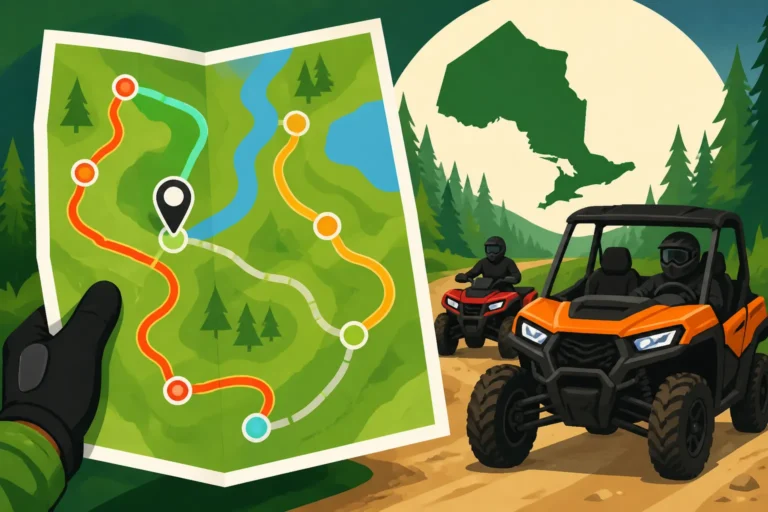
A mapping app such as onX Offroad can help you review routes and identify where you intend to stop, but it should be one part of your plan rather than the whole plan. Check the map before leaving, download or save what you need if the app supports offline use, and carry a backup navigation method appropriate to your ride. Battery life can be affected by cold, screen brightness, and extended use, so bring a charged phone and a way to keep it powered.
Before departure, also check the trail and weather information for the exact area you plan to ride. [Ontario Trail Conditions Before You Ride] is a useful companion when you are deciding whether a route is suitable that day. If recent rain is part of the forecast or has already passed through, [Ontario Trail Conditions After Rain] can help you think through how wet ground may affect your plans.
| Before you leave | Why it matters during blackfly season |
|---|---|
| Check local trail and weather information | Conditions can vary between nearby areas and change after rain |
| Wear coverage that suits the temperature | Less exposed skin can mean fewer bites during stops |
| Pack water, a spare layer, and repellent | Small comforts matter when the group needs to pause |
| Review the route and a backup option | You can shorten or adjust the ride if conditions become unpleasant |
| Agree on a regrouping plan | A separated group should not depend only on cell service |
| Confirm the machine is ready for the route | A mechanical delay can leave everyone stopped longer than planned |
Plan Routes and Breaks Around Insect Pressure
Choose a route that gives you options
During blackfly season, a good route is not just one that looks exciting on a map. Consider how long you will be in sheltered woods, how often the group may need to stop, and whether there are reasonable places to turn around or shorten the ride. A route with several exit or turnaround options can feel more manageable than a long out-and-back through remote terrain.
Use maps to understand the route before the group reaches a junction. onX Offroad may be one tool for reviewing an area and keeping a route visible, but confirm access and local trail rules through the relevant club or land manager. Mapping information does not replace signage, permissions, or current closures. Keep your route within areas where riding is allowed, and do not assume that a track visible on a map is open to motorized use.
It is also worth matching the route to the least comfortable rider in the group. A first-time rider, a child, or someone who dislikes insects may prefer a shorter loop with fewer long stops. If the group has different preferences, agree in advance on a turnaround point instead of negotiating while tired, hot, and surrounded by bugs.
Make stops short, safe, and deliberate
Stopping is often when blackflies become most aggravating, but rushing every break can create other problems. Riders still need water, rest, and time to check their machines. Choose a safe pull-off where the group can get completely clear of the travel path. Keep helmets and protective gear organized, and avoid leaving belongings where another rider or vehicle could hit them.
Keep breaks purposeful. Decide whether the group is stopping to hydrate, check a machine, eat, or review the route, then get back underway when ready. If someone needs more time, make sure the whole group knows where to wait and how to avoid blocking other trail users. Do not stop on a blind corner, narrow bridge, or other location where approaching riders cannot see the group in time.
If insects make one stop unbearable, move to a safer, more open location rather than simply pulling over wherever there is space. A short ride to a suitable clearing or staging area can be more comfortable and safer than gathering on a narrow trail. For regional route ideas, [Ontario ATV Trails Near Ottawa] and [Ontario ATV Trails Near Sudbury] can help you explore different parts of the province, while local access and trail conditions should still be confirmed before departure.
Adjust the Ride When Conditions Are Uncomfortable
Know when to shorten or postpone
A ride does not have to be all-or-nothing. If blackflies are making every stop miserable, shorten the loop, skip a planned lunch stop in the woods, or head back to the staging area. That is especially sensible when the group includes young riders, people who are becoming distracted, or anyone who is having a concerning reaction to bites.
Heat, fatigue, dehydration, and insect irritation can compound one another. A rider who is increasingly impatient or struggling to focus may need a proper break, even if the insects make stopping unpleasant. Find a safe location, get water, check on everyone, and make a calm decision about continuing. The goal is not to prove that the group can complete the original route; it is to finish safely.
Postponing can also be the right call. If the forecast, trail report, or local advice suggests a combination of poor trail conditions and intense insect activity, choose another day or a different area. [Ontario Trail Conditions After Rain] is particularly relevant when wet ground could turn an already uncomfortable ride into a muddy, slow-moving one. Respect temporary closures and avoid riding soft trails simply because the group has already made the drive.
Consider a different riding area or style of day
You may be able to keep the outing enjoyable by changing the setting. An exposed route, a shorter ride near a staging area, or a destination with a suitable place to rest can be easier than spending hours in a shaded forest. The right choice depends on local access, trail permission, and the needs of your group, so do not treat “more open” as permission to ride on roads or land that is not open to ORVs.
If you are planning a weekend farther north, build flexibility into the itinerary. Places such as Mattawa, the Haliburton region, and communities across Northern Ontario can offer very different riding experiences, but local timing and trail access still matter. [Ontario's Northern Trail Towns] is a useful starting point for thinking about destinations, while [Ontario ATV Trail Maps] can help you compare route options before choosing where to go.
A phone-based mapping tool such as onX Offroad can be useful when you are comparing routes or keeping track of a planned ride, but check the local club’s information as well. If the group has limited reception, save key details ahead of time and share the plan with everyone. For more on signal availability and planning around gaps in service, see [Ontario Trails With Cell Coverage].
Ride Responsibly and Look After Your Group
Be considerate of other trail users
Blackfly season does not change the basic responsibilities of trail riding. Keep a safe pace, leave room for others, follow posted signs, and stay on authorized routes. When stopping to regroup, pull completely out of the way where it is safe to do so. A group that is focused on escaping insects can accidentally create a hazard by bunching up at a junction or stopping where sightlines are poor.
Remember that a trail may be shared with hikers, cyclists, horses, or other motorized users, depending on the location. Slow down when approaching people, give them space, and follow trail-specific rules. Avoid accelerating aggressively through damp or muddy sections; spinning tires can damage the surface and make the route harder for everyone who follows.
Do not leave wrappers, wipes, bottles, or used insect-protection items behind. Pack out what you bring in, and do not assume someone else will clean up the staging area. Responsible riding is especially important when seasonal conditions make trails more vulnerable or when clubs are managing access and maintenance.
Check in with riders and respond to bites sensibly
Before setting off, make sure everyone knows the planned route, expected return time, and regrouping point. Assign a lead rider and a sweep rider so no one is left behind. Agree on a simple signal or procedure for a stop, a mechanical issue, or a change of plan. When phone reception is uncertain, these basic habits are more dependable than assuming the group can message one another from anywhere.
Check on riders during breaks, particularly children and anyone who seems unusually uncomfortable. Most bites are an irritation, but people can react differently. If someone develops symptoms that seem severe or rapidly worsening, stop the ride and seek appropriate medical help rather than continuing down the trail. Carrying basic first aid and knowing where the nearest accessible road or staging area is can make a stressful situation easier to manage.
A comfortable blackfly-season ride usually comes down to modest decisions: cover up, plan sensible stops, check conditions, and stay willing to change the route. The insects may still be part of the day, but they do not have to dictate every decision. With a realistic plan and a group that looks out for one another, you can enjoy Ontario’s riding season without turning the whole outing into a battle against the bugs.
Disclaimer
This article is for general informational purposes only and does not constitute professional advice. Laws, prices and regulations vary by location and change over time. Consult a qualified professional for guidance on your specific situation.