What a 12-Year-Old May Ride on Private Land
It's incredibly common for parents in Ontario to feel a bit lost when trying to figure out what's allowed and what's not for their kids riding ATVs or UTVs, especially when it comes to riding on the family's own property. The rules can seem like a confusing maze of age limits and land designations. This guide is here to untangle all that, giving you a clear picture of what a 12-year-old can legally and safely ride on private land in Ontario, helping you navigate the regulations so your young rider can enjoy their time responsibly.
Understanding Ontario's Age Restrictions for ORVs
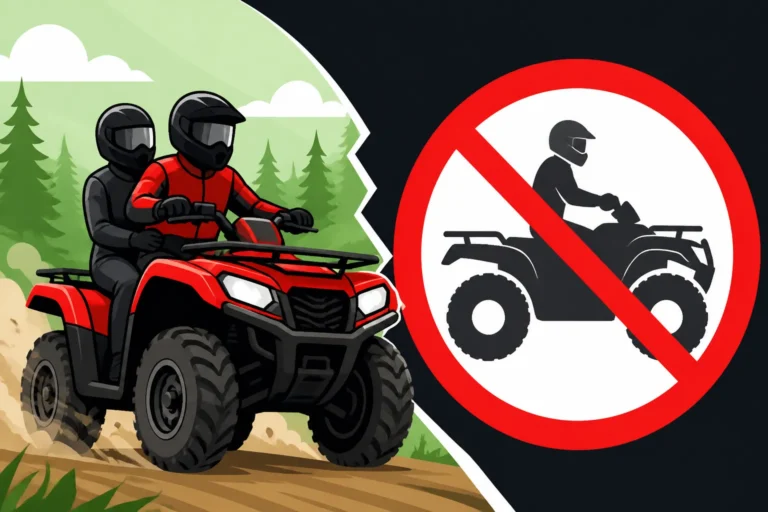
When we talk about off-road vehicles (ORVs) like ATVs and UTVs in Ontario, the rules for young riders are a bit nuanced. There's a common misconception that all riders, regardless of age, must meet a minimum age requirement across the board. However, the province makes a clear distinction between riding on public lands, trails, or roads, and riding on private property. For a 12-year-old, this distinction is absolutely crucial, and understanding it is the first step toward responsible riding.
The Off-Road Vehicles Act is the main piece of legislation that governs ORVs in Ontario. It sets out various requirements, including operator age, licensing, and equipment standards. Generally, for anyone to operate an ORV on a highway, road allowance, or most public trails, they must be at least 16 years old and hold a valid G2 or M2 licence (or higher). This often leads parents to believe their younger children can't ride at all, but that's not entirely the case when it comes to private property.
General Rules Versus Private Land Exceptions
Here's where the good news comes in for those with access to private land. The general age limits outlined in the Off-Road Vehicles Act primarily apply to public spaces. When an ORV is being operated entirely on private property, the provincial age restrictions for operators are significantly relaxed. This means that a 12-year-old can indeed operate an ATV or UTV on land that you own, or land for which you have explicit permission from the landowner. It's a critical difference that allows families to introduce their children to the joys of off-road riding in a controlled environment.
However, this leniency on private land doesn't mean a free-for-all. It simply means the provincial legal age for operation is less restrictive. The spirit of the law, and certainly the intent of responsible parenting, still emphasizes safety and supervision. While the ORV Act might not dictate a minimum age for private land, common sense and a duty of care absolutely do. Think of it as owning your own backyard pool; the province might not dictate a lifeguard, but you wouldn't let a 12-year-old swim unsupervised without knowing they are capable and safe. The same applies here. For more context on the overarching rules, check out [The Off-Road Vehicles Act and Ontario Riders].
The Role of Parental Supervision
Even though provincial law doesn't impose a strict minimum age for riding on private land, the importance of parental supervision cannot be overstated. When a 12-year-old is operating an ORV on private property, the responsibility for their safety, and for ensuring they ride appropriately, falls squarely on the parents or guardians. This isn't just about preventing accidents, it's also about instilling good riding habits from a young age. Supervision means more than just being present; it means actively monitoring their riding, ensuring they are operating the machine safely, wearing appropriate gear, and not engaging in risky behaviour.
If your child is riding on private land that isn't yours, it's vital to have explicit, written permission from the landowner. This protects everyone involved. Moreover, even on private land, if the child somehow ventures onto a public road or trail, even for a moment, they immediately become subject to the stricter public land rules, including age and licensing requirements. This is why constant and vigilant supervision is key, especially if your private property borders public access points. It's about creating a safe bubble where the child can learn and enjoy their ride without inadvertently breaking the law or endangering themselves or others. You might also want to read [Riding Unsupervised on Your Own Property] to understand the nuances of this freedom.
What Kind of Machine Can a 12-Year-Old Ride?
Once you understand where a 12-year-old can ride, the next big question for many parents is what they can ride. It’s not simply about hopping on any machine available. Matching the rider to the machine is paramount for safety, skill development, and overall enjoyment. Manufacturers produce a wide range of youth-model ATVs and UTVs specifically designed for younger riders, taking into account their physical size, strength, and cognitive abilities. These machines typically feature smaller engines, lighter frames, and often come with built-in safety features.
It's common to see youth models explicitly labelled with age recommendations, such as "for riders 10 and older" or "for riders 12 and older." These recommendations are not just marketing ploys; they are based on extensive safety research and are crucial guidelines to follow. Putting a 12-year-old on a full-sized adult machine is a recipe for disaster. Such machines are too heavy, too powerful, and too large for a young rider to control effectively, leading to increased risk of injury. Prioritize a machine that fits your child, not one they'll "grow into."
Engine Size and Vehicle Class Considerations
For a 12-year-old, you'll generally be looking at youth-specific models. These ATVs typically have engine sizes ranging from 50cc to around 200cc, though some might go slightly higher depending on the specific manufacturer and model. UTVs (side-by-sides) for youth are also available, often with similar engine displacements, and they offer the added protection of a roll cage and seat belts. The key is to find a machine that offers manageable power and weight. A machine that is too powerful can lead to loss of control, while one that is too heavy can be difficult to maneuver, especially if it gets stuck or tips.
| Vehicle Type | Recommended Engine Size (approx.) | Key Characteristics for Youth |
|---|---|---|
| Youth ATV | 50cc – 200cc | Lighter, smaller frame, speed governors, often automatic transmission |
| Youth UTV | 150cc – 250cc | Roll cage, seat belts, limited top speed, wider stance for stability |
| Adult ATV | 250cc+ | Heavier, more powerful, not suitable for a 12-year-old |
| Adult UTV | 300cc+ | Heavier, more powerful, not suitable for a 12-year-old |
It's important to remember that these are general guidelines. Always consult the manufacturer's recommendations for any specific model you are considering. Some machines might have features that make a slightly larger engine manageable, or conversely, a smaller engine might still be too much for a less experienced or smaller 12-year-old. The goal is a comfortable fit where the child can easily reach all controls, operate them smoothly, and handle the machine's weight and power without struggle. This balance is critical for safety and building confidence.
Safety Features and Modifications
Many youth ORVs come equipped with important safety features right from the factory. Speed governors or limiters are common, allowing parents to restrict the top speed of the machine as their child develops skills. This is a fantastic feature for gradually increasing the challenge. Tether switches, which kill the engine if the rider falls off, are also excellent for ATVs. For youth UTVs, features like a roll-over protective structure (ROPS) and seat belts are standard and non-negotiable.
Beyond factory features, parents can also consider aftermarket modifications to enhance safety or fit. For instance, adjusting handlebar positions, adding wider footpegs, or upgrading tires for better grip can all contribute to a safer and more comfortable ride. Brands like SuperATV offer a range of robust, high-quality accessories that can improve the durability and safety of an ORV, from skid plates that protect the undercarriage from rough terrain to stronger suspension components that can handle varied conditions. While primarily known for adult machine upgrades, the principle of enhancing durability and protection applies to youth machines as well, ensuring components hold up to the rigours of learning. Always ensure any modifications are installed correctly and don't compromise the vehicle's inherent safety design.
Safety Gear and Training: Essential for Young Riders
Regardless of where your 12-year-old rides, or what machine they're on, certain elements remain non-negotiable: proper safety gear and adequate training. These aren't just suggestions; they are fundamental pillars of responsible ORV riding, especially for young operators. Even on the safest private land, accidents can happen, and the right gear can significantly mitigate injury, while training can help prevent those accidents in the first place. Parents often debate whether all the gear is truly necessary for "just riding in the yard," but the answer is always a resounding yes.
The forces involved in an ORV accident, even at low speeds, can be substantial. A simple tip-over, a collision with a tree stump, or a sudden stop can lead to serious injuries if the rider isn't properly protected. Furthermore, formal training goes beyond simply knowing how to start and stop the machine; it teaches crucial defensive riding techniques, hazard awareness, and how to react safely in unexpected situations. It empowers young riders with the skills and confidence to handle their machine effectively.
Mandatory Helmets and Protective Clothing
In Ontario, a helmet is legally required for ORV operators and passengers on public land and trails, but what about private property? While the letter of the law regarding helmets on private land may be less explicit, safety experts and responsible riders unanimously agree: a helmet is absolutely mandatory, no exceptions. Head injuries are among the most serious types of injuries sustained in ORV accidents, and a properly fitting, approved helmet can literally be a lifesaver. This applies equally to private land as it does to public trails. To delve deeper into this, you might find [Do You Need a Helmet on Your Own Property?] insightful.
Beyond a helmet, a 12-year-old rider needs comprehensive protective clothing:
- Eye Protection: Goggles or a helmet visor to protect against dust, debris, and branches.
- Gloves: To protect hands from blisters, abrasions, and improve grip.
- Long-sleeved shirt and long pants: Made of durable material to protect skin from scratches, sun, and minor impacts.
- Over-the-ankle boots: Sturdy boots with good ankle support to protect feet and ankles, and to provide good grip on footpegs.
- Chest Protector (optional but highly recommended): Especially for more aggressive riding or inexperienced riders, a chest protector can guard against impacts to the torso.
These items should fit well, not be too loose or too tight, and not impede the rider's movement or vision. Dressing for the slide, not for the ride, is a maxim that holds true for ORV operation as much as it does for motorcycles.
The Value of Rider Training
While not legally mandated for private land use in Ontario, participating in an approved ORV rider training course is one of the best investments you can make for your child's safety and skill development. These courses, such as the "Ready To RideON" program offered by the Canada Safety Council, are specifically designed to teach safe riding practices, proper control techniques, and risk management strategies. They cover everything from pre-ride inspections and basic controls to emergency stopping and obstacle avoidance.
For a 12-year-old, learning from certified instructors in a structured environment provides a solid foundation of skills that can prevent accidents and build confidence. It also teaches them the importance of responsibility and respect for the machine and the environment. While the program itself isn't compulsory, the knowledge gained is invaluable. The [Ready To RideON and Its Six Modules] course, for example, is a fantastic resource. Even if your child primarily rides on private land, these skills transfer directly to that environment, making every ride safer. For details on the cost, consider [Ontario ATV Safety Course Cost]. A 12-year-old might not be old enough for all types of public trail riding, but they are certainly old enough to benefit greatly from formal safety training. Parents can also learn a lot from these courses, improving their own supervision skills and setting a better example for their young rider.
Beyond the Back Forty: Other Places a 12-Year-Old Might Ride
While private land offers the most flexibility for a 12-year-old to ride an ORV in Ontario, it's natural to wonder about other possibilities. The reality is that options outside of your own property are severely limited due to stricter age, licensing, and equipment requirements that apply to public lands, trails, and roads. It's crucial for parents to understand these distinctions to avoid fines, legal trouble, and, most importantly, ensure the safety of their child. The rules are in place for good reason: to manage risk in shared spaces and ensure operators have the necessary maturity and skills.
Navigating the various types of land in Ontario can be confusing, but a simple rule of thumb is this: if it's not explicitly your private property, assume the stricter rules apply. This cautious approach will help you ensure compliance with the law and keep your young rider safe.
Club Trails and Managed Riding Areas
Most organized ATV and UTV club trails in Ontario, which are part of networks like the OFATV (Ontario Federation of ATV Clubs) or specific private riding parks, operate under rules similar to public land. This means that to ride on these trails, an operator generally needs to be at least 16 years old and possess a valid driver's licence (G2/M2 or higher), in addition to having a valid trail permit. Therefore, a 12-year-old would typically not be allowed to operate an ORV on these trails, even with adult supervision. These rules are usually clearly stated by the clubs and are designed to ensure the safety of all users, as well as to comply with insurance requirements.
Some private, commercially operated riding parks or tour companies might have different internal policies, but these are rare exceptions, and even then, specific age and skill requirements would apply, often necessitating direct parental involvement or a guided tour. Even if a specific location allows a younger passenger, operating the machine is a different matter. Always check with the specific club or operator before planning a trip, as rules can vary. It’s also important to remember that these trails often cross municipal lands or road allowances, bringing them under the full scope of the Off-Road Vehicles Act. The concept of [Ontario's Off-Road Minimum Age of Twelve] is relevant here, but it mostly pertains to private land unless specific, highly managed youth-only programs exist on designated trails.
The Strict Limits of Crown Land and Public Roads
This is where the "no-go" for a 12-year-old becomes unequivocal. Operating an ORV on Crown land in Ontario (which is essentially public land managed by the province) falls under the same general rules as public roads and organized trails. This means the operator must be at least 16 years old and possess the appropriate driver's licence. The idea of "free use" on Crown land for ORVs does not extend to waiving age and licensing requirements. Trying to ride an ORV on Crown land with a 12-year-old at the controls would be a violation of the Off-Road Vehicles Act.
Similarly, riding an ORV on any public road, even just to cross it or ride a short distance on a shoulder, requires the operator to be 16 years old and hold a valid G2 or M2 licence. A 12-year-old simply does not meet these criteria. This is a crucial point for anyone with private land that borders public roads or trails, or even an unopened road allowance that might technically be public. The temptation to "just quickly cross" can lead to significant fines and legal repercussions. The rules regarding [Ontario Rules for Riding Private Property] are clear, but those rules stop at the property line. Therefore, for a 12-year-old, the safest and only legally permissible option for operating an ORV is on properly supervised, truly private land.
Disclaimer
This article is for general informational purposes only and does not constitute professional advice. Laws, prices and regulations vary by location and change over time. Consult a qualified professional for guidance on your specific situation.