Ontario Fines for Riding Without a Permit
Riding an Ontario ATV or UTV without the right trail permit can lead to more than an awkward conversation with a patroller. The consequences depend on where you are riding and which rule applies. Here’s how to tell when a permit is required, what an enforcement stop may involve, and how to avoid confusing a trail pass with vehicle registration.
What “riding without a permit” can mean
In Ontario, riders often use “permit” to mean two different things: the vehicle registration permit issued for an off-road vehicle, or a trail permit that gives access to a particular trail network. They are not interchangeable, and having one does not automatically satisfy the requirements for the other.
A vehicle registration permit and plate relate to the machine’s registration. Trail permits relate to access and use of trails managed by clubs or other organizations. Depending on where and how you ride, you may need both. For details on the separate registration requirement, see Registering an ATV in Ontario. For trail access, Ontario ATV Trail Permits Explained covers the basic role of a trail permit.
| Where you ride | What to check | Why a missing permit can be a problem |
|---|---|---|
| Club-managed trail | Whether that trail system requires its own pass or honours a particular permit | Riding without permission may breach the trail operator’s rules and could lead to enforcement or removal |
| Crown land | Whether the specific area is open to your kind of use and whether restrictions apply | Free use does not mean every road, trail or parcel is open to every rider |
| Provincial park or other restricted area | Whether motorized riding is allowed and whether authorization is required | A trail permit does not override a land-use restriction |
| Private land | Whether the owner or lawful occupier has given permission | A trail pass does not grant access across private property |
| Municipal road | Whether the municipality allows the vehicle on that road and whether road-use rules are met | A trail permit is not permission to ride on a road |
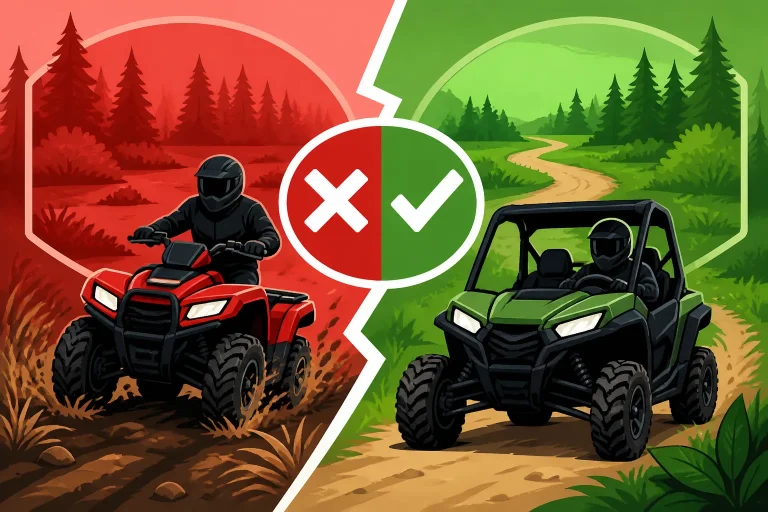
There is no single province-wide “no trail permit” ticket that covers every situation. The possible consequence depends on the location, the kind of permission required, and the law or local rule that applies. A patroller or officer may deal with an unauthorized ride under the rules for that trail, land or road rather than under a universal trail-permit fine.
That is why it helps to identify exactly what is missing before setting out. If your machine is not registered, that is a separate issue from riding on a trail without its required pass. Riding an Unregistered ATV in Ontario explains the registration side; Ontario Fines for Riding a Closed Trail is relevant when the issue is access to a trail that is not open.
When a trail permit is required
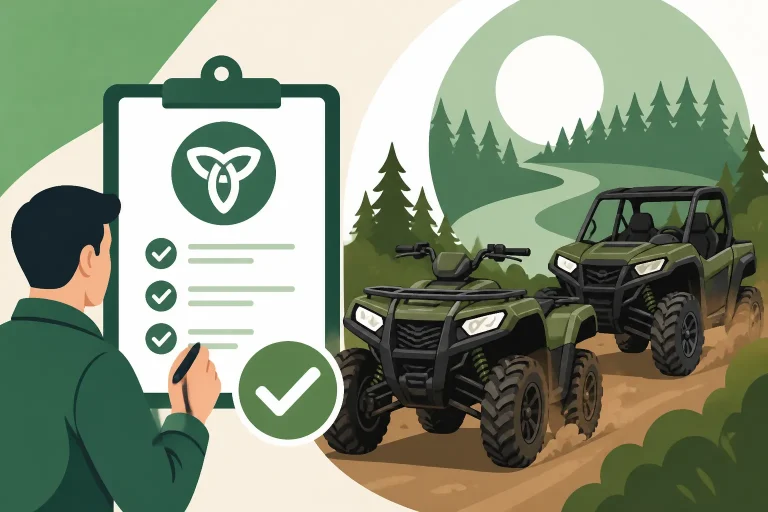
Many organized Ontario trail networks require a valid trail permit for the machine using their trails. Requirements can vary by trail operator, club area and type of pass. A pass for one system should not be assumed to cover every trail you can reach from it. Check the permit’s coverage before crossing into another club’s district or using a connecting route.
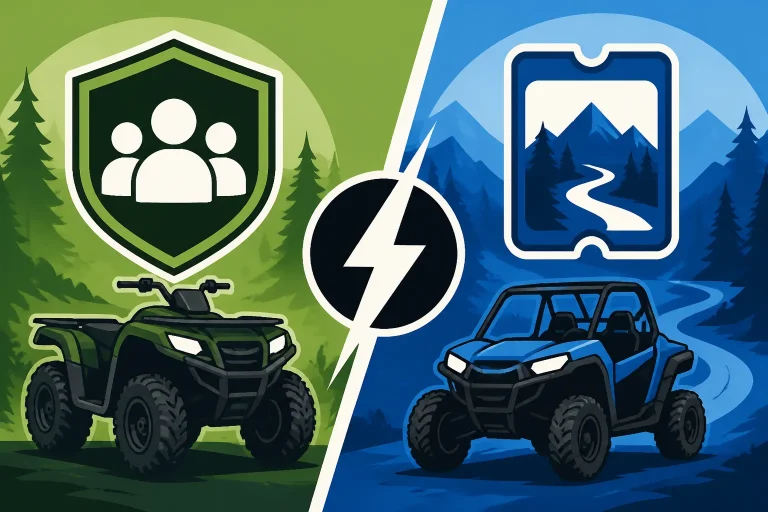
Some operators sell their own passes rather than accepting a broader permit. Others participate in arrangements that allow a particular permit to be used across participating trails. The details are specific to the system, and can change. Check the trail operator’s current information before you ride, especially for a multi-area trip. Ontario’s Separate Club Passes explains why two connected trail areas may have different requirements, while Does Your Permit Cover the Next Club’s District? addresses the common question of crossing a club boundary.
A permit requirement can also depend on what kind of access you are using. A maintained club trail is not necessarily treated like nearby Crown land simply because the two appear connected on a map. The trail may be on land managed under a separate agreement or subject to the operator’s conditions. Likewise, a route through private property requires the relevant permission; a trail permit alone does not create a right to cross someone’s land.
Crown land is not a blanket exception
Ontario’s public-land free-use policy is often misunderstood. In some circumstances, a rider may use Crown land without buying an organized trail permit. That does not mean all Crown land is open to ATVs and UTVs, that every route is available, or that a trail pass is never required nearby.
Access may be restricted by signs, land-use rules, local closures, temporary conditions or the status of a particular road or trail. A route shown online can cross land with different access rules, and a club trail passing through or beside Crown land may still have its own permit requirement. Check where the route actually goes and who manages the segment. What Free Use Means on Crown Land explains the limits of the policy, and Where Crown Land Riding Is Restricted is useful when planning a route.
A provincial park is not automatically open to motorized recreation just because it is public land. Nor does a trail permit authorize riding in an area where motorized vehicles are prohibited. Check the site’s rules and any posted restrictions before entering.
A day permit still has conditions
A short-term pass is not a general permission slip for any Ontario trail. It applies according to the seller’s terms: which area it covers, which dates it is valid for, and how it must be displayed or carried. A pass intended for one ride or one system may not be valid on a neighbouring network.
Before buying, confirm the exact riding area, dates and machine covered. Check whether the permit is tied to a particular vehicle, whether the operator requires a sticker or other proof, and whether the pass covers all riders in your group. If you are purchasing shortly before riding, verify that the pass is active and that you can show proof if asked. Ontario ATV Day Permit Cost and Where to Buy an Ontario ATV Trail Permit can help with the purchase questions, but confirm current conditions with the relevant seller.
What may happen if you ride without one
The response depends on who discovers the issue and what rule has been broken. A trail patroller may check for proof of a valid pass, explain the requirement, or direct a rider to leave the trail. A land manager, property owner or law-enforcement officer may respond differently if the ride also involves trespass, a closed area, unsafe operation or a separate vehicle offence.
Possible outcomes can include being told to stop riding or leave, being reported to the trail operator or land manager, or receiving a ticket or other enforcement action where applicable. A ticket’s amount and process depend on the specific offence and jurisdiction; there is no safe general figure to apply to every “no permit” situation. Read the notice carefully if you receive one. It should identify the allegation and explain the next steps. If the allegation is unclear or the consequences are significant, seek qualified legal advice.
The circumstances matter. For example, a rider who mistakenly crosses a club boundary may face a different response from someone who knowingly enters a signed, closed trail. A missing trail pass is also different from riding on private property without permission or entering a protected area where motorized use is prohibited. A trail permit does not protect a rider from enforcement for those other issues.
Do not assume that showing a vehicle registration permit will resolve a trail-access problem. Registration establishes information about the vehicle; it does not prove that the rider has paid for or received permission to use a specific trail network. The reverse is also true: a trail pass does not replace the registration permit or plate required for the machine. The Permit Versus a Title in Ontario explains the registration document, while Ontario Club Membership Versus a Trail Permit distinguishes a club membership from permission to ride.
How to avoid a ticket or being turned back
A few checks before leaving can prevent most permit problems. They are especially worthwhile when the route crosses club areas, uses a mix of public and private land, or follows a trail map that does not clearly identify access boundaries.
- Identify the trail operator. Find out who manages the route or trail network, rather than relying only on a general map or a friend’s description.
- Check the permit coverage. Confirm that your pass is accepted on the exact area and dates you plan to ride. Do not assume it carries over to a connected trail.
- Check closures and restrictions. Look for current notices, signs and local rules. A valid permit does not make a closed trail open.
- Confirm land access. Check whether the route crosses Crown land, private property, a park or another restricted area. Obtain permission where required.
- Keep proof available. Follow the operator’s directions for displaying or carrying the pass, and make sure your proof is accessible during the ride. A screenshot may be useful, but do not assume it meets every operator’s requirements.
- Check the machine separately. Make sure its registration, plate and other required documents are in order. A trail permit does not replace those obligations.
If you discover that your pass does not cover a route, stop before entering the area and contact the operator or choose a permitted route. Buying a pass after being challenged may not undo an earlier unauthorized ride. And if a patroller or officer asks you to leave, do not continue farther into the trail while arguing about whether the permit should have applied. Get the relevant details and resolve the question with the operator afterward.
For riders visiting Ontario or joining a group ride, ask the organizer which permit is needed and whether the planned route crosses more than one trail system. A group leader’s pass does not necessarily cover every machine in the group. Rules can also differ for events, rentals and guided rides, so confirm the operator’s arrangements rather than assuming that a standard pass applies.
The practical takeaway is simple: check the route, not just the machine. Ontario does not have one universal trail permit for every place an ATV or UTV can go, and a permit is not a substitute for permission to enter land. Confirm the requirements for each trail area before riding, and keep vehicle registration and trail access as two separate checks.
Disclaimer
This article is for general informational purposes only and does not constitute professional advice. Laws, prices and regulations vary by location and change over time. Consult a qualified professional for guidance on your specific situation.