Where to Buy an Ontario ATV Trail Permit
An Ontario ATV trail permit is not the same as vehicle registration, and buying one does not automatically open every trail in the province. The right place to buy depends on the trail network you plan to ride. Start with the official permit seller for that network, then confirm the permit covers your route, machine and riding dates before you set out.
Where to buy an Ontario ATV trail permit
For trails operated by clubs in the Ontario Federation of ATV Clubs network, start with the official OFATV permit channel, commonly accessed through QuadON. It is the most direct route for checking available permit types and choosing a participating club or riding area. Follow the current instructions there for payment, delivery or permit display.
You can also check the website or contact details of the local club responsible for your destination. A club may direct riders to the same online system or sell a separate pass for its own trails. If you are unsure which organization maintains a trail, ask the club or trail operator rather than relying on an old link, a social media post or a seller who cannot explain what the pass covers.
Some well-known riding areas use their own permit arrangements. For example, riders should check the Eastern Ontario Trails Alliance’s current pass information for its network, and confirm Haliburton requirements before riding there. The Ganaraska Forest also has its own access and fee arrangements, which are not simply interchangeable with an OFATV permit. Relevant details are covered in The Eastern Ontario Trails Alliance Pass, Why Haliburton Riders Need a HATVA Pass Too and Ganaraska Forest Fees for Ontario Riders.
| Where you plan to ride | Where to start | What to confirm |
|---|---|---|
| An OFATV club trail network | The official OFATV or QuadON permit channel, or the local club | The permit type, selected club or district, validity dates and display instructions |
| Eastern Ontario Trails Alliance routes | EOTA’s official pass information | Whether the pass covers your intended route and any additional requirements |
| Haliburton-area trails | The relevant local trail association and its permit instructions | Whether an OFATV permit alone is enough or a separate local pass is also needed |
| Ganaraska Forest | The forest’s official access and fee information | Forest access, vehicle or parking requirements, and the correct pass for your visit |
| Crown land | The land manager’s rules and local access information | Whether the location is open to riding and whether any local or event-specific conditions apply |
This table is a starting point, not a guarantee of access. Trail boundaries, participating clubs and pass arrangements can change. Check the current rules for the actual route you intend to ride, especially if it crosses from one network into another.
Do not assume you can buy an ATV trail permit at ServiceOntario or from the dealership where you bought your machine. Those places deal with vehicle registration, plates and permits for road use, which are separate from club trail access. The distinction is explained in Ontario ATV Trail Permits Explained and The OFATV Permit and What It Costs in Ontario.
A seller should be able to tell you which organization issues the pass, where it is valid and what you must do to show it on the trail. If the listing only says “Ontario trail pass” without identifying the network, ask for clarification before paying.
Choose a permit for the trails you will actually ride
A trail permit is permission to use the trails covered by the issuing organization, subject to its rules. It is not a province-wide pass for every road, forest or trail. One permit may cover a club network while a nearby route requires a different pass or is not open to motorized vehicles at all.
Start by mapping out your planned ride. Identify the trailhead, the clubs or land managers responsible for each section, and any intended connection between networks. Then check each organization’s permit conditions. A route that appears continuous on a map can cross into a separate system with its own requirements.
Pay particular attention to these details:
- Network coverage: Confirm the trails you want to ride belong to the organization selling the permit.
- Permit type: Check whether you need an annual, short-term, day or other permit. The choices and terms are set by the issuer.
- Validity: Read when the permit begins and ends. Do not assume a pass is valid for a calendar year or that buying it early extends its term.
- Machine and rider details: Enter the information requested accurately. If the permit is linked to a vehicle or rider, do not assume it can be freely transferred.
- Display rules: Follow the issuer’s current instructions for a sticker, digital proof or other required method. Keep any purchase confirmation until you have verified what must be carried or displayed.
- Additional local requirements: A club, forest or trail operator may require a separate pass, membership or parking payment.
Some riders confuse a club membership with a trail permit. They can be connected, but they are not necessarily the same purchase. A membership may support a local club or provide certain member benefits, while a permit is the authorization required to ride specified trails. Check what the checkout screen actually includes instead of assuming that joining a club alone grants trail access. See Ontario Club Membership Versus a Trail Permit for the distinction.
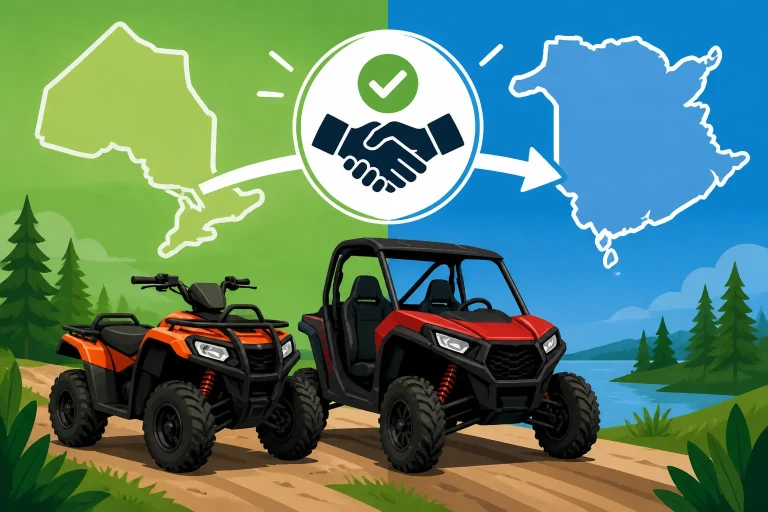
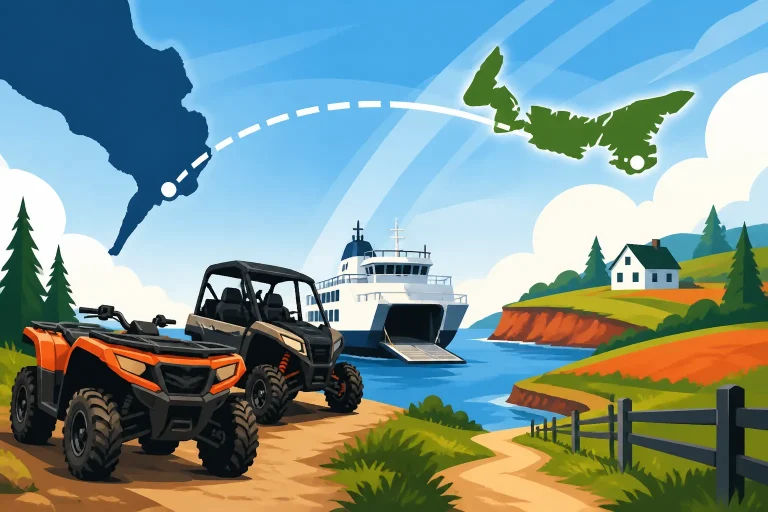
Reciprocity can help when riding across provincial borders, but it is not a reason to skip checking the local rules. Ontario permits may be recognized in some other jurisdictions under specific arrangements, while others require a separate permit. The details vary by destination and can change. Before a cross-border trip, confirm the current terms with the trail organization where you plan to ride. Ontario Trail Permit Reciprocity With the Maritimes explains why this should be checked rather than assumed.
Crown land is another situation that causes confusion. Ontario’s free-use policy does not mean every Crown land road or trail is open to every rider without conditions. Access can be restricted by closures, land-use rules, local bylaws, private property or other controls. A trail permit may not be required for some lawful Crown land riding, but it cannot make a closed or prohibited route legal. Check Do You Need a Trail Permit on Ontario Crown Land? and Where Crown Land Riding Is Restricted before treating a map line as an open trail.
How to buy the permit without choosing the wrong one
The safest purchase process is to work from your route back to the seller. Buying first and planning later can leave you with a permit that does not cover your destination.
- Choose the riding area. Pick the trailhead or network you expect to use, not just the general region. If the ride crosses club boundaries, list each network.
- Identify the trail operator. Use official club, federation or land-manager information to confirm who maintains or controls access to that route.
- Check the permit page. Read the current descriptions for annual and short-term options, coverage, expiry, eligible machines and any display instructions.
- Select the correct network and permit. Make sure the option corresponds to your riding area and planned dates. If a choice is unclear, contact the issuer before checkout.
- Enter accurate details. Check spelling, address, machine information and email before submitting. Save the receipt or confirmation.
- Review delivery or display requirements. If a physical permit is mailed, allow enough time for delivery and follow the issuer’s instructions. If proof is digital, confirm whether that format is accepted on the trail and whether the permit must also be displayed on the vehicle.
- Recheck access before departure. Confirm trail status, closures and any local rules shortly before riding. A valid permit does not override a temporary closure.
If you are buying for more than one machine or for a household, read the terms carefully. Permits may be associated with a particular machine, person or address, and family or multi-machine options can have specific eligibility rules. Do not assume that one permit covers every ATV or UTV in a group. Confirm how many machines it authorizes and what information must be supplied for each.
Buying on the morning of a ride can be possible through some official online systems, but it is a poor plan if you have not checked the network and display requirements. You may have weak service at the trailhead, enter the wrong area, or discover that the local operator requires a different pass. Purchase in advance when practical, and keep your proof accessible. For advice on permit checks while riding, see Showing a Permit on a Phone and What a Trail Patroller Checks.
A trail permit also does not replace the machine’s provincial registration, plate or required insurance. These documents serve different purposes. Registration identifies the vehicle for applicable legal use; a trail permit grants access to a particular trail system under its conditions. Riders may need both, depending on where and how they ride. Review Registering an ATV in Ontario and Ontario ATV Insurance Requirements if you are unsure what your machine needs beyond trail access.
Common buying mistakes and what to do instead
Buying a pass because it says “Ontario.” The province name does not prove that a permit covers every trail in Ontario. Look for the issuing organization and the specific network. If coverage is not clear, ask the seller before purchasing.
Assuming a trail permit is a plate or registration. A trail pass does not replace the vehicle documents required for riding on roads or other regulated areas. Keep the categories separate when preparing for a trip.
Relying on an old purchase link. Clubs may update their sales pages, permit procedures or operating arrangements. Navigate from the current official organization page or contact the club directly rather than paying through a stale listing.
Confusing a permit with a parking pass. Some riding locations manage trail access and vehicle parking separately. Read the product description and check whether your truck and trailer need their own authorization.
Assuming one pass covers connected trails. Trail systems can meet without sharing the same permit arrangement. Confirm each section, especially when a route connects separate clubs or crosses onto a managed forest.
Thinking a purchase guarantees the trail is open. Permits are subject to closures, seasonal limits and posted restrictions. Check conditions before setting out and follow signs on the route.
Waiting until you are already at the trailhead. Online access, cell service, payment verification or permit display may be difficult on location. Complete the purchase and save the confirmation beforehand when possible.
If you buy the wrong permit, contact the seller promptly and explain which network you intended to ride. Ask whether the permit can be changed, transferred or refunded under its current terms; do not assume that a correction will be automatic. Keep the purchase confirmation and any correspondence until the issue is resolved.
The practical rule is simple: buy from the organization that controls access to the trails you plan to ride, and verify the permit’s coverage before payment. For a multi-network trip, check every operator separately. That small bit of planning helps prevent a valid-looking pass from leaving you without permission where you actually want to ride.
Disclaimer
This article is for general informational purposes only and does not constitute professional advice. Laws, prices and regulations vary by location and change over time. Consult a qualified professional for guidance on your specific situation.