Displaying a Ganaraska Parking Pass on Your Dash
A Ganaraska Forest parking pass is easy to overlook when you are preparing for a ride, especially if you are thinking about trail permits for the machines instead. Keep the two requirements separate: the parking pass belongs in the tow vehicle, while an ATV trail permit may have its own display rules. Here’s how to place the parking pass clearly and avoid common mix-ups.
What the Ganaraska parking pass is for
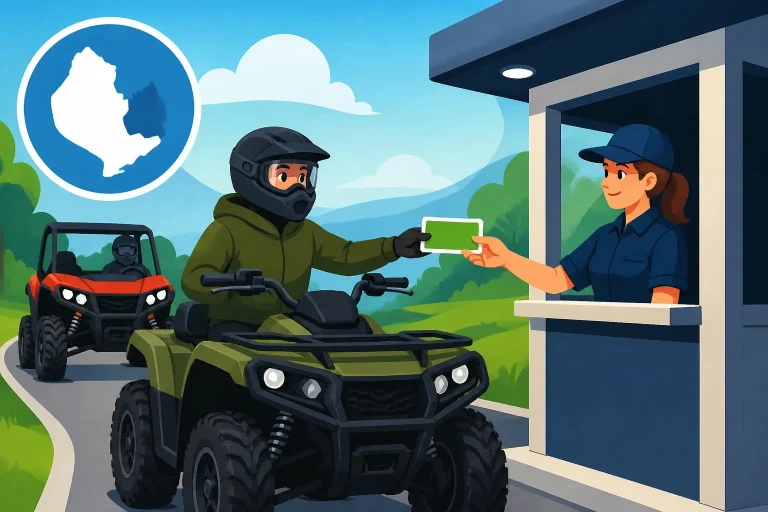
A parking pass is for the vehicle you use to access and park at the Ganaraska Forest. It is not the same thing as a trail permit displayed on an ATV or UTV. If you arrive with a truck and trailer, the parking pass concerns the vehicle parked at the forest; the trail permit concerns the machine you ride.
That distinction matters because buying one does not necessarily satisfy the other. Check the current requirements for your visit and for each kind of vehicle involved. The forest’s parking rules and the trail-access rules are related, but they are not interchangeable.
For background on the parking requirement and the different pass options, see Ganaraska Forest Parking Passes for Tow Vehicles and Ganaraska Forest Fees for Ontario Riders. If you are comparing a forest pass with a broader riding permit, Ontario ATV Trail Permits Explained covers the separate role trail permits play.
| Item | Where it belongs | What it relates to |
|---|---|---|
| Ganaraska parking pass | In the tow vehicle, displayed on the dash as directed by its terms | Parking or vehicle access at the forest |
| ATV or UTV trail permit | On the off-road vehicle, displayed as required by its permit rules | Trail use |
| Proof of purchase or booking | Keep available in the form the provider accepts | Confirming your purchase if a question comes up |
Do not assume that a permit sticker on your quad or side-by-side is proof of the tow vehicle’s parking authorization. Likewise, a pass displayed on the dash does not replace any trail-permit requirement for the machine.
A Ganaraska visit may involve more than one vehicle and more than one kind of authorization. Before leaving home, make a short list: the tow vehicle, any trailer, each ATV or UTV, and the pass or permit associated with each. If you are unsure which pass applies to your planned visit, confirm the current instructions with the forest before setting out.
How to display the pass on your dash
Place the pass inside the tow vehicle, on the dashboard, so it can be seen clearly from outside through the windshield. The goal is straightforward: a person checking the vehicle should not have to search for the pass, open a door, or move other items to read it.
Use these steps:
- Read the pass instructions first. Check for any specific placement, orientation, or display directions that came with the pass. Those directions take priority over general advice.
- Set it on the dashboard in a visible spot. Keep the pass face-up and avoid placing it under papers, a sunshade, a phone, or other gear.
- Make sure it can be read from outside. Before leaving the parking area, step outside and look through the windshield. Confirm that the pass is visible and that glare or reflections do not make its details hard to see.
- Keep it in the vehicle it applies to. A pass left in a different vehicle may not help if the vehicle parked at the forest is the one being checked.
- Secure it without hiding it. If the pass is likely to slide, use a simple holder or another method that keeps it in place while leaving the required details visible.
A clear document sleeve can help protect a paper pass from spills or scuffs. If you choose one, make sure it does not create glare or cover information that needs to be read. A sleeve from an office-supply shop or Amazon may work, but it is optional: a holder does not replace the display rules, and a loose pass placed visibly on the dash may be all that is needed.
Avoid putting the pass in the glove box, centre console, door pocket, or on the trailer. Those may be convenient places to store it, but they do not make it visible on the vehicle’s dashboard. Do not tape it to the outside of the windshield unless the pass instructions specifically call for that. Exterior placement can expose it to weather and may interfere with visibility.
If you use a sunshade, remove it or position it so the pass remains visible whenever the vehicle is parked for inspection. Also keep dashboard clutter low around the pass. A pass can be physically present and still be difficult to verify if it is folded, upside down, covered, or hidden by a reflective cover.
Parking pass versus trail permit sticker
The most common mistake is treating a parking pass and a trail permit as two versions of the same thing. They serve different purposes and may be checked in different places.
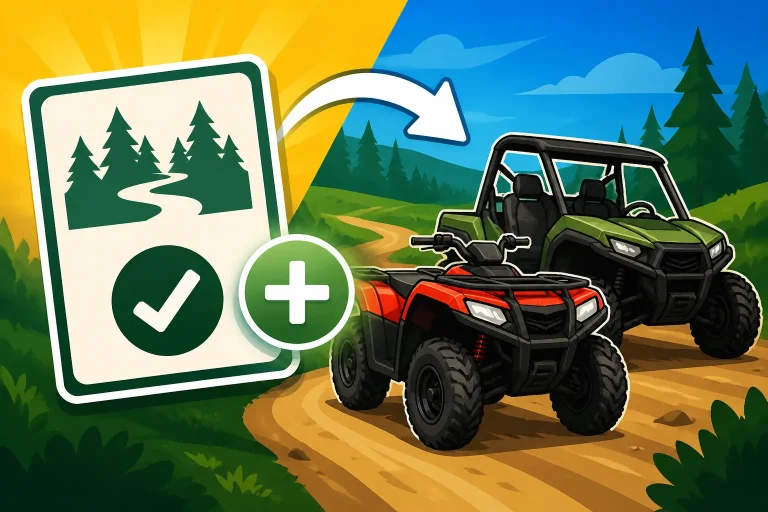
A parking pass is associated with the vehicle used to park at the forest. An ATV trail permit is associated with the off-road machine being ridden. The vehicle pass belongs on the dash if its instructions say to display it there. A trail permit sticker follows its own instructions for where it must be placed on the ATV or UTV.
For more on the trail sticker itself, see What an OFATV Trail Permit Sticker Looks Like and Where the Sticker Goes. If a permit sticker is peeling or has been moved, Does a Peeled-Off Permit Sticker Still Count on Trail? explains why placement and condition matter.
Before a ride, verify each requirement independently:
- Is the tow vehicle covered by the parking pass required for this visit?
- Is the parking pass displayed as directed?
- Does each ATV or UTV have the trail authorization it needs?
- Is each trail permit displayed in the required location?
- Are the pass or permit terms valid for the area and date you plan to ride?
This check is especially helpful when several riders are travelling together. One person may handle the parking pass while another checks the machines, but everyone should know which item goes where. Do not move a pass from a vehicle to an ATV simply because both are part of the same trip.
If your itinerary includes other trail systems, do not assume that a Ganaraska parking pass or forest-specific authorization covers them. Trail access and permit arrangements can differ by club or area. Ontario’s Separate Club Passes explains why checking the destination’s own requirements matters.
Common display problems and a quick pre-ride check
A few practical issues can make a correctly purchased pass hard to verify. Sorting them out before you leave the vehicle saves time and avoids relying on someone else to interpret a partly hidden pass.
The pass slides off the dashboard
A smooth dashboard, a sharp turn, or a sudden stop can send a loose paper pass onto the floor. Place it where it stays flat and visible, away from vents that could lift it or blow it around. A non-slip holder can help, but do not use a cover that obscures the pass or reflects light across it.
Sunlight or reflections make it hard to read
A pass may be visible but unreadable because of glare. Try a different spot on the dashboard and check it from outside in the conditions you expect. Do not put it behind a dark tint strip, a reflective screen, or a windshield accessory that makes the text difficult to see.
The pass is in the wrong vehicle
If you switch tow vehicles, confirm that the pass arrangement still applies. Do not assume that a pass left in one vehicle automatically covers another. Check the current pass terms, and contact the provider if those terms are unclear.
The pass is damaged or missing
If the pass is torn, unreadable, or lost, do not assume that a phone photo or receipt is an accepted substitute for the required display. Keep purchase confirmation available, but verify what the forest accepts before relying on it. If you are buying a replacement or changing your plans, check the provider’s current instructions.
The dashboard display conflicts with safe driving
A pass should never block the driver’s view. Choose a spot that is visible through the windshield without obscuring the road, mirrors, or essential instruments. If the required display location appears to create a visibility problem in your vehicle, ask the forest how to comply rather than hiding the pass somewhere else.
A final check can take less than a minute: look at the pass instructions, place the pass on the dash, check that it is readable from outside, and confirm that the trail permits are separately displayed on the machines. For a first visit, it can also help to review Why Every Rider Needs a Ganaraska Forest Day Pass so the parking and riding parts of the trip are not confused.
Disclaimer
This article is for general informational purposes only and does not constitute professional advice. Laws, prices and regulations vary by location and change over time. Consult a qualified professional for guidance on your specific situation.