Crossing to Nova Scotia
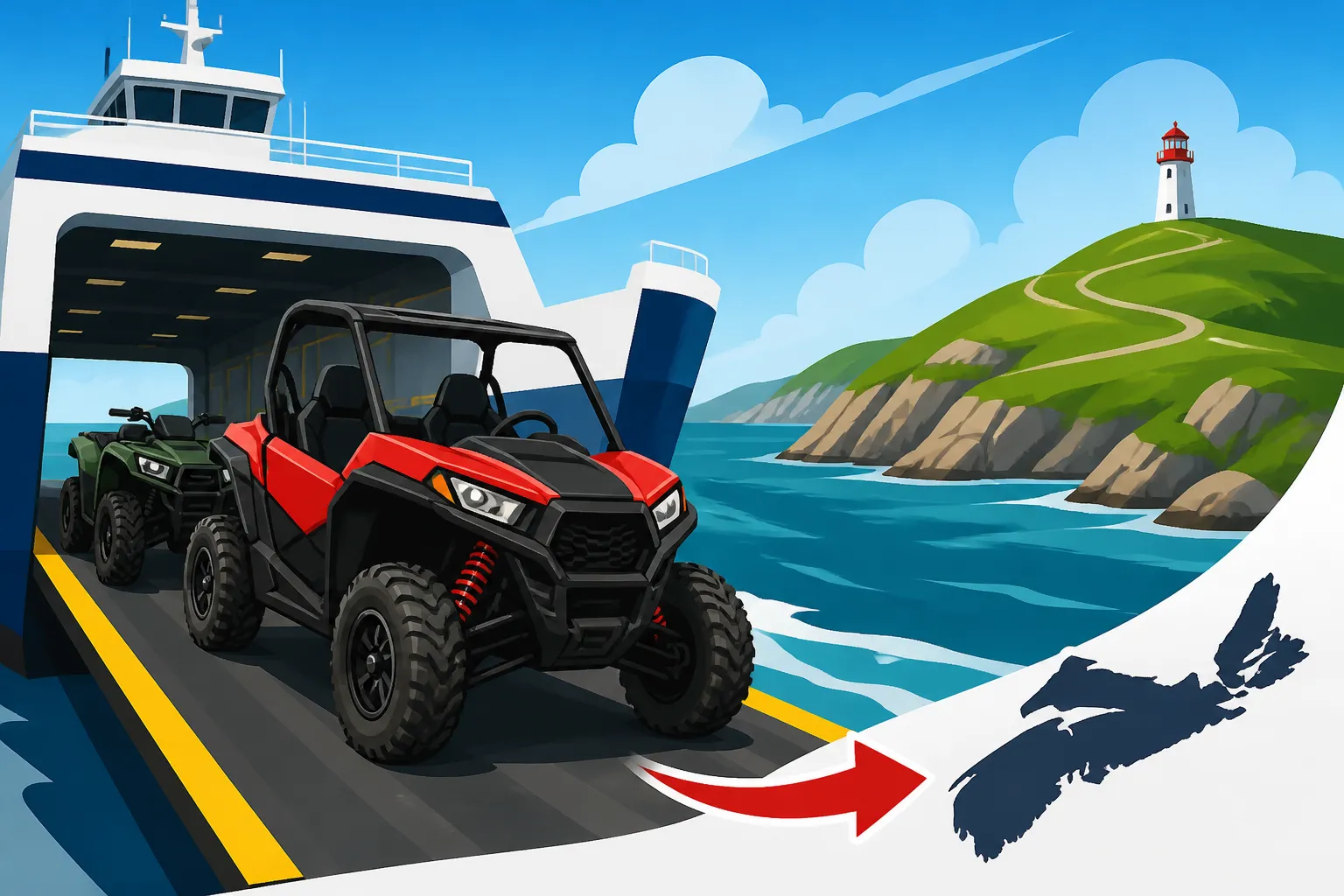
Crossing to Nova Scotia with an Ontario ATV or UTV raises a practical question: will your Ontario trail permit get you onto Nova Scotia trails? The answer depends on the permit and the trail system. This article explains what reciprocity can cover, what it does not replace, and what to check before you load up.
What Ontario trail-permit reciprocity means in Nova Scotia
Ontario’s trail permit and your machine’s registration are separate things. An Ontario vehicle permit and plate identify a registered off-road vehicle; a trail permit gives access to participating trail networks under their rules. Neither one automatically serves as the other. If you need a refresher, see Ontario ATV Trail Permits Explained and The Ontario Vehicle Permit Explained.
Ontario has permit reciprocity with Nova Scotia for eligible Ontario riders. In practical terms, an Ontario annual trail permit may be accepted on participating Nova Scotia trails without requiring you to buy another permit for that same access. The important words are “eligible,” “participating” and “may”: reciprocity is not a promise that every trail, club or private trail operator in the province will accept every kind of pass.
Check the current terms with the permit issuer and the Nova Scotia trail organization before travelling. In particular, do not assume that a short-term Ontario pass, a club membership by itself, or a permit bought for another machine will qualify. If you are comparing options, How Long an Ontario Trail Permit Lasts and Ontario Club Membership Versus a Trail Permit explain why the type of pass matters.
| Item | What it covers | What it does not establish |
|---|---|---|
| Ontario ATV or UTV registration | Registration of the machine in Ontario | Access to Nova Scotia trails |
| Ontario trail permit | Access to eligible trails under the permit’s terms | Registration, insurance or permission to ride every trail |
| Insurance | Coverage subject to your policy and local requirements | Trail access or permission to ride on a road |
| Local trail rules | Access and conduct on a particular trail system | Permission to use a trail that is closed or restricted |
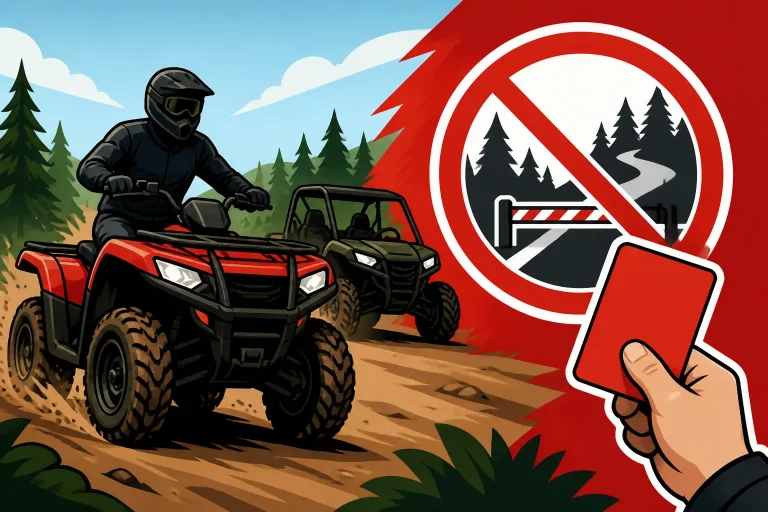
A trail permit is also not a province-wide riding licence. A trail may be closed, privately managed, limited to certain vehicles, or subject to local access conditions even when you hold a permit recognized through reciprocity. Trail conditions and operator rules can change, so look up the specific places you plan to ride rather than relying on a general statement that “Ontario permits are accepted in Nova Scotia.”
If you are considering travelling without an annual permit, verify the rules before you go. Do not treat an Ontario day or multi-day pass as interchangeable with the annual permit unless the issuer confirms that it is covered by the current agreement. The details of reciprocity belong to the permit program, not to the fact that the machine is registered in Ontario.
What to check before leaving Ontario
A little preparation can prevent a long drive ending in a trailhead parking lot where your pass is not accepted. Confirm the permit, machine and insurance details while you still have time to change your plan.
-
Confirm that your permit qualifies. Contact the organization that issued your Ontario trail permit and ask whether your permit type is recognized in Nova Scotia. Confirm the period of validity and whether the pass must be associated with a particular machine or rider. The rules can differ for an annual permit, a short-term pass and a club-specific pass.
-
Identify the trails you intend to ride. Check the trail operator or club responsible for each route. Ask whether it accepts the Ontario permit, whether there is a separate local pass or registration step, and whether your planned vehicle type is allowed. A recognized permit does not override trail closures, seasonal restrictions or local access rules.
-
Check your Ontario registration documents. Make sure the machine’s registration and plate are in order, and bring the permit documents associated with the machine. A trail permit does not replace the registration issued for an Ontario ORV. For help understanding the distinction, see Reading an Ontario ORV Permit and Carrying Permit and Insurance Together.
-
Confirm insurance for the trip. Call your insurer and ask whether your policy covers riding in Nova Scotia, including the type of terrain and use you have planned. If you will ride a UTV or carry a passenger, mention that too. Keep proof of insurance accessible, and do not assume that a trail permit includes the coverage your policy requires. Ontario ATV Insurance Requirements explains the separate role insurance plays for Ontario riders.
-
Check local operating rules. Trail access and vehicle rules are not necessarily identical from province to province. Before riding, find out what Nova Scotia requires for the machine, its operator and any passenger, and whether any part of your planned route uses a public road. A permit accepted on a trail does not by itself make road use legal.
-
Save proof in a usable form. Keep your permit confirmation, insurance information and trail details available offline as well as on your phone. Remote areas may have limited cell service. A waterproof document pouch can help protect paper copies from rain and mud; if you shop for one, compare its closure and size with the documents you need to carry.
A useful planning call should get direct answers, not just a general “yes, there is reciprocity.” Ask which exact Ontario permit is covered, where it is accepted, whether there are any local fees or sign-in requirements, and what you need to show if a patroller or trail representative checks your access. If the answer is unclear, ask the Nova Scotia trail operator as well as the Ontario permit issuer.
This is also a good time to confirm that the name, machine details and validity dates on your documents are consistent. If you have recently bought the ATV, changed its registration or transferred a permit, make sure the paperwork reflects the current situation. Guides such as Ontario ATV Registration Transfer to a New Owner can help sort out registration questions before the trip.
What reciprocity does not let you assume
The most common planning mistake is treating reciprocity as a blanket exemption from every local requirement. It is better to think of it as recognition of a qualifying permit for eligible trail access, subject to the trail system’s own terms.
It does not automatically mean:
- Every trail in Nova Scotia is open to Ontario riders.
- Every Ontario permit type is accepted.
- Your Ontario registration replaces any Nova Scotia trail-access requirement.
- A pass gives you permission to ride on private land, closed trails or roads.
- Your Ontario insurance necessarily covers every activity on the trip.
- Your ATV or UTV meets the equipment or operating rules for every route.
Also check whether your chosen route crosses boundaries between trail systems. A trail network can connect to another area without having the same permit arrangement throughout. Ask whether your Ontario permit continues to be accepted across the connection, or whether you need a separate pass once you enter another operator’s area. This is especially important for a multi-day ride where you may start in one community and finish somewhere else.
If your plan includes riding on roads to reach a trail, verify the road rules separately. A trail permit is not road authorization. Rules may depend on the road, municipality, vehicle class, equipment and operator qualifications. Do not use a map line that appears to connect two trails as proof that the intervening road is open to ORVs.
For a side-by-side, check vehicle eligibility rather than assuming that an ATV permit automatically covers every UTV configuration. Confirm the permit is valid for the machine and that the trail system allows its size and type. The distinction between trail access and vehicle classification can matter even when the pass itself is accepted.
A straightforward plan for the trip
Before departure, make a short checklist with the permit issuer’s answer, trail-operator contacts, insurance confirmation and a route that stays on trails open to your vehicle. Keep a backup route in case of a closure or access restriction. Recheck trail notices shortly before riding; conditions, maintenance work and local closures can change after you have planned the trip.
At the trailhead, follow posted signs and any local instructions. Carry the documents required by the trail operator, and be ready to show that your permit is valid for the machine you brought. If a trail representative says your pass is not accepted at that location, do not assume that showing a different Ontario document will settle the issue. Contact the operator or buy the required local pass if one is available and you are eligible to ride.
If reciprocity cannot be confirmed, make another plan before travelling. That might mean buying an approved local pass, choosing a participating trail system, or postponing the ride until you have the right access. Do not ride first and expect to resolve the permit question later. A trail permit is permission to use trails under specific terms, not a guarantee against being turned away or ticketed for an access violation.
On the return trip, keep the same care with your documents and machine. If the ATV or UTV is registered in Ontario, follow the Ontario requirements that apply when you return to riding there. Travelling to Nova Scotia does not change your Ontario registration or renew an expired document. For broader context on which neighbouring provinces recognize Ontario passes, see Ontario Permits Honoured in the Maritimes.
The simplest approach is to confirm three separate things before departure: that your Ontario permit qualifies for the Nova Scotia trails you have chosen, that your machine’s registration and insurance are in order, and that each part of your route is open to your vehicle. Reciprocity can make a cross-province ride easier, but checking the actual trail and permit terms is what makes the plan dependable.
Disclaimer
This article is for general informational purposes only and does not constitute professional advice. Laws, prices and regulations vary by location and change over time. Consult a qualified professional for guidance on your specific situation.