Club Membership Versus a Bare Permit
Choosing between an Ontario trail permit on its own and a club membership can be confusing because people often use the terms as if they mean the same thing. They may be connected, but they do different jobs. The right choice depends on where you plan to ride, what the permit includes, and whether you want to support or take part in a local club.
What a bare permit gives you
A “bare permit” usually means a trail permit without a separate club membership. It is a convenient informal term, not a single Ontario-wide permit category. The permit is the authorization you need to ride on the trails covered by its issuer, subject to that trail system’s rules and closures.
For riders using a permit associated with the Ontario Federation of All Terrain Vehicle Clubs (OFATV), the permit and the club relationship can be connected: you may select a participating club when buying the permit, while still choosing not to buy a separate membership in that club. The exact purchase options and benefits can differ by system, so check the permit issuer’s current terms rather than assuming every Ontario pass works the same way. Ontario ATV Trail Permits Explained
A permit may also come with benefits such as trail-system access or insurance arrangements, but the details depend on the issuer and the permit type. Do not assume that a permit for one network covers every club’s trails, or that it replaces your vehicle registration, insurance policy, or permission to use land outside the permit system. The QuadON Annual Permit in Ontario
A permit is generally the practical choice when your main goal is to ride eligible trails without taking on club activities. It may be enough if you:
- Ride occasionally and want access to a particular network.
- Prefer to choose a permit online without joining a club as a member.
- Do not plan to attend meetings, volunteer, or participate in club decisions.
- Have checked that the permit you’re buying covers the places you intend to ride.
The key question is what the permit covers, not whether the seller calls it “bare.” Before you pay, confirm the issuing organization, the trail areas included, the permit period, and any limits on machines or riders. If you expect to cross into another club’s district, check that specifically; coverage can change at a network boundary. Does Your Permit Cover the Next Club’s District?
A permit also does not give you blanket permission to ride anywhere in Ontario. Roads, private property, Crown land, provincial parks, and club trails can each have different access rules. A trail permit is for the network or land arrangements identified by its issuer, not a substitute for checking local access. Ontario’s Public Lands Act Free Use Policy Provincial Parks Closed to Ontario ORVs
What club membership adds
A club membership is a relationship with a local organization. It may provide a way to support trail work, take part in club events, receive member communications, or have a say in club matters. What it actually adds is specific to the club. Some clubs may bundle a trail permit with membership; others may sell membership separately or offer different membership types.
That is why “buy a permit” and “join a club” are not always interchangeable instructions. A permit may let you ride without a separate membership, while membership may add participation or local benefits without changing which trails your permit covers. In other arrangements, the membership purchase may include the permit you need. Read the terms for the particular club and trail system. What a Club Membership Adds
Membership can be worthwhile even if you do not need it to ride. Local clubs help maintain and manage trail networks, and members may have opportunities to volunteer, attend meetings, or help shape local priorities. If you ride frequently in one area, supporting the people who maintain its trails can be a meaningful reason to join.
But membership is not automatically a better purchase for every rider. If you will only ride a network once, do not want to participate in club activities, or are already covered by a permit that includes the relevant trails, a separate membership may not provide a practical benefit for your plans. Check whether it adds access or simply offers a way to support the club.
It also helps to ask what “membership” means in the specific offer. It could be:
- A formal membership in a local club.
- A trail permit linked to a chosen club for administrative or funding purposes.
- A package that combines club membership and a permit.
- A membership with benefits that do not include trail access.
These arrangements are not identical. A rider can sometimes select a club in a permit process without becoming a voting member of that club. Conversely, joining a club does not necessarily give a rider permission to use every trail in a broader network. Ontario Club Membership Versus a Trail Permit
Compare the choices before buying
The simplest way to decide is to separate trail access from club participation. First identify the trails you want to ride and the permit those trails accept. Then decide whether the club’s additional benefits or activities matter to you.
| Your situation | A permit without separate membership may suit you if… | Club membership may suit you if… |
|---|---|---|
| You ride once or a few times | You need valid access for a particular network and do not want extra involvement | You want to support the local club despite riding infrequently |
| You ride one area often | Your permit already covers the trails you use | You want to volunteer, attend events, or take part in club decisions |
| You travel between regions | You have verified that the permit covers each district on your route | You want a connection with a local club in one or more areas |
| You are unsure what is included | The issuer confirms the permit alone is sufficient for your route | The club explains a specific added benefit that matters to you |
| You want to support trail work | The permit’s proceeds support the system or a selected club | You want a more direct or active way to contribute locally |
Do not make the decision based only on the word “membership” or the way an online checkout labels an option. Ask the issuer these questions:
- Does the permit alone authorize me to ride the trails I plan to use?
- Is a separate club membership required, optional, or already included?
- Does membership add trail access, or mainly participation and club benefits?
- Which clubs or trail areas does the permit cover?
- If I cross into another network, do I need a separate pass?
- How are permit proceeds allocated, and can I choose a club?
The answers help avoid paying twice for overlapping access—or buying a membership that does not cover the trails you intend to ride. Permit money may be distributed among a federation, clubs, or trail operations according to the issuer’s structure. The allocation is not necessarily the same across all Ontario systems, so check how the specific pass is handled. Where Ontario Permit Money Goes Choosing Which Club Gets Your Money
A useful rule is to treat “access” and “support” as two separate decisions. Buy the permit that the trail system requires. Add a club membership if its participation, benefits, or support role is worth it to you. If a club says its membership includes a permit, confirm the covered trails and any conditions before assuming it is a complete pass for your trip.
Check the network and terms before riding
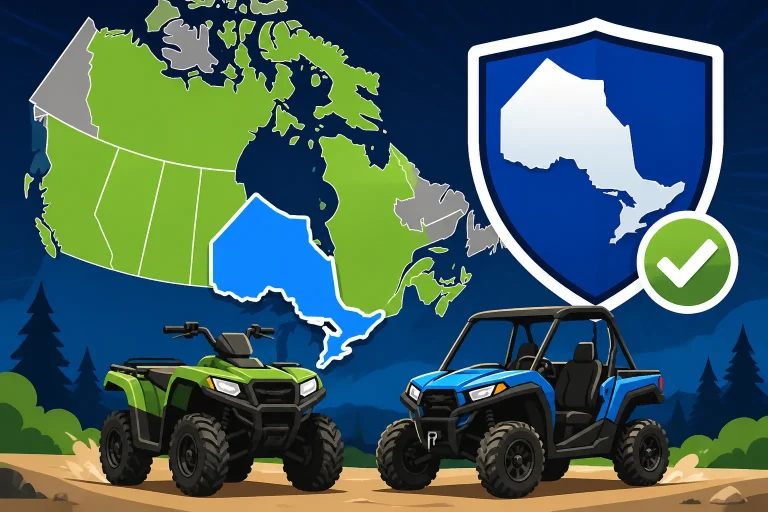
Ontario has different trail organizations and land arrangements. A pass that works for one club or network should not be treated as a province-wide riding pass. Some areas use their own permit system, and a permit accepted on one set of trails may not be valid on another. Ontario’s Separate Club Passes
Before a ride, use this short check:
- Map your route. Identify the club areas and trail networks you expect to enter, not just your starting point.
- Confirm each area’s permit rules. Check the official information from the local club or permit issuer, especially where networks meet.
- Read the membership details separately. Confirm whether it is required for access and what benefits it actually provides.
- Check current closures and conditions. A valid permit does not override a temporary closure, seasonal restriction, or trail rule.
- Carry the required proof. Follow the issuer’s directions for displaying or showing your permit, and keep any other required vehicle documents with you.
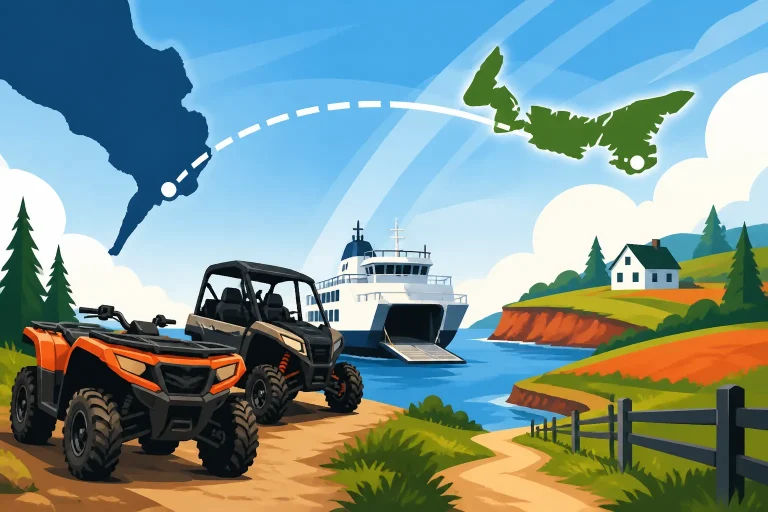
This matters particularly for a multi-day trip. A rider may buy a permit for the first part of a route and discover that the next club district has different rules. Plan the permit coverage in advance instead of relying on a general assumption that participating clubs all share one pass. Ontario Trail Permit Reciprocity With the Maritimes
Also remember that trail permission and legal permission to operate the machine are separate issues. Registration, insurance, road-use rules, age requirements, and landowner permission still apply where relevant. A club membership or trail permit does not replace them. For example, riding on a municipal road may be subject to local rules that have nothing to do with whether you belong to a trail club.
For most riders, the decision is straightforward once the terms are clear: choose a permit that covers the trails you will ride, then join a club if you want its additional benefits or want to support its work more directly. When an issuer uses “membership” and “permit” together, ask exactly what each purchase provides before checking out.
Disclaimer
This article is for general informational purposes only and does not constitute professional advice. Laws, prices and regulations vary by location and change over time. Consult a qualified professional for guidance on your specific situation.