Which Provinces Take an Ontario Permit
An Ontario ATV trail permit may be accepted beyond Ontario, but that does not mean every trail in another province is open to you. The key is to separate permit reciprocity from local riding rules, registration and insurance. Here’s where Ontario permits are recognized, what that recognition generally covers, and what to confirm before loading your machine.
Where an Ontario ATV Trail Permit Is Recognized
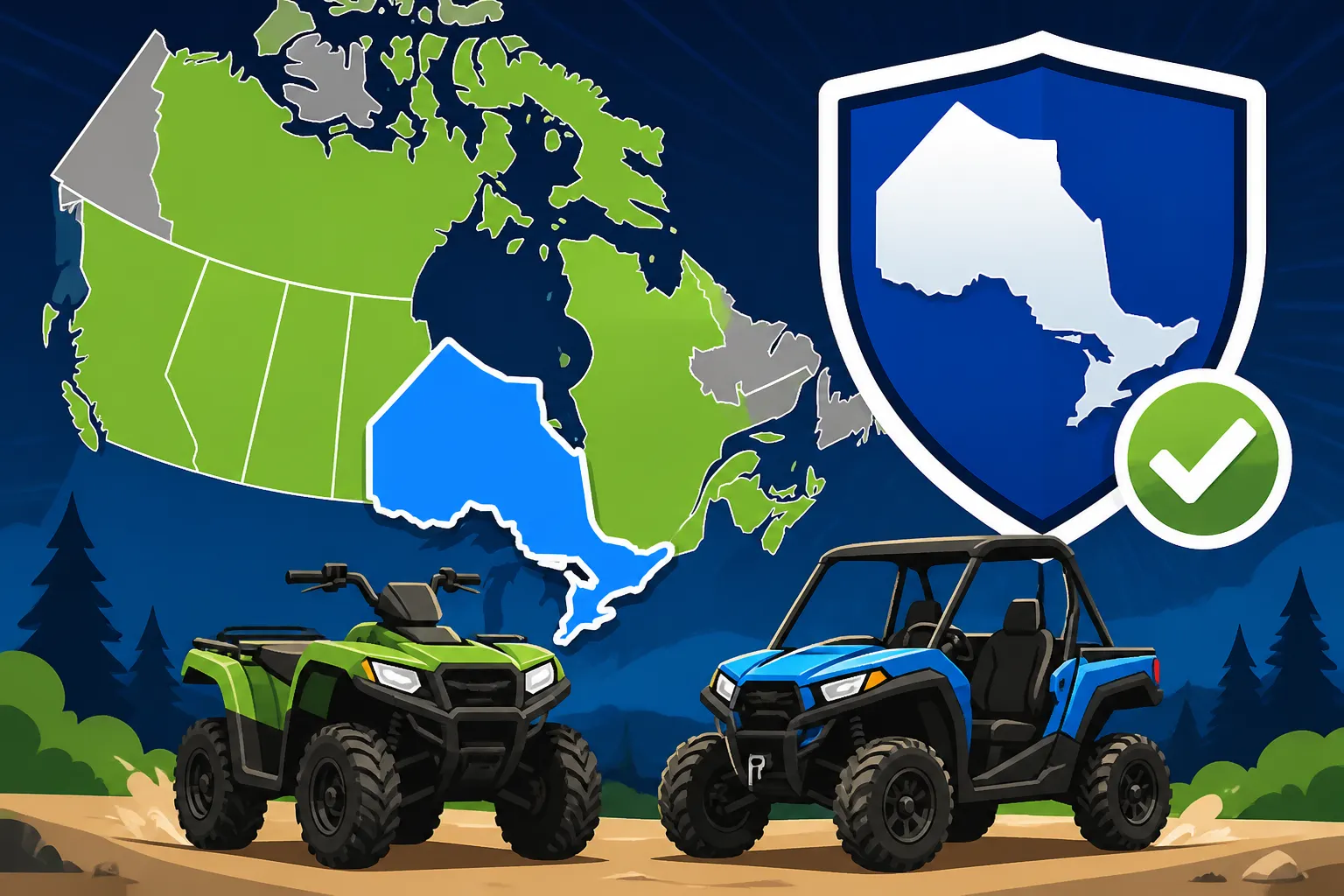
Ontario’s organized trail-permit reciprocity is associated with trail networks in New Brunswick, Prince Edward Island and Nova Scotia. A valid Ontario permit may be accepted on participating trails in those provinces, subject to the permit terms and the destination network’s rules.
That recognition is not a blanket pass for every road, club trail or off-road area in a province. It applies through participating trail organizations and may depend on the permit type you hold. Before travelling, confirm that the specific destination club or trail system accepts your permit and that your permit is valid for your planned riding dates.
| Destination | General reciprocity picture | What to check before riding |
|---|---|---|
| New Brunswick | Ontario permits are recognized through participating trail networks | The network, permit type, trail access and local riding rules |
| Prince Edward Island | Ontario permits are recognized through participating trail networks | Which trails are included and whether the permit covers your planned ride |
| Nova Scotia | Ontario permits are recognized through participating trail networks | The local association’s current requirements and trail conditions |
| Quebec | The former Ontario reciprocity arrangement has ended | The Quebec permit required for the trails you want to ride |
| Other provinces | Do not assume an Ontario permit will be accepted | Contact the destination’s trail organization or land manager |
For a quick provincial overview, see Ontario Trail Permit Reciprocity With the Maritimes. It is useful to treat reciprocity as permission to use certain participating trail networks, not as an all-purpose permit for the whole province.
The distinction matters because a trail pass is not the same as vehicle registration. A trail organization’s permit may grant access to its managed trails, while the machine still needs to meet the destination province’s requirements for registration, insurance, equipment and road use. Ontario registration, for example, does not automatically authorize riding on every road or trail outside Ontario.
If you are unsure which Ontario permit you have, start with Ontario ATV Trail Permits Explained. An annual permit and a short-term permit may not have identical terms. Don’t assume that an acceptance arrangement for an annual permit applies to a day or multi-day pass unless the destination organization confirms it.
What Reciprocity Covers and What It Does Not
In practical terms, reciprocity is an arrangement between trail organizations or their participating networks. It means a rider with a qualifying permit from one participating system can ride certain trails in another system without buying an additional permit for that same access. It does not automatically replace every other requirement.
Before setting out, consider these separate questions:
- Is the permit valid? Check its expiry or validity period and any conditions attached to it.
- Is the trail network participating? A province may have multiple clubs, land managers and trail systems. Acceptance by one does not prove acceptance by all.
- Is the machine properly registered? Trail access does not replace registration requirements. Learn how Ontario’s own permit and registration differ in The Permit Versus a Title in Ontario.
- Is insurance required? Trail-permit acceptance does not waive insurance obligations. Confirm the rules where you will ride and make sure your coverage applies to the planned use.
- Are you allowed on that particular route? A route may be closed, restricted to certain vehicle types, or subject to seasonal limits.
- Can you ride on connecting roads? A trail pass does not grant permission to use a public road. Road access depends on local laws and the road’s status.
A permit also does not guarantee that every section shown on a map is open on the day of your ride. Weather, maintenance, landowner access and seasonal closures can affect the route. Check the destination organization’s latest notices and maps before leaving, and again if your plans change during the trip.
This is especially important when a trail system connects multiple clubs or land types. You may start on a participating trail and then reach a section managed under different rules. When in doubt, ask which organization manages each part of your planned route and whether your permit is accepted there.
An Ontario permit is also not a substitute for a local club pass where one is required. Some destinations operate separate systems or sell their own passes. Ontario’s Separate Club Passes explains why an Ontario rider may still need to buy a different pass for certain trail areas at home; the same practical check applies when travelling.
How the Maritime Provinces Differ From Quebec and Other Destinations
The clearest Ontario reciprocity destinations are New Brunswick, Prince Edward Island and Nova Scotia. Even there, acceptance is tied to participating trails, not every place where an ATV can physically travel. Contact the local trail organization before your trip, especially if you plan to cross between club areas or use a trail network you have not visited before.
New Brunswick, Prince Edward Island and Nova Scotia may each have their own trail maps, local access conditions and operating rules. Treat the Ontario permit as one part of your preparation, not the final answer to whether a particular ride is allowed. The destination organization can tell you whether the permit is recognized on the route, whether you need a local pass for any portion, and how to find current closures.
Quebec requires extra care. The former agreement that allowed Ontario permits to be used in Quebec ended, so riders should not assume an Ontario permit covers Quebec trails. If Quebec is on your itinerary, check the current requirements with the relevant Quebec trail organization and arrange the appropriate permit before riding. Does Quebec Honour an Ontario Permit? covers the issue in more detail, and Riding Quebec on an Ontario Registration addresses the separate question of bringing an Ontario-registered machine into Quebec.
For provinces beyond these destinations, don’t infer acceptance from a neighbouring province’s policy. Reciprocity is not necessarily national or automatic. If your destination is not on the confirmed list, ask the provincial association, local club or land manager whether an Ontario permit is accepted. If it is not, ask which permit you need, where to buy it and whether it covers all the trails on your route.
When contacting a destination organization, be specific. Tell them:
- The type of Ontario permit you hold, such as an annual or short-term permit.
- The trail system or communities you plan to visit.
- Your planned riding dates.
- The type of machine you are bringing.
- Whether you expect to cross into another club’s area.
These details help avoid a vague answer that applies to one trail network but not the route you intend to ride. If the organization confirms acceptance, keep a record of the current permit information and any route-specific instructions.
A Pre-Trip Checklist for Riding Outside Ontario
A little checking before departure can prevent a wasted trip or an avoidable ticket. Use this process whenever you plan to ride under an Ontario permit in another province.
- Identify the permit precisely. Confirm whether it is an annual permit or a short-term pass, and check its validity dates. The QuadON Annual Permit in Ontario is a useful starting point for understanding the annual option, but confirm the terms that apply to your own permit.
- Confirm acceptance with the destination network. Ask the trail organization directly whether it accepts your specific Ontario permit. Don’t rely only on a general statement that a province has reciprocity.
- Map the full route. Find out whether every section is part of the participating network. Check whether the route crosses into a separate club area, onto private land, or onto roads with different rules.
- Check local riding requirements. Confirm registration, insurance, age, helmet and equipment rules for the province and route. Trail-permit reciprocity does not make Ontario’s rules apply everywhere.
- Check closures and seasonal restrictions. Look for current trail notices, weather-related closures and local operating limits. A valid permit does not open a closed trail.
- Carry proof as directed. Follow the permit provider’s instructions for displaying or presenting the permit. Keep your vehicle registration and insurance documents available as well.
- Recheck before you ride. Conditions and access can change between trip planning and arrival. Verify the route and permit requirements shortly before departure.
The cost of riding outside Ontario depends on the destination’s own permit system and the type of access you need. If your Ontario permit is accepted, you may not need to buy a second trail permit for participating trails, but that does not guarantee every part of a trip is covered. If a local pass is required, check its current cost and terms with the organization that issues it rather than relying on old trip notes or forum posts.
Keep the responsibilities separate: the trail permit addresses trail access; registration identifies the machine under the applicable vehicle rules; and insurance protects against liability as required by law or policy. A pass that solves one of those issues does not automatically solve the others.
The most reliable answer is therefore not simply “which provinces take an Ontario permit?” It is: which participating trail network accepts your particular permit, for your planned ride, under the rules in effect there? New Brunswick, Prince Edward Island and Nova Scotia are the key reciprocity destinations to check. For Quebec and other provinces, confirm requirements directly instead of assuming your Ontario permit will carry over.
Disclaimer
This article is for general informational purposes only and does not constitute professional advice. Laws, prices and regulations vary by location and change over time. Consult a qualified professional for guidance on your specific situation.