What an OFATV Trail Permit Sticker Looks Like
An OFATV trail permit sticker can be easy to confuse with an Ontario registration plate or an old season’s decal. If you are checking a machine before a ride, buying a used quad, or replacing a sticker, the key is knowing what the decal does—and what it cannot prove by itself. Here’s how to recognize it and confirm the permit is usable.
What an OFATV trail permit sticker is
An OFATV trail permit sticker is the physical decal associated with a trail permit for riding on participating Ontario club trails. It is not the same as the licence plate and vehicle permit issued through Ontario’s registration system. The two serve different purposes: provincial registration identifies the off-road vehicle for registration requirements, while a trail permit relates to access on trails covered by the applicable permit system.
That distinction matters because a machine can have an Ontario plate without having the trail permission required for a particular ride. The reverse is also true: a trail permit does not replace provincial registration, insurance, or other legal requirements that apply to the machine and where you ride.
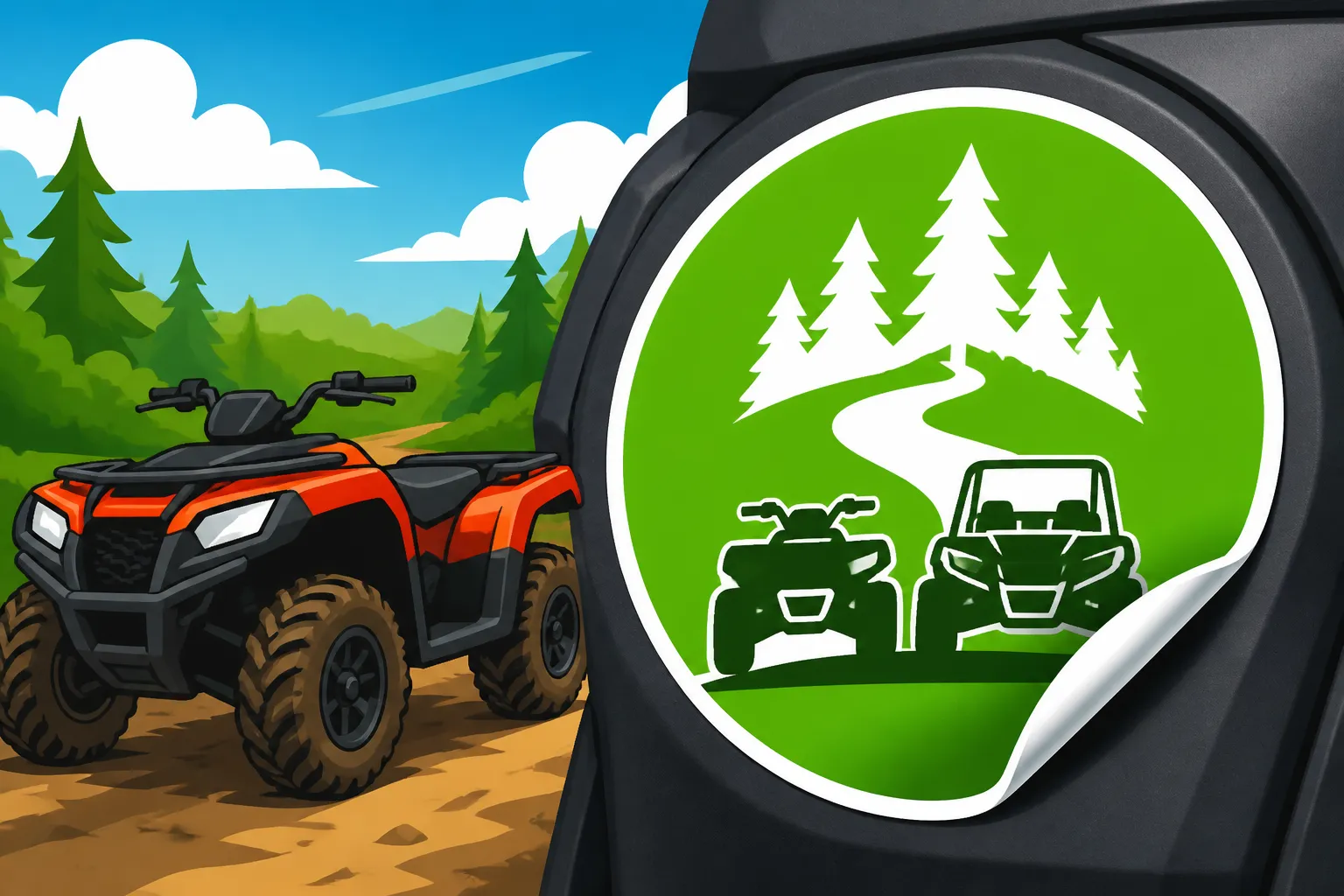
The general appearance to expect is an adhesive permit decal intended to be displayed on the machine it was issued for. Its exact colours, artwork, layout, or other visible details can differ between permit types or seasons. Do not rely on a remembered colour or a photo of an older sticker as proof that a permit is current. For the broader difference between trail access and other riding requirements, see Ontario ATV Trail Permits Explained.
A sticker is useful as a visible sign that a permit has been issued, but it is not a complete record of every condition attached to that permit. It may not, on its own, tell you which machine or purchaser it is associated with, whether it remains valid, or whether the trail you plan to ride is included. Those questions need to be checked against the permit details and the relevant club’s rules.
| What you are looking at | What it is for | What it does not establish by itself |
|---|---|---|
| OFATV trail permit sticker | Visible display of a trail permit on the permitted machine | Provincial registration, insurance, or permission to ride every trail |
| Ontario ORV plate | Part of provincial vehicle registration | A valid trail permit or access to a private club trail |
| Trail map or phone display | Helps identify routes, conditions, or permit information | That a rider has met every permit and riding requirement |
If you are new to Ontario trail riding, treat the sticker as one part of your ride-readiness check rather than a substitute for it. Confirm the permit status, the trail system you intend to use, the sticker’s placement, and the machine’s separate registration and insurance requirements.
How to identify a sticker without guessing
Start with the source of the sticker. A trail permit decal should be connected to a permit purchase or renewal, rather than simply appearing on a used machine with no supporting information. If you bought the permit yourself, check the confirmation or account details from the seller or permit system. If you are inspecting a machine that already has a decal, ask the owner for the associated permit information instead of assuming that the sticker is current.
The decal’s design can help you recognize that it is intended as a trail-permit sticker, but design alone is not a reliable validity check. Stickers can remain on a machine after a permit is no longer useful, and a decal can be damaged, partly removed, or difficult to read. A photo or description of a previous year’s design is not a substitute for checking the actual permit record and current instructions.
Use these checks before relying on a sticker:
- Confirm how the permit was obtained. Ask whether it was bought for this machine and whether the buyer has confirmation or account information.
- Check the permit details. Verify the permit type and any information that identifies the permitted machine or rider. Do not assume that a sticker can be transferred just because the machine changed hands.
- Confirm the applicable period. Trail permit terms differ. Check the details for the permit you have rather than inferring validity from its colour or appearance.
- Check where it can be used. A permit may not provide access to every trail organization or separately managed area. Confirm the rules for the club and route you plan to ride.
- Inspect the decal’s condition. Make sure it is attached and readable, and follow the issuer’s current directions for displaying it.
These steps are particularly important when buying a used ATV or UTV. A previous owner may have left a sticker on the machine, but that does not automatically establish that the permit is transferable or valid for the new owner. Ask for documentation and confirm the rules before counting on the decal for your first ride. For a separate overview of the costs involved, see What an OFATV Permit Costs in Ontario.
A sticker can also be confused with other decals placed on a quad or side-by-side, including manufacturer labels, safety information, and old club or event stickers. If you cannot identify a decal confidently, compare it with the permit confirmation or ask the permit issuer or relevant club. Guessing based on colour, shape, or an old image can lead to a frustrating stop before the ride begins.
Placement, damage, and replacement
The permit sticker is meant to be displayed on the machine, but do not choose a location solely because another rider’s decal is there. Follow the instructions supplied with your permit for its placement. The correct location can depend on the issuer’s requirements and the machine’s bodywork. The goal is to display it as directed so it remains visible and is less likely to peel, get covered in mud, or be damaged during normal use.
Before applying a decal, check that the surface and placement meet the current instructions. A curved, dirty, wet, or frequently scraped area can make an adhesive sticker harder to keep in place. Once applied, avoid moving it unless the permit issuer tells you how to handle a placement error. Peeling it off can damage the decal or make it difficult to reattach.
If you want more detailed help with positioning, see Where the Sticker Goes. That article focuses on the practical placement question; the permit instructions remain the final reference for your particular decal.
A sticker that is peeling at an edge is not the same as one that has been deliberately removed, transferred, or badly damaged. Still, do not assume that a partly attached decal will satisfy the display requirement. If it is lifting, stop it from catching on gear or being rubbed away, and contact the permit provider or club for the appropriate next step. Avoid covering important parts of the decal with tape or a protective layer unless the issuer permits it; an improvised covering could obscure information or interfere with the sticker.
If the decal is missing, torn, or no longer readable, do not make a replacement by copying a photo or using an old sticker from another machine. Ask the permit provider what replacement process applies. Keep any confirmation or replacement instructions available while the issue is being resolved. The guidance in Replacing a Lost Trail Permit can help you understand the replacement question, while the permit issuer can confirm the procedure for your specific purchase.
Do not remove a sticker from one machine and attach it to another unless the permit rules expressly allow that. A permit may be linked to a particular vehicle or purchase record, and the physical decal is not necessarily a transferable pass. This is especially important when a family owns multiple machines. Check the current rules for each machine rather than assuming that one sticker can cover more than one ride.
What to check before riding
A visible sticker is only one part of a sensible pre-ride check. Verify that the permit is valid for the ride, that the machine meets the permit requirements, and that the route is covered. Club and trail access can vary, so a permit that works for one system may not be enough for another. If your route crosses club boundaries, check each area in advance; Does Your Permit Cover the Next Club’s District? explains why that question matters.
Also check trail status before setting out. A permit does not override a closure, a club rule, a land restriction, or a municipal by-law. Weather, maintenance, seasonal conditions, and local access arrangements can affect whether a trail is open. Carry the information the permit issuer requires, and keep a way to show your permit details if the decal is difficult to inspect. Showing a Permit on a Phone covers the phone-display question, but do not assume a digital record replaces a required physical sticker.
A practical checklist is:
- The decal is on the machine associated with the permit and displayed as instructed.
- You have checked the permit’s validity and any restrictions in its terms.
- The club or trail area you plan to use accepts that permit.
- The trail is open and your route does not enter an area requiring separate permission.
- The machine’s provincial registration and insurance requirements are handled separately.
- The permit details are available if a patroller or other authorized person asks to see them.
If you are lending a machine or bringing a visiting rider, explain that the decal is not a general pass for anyone to use on any vehicle. The rider should know which permit applies, which trails it covers, and what else they need to carry or follow. For riders who want to check the physical decal, avoid relying only on an old photograph: current permit details and issuer instructions are more useful than a visual match.
When there is uncertainty, ask the permit issuer or the relevant club before riding. That is more reliable than trying to settle a permit question at a trail entrance or during a check. Keep the purchase confirmation and any replacement correspondence until you are satisfied that the decal and permit details are correct.
Frequently Asked Questions
Does an OFATV trail permit sticker replace an Ontario plate?
No. The trail permit sticker and the provincial ORV plate serve different purposes. A trail permit does not replace provincial registration, insurance, or other requirements that apply to the machine.
Can I tell whether a permit is valid from the sticker’s colour?
Not reliably. Designs and colours can vary, and appearance alone does not confirm the permit’s current status or coverage. Check the permit details and the rules for the trails you plan to use.
Can I move the sticker to another quad or UTV?
Do not assume you can. A permit may be associated with a particular machine or purchase record. Check the issuer’s current transfer rules before moving or reusing a decal.
What should I do if my sticker is missing or damaged?
Contact the permit provider or relevant club and follow its replacement instructions. Do not make a copy or use a decal from another machine as a substitute.
Disclaimer
This article is for general informational purposes only and does not constitute professional advice. Laws, prices and regulations vary by location and change over time. Consult a qualified professional for guidance on your specific situation.