Ontario RST Paid at the Counter, Not to the Seller
It’s a common scenario for many folks looking to get into the Ontario ATV or UTV scene: you find that perfect machine for sale privately, haggle a bit, shake hands, and think you're all done with the financial side of things. But then comes the moment of truth at ServiceOntario, and suddenly you're hit with the Retail Sales Tax (RST) that the seller never mentioned or collected. This guide is going to walk you through exactly why and how Ontario's RST is handled for privately sold off-road vehicles, clarifying the often-confusing process so you’re never caught off guard.
Understanding Ontario's Retail Sales Tax for ORVs
When you’re buying an ATV or UTV in Ontario, the way sales tax is applied depends entirely on who you’re buying it from. This distinction is where a lot of the confusion begins for private sales, and it's super important to grasp this upfront.
Why Private Sellers Don't Collect Tax
Let's be real: most of us are used to paying tax directly to the person or business we're buying from. You grab groceries, you pay tax. You buy a new jacket, you pay tax. This ingrained habit leads many to believe that when they’re buying a used ATV from a neighbour down the road, the seller should be adding tax to the price. But that’s simply not how it works in Ontario for private vehicle sales.
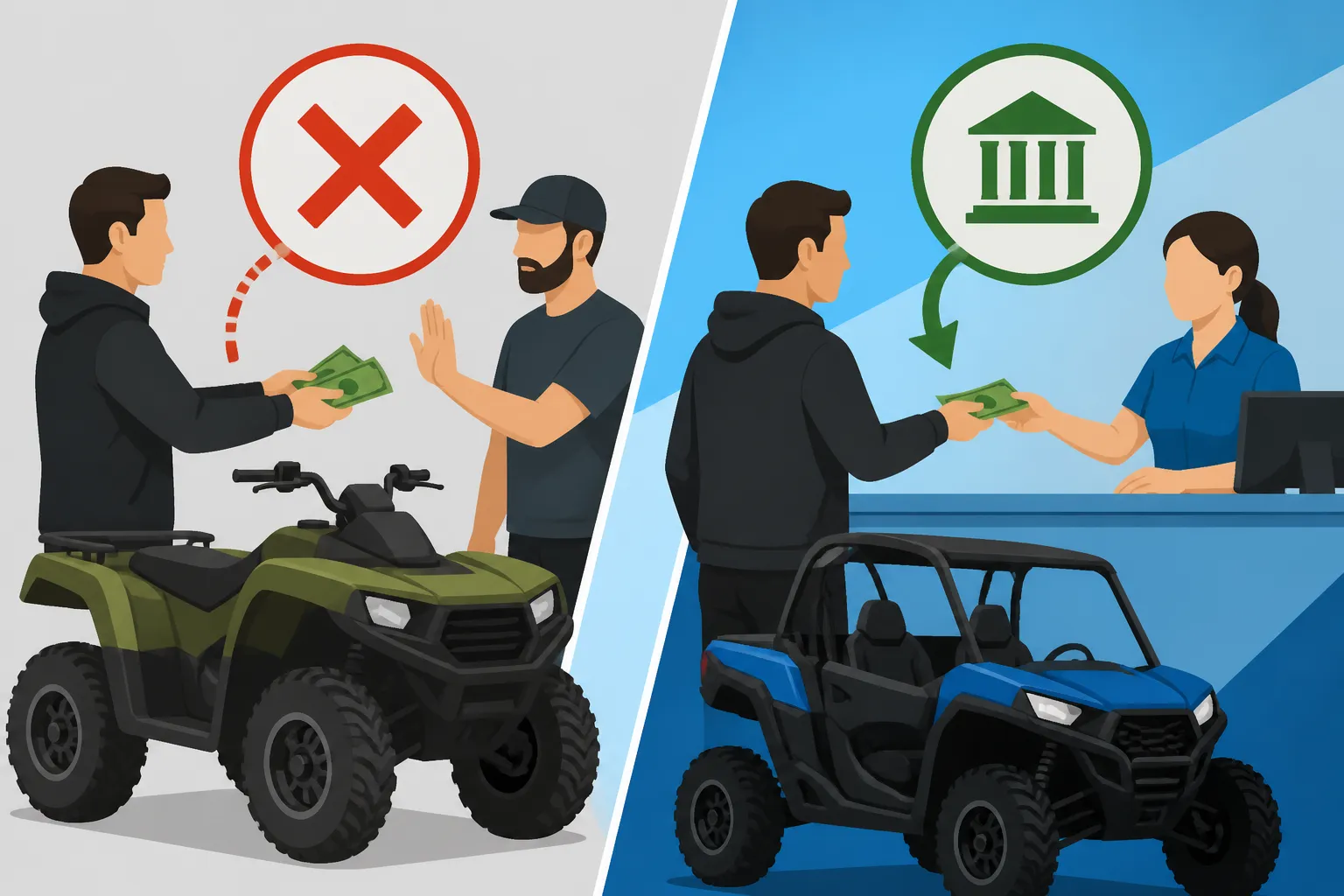
Private individuals are not registered tax collectors. They don't have a business number, they don't file HST or RST returns to the government for individual sales, and frankly, it would be an administrative nightmare if they did. When you hand over cash (or e-transfer funds) to a private seller for their quad, that money is entirely theirs, and no portion of it is forwarded to the provincial government as sales tax by them. This isn't a loophole; it's by design. The onus for paying the sales tax falls squarely on the buyer, and it’s collected at a very specific point in time.
Dealer Sales Versus Private Sales
To further clarify, let’s quickly compare this to buying from a registered dealer. If you purchase a brand-new ATV or a used one from a dealership in Ontario, they will absolutely charge you Harmonized Sales Tax (HST) on the sale. HST is a combination of the federal Goods and Services Tax (GST) and the provincial Retail Sales Tax (PST). Dealers are businesses, and they are legally obligated to collect and remit HST to the government on every sale. This means when you drive off the lot, all your taxes have already been paid and handled.
However, when you buy privately, you're dealing with a different beast: the Retail Sales Tax (RST). This is often colloquially referred to as "provincial sales tax" or simply "tax" on a private sale, and it applies to off-road vehicles, cars, and other goods. The key difference is that this 13% RST is not collected by your private seller. Instead, it’s collected by the provincial government (via ServiceOntario) when you go to register the machine in your name. It's a critical distinction, and understanding it can save you a lot of headache and unexpected costs later on.
The Calculation and Payment of RST
Now that we know the tax isn't collected by the private seller, let's dive into how it actually gets calculated and where you'll be paying it. This is where the rubber meets the road, quite literally, at the ServiceOntario counter.
How Your ATV's Value is Assessed for Tax
Ontario's Retail Sales Tax for privately sold ORVs is generally 13% of the purchase price. Sounds straightforward, right? Well, there's a catch, and it's a significant one. The government wants to ensure it collects a fair amount of tax, so it doesn't just take your word for it if you declare a ridiculously low price. ServiceOntario will assess the tax based on either the purchase price you state on your bill of sale or the wholesale value of the machine, whichever is higher.
This can be a point of contention for buyers, especially if they believe they got an incredible deal on an older machine that might not have a widely recognized "book value." While ATVs and UTVs don't have a "Red Book" value quite like cars do, ServiceOntario has internal resources to determine a fair market wholesale value for most common makes and models. [Why ORVs Have No Red Book Value] explains this further. If your declared purchase price is significantly lower than their assessed value, you might be asked to justify it. For example, if you bought a machine that needed extensive repairs and got it for a steal, you might need to provide repair estimates or photos to prove the lower value. Otherwise, expect to pay RST on the higher of the two figures.
Making the Payment at ServiceOntario
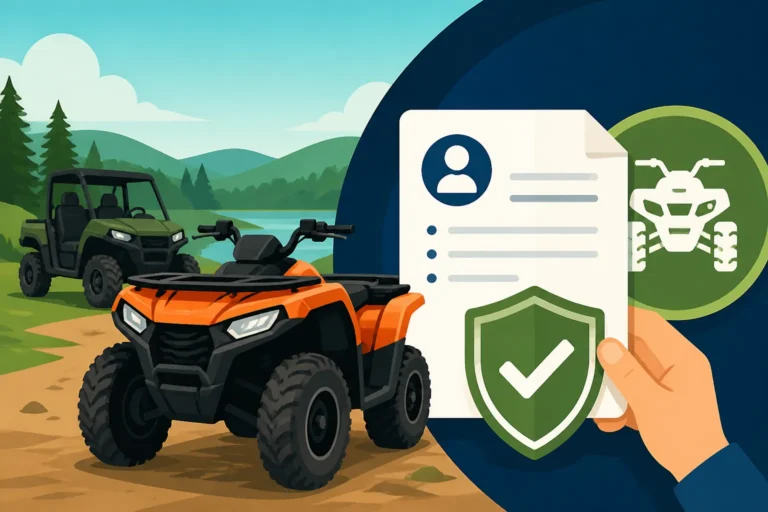
So, you’ve got your bill of sale, you’ve insured your machine, and you’re ready to get that [Ontario ORV Plates and Where They Mount] and your [The Ontario Vehicle Permit Explained]. This is the moment you'll actually pay the RST. When you visit a ServiceOntario centre to register your newly acquired ATV or UTV, the agent will review your paperwork. This includes your bill of sale, which serves as proof of purchase and states the price you paid.
After verifying your ownership and the machine’s details, they will calculate the 13% RST based on the higher of your declared purchase price or their assessed wholesale value. This tax amount is then added to the other fees, such as the initial registration fee. You pay it all right there, usually by debit, credit card, or cash. It’s a one-time payment that cements your ownership with the province and gets you legally registered. Don't forget, [Ontario ATV Registration Paperwork] is crucial for this step; ensure you have everything in order to avoid a wasted trip.
For private sales, a clear, dated, and signed bill of sale is essential for this process. It should include the names and addresses of both buyer and seller, the VIN (Vehicle Identification Number) of the machine, and the agreed-upon purchase price. If you're looking for a reliable template, platforms like LawDepot offer professional, legally sound bill of sale documents that can protect both parties and make your ServiceOntario visit smoother. Having a proper bill of sale can prevent headaches down the road, especially if there's any dispute over the declared value for tax purposes.
Common Misconceptions and Buyer Beware Scenarios
It's easy to get confused or misled when navigating a private sale, especially with the unique way RST is handled. Let's look at some common pitfalls and what to watch out for.
The "Tax Included" Trap in Private Sales
You're browsing Kijiji or Facebook Marketplace, and you see a listing for an ATV. Maybe the seller includes a line like, "Price is firm, and tax is included." Or, during negotiations, they might say, "I've factored the tax into my asking price, so you don't have to worry about it." While this might sound helpful or convenient, it's a major red flag and a common misunderstanding.
As we've discussed, a private seller cannot collect and remit RST on your behalf to the provincial government. If a seller claims they've "included" the tax, what they likely mean is that they've simply inflated their asking price to cover what they assume you'll pay at ServiceOntario, or perhaps they're just using it as a sales tactic. The problem is, when you get to ServiceOntario, the agent isn't going to care what the seller told you. They will look at your bill of sale, determine the 13% RST, and expect you to pay it directly to the province. This means you could end up paying the "tax" twice: once implicitly to the seller through a higher price, and then again explicitly to the government. Always remember that the 13% RST Ontario RST Paid at the Counter, Not to the Seller is your responsibility at the time of registration, not the seller's.
Declaring a Lower Purchase Price
The temptation to save a few bucks on taxes is real, especially when you're buying a used machine and might feel the price is already fair. Some buyers and sellers might be tempted to put a lower-than-actual price on the bill of sale, hoping to reduce the 13% RST payable. For example, if you paid $5,000 for a quad, you might consider writing $3,000 on the bill of sale.
However, this is a risky game and generally not recommended. ServiceOntario has systems in place to prevent this kind of tax avoidance. As mentioned earlier, they will assess the tax based on the higher of your declared purchase price or the machine's wholesale value. If your declared $3,000 purchase price for a quad that typically sells for $5,000-$6,000 raises an eyebrow, they will simply tax you on their assessed value. Furthermore, intentionally falsifying a legal document like a bill of sale can have serious consequences beyond just paying the correct tax. It can lead to penalties, fines, and potentially complicate future transactions or ownership disputes. It's always best to be honest and upfront about the actual purchase price. Remember, [Retail Sales Tax on an Ontario Private Sale] is a non-negotiable part of the process unless a specific exemption applies.
Exemptions from Retail Sales Tax
While most private sales will be subject to the 13% RST, Ontario does offer a few specific exemptions where you might not have to pay this tax. However, even if an exemption applies, you still need to go through the proper channels and provide the correct documentation at ServiceOntario.
Documenting Your Exemption Properly
Simply saying "it was a gift" won't cut it. For any RST exemption to be valid, you must provide specific documentation that proves your claim. These exemptions are not automatic and require you to proactively demonstrate eligibility when you register the ORV.
Common exemptions include:
- Family Gifts: If you receive an ATV or UTV as a bona fide gift from a direct family member (e.g., parent, grandparent, spouse, child, sibling), you may be exempt from RST. However, this isn't just a handshake deal. You'll need a specific gift declaration form and usually proof of the familial relationship. [The Family Gift Exemption in Ontario] provides more details.
- Estate Transfers: If you inherit a machine through a will after the owner has passed away, it can be exempt from RST. Again, legal documentation such as the will and death certificate will be required. [Ontario's Estate Transfer Exemption] is a useful resource for this.
- Farm Use: If you are a bona fide farmer and the ORV will be used exclusively for farm purposes, you might qualify for an exemption. This requires specific forms and proof of your farming operation. [The Farm-Use Exemption in Ontario] explains the criteria.
- First Nations Purchasers: Individuals with a valid Status Card may be exempt from RST on certain purchases, including ORVs, depending on where the transaction occurs and the circumstances. Proper identification and understanding of the specific rules are key. [First Nations Purchasers and Ontario RST] elaborates on this.
In all these cases, even if no money changes hands, you'll still need a form of "bill of sale" or transfer document clearly outlining the transaction (e.g., "gift," "estate transfer") and stating that no money was exchanged, or providing the exemption details. Using a template from a service like LawDepot for a gift affidavit or a specific bill of sale can help ensure all necessary legal details are included, preventing issues when you get to ServiceOntario. Remember, the goal is always a clear paper trail for [Proving Ownership of an Ontario ATV].
Specific Scenarios for RST Relief
Let’s delve a little deeper into a couple of these exemption scenarios to illustrate the documentation needs.
Imagine your father decides to give you his old but perfectly running quad as a graduation gift. You're thrilled, but you know you still need to register it. To claim the family gift exemption, you and your father would need to complete a 'Sworn Statement for the Transfer of a Used Motor Vehicle in Ontario' form (or a similar specific declaration for gifts of ORVs if applicable, confirming no money exchanged hands and detailing your relationship). You would bring this, along with your father's old [Ontario Vehicle Permit Explained] (or whatever proof of ownership he had), and your identification to ServiceOntario. They would process the transfer and, if all documentation is in order, waive the 13% RST.
Another scenario might involve a farmer purchasing a utility-focused UTV specifically to help with tasks around the farm, like hauling feed or checking fences. For this, the farmer would need to present a completed 'Declaration of Tax Exemption – Farm Use' form when registering the machine. This form attests that the ORV will be primarily used for eligible farming activities. If the UTV is later sold or used for non-farm purposes, the RST might become payable at that time, so it's essential to understand the ongoing obligations tied to such exemptions. These aren't just one-time get-out-of-tax-free cards; they carry conditions.
The Broader Context: Why Ontario Collects Tax This Way
It might seem cumbersome to have to pay the tax at ServiceOntario rather than directly to your seller, but there are some very practical and important reasons why the province has structured the system this way. It's not just about making things complicated for you, the buyer!
Ensuring Fair Revenue Collection
One of the primary reasons Ontario collects RST at the point of registration for private sales is to ensure consistent and fair revenue collection. If private sellers were responsible for collecting and remitting tax, it would open the door to widespread tax avoidance. It would be incredibly difficult for the government to track every private transaction, verify the reported sale price, and ensure that the correct tax was collected and sent in. Imagine the administrative burden and the potential for lost revenue!
By making the tax payable at ServiceOntario, the province centralizes the collection point. This means every off-road vehicle sold privately (that isn't exempt) will eventually have its 13% RST paid to the government before it can be legally registered and operated. This system prevents people from under-reporting sales prices or simply skipping tax payments altogether, which would put a significant dent in public funds that support various provincial services. It ensures that everyone pays their fair share, maintaining equity in the tax system.
The Benefits of a Clear Paper Trail
Beyond revenue collection, this method also creates an indisputable paper trail for every ORV registered in the province. When you go to [Registering an ORV at a ServiceOntario Centre] and pay your RST, you're not just getting a plate; you're formally transferring ownership in the government's records. This process requires a bill of sale or other proof of transfer, which clearly identifies the previous owner, the new owner, the machine's VIN, and the date of the transaction.
This clear paper trail offers significant benefits to you, the buyer, and to the wider community. For you, it's definitive proof of ownership, which is crucial for insurance, potential resale, or if your machine is ever stolen. For law enforcement, it helps track vehicle ownership, combat theft, and ensure accountability. It provides a robust system that verifies who owns what, when, and for how much. In essence, while it adds an extra step for the buyer, it ultimately contributes to a more secure and transparent ownership environment for off-road vehicles across Ontario.
Paying the Retail Sales Tax at the ServiceOntario counter, rather than to a private seller, is a fundamental aspect of registering an ATV or UTV in Ontario. It's designed to ensure fair revenue collection for the province and establish a clear, documented chain of ownership. While it might seem like an extra step, understanding this process, including how values are assessed and when exemptions apply, will help you navigate your purchase smoothly and avoid any unwelcome surprises. Always budget for that 13% RST when buying privately, unless you're absolutely certain you qualify for a documented exemption.
Disclaimer
This article is for general informational purposes only and does not constitute professional advice. Laws, prices and regulations vary by location and change over time. Consult a qualified professional for guidance on your specific situation.