Why ORVs Have No Red Book Value
It’s a common scenario for many folks buying or selling an ATV or UTV in Ontario: you head online, open up your favourite vehicle valuation tool – you know, the one you’d use for a car or truck – and search for the “Red Book” value for your quad. Only to find… absolutely nothing. This can be incredibly frustrating and confusing, leaving you wondering how on earth to set a fair price or gauge if you’re getting a good deal. This guide will dive deep into why ORVs don't have a Red Book value and, more importantly, how you can still navigate the market confidently, ensuring you're making informed decisions whether you're buying your dream machine or letting go of an old friend.
Understanding the "Red Book" and Why ORVs Are Different
When you think about valuing a vehicle, especially a used one, many people immediately picture the Canadian Black Book, often colloquially referred to as the "Red Book." This invaluable resource provides average wholesale and retail values for used cars, trucks, and SUVs, based on extensive market data, sales trends, and vehicle specifications. It’s a cornerstone for dealerships, insurance companies, and private sellers alike, offering a baseline for fair pricing. But when it comes to off-road vehicles, the landscape is entirely different, and for good reason.
What the Red Book Provides for Road Vehicles
The Red Book's strength lies in its comprehensive data collection for mainstream road vehicles. Every make, model, trim, and year of car or truck is catalogued, alongside historical sales data, odometer readings, and condition assessments. This allows for a fairly precise valuation, accounting for factors like regional demand, seasonal shifts, and even specific options packages. Dealerships rely on it for trade-ins, banks for loan collateral, and insurers for determining total loss payouts. It brings a degree of standardization to a complex market, making transactions more transparent and predictable.
However, this intricate system is built upon a foundation of factors that simply don't translate well to the off-road world. Road vehicles operate within a highly regulated environment, with standardized inspections, easily trackable mileage, and a vast network of dealerships and service centres that contribute data. These conditions create the kind of consistent, high-volume market activity that the Red Book needs to generate reliable valuations.
Why ORVs Fall Outside This Valuation System
Off-road vehicles, encompassing ATVs, UTVs (side-by-sides), and even dirt bikes, exist in a different universe from cars and trucks. For starters, they aren't primarily designed for or regulated for extensive road use. While some Ontario municipalities have opened up specific roads to ORVs, their primary domain is trails, fields, and rugged terrain. This fundamental difference means many of the data points critical for Red Book valuations are either absent or wildly inconsistent for ORVs.
Think about it: ORVs don't have odometers in the same way cars do; they often have hour meters, which can be less precise indicators of wear and tear, and are sometimes more easily tampered with. Their usage is incredibly varied – from leisurely trail rides to demanding farm work, competitive racing, or deep-woods expeditions. This diverse usage leads to a much wider range of wear and tear, making standardized condition assessments incredibly difficult. Furthermore, the market for ORVs is often more localized and less centralized than the automotive market, making comprehensive data collection a logistical nightmare for a service like the Red Book. The sheer volume and consistency of new and used car sales simply don't exist for ORVs, preventing the kind of deep, statistical analysis that underpins traditional vehicle valuation guides.
The Unique Nature of ORV Depreciation and Value
Since the Red Book isn't riding along with us, understanding the unique factors that drive ORV depreciation and value becomes absolutely crucial. Unlike a car, which might lose a predictable percentage of its value each year simply by aging, an ORV's worth is a much more dynamic beast, heavily influenced by its life story and the care it has received.
Factors Influencing ORV Value in Ontario
When you're trying to figure out what your quad or side-by-side is truly worth, you need to look beyond just the year and model. Here in Ontario, like anywhere else, several key factors play a massive role:
- Overall Condition and Maintenance: This is perhaps the biggest one. Has the machine been meticulously maintained, with regular oil changes, filter cleanings, and necessary repairs? Or has it been thrashed, neglected, and left to rust? A well-cared-for machine, even an older one, will command a significantly higher price than a newer but abused counterpart. Look for signs of proper storage, clean fluids, and operational components.
- Engine Hours/Mileage: While ORVs often track hours rather than kilometres, both matter. A machine with low hours or mileage for its age suggests less wear on critical components. However, don't just look at the number; consider how those hours were accumulated. Were they slow, gentle trail rides, or hard, high-RPM mud bogging?
- Modifications and Accessories: This is a double-edged sword. Useful, high-quality upgrades like winches, plows, upgraded tires, suspension, or storage boxes can add value, especially if they enhance the machine's utility or performance. However, highly personalized or extreme modifications might reduce the pool of potential buyers and could even detract from the value if they compromise reliability or are poorly installed. Aftermarket exhaust systems, for example, might be a selling point for some, but a deal-breaker for others concerned about noise bylaws.
- Manufacturer and Model Reputation: Some brands and specific models hold their value better than others due to reputation for reliability, performance, or availability of parts. A well-regarded utility side-by-side from a major manufacturer might depreciate slower than a less common sport quad.
- Seasonal Demand: Here in Ontario, the demand for ORVs can fluctuate with the seasons. Spring and early summer often see a surge in interest as riders get ready for the trail season. Late fall or winter might be a slower period for selling, potentially leading to lower prices, though it could be a great time to buy for the patient shopper.
How Different ORV Types Depreciate Differently
Not all off-road vehicles are created equal when it comes to holding their value. The type of machine itself significantly influences its depreciation curve.
- Utility ATVs and UTVs (Side-by-Sides): These machines, often used for work, hunting, or family trail rides, tend to hold their value quite well, especially if they're well-maintained. Their versatility and durability mean they have a broad appeal, and many buyers are looking for reliable workhorses. A Polaris Ranger or a Can-Am Defender, for instance, used on a farm or for property maintenance, might see less dramatic depreciation if it's been cared for, compared to a pure sport machine. Their utility often makes them a longer-term investment for many owners.
- Sport ATVs and Dirt Bikes: These machines are often pushed harder and ridden more aggressively, leading to higher wear and tear. They also tend to be more susceptible to trend cycles. While a well-maintained, iconic sport quad like a Yamaha YFZ450R might hold its value among enthusiasts, the general market for sport machines can be more volatile. Modifications are more common in this segment, which, as mentioned, can be a mixed bag for resale.
- Specialty Machines (e.g., highly customized builds, vintage models): These are niche markets. A custom-built rock crawler UTV might fetch a premium from the right buyer, but it could sit on the market indefinitely if that buyer doesn't surface. Vintage machines, if restored, can appreciate, but this is an exception rather than the rule and depends heavily on rarity and condition.
Understanding these nuances is key to realistic expectations, whether you're looking to purchase your first off-road machine or preparing to sell one that has served you well.
How to Determine a Fair Market Value for Your Ontario ORV
Without the convenience of a "Red Book," figuring out a fair price for an ORV in Ontario requires a bit more legwork and a healthy dose of market savvy. It’s not impossible, but it demands a more hands-on approach. The goal is to gather enough comparable data to make an educated estimate.
Researching Comparable Sales and Online Marketplaces
This is your most powerful tool. The internet has opened up a treasure trove of information that can help you gauge current market prices.
- Scour Online Classifieds: Websites like Kijiji, Facebook Marketplace, and dedicated ATV/UTV forums are goldmines. Search for machines that match yours as closely as possible in terms of make, model, year, and condition. Don’t just look at the asking price; pay attention to how long listings have been active. If a machine has been listed for months, it’s likely overpriced. If similar machines are selling quickly, it suggests the price is reasonable. Look for ads with good descriptions and clear photos. This gives you a real-time snapshot of what people are asking for their machines.
- Check Dealer Websites: While dealer prices will generally be higher (to cover overheads, reconditioning, and warranty, if offered), they can still provide an upper benchmark, especially for newer used models. Dealers also often highlight what they’ve done to recondition a machine, which can inform you about what adds value.
- Look at "Sold" Listings (where available): Some platforms allow you to filter for "sold" listings, which is even more valuable as it shows what people are actually paying, not just what they're asking.
- Expand Your Search Regionally: While focusing on Ontario is ideal, if you're not finding enough comparable sales, you might need to broaden your search to neighbouring provinces like Quebec or even parts of the US, keeping in mind that local market conditions and registration rules, like [Ontario Rules for an Out-of-Province Machine], might differ.
- Note Key Details: When you find a comparable listing, jot down the make, model, year, reported hours/mileage, condition (based on photos/description), included accessories, and the asking price. Compile a small spreadsheet or list to help you compare.
Considering Common Adjustments
Once you have a range of prices from comparable sales, you need to adjust for the specifics of your machine. No two used ORVs are identical, even if they're the same model year.
- Condition is King: Be brutally honest about your machine's condition. Are there dents, scratches, torn seats, or bald tires? Does it start easily, run smoothly, and shift cleanly? Are there any known mechanical issues, even minor ones, that need addressing? Deduct from your estimated price for significant flaws. Conversely, if your machine is exceptionally clean, well-maintained, and has fresh fluids and filters, you can justify a price at the higher end of your range.
- Accessories and Upgrades: As discussed, useful and well-installed accessories can add value. A plow package for a utility UTV in a rural area, for example, is a significant selling feature. A good winch or a set of quality handguards can also nudge the price up. However, don't expect a dollar-for-dollar return on every upgrade you've made. Aftermarket light bars, for instance, while functional, might not add much to resale value if they're not universally desired.
- Hours vs. Average Use: Compare your machine's hour meter reading to what seems typical for its age. Significantly lower hours for its age might warrant a slight premium, assuming the machine wasn't simply left to rot. Higher hours, especially if it's been used for heavy work, will generally mean a lower price.
- Seasonality: Remember that spring and early summer often command slightly better prices due to higher demand. If you're selling in the off-season, you might need to adjust your price downwards to attract buyers.
The Role of Professional Appraisal
For most private ORV transactions, a formal professional appraisal isn't common or necessary. The cost of an appraisal can often outweigh the benefit, especially for mid-range or older machines. However, there are a few scenarios where it might be considered:
- Disputes for Insurance Claims: If your ORV is stolen or declared a total loss and you disagree with your insurance company's valuation, a professional appraisal from an expert familiar with the ORV market might be worthwhile. Many insurance policies for ORVs, especially those purchased as "actual cash value," can leave you feeling shortchanged. Having an independent valuation can provide leverage in negotiations.
- High-Value or Collectible Machines: For very high-end, custom-built, or rare vintage ORVs where market comparables are scarce, an appraisal could provide a more authoritative value. However, finding an appraiser with specific expertise in niche ORV markets can be challenging.
- Estate Sales or Legal Matters: In situations involving estates, divorces, or other legal proceedings where a neutral, third-party valuation is required, an appraisal might be mandated.
For the average buyer or seller of a used quad or side-by-side in Ontario, a thorough market research approach using online classifieds and an honest assessment of condition will usually get you to a fair and defensible price.
Beyond the Price: Essential Considerations for Buying and Selling an ORV in Ontario
Figuring out the "value" of an ORV is about more than just the sticker price. When you're dealing with these machines in Ontario, there are crucial legal, administrative, and due diligence steps that protect both buyers and sellers. Neglecting these can lead to headaches, financial loss, or even legal trouble down the road.
Importance of a Solid Bill of Sale
A handshake and a cash exchange might seem simple, but it’s a recipe for disaster when it comes to ORVs. A comprehensive bill of sale is your absolute best friend, whether you're buying or selling. It acts as a legal contract and proof of transfer of ownership. A good bill of sale should include:
- Buyer and Seller Information: Full names, addresses, and contact details for both parties.
- Vehicle Description: Make, model, year, Vehicle Identification Number (VIN), and hour meter/odometer reading.
- Purchase Price: The agreed-upon sale price in Canadian dollars.
- Date of Sale: Crucial for establishing ownership timelines.
- "As Is" Clause: Most private sales are "as is, where is," meaning the buyer accepts the vehicle in its current condition with no warranties from the seller. This should be clearly stated.
- Signatures: Both parties should sign and date the document. It's also wise to have a witness sign, if possible.
- Lien Statement: The seller should confirm (and ideally, guarantee) that the ORV is free of all liens and encumbrances.
You can find templates for bills of sale online, and services like LawDepot offer customizable legal forms that can simplify this process and ensure you cover all your bases. Having this documented proof of purchase is vital for registering the ORV with ServiceOntario and can be a lifesaver if any disputes arise later.
Understanding the Permit Versus a Title
In Ontario, ORVs don't have a "title" in the same way cars do in some other jurisdictions. Instead, they operate under an [The Permit Versus a Title in Ontario] system, where the provincial government issues an Off-Road Vehicle Permit (often just called the ORV permit or ownership). This permit serves as the primary document of ownership.
- For the Buyer: When you purchase an ORV, the seller must hand over their signed Off-Road Vehicle Permit. This permit has a section on the back for the seller to sign and indicate the sale date. This signed permit, along with your bill of sale, is what you'll take to ServiceOntario to register the vehicle in your name. Without the original permit, [Ontario ATV Registration Without a Bill of Sale] becomes a much more complex process.
- For the Seller: It is your responsibility to provide the buyer with the original, signed ORV permit. Ensure you clearly fill out the transfer information on the back, including the buyer's name and the date of sale. Keep a copy of the permit and the bill of sale for your own records. This proves you've officially transferred ownership and are no longer liable for the machine. Remember, you have six days from the date of purchase to register an ORV in your name.
Performing Due Diligence: VIN and Lien Checks
Before you hand over any money for a used ORV, thorough due diligence is non-negotiable. This protects you from buying a stolen machine or one with outstanding debts.
- Vehicle Identification Number (VIN) Check: Every ORV has a unique 17-character VIN. You should verify this VIN against the one listed on the seller's permit and bill of sale. More importantly, perform an [Ontario ATV VIN Check Before Buying]. You can do this through various online services (some charge a fee) or, for peace of mind, contact local police with the VIN to check against stolen vehicle databases. A VIN check can reveal if the vehicle has been reported stolen, significantly damaged, or rebuilt.
- Lien Check: An ORV might have a lien against it if the previous owner used it as collateral for a loan. If you buy a machine with a lien, that debt becomes your responsibility, even if you weren't aware of it. You can perform an [Ontario ATV Lien Check Before Buying] through the Personal Property Security Act (PPSA) registry in Ontario. This service typically involves a small fee but is invaluable for protecting your investment. If a lien exists, the seller must clear it before the sale can proceed. Never buy an ORV with an outstanding lien unless you're prepared to inherit the debt.
Taking these steps goes a long way in ensuring a smooth and legitimate transaction, protecting both parties involved in the sale or purchase of an ORV in Ontario.
Taxes and Registration: How Valuation Impacts Your Wallet
Beyond the agreed-upon sale price, there's another financial aspect of an ORV transaction in Ontario that directly relates to its value: taxes and registration fees. Understanding these obligations is crucial for both buyers and sellers to avoid surprises and ensure legal ownership.
Retail Sales Tax (RST) on Private Sales in Ontario
Unlike many other provinces that have harmonized sales tax (HST) on used vehicle private sales, Ontario still applies a provincial [Retail Sales Tax on an Ontario Private Sale] (RST) – specifically 13% – on ORV purchases from private sellers. This is a significant cost that buyers often forget to factor into their budget.
- Who Pays It: The buyer is responsible for paying the 13% RST directly to ServiceOntario when they register the ORV in their name. The seller does not collect this tax.
- How It's Calculated: The RST is generally calculated on the purchase price you declare on your bill of sale. However, ServiceOntario has the authority to assess the value of the ORV independently. If they believe the declared purchase price is significantly lower than the fair market value of the machine, they may levy the tax based on their determined value, rather than your declared price. This means you can't simply declare a ridiculously low price on a bill of sale to avoid tax. This is covered in more detail in [Declaring a Low Purchase Price].
- What This Means for Sellers: While you don't collect the tax, being transparent about the expected tax burden can help a buyer. Also, ensure your bill of sale accurately reflects the true sale price to avoid complications for the buyer at ServiceOntario.
Understanding this tax obligation upfront prevents sticker shock when you go to [Registering an ORV at a ServiceOntario Centre]. It's a key part of the total cost of acquiring an ORV.
Declaring a Purchase Price and Potential for Reassessment
When you register your newly acquired ORV, you'll present your bill of sale to ServiceOntario. The purchase price stated on this document is what they'll use to calculate the RST.
- The ServiceOntario Scrutiny: ServiceOntario staff are trained to identify unusually low declared prices. They have access to internal valuation guides (though not a public "Red Book") and can use their discretion. If your declared price seems unusually low for the make, model, and year of the ORV, they can challenge it.
- The Reassessment Process: If ServiceOntario decides your declared price is too low, they will likely reassess the value of the ORV based on their internal guidelines. They will then calculate the 13% RST based on their assessed value, which could be higher than your declared price. This means you could end up paying more tax than you anticipated. It's often difficult to argue these reassessments unless you have compelling evidence to support your lower declared price (e.g., significant mechanical issues documented by a mechanic).
- Fairness is Key: The best practice is to always declare the actual purchase price. Trying to save a few dollars on tax by under-declaring can backfire and lead to more hassle and potentially a higher tax bill anyway. Be honest, be transparent, and be prepared to pay the 13% RST on the fair market value of your machine. This is an important consideration when calculating your [Ontario ATV Registration Cost].
Exemptions That Can Save You Money
While 13% RST is a given for most private ORV sales, there are a few specific exemptions available in Ontario that can save you a significant amount of money. Knowing about these can make a big difference for eligible buyers.
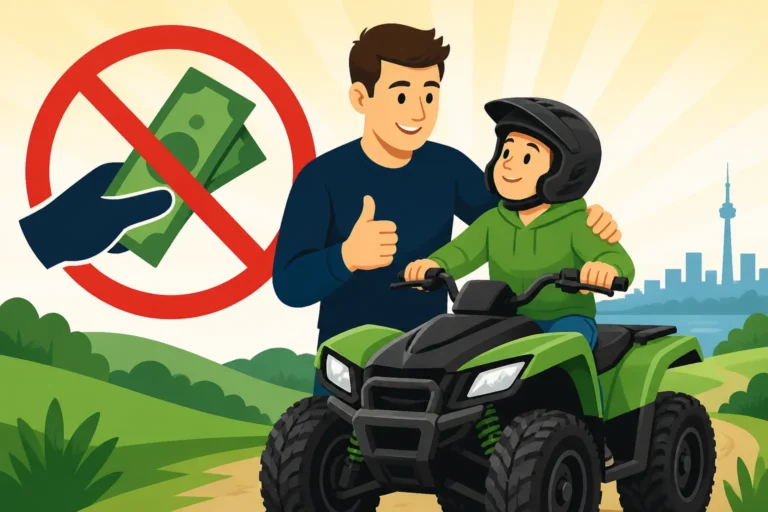
- Family Gift Exemption: If an ORV is gifted from an immediate family member (parent, grandparent, sibling, spouse, child, or grandchild), it can be exempt from RST. There are specific forms and declarations required to prove this relationship, typically a Sworn Statement for the Transfer of a Used Motor Vehicle in the form of a Gift. This is a common exemption, often used when [Giving a Quad to Your Child Without Paying RST].
- Estate Transfer Exemption: An ORV transferred as part of an estate (e.g., inherited through a will) can also be exempt from RST. Again, specific documentation, such as the will and proof of executorship, will be required by ServiceOntario. For more on this, see [Ontario's Estate Transfer Exemption].
- Farm-Use Exemption: Certain ORVs used exclusively for farming operations by a registered farmer can be exempt from RST. This is a more stringent exemption and requires specific declarations and proof of farming status. The machine must be primarily used for tilling, planting, harvesting, or raising livestock, and not for recreational purposes. You'll need to know [Which Form Claims the Farm-Use RST Exemption].
- First Nations Purchasers: Individuals who hold a valid Certificate of Indian Status card may be exempt from paying RST on their ORV purchase. This exemption applies when the purchase is made on a reserve, or if the ORV is delivered to the individual on a reserve. [Paperwork for a Status Card Purchase] will be required.
Always check the most current requirements with ServiceOntario for any exemptions, as rules and required documentation can change. Claiming an exemption you're not entitled to can lead to penalties, so ensure you genuinely meet the criteria.
| Exemption Type | Requirements | Who It Benefits |
|---|---|---|
| Family Gift | Sworn Statement of Gift, Proof of Relationship (immediate family) | Immediate family receiving a gifted ORV |
| Estate Transfer | Will, Proof of Executorship | Beneficiaries inheriting an ORV |
| Farm Use | Specific declaration of farm use, Proof of farming status | Registered farmers using ORV for primary farm operations |
| First Nations | Valid Certificate of Indian Status card, Purchase on/delivery to reserve | Status card holders |
Insurance Implications of Not Having a Standard Valuation
While the lack of a "Red Book" value might seem like a mere inconvenience for buying and selling, it actually has significant implications when it comes to insuring your ORV. Since there isn't a universally accepted baseline value, how your insurance company determines coverage and payouts becomes critical. [Insurance and Ontario ORV Registration] are inextricably linked.
How Insurers Determine Coverage for ORVs
When you purchase an ORV insurance policy in Ontario, the insurer needs to establish a value for your machine to set premiums and determine potential payouts. Since they can't simply look up a Red Book value, they rely on a combination of factors:
- Your Declared Value: Often, the first step is to ask you, the owner, what you believe the machine is worth. This usually aligns with the purchase price if it's a new acquisition, or your best estimate based on market research if it's an older machine. It's important to be realistic here; over-declaring could lead to higher premiums for a value the insurer might dispute later, while under-declaring could leave you underinsured.
- Market Comparables: Insurers have their own internal databases and methods for assessing ORV values. They'll look at recent sales of similar makes, models, and years in your region, much like you would if you were selling. They also factor in standard depreciation rates for different types of ORVs.
- Condition and Accessories: They may ask for photos or a detailed description of your ORV's condition, as well as a list of any significant aftermarket accessories or modifications. Quality accessories like a winch, track system, or plow can sometimes be added to the insured value, but you'll need to declare them specifically.
- Adjustments for Usage: While less direct, how you intend to use the ORV (recreational, farm, competition) can influence both the type of coverage available and the insurer's perception of risk, indirectly affecting their valuation.
It's a more subjective process than for a car, making it even more important to have a clear discussion with your insurance provider.
Agreed-Upon Value vs. Actual Cash Value Policies
This is one of the most critical distinctions to understand in ORV insurance because it directly impacts how much you receive in the event of a total loss.
- Actual Cash Value (ACV): This is the most common type of policy. In the event of a total loss (theft, severe accident), the insurer will pay out the "actual cash value" of the ORV at the time of the loss, minus your deductible. This means they will factor in depreciation from the day you bought it until the day it was lost. Even if you paid $15,000 for your side-by-side two years ago, its ACV might only be $10,000 when it's stolen, especially if there’s no Red Book to provide a firm, agreed-upon depreciation schedule. This can be a source of major frustration for owners who feel their payout doesn't reflect what it would cost to replace their machine.
- Agreed-Upon Value (AV) or Stated Value: Some insurers offer an "agreed-upon value" option, typically for newer or high-value ORVs. With this type of policy, you and the insurer agree on a specific value for the ORV when you purchase the policy. In the event of a total loss, the insurer will pay out that agreed-upon amount (minus your deductible), regardless of its depreciated market value at the time of the loss. This offers significantly more peace of mind and predictability. However, it usually comes with a higher premium, and the insurer might require a formal appraisal or extensive documentation (photos, receipts for upgrades) to establish the agreed value. This type of policy can be particularly appealing given the absence of a standard valuation guide.
Always ask your insurance broker about both options and understand the payout mechanism of your policy. It's often worth paying a bit more for an agreed-upon value, especially for a newer or customized machine, to avoid the potential disappointment of an ACV payout.
What to Do If Your ORV is Stolen or a Total Loss
If the worst happens and your ORV is stolen or damaged beyond repair, having prepared information will be incredibly helpful in dealing with your insurance claim.
- Gather Documentation: Immediately pull together all your paperwork: the original bill of sale, the ORV permit, maintenance records, receipts for any accessories or upgrades, and photos of your machine. This documentation helps substantiate its value and condition.
- Market Research (Again): Do your own market research, just as you would if you were selling the machine. Find current listings for comparable ORVs to demonstrate what it would cost to replace your machine or what similar machines are currently selling for. This information can be powerful when negotiating an ACV payout.
- Negotiate and Advocate: Don't just accept the first offer from your insurer if you feel it's unfair. Use your documentation and market research to negotiate. Explain why your machine was worth more than their initial offer, highlighting unique features, excellent maintenance, or recent upgrades.
- Consider a Professional Appraisal (in rare cases): As mentioned earlier, if the ORV is particularly unique, custom-built, or of very high value, and you are in a dispute with your insurer over its ACV, a professional appraisal might be a worthwhile investment to provide an independent expert opinion.
While the absence of a "Red Book" value for ORVs can complicate things, being proactive and informed about your machine's worth and your insurance policy can go a long way in protecting your investment.
Disclaimer
This article is for general informational purposes only and does not constitute professional advice. Laws, prices and regulations vary by location and change over time. Consult a qualified professional for guidance on your specific situation.