The Family Gift Exemption in Ontario
Navigating the world of off-road vehicle ownership in Ontario can often feel like a maze, especially when it comes to the dreaded Retail Sales Tax (RST). Many families want to pass down a beloved ATV or UTV to a child, grandchild, or sibling, only to be hit with a hefty tax bill that feels completely unnecessary for what is essentially a gift. This comprehensive guide will walk you through Ontario’s family gift exemption for ATVs and UTVs, explaining how it works, who qualifies, and how to successfully claim it so you can keep those hard-earned dollars in your pocket.
Understanding Ontario's Retail Sales Tax (RST) on ATVs and UTVs
When you buy an ATV or UTV in Ontario, whether brand new from a dealer or used from a private seller, you’re almost always going to encounter Retail Sales Tax, or RST. This is one of those administrative hurdles that can really take the shine off a new-to-you machine, especially when you’re just trying to get it registered and out on the trails. It's an important part of the cost of ownership that many people overlook until they're standing at the ServiceOntario counter.
Why RST Applies to Off-Road Vehicles
Unlike some other types of property transfers, the Province of Ontario has determined that off-road vehicles (ORVs) like ATVs and UTVs are subject to RST. This isn't just a casual fee; it's a significant percentage of the vehicle's value. For many riders, this tax feels like an arbitrary extra cost, particularly when you're dealing with a used machine that has already been taxed once, if not multiple times, over its lifespan. It’s part of the provincial revenue system, intended to capture a portion of the value exchanged in most sales.
This application of RST is consistent whether you're bringing home a shiny new quad or a trusty, well-loved utility vehicle from a neighbour down the road. The system is designed to ensure that most transfers of ownership within the province generate some revenue for the provincial coffers. Understanding this foundational principle is key to appreciating why exemptions, like the family gift exemption, exist and why they are so valuable.
The Sticker Shock of RST
The current rate of RST in Ontario for off-road vehicles sits at 13 percent, which is the same as the provincial portion of the HST you’d pay on most goods and services. While 13 percent might not sound astronomical on its own, when applied to the purchase price of an ATV or UTV, it can quickly add up to hundreds, if not thousands, of dollars. Imagine buying a used side-by-side for $10,000 – that’s an extra $1,300 right off the bat, money that many people would rather put towards accessories, gear, or even just filling up the tank for their first ride. [13 Percent RST on an Ontario ATV] can be a real hit to the budget, making it vital to know if you can avoid it.
This financial impact is where the frustration often builds for families. If you’re simply passing a machine from a parent to a child, it can feel punitive to pay such a substantial tax on an item that isn't really "changing hands" in a commercial sense. It’s not a business transaction; it’s a family one. The sticker shock is real, and it’s a primary reason why the family gift exemption is such a sought-after and important provision for Ontario ORV owners.
How RST is Calculated on a Private Sale
When you purchase an ATV or UTV through a private sale in Ontario, the RST is typically calculated based on the declared purchase price. However, ServiceOntario does reserve the right to assess the tax based on the vehicle’s fair market value if they believe the declared price is unrealistically low. This is where things can get a bit subjective, as off-road vehicles don't typically have a "Red Book" value like cars or trucks do. [Why ORVs Have No Red Book Value] means that ServiceOntario staff often use their judgment, based on the vehicle's year, make, model, and general condition.
For a true gift, this becomes less of an issue, as the declared purchase price is essentially zero. But in situations that don't qualify as a gift and ServiceOntario questions the declared value, they may request evidence of market value or simply apply what they deem appropriate. This uncertainty can be another source of anxiety for individuals trying to navigate the registration process. It underscores the importance of having all your ducks in a row when claiming an exemption, to avoid any disputes about the vehicle's worth or the nature of the transaction.
What Exactly is the Family Gift Exemption?
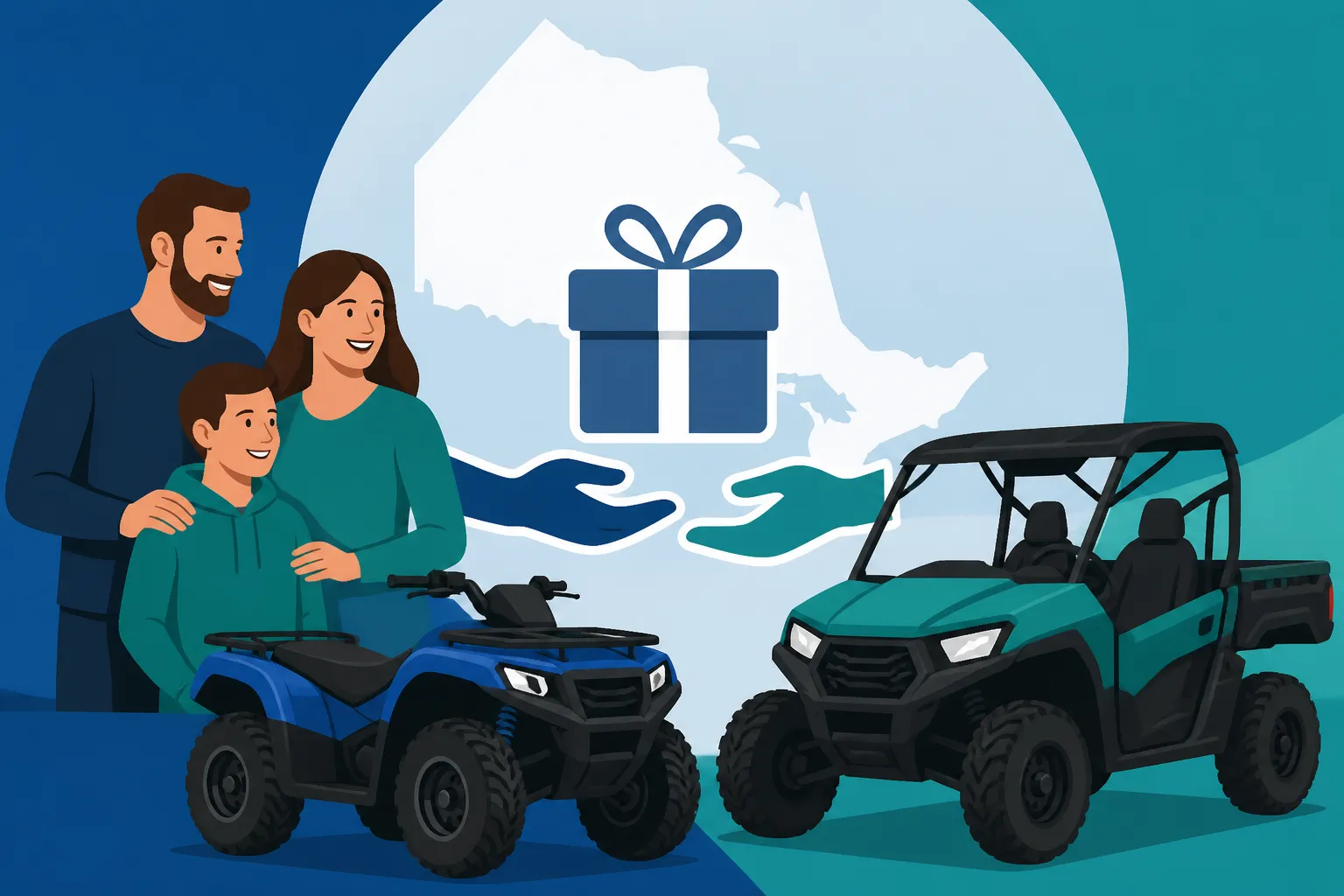
The family gift exemption is a vital piece of legislation designed to prevent the double taxation of goods when they are transferred between immediate family members without any money changing hands. It’s a common-sense provision that acknowledges the unique nature of family asset transfers, ensuring that a genuine act of generosity isn't penalized by the province's tax system. For many, it's a relief to know that their generosity won't come with an unexpected provincial tax bill.
The Heart of the Exemption: Avoiding Double Taxation
At its core, the family gift exemption aims to alleviate the burden of [Ontario RST on an ATV Purchase] when an off-road vehicle is simply being transferred within a close family unit. Imagine an ATV that was purchased years ago, with RST already paid. If a parent wants to give that same ATV to their child, without this exemption, the child would technically have to pay RST again on the value of the machine. This would amount to paying tax twice on the same asset, which just doesn't seem fair or logical.
The exemption prevents this scenario, recognizing that a true gift, where no money or goods are exchanged, shouldn't be treated like a commercial sale. It acknowledges the family bond and the inherent desire to pass down possessions without unnecessary financial penalties. This focus on avoiding double taxation is a central pillar of many provincial tax codes, and its application to ORVs in Ontario is a significant benefit for riders.
Who Qualifies as "Family" for This Exemption?
This is perhaps the most crucial detail for anyone looking to claim the family gift exemption. ServiceOntario has a very specific definition of "family" for this purpose. It generally includes:
- Spouses: Legally married partners.
- Common-Law Partners: Individuals who have been living together in a conjugal relationship for at least three years, or in a relationship of some permanence if they are the natural or adoptive parents of a child.
- Parents: Including adoptive parents.
- Grandparents: Biological or adoptive.
- Children: Including adopted children.
- Grandchildren: Biological or adopted.
- Siblings: Brothers and sisters.
It’s important to note that this list is quite specific. Transfers to aunts, uncles, cousins, nieces, or nephews typically do not qualify for this exemption. If you're unsure about a specific relationship, it's always best to clarify directly with ServiceOntario or consult the relevant provincial guidelines before heading to the counter. This clarity on who is included helps prevent confusion and ensures that the exemption is applied consistently.
The "Gift" Element: No Money Changes Hands
For the exemption to apply, the transfer must be a genuine gift. This means absolutely no money, services, or other forms of consideration can be exchanged between the donor and the recipient for the ATV or UTV. If even a token amount changes hands, or if the transfer is part of a larger exchange of goods or services, ServiceOntario may consider it a sale, not a gift, and the RST will be applied.
This "no consideration" rule is strictly enforced because the exemption is designed specifically for gifts. If there's any perceived transaction, it then falls outside the scope of what the exemption is meant to cover. It’s vital for both parties to understand and adhere to this, as misrepresenting the nature of the transfer could lead to complications, including the rejection of the exemption and the imposition of the full tax.
The Process for Claiming the Family Gift Exemption
Successfully claiming the family gift exemption requires a bit of preparation and attention to detail. It's not as simple as just saying "it was a gift" at the counter; ServiceOntario will need to see documentation to support your claim. By gathering the right paperwork and understanding the steps involved, you can make the process smooth and avoid unnecessary delays or frustration.
Gathering Your Documentation: Proof of Relationship and Ownership
The key to a successful exemption claim lies in thorough documentation. You'll need to demonstrate two main things: proof of ownership of the ATV or UTV by the donor, and proof of the qualifying family relationship between the donor and the recipient.
For proof of ownership, the original [Ontario Vehicle Permit Explained] is absolutely essential. This document shows who legally owns the vehicle. Without it, you’ll have a much harder time transferring the machine. For proving the relationship, you might need birth certificates, a marriage certificate, a common-law declaration, or even official documents showing a shared address if you're common-law partners. Always bring original documents, or certified true copies, as ServiceOntario agents will need to verify them. Sometimes, a well-drafted [Ontario ATV Bill of Sale Requirements] (even if for $0 consideration) or a formal gift letter can also serve as a crucial piece of this puzzle, clearly stating the intent.
The Importance of a Formal Gift Letter
While not always explicitly required for every family transfer, a formal gift letter can be an absolute lifesaver. This letter, signed by both the donor and the recipient, explicitly states that the ATV or UTV is being transferred as a gift, with no money or other consideration exchanged. It should include a detailed description of the vehicle (make, model, VIN, year), the full names and addresses of both parties, and the date of the transfer.
A gift letter serves multiple purposes: it acts as a clear record of the transaction, it formally declares the "gift" status, and it can often preempt questions from ServiceOntario staff who might be looking for any signs of a disguised sale. Think of it as your official statement of intent. If you're looking for a reliable template to ensure all the necessary details are covered, resources like LawDepot offer templates for gift letters that can be easily customized. Using a professional template from a reputable source can provide peace of mind and bolster your claim at the ServiceOntario counter.
Visiting ServiceOntario: What to Expect
Once you have all your documents in order, the next step is to visit a [Registering an ORV at a ServiceOntario Centre]. It's often recommended that both the donor and the recipient attend the ServiceOntario centre together, as this can streamline the process and allow for immediate clarification of any questions the agent might have. You'll need to present the original Ontario Vehicle Permit, your proof of identity, the proof of relationship documents, and your gift letter (if you have one).
The ServiceOntario agent will review all your paperwork. They may ask questions to confirm the nature of the transfer and the relationship between the parties. Be prepared to clearly state that it is a genuine gift with no monetary exchange. Once satisfied, the agent will process the transfer, update the ownership records, and issue a new permit in the recipient's name, ideally with the RST exemption applied. Remember, you still need to adhere to the [Six Days From Purchase in Ontario] rule for transferring the permit, even for a gifted machine, to avoid any potential late fees or issues.
Common Pitfalls and Important Considerations
Even with the best intentions, navigating the family gift exemption can present a few challenges. Being aware of these common pitfalls and understanding some key considerations can help you avoid unwelcome surprises and ensure a smooth transfer of your ATV or UTV. Preparation is key to avoiding disappointment.
The "Gift" That Wasn't: When ServiceOntario Says No
One of the most common reasons an exemption is denied is when ServiceOntario determines that the transfer wasn't a true gift. This can happen for several reasons. Perhaps some money did change hands, even a small amount, or there was an implied exchange of services or property. For example, if a parent "gifts" an ATV to a child, but the child simultaneously washes the parent's car every week for a year as part of the deal, ServiceOntario might view this as a form of consideration.
It's crucial that the transfer is genuinely gratuitous. Any hint of a quid pro quo can jeopardize the exemption. ServiceOntario agents are trained to identify these situations, and they have the authority to deny the exemption if they suspect it's a disguised sale aimed at avoiding tax. Honesty and clarity in your transaction are paramount to ensure the exemption is successfully applied.
Preparing a Detailed Gift Letter (and Using LawDepot)
I cannot stress this enough: a detailed, explicit gift letter is your best friend when claiming this exemption. It acts as a formal declaration of intent and can go a long way in preventing misunderstandings at the ServiceOntario counter. This letter should explicitly state that the ATV or UTV is being transferred as a gift, with no monetary or other consideration exchanged between the donor and the recipient. It should include:
- The full names and addresses of both the donor and recipient.
- The precise details of the off-road vehicle (make, model, year, Vehicle Identification Number (VIN)).
- A clear statement that the transfer is a gift and that no money or value has been exchanged.
- The date of the gift.
- Signatures of both the donor and recipient.
Having a robust, legally sound document can make all the difference. While you can draft one yourself, using a reputable online service like LawDepot to create a tailored gift letter template can ensure all legal bases are covered. They provide user-friendly forms that walk you through the necessary information, giving you a professional document that will stand up to scrutiny. This formal document really helps solidify your claim.
Understanding the Six-Day Registration Window
Even for a gift, the clock starts ticking the moment the "transfer" occurs. In Ontario, you have [Six Days From Purchase in Ontario] to register an off-road vehicle in your name after you acquire it. While a gift doesn't involve a "purchase" price, the legal ownership transfer still initiates this deadline. Failing to register within this period can lead to complications, though typically not outright refusal of the exemption if the paperwork is otherwise in order.
However, it's best practice to complete the registration as quickly as possible. This avoids any questions about the timeliness of the transfer and ensures that the new owner is legally compliant. Plan your visit to ServiceOntario promptly after the gift is made to ensure everything is processed within this window.
Tax Implications Beyond RST: A Quick Note
While the family gift exemption specifically targets the Retail Sales Tax, it's worth a quick mention that other tax implications could potentially arise in certain, albeit rare, circumstances. For most ATVs and UTVs, especially those not considered high-value luxury items, the primary concern is RST. However, for extremely valuable assets, there could theoretically be capital gains implications for the donor, depending on the asset's appreciation and the donor's overall tax situation.
For the vast majority of family ATV/UTV gifts, this is not a concern, but if you're dealing with a custom-built, highly valuable, or exceptionally rare machine, it's always wise to consult with a tax professional. Their advice can provide specific guidance tailored to your unique financial situation, ensuring you've considered all angles beyond just the provincial sales tax.
Scenarios and Examples for Family Gifts
Let's look at a few common family scenarios to illustrate how the gift exemption typically works in practice. Real-world examples can often make the rules clearer and easier to apply to your own situation, helping you prepare for your visit to ServiceOntario.
Gifting to Your Child
This is perhaps the most common scenario for the family gift exemption. A parent, wanting to pass on their passion for riding, decides to give their ATV or UTV to their son or daughter. Provided the child is old enough to legally register an ORV (which is typically 16 years old in Ontario for this purpose, as per [Why You Must Be 16 to Register in Ontario]), the process is generally straightforward.
The parent (donor) and child (recipient) would visit ServiceOntario with the original permit, their identification, and proof of their parent-child relationship (e.g., birth certificate). A gift letter, explicitly stating no money was exchanged, would further solidify the claim. If the child is under 16 but still wants to be the registered owner, this presents a different challenge and might involve [Registering a Machine for a Teenager] under certain conditions, potentially with a guardian co-signing. The key is ensuring the transfer is a true gift, allowing the child to receive the machine without incurring the 13% RST.
Transferring to a Spouse or Common-Law Partner
Transferring an ATV or UTV between spouses or common-law partners is often one of the smoothest types of family gift exemptions. Since partners typically share an address and often finances, the "gift" aspect is usually more readily accepted by ServiceOntario, assuming it's genuine. Proof of marriage or a declaration of common-law status (often supplemented by shared utility bills or government documents showing the same address for a period) would be required.
Just like with other family gifts, the original [Ontario Vehicle Permit Explained] is crucial, and a gift letter can provide added assurance. This type of transfer avoids the RST entirely, allowing couples to easily adjust ownership of their shared recreational assets without financial penalty. This flexibility is a significant benefit for partners who might want to put the ORV in the name of the primary rider or for insurance purposes.
Siblings and Grandparents
Gifting an ORV between siblings or between a grandparent and grandchild also falls under the family gift exemption. While these relationships are still considered "family" for the purpose of the exemption, you might find that ServiceOntario agents require slightly more robust proof of the relationship compared to, say, a parent-child transfer where birth certificates are typically very clear.
For siblings, birth certificates showing common parents would be ideal. For grandparents and grandchildren, a combination of birth certificates linking the generations might be necessary. Again, the gift letter becomes even more valuable in these scenarios, clearly outlining the nature of the transfer and that no consideration was given. Providing comprehensive documentation upfront can prevent extra inquiries and ensure the exemption is granted without a hitch.
What Happens If You Don't Qualify for the Exemption?
Sometimes, despite best intentions, a transfer might not meet the strict criteria for the family gift exemption. Perhaps the relationship isn't covered, or there was some form of exchange that negates the "gift" status. It's important to understand what happens in these situations so you're not caught off guard at the ServiceOntario counter.
Paying the Standard RST
If your transfer doesn't qualify for the family gift exemption, then the standard [13 Percent RST on an Ontario ATV] will be applied. This means you will be required to pay the Retail Sales Tax based on the declared purchase price or the fair market value of the ATV or UTV, whichever ServiceOntario deems appropriate. This payment is typically made directly to ServiceOntario at the time of registration.
It’s crucial to be prepared for this outcome if you know your situation doesn’t perfectly fit the exemption criteria. Having the funds available to pay the RST will allow you to complete the registration process without delay. While it might be a significant cost, it's the legal requirement for transferring ownership of an ORV in Ontario when an exemption isn't applicable.
Declaring a Fair Market Value
Even in non-gift family transactions where the RST applies, or if ServiceOntario challenges a very low declared price in a regular sale, they may assess the tax based on what they consider the fair market value of the machine. As discussed earlier, ORVs don't have a "Red Book" value. This means ServiceOntario agents will rely on their judgment, often looking at factors like the year, make, model, condition, and possibly even comparable sales data (though this can be difficult for unique machines).
If you are declaring a purchase price for a family sale that is lower than what ServiceOntario believes is fair market value, you may be asked to justify it. Having a clear [Ontario ATV Bill of Sale Requirements] even if it's for a nominal amount, and being prepared to explain the rationale for the price, can be helpful. Ultimately, ServiceOntario has the final say on the value for tax assessment, so it’s always best to be transparent and realistic to avoid any disputes and ensure a smooth registration process. [Proving Ownership of an Ontario ATV] requires this clarity.
| Family Relationship | Qualifies for RST Exemption | Required Documentation Examples |
|---|---|---|
| Spouse | Yes | Marriage Certificate, Shared Address Proof (e.g., utility bill) |
| Common-Law Partner | Yes | Common-Law Declaration, Shared Address Proof (3+ years), Birth Certificate of Shared Child |
| Parent/Child | Yes | Birth Certificate (linking parent to child) |
| Grandparent/Grandchild | Yes | Birth Certificates (linking generations) |
| Sibling | Yes | Birth Certificates (showing common parent) |
| Aunt/Uncle/Cousin | No | N/A |
| Friend/Acquaintance | No | N/A |
Disclaimer
This article is for general informational purposes only and does not constitute professional advice. Laws, prices and regulations vary by location and change over time. Consult a qualified professional for guidance on your specific situation.