Does an Ontario ATV Permit Expire?
One of the most common questions new and even experienced ATV and UTV riders in Ontario have revolves around the validity of their registration permit. It's easy to get confused with all the different kinds of permits and licenses out there, especially when you're used to annual renewals for things like car plates or even snowmobile stickers. But for your off-road vehicle (ORV) in Ontario, the permit system is quite unique, and understanding it can save you a lot of worry and ensure you're always riding legally. This guide will clear up the common misconception about expiry dates for your Ontario ATV permit and walk you through what you truly need to keep current.
Understanding Ontario's Unique ORV Permit System
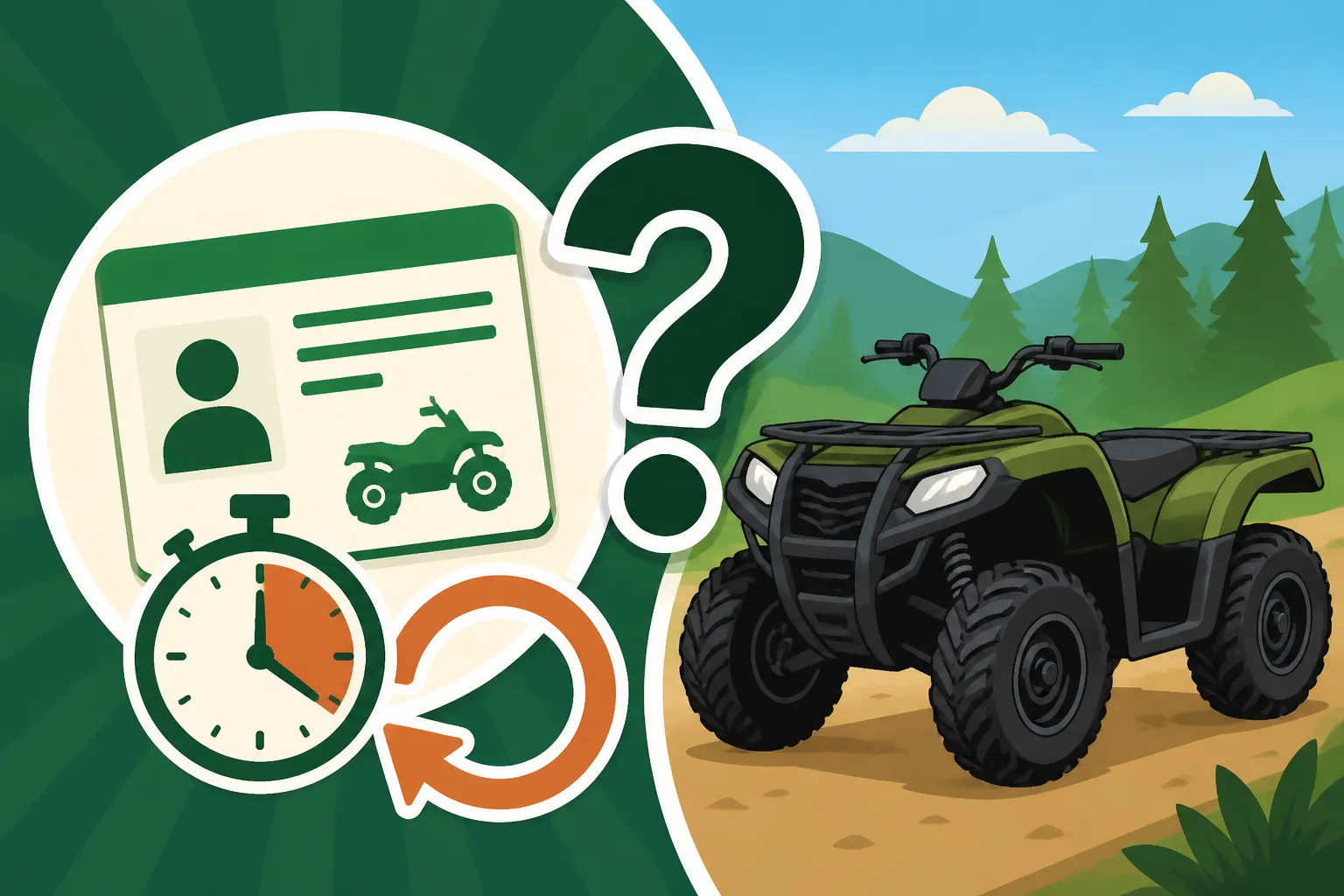
Let's cut right to it: the actual Ontario ORV registration permit itself, the one issued by ServiceOntario when you register your quad or side-by-side, does not "expire" in the traditional sense. This can be a huge relief to hear, especially if you're picturing annual trips to the service centre or forgetting a renewal date. Unlike many other vehicle registrations, Ontario's system for off-road vehicles is designed for a one-time issuance, tied to the machine itself and its owner.
When you go to ServiceOntario to get your machine registered, whether it's a brand-new quad from a dealer or a trusty used side-by-side you just bought, you're essentially registering it into the provincial system. You pay a fee, get your permit, and receive your licence plate. That's usually the extent of it for the lifetime of that machine's ownership under your name in Ontario. This fundamental difference is often what trips people up, leading them to search for expiry dates that simply aren't there for the core registration document.
The "Forever" Permit: What That Really Means
When we say the permit is "forever," what we really mean is that once it's issued to you for your specific machine, it remains valid for as long as you own that ORV in Ontario. There's no annual sticker to buy, no yearly fee to pay to ServiceOntario to keep the registration active. It’s a one-and-done deal for the life of your ownership. This really simplifies things, allowing you to focus on enjoying your rides rather than remembering another administrative deadline. Many riders appreciate this because it makes long-term ownership of an ORV less of a bureaucratic hassle. You won't find a printed expiry date on your Ontario ORV permit because, in essence, it doesn't have one. This is why you'll often hear that [No Annual Renewal for an Ontario ORV] is required.
Think of it like this: once you've proven ownership and paid the initial [Ontario ORV Permit Cost] and any applicable sales tax, that permit is a permanent record of your ORV's place in the provincial system. It's not a temporary pass; it's the official documentation for that machine while it belongs to you. This also means that if you're ever stopped by an enforcement officer, as long as that permit is in your name and for that machine, it's considered valid.
How It Differs From Other Vehicles
To truly grasp why your ORV permit doesn't expire, it helps to understand how it contrasts with other types of vehicle registration in Ontario. Take your passenger car, for example. You pay an annual fee, and you get a sticker for your licence plate that needs to be renewed every year. If you forget to renew, your plates are expired, and you can face fines. The same goes for snowmobiles; they require annual registration and a trail permit, often bundled together, and these absolutely have expiry dates. This is a key distinction that sometimes catches riders off guard, especially those who own both types of machines. [How Ontario ORV Registration Differs From a Snowmobile's] is a topic that often comes up in conversation among multi-sport enthusiasts.
The reason for this difference often boils down to how these vehicles are primarily used and regulated. Cars are on public roads daily, requiring ongoing safety inspections and consistent revenue generation for road maintenance. Snowmobiles operate on a groomed trail network, often managed by clubs, which requires annual funding through permits. Off-road vehicles, while increasingly using trails, also have a significant component of private land use and a different historical regulatory framework. So, while the provincial government collects an initial fee for your ORV permit, they've opted for a simpler, one-time registration system for the permit itself, diverging from the annual renewal model used for many other vehicles.
When the Permit "Status" Changes (It's Not Expiry!)
While your Ontario ORV permit doesn't expire, its relevance to your ownership can change. It's not about the permit ceasing to be valid in general, but rather about who it's valid for, or if a new permit needs to be issued under different circumstances. These situations don't involve "renewal" but rather "transfer" or "new issuance."
Selling Your ATV: Transferring Ownership
If you decide to sell your ATV or UTV, the permit doesn't expire; instead, it's transferred to the new owner. This is a crucial step in any private sale of an off-road vehicle in Ontario. When you sell your machine, you'll need to hand over the existing [The Ontario Vehicle Permit Explained] to the buyer. This permit, along with a properly executed bill of sale, is what the new owner will use to register the machine in their name at ServiceOntario.
It’s vital that you understand your role in this process. You're not just selling a piece of equipment; you're transferring legal ownership, and the permit is a key piece of that puzzle. The new owner then has a limited window – typically six days – to register the machine in their name. If they don't, they're riding an unregistered machine, which can lead to significant fines. For a smooth transaction, I always recommend preparing a clear bill of sale. Services like LawDepot can provide templates that help ensure all the necessary information is captured, including the VIN, sale price, and transfer of ownership details, protecting both buyer and seller. This process is fully explained when discussing [Transferring a Permit to a Buyer in Ontario].
Importing an ATV into Ontario
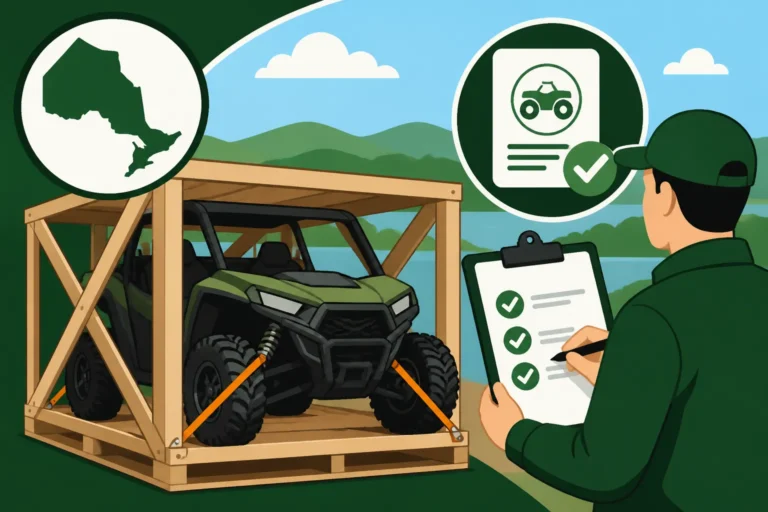
If you've bought an ORV outside of Ontario and are bringing it into the province, or if you're moving here from another province or country, your existing permit from elsewhere will not transfer directly. In this scenario, you won't be renewing an Ontario permit; you'll be applying for a brand new Ontario ORV permit for the machine. This is a fresh registration, just as if you were buying a new machine from a dealer within Ontario.
The process for [Ontario Rules for an Out-of-Province Machine] can involve a few extra steps, such as proving that any applicable sales tax has been paid in your previous jurisdiction or paying Ontario's Retail Sales Tax (RST) at the ServiceOntario counter. You'll need documentation like your bill of sale, proof of previous registration (if applicable), and customs clearance papers if importing from outside Canada. Each province and country has its own registration nuances, so Ontario treats these as new entries into its system rather than a continuation of an old one. It’s always best to have all your paperwork in order when you head to ServiceOntario to avoid any delays.
What You Still Need to Keep Current (Beyond the Permit Itself)
Alright, so the core ORV permit doesn't expire. Fantastic, right? Absolutely! But here's where clarity is key: not everything related to legal ORV riding in Ontario is a one-time deal. There are other essential elements that do have expiry dates and require regular attention. Neglecting these can still land you in hot water, even if your ORV permit is perfectly valid.
Your OFATV Trail Permit (If You Ride Trails)
This is probably the biggest source of confusion for many riders. Your Ontario Federation of ATV Clubs (OFATV) trail permit is completely separate from your ServiceOntario ORV registration permit. The OFATV permit is what grants you legal access to the vast network of organized ATV trails across the province. And yes, unlike your ORV permit, the OFATV trail permit does expire annually.
Most OFATV permits are valid for a specific season, typically from January 1st to December 31st. You need to purchase a new one each year if you plan on using club trails. There are options for annual permits, family permits, three-day passes, and even day passes, but they all have a clear validity period. Riding on an OFATV trail without a current, valid trail permit is trespassing and can result in fines and loss of riding privileges. So, while your machine's provincial registration stays active, your access to regulated trails depends on an annual renewal. This distinction is so important that [Ontario ATV Trail Permits Explained] is a post all its own, highlighting these critical differences.
Here's a quick comparison to help keep these vital documents straight:
| Feature | Ontario ORV Registration Permit (from ServiceOntario) | OFATV Trail Permit (from OFATV or clubs) | Insurance Policy (from private insurer) |
|---|---|---|---|
| Purpose | Legal registration of machine and ownership with province | Access to organized ATV trails | Legal liability coverage for operating ORV |
| Issued By | ServiceOntario | OFATV (or individual member clubs) | Licensed insurance provider |
| Expiry Date | NO EXPIRY (valid for lifetime of ownership) | YES, EXPIRES ANNUALLY | YES, EXPIRES ANNUALLY |
| Renewal Needed? | No (unless new owner or imported machine) | Yes, for continued trail access | Yes, for continued legal operation |
| Cost | One-time fee (plus RST upon purchase) | Annual fee (day, 3-day options available) | Annual premium (varies by provider/coverage) |
| Legal to Ride Public Roads/Crown Land Without? | No | Yes (if permissible under ORV Act/bylaws) | No |
Insurance Coverage: A Must-Have
Another non-negotiable element that absolutely has an expiry date is your off-road vehicle insurance policy. In Ontario, mandatory insurance coverage is required for all ORVs, whether you're riding on private land, Crown land, or designated roads. Your insurance policy is a contract with a private insurer, and these contracts are always for a specific term, usually one year.
You will receive renewal notices from your insurance provider well in advance of your policy's expiry date. It is your responsibility to ensure your policy is renewed and current. Riding an ATV or UTV without valid insurance is a serious offense in Ontario and carries substantial fines, not to mention the immense financial risk if you're involved in an accident. Never, ever let your ORV insurance lapse. It's a fundamental part of legal and responsible riding, and your permit means nothing if you're not insured. This is why discussions around [Insurance and Ontario ORV Registration] and [Ontario ATV Insurance Requirements] are so critical. Make sure you understand your policy and carry proof of valid insurance with you whenever you ride.
Driver's Licence Requirements
Finally, let's talk about your own qualifications to operate the machine. Your driver's licence, whether it's a G2, M2, or full G or M class licence, does have an expiry date and needs to be renewed periodically. While this isn't directly tied to the ORV permit itself, it's absolutely essential for legal operation, especially if you plan to ride on any public roads or designated trails where a licence is required.
Operating any motorized vehicle, including an ORV, with an expired or invalid driver's licence is a serious Highway Traffic Act offense. Always ensure your personal driver's licence is current, in good standing, and appropriate for the type of ORV you're operating in the environment you're riding in. [Ontario ATV Licence Requirements] specify what you need to legally take your ORV on public access points. Just like your insurance, keeping your licence current is part of being a responsible and legal rider.
What Happens if Your Permit is Lost or Damaged?
Since the ORV permit doesn't expire, you might wonder what happens if the physical document gets lost, stolen, or damaged during a particularly spirited ride. Rest assured, you don't need to "re-register" your machine or get a whole new type of permit. You simply need to obtain a replacement.
Replacing a Damaged or Lost Permit
If your [The Ontario Vehicle Permit Explained] somehow goes missing from your fanny pack, gets water damaged beyond recognition, or is otherwise unusable, you'll need to head to a ServiceOntario centre to request a replacement. This is a straightforward process, but it's important to remember it's a replacement, not a renewal. You'll typically need to provide identification and sometimes proof of ownership (like your bill of sale or other documentation linking you to the VIN). There will likely be a small fee for the replacement document, but it's a one-time charge for the new paper, not a new registration fee.
It's a good idea to keep a digital photo of your permit on your phone or a photocopy in a secure, dry place, just in case the original goes missing. However, note that while a copy can help, carrying the original or a true copy is usually preferred or even required by law enforcement.
The Importance of Carrying Proof
Regardless of its non-expiring nature, it is absolutely essential to [Carrying the Permit or a True Copy] of your ORV permit (along with proof of insurance) whenever you're operating your machine. Law enforcement officers, whether provincial police or conservation officers, have the right to ask for these documents during a roadside or trailside stop. Being unable to produce them can lead to delays, inconvenience, and potentially a ticket.
Many riders choose to laminate their permit or store it in a waterproof bag or container to protect it from the elements while out on the trails. Given that you're only issued one (until you need a replacement), treating it with care is a smart move. Having your documents readily available not only demonstrates that you're a responsible rider but also helps ensure any interaction with enforcement goes smoothly and quickly.
In Ontario, your ATV or UTV registration permit from ServiceOntario is a one-time issuance that does not expire. It remains valid for as long as you own the machine in the province. However, it's crucial to remember that this "forever" status applies only to the core registration document. Your OFATV trail permit (if you ride club trails), your insurance policy, and your driver's licence all have expiry dates and require annual renewal or attention. By keeping track of these separate but equally important requirements, you can enjoy all the incredible off-road riding opportunities Ontario has to offer, knowing you're fully compliant with the law. Happy trails!
Disclaimer
This article is for general informational purposes only and does not constitute professional advice. Laws, prices and regulations vary by location and change over time. Consult a qualified professional for guidance on your specific situation.