Registering a Machine Still in Its Crate
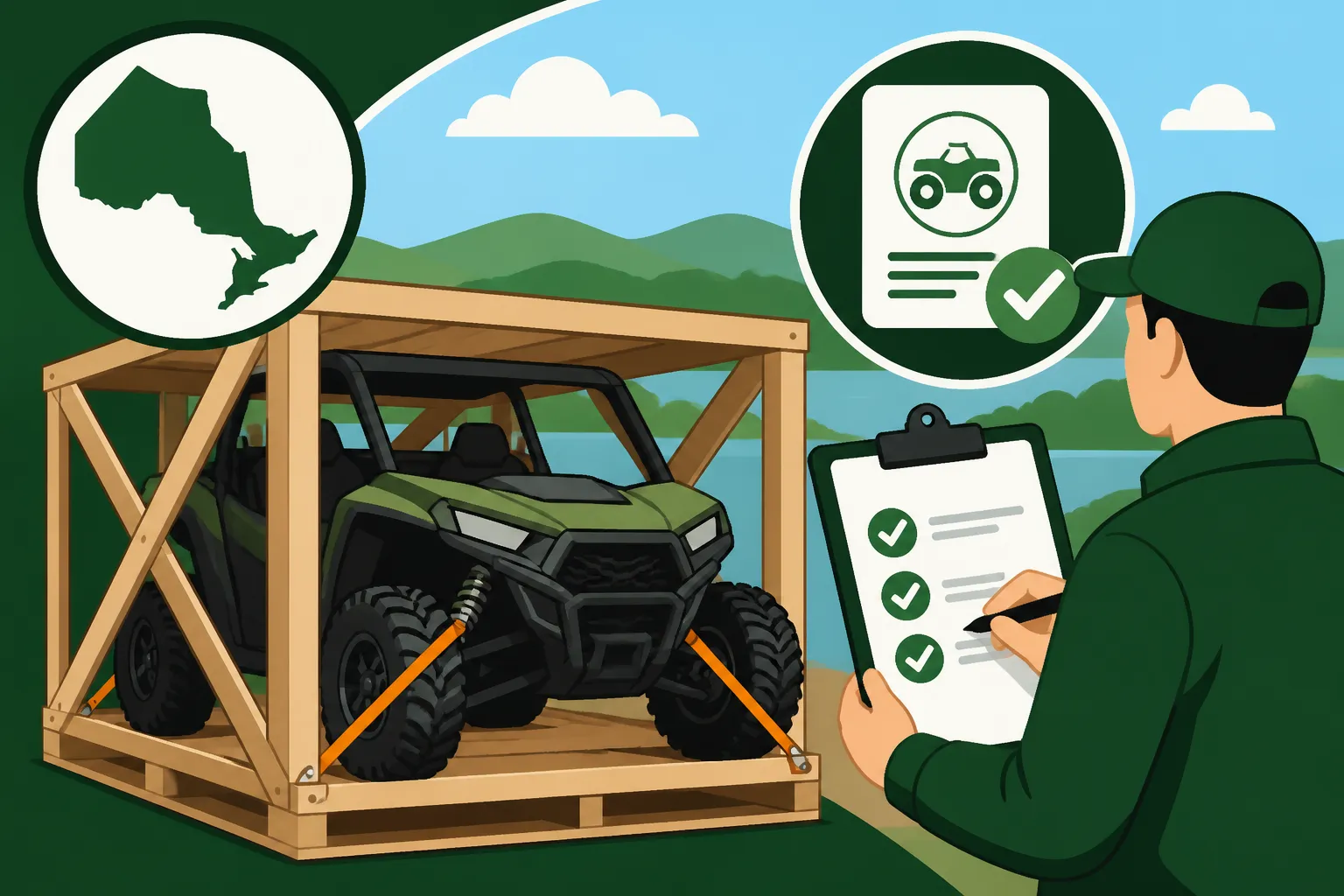
So, you've just brought home a brand new ATV or UTV, still gleaming in its original shipping crate, and you're bursting with excitement to get it out on the trails. But then reality sets in: how do you even begin the registration process for a machine that's never had a permit, never been on the road, and is literally still in pieces? It's a unique situation that can feel a bit confusing, but don't worry, this guide is here to walk you through exactly what you need to do to get that crated marvel legally registered in Ontario.
The Initial Ownership Hurdles: Why a Crate Machine Is Different
When you're dealing with a brand-new ATV or UTV that's fresh out of the factory and still in its shipping crate, the registration process isn't quite the same as buying a used machine that already has an Ontario Vehicle Permit. There are specific documents you'll need, and the way ownership is established initially is unique to new vehicles. It can feel a bit like you're starting from scratch, which, in a way, you are! The key is understanding the paperwork trail that accompanies a machine that has never been registered before.
Understanding the Bill of Sale for a Crate Machine
Even though your new machine is still in its crate, you'll absolutely have a bill of sale or an invoice from wherever you purchased it. This document is your first, and arguably most critical, piece of ownership proof. It clearly states who bought the machine, who sold it, the purchase price, and often includes the vehicle identification number (VIN). This isn't just a casual receipt; it's a legally binding document that establishes you as the rightful owner from the moment you take possession. It’s important to make sure all the details on this bill of sale are accurate, especially your name and the VIN, as any discrepancies can cause headaches down the line at ServiceOntario. If you're purchasing from a private seller who somehow ended up with a crated machine they never registered, ensure they provide a proper bill of sale. Sometimes, using a template from a service like LawDepot can ensure all the necessary information is captured, giving you peace of mind.
The Importance of the New Vehicle Information Statement (NVIS)
This is perhaps the most crucial document unique to new, never-before-registered vehicles. The New Vehicle Information Statement, or NVIS, is issued by the manufacturer and certifies that the vehicle meets all Canadian safety standards. It contains vital information about your ATV or UTV, including its make, model, year, and, most importantly, its unique VIN. Think of the NVIS as the birth certificate for your off-road vehicle. Without it, ServiceOntario cannot confirm that your machine is legitimate and safe for use, and therefore, they cannot issue an [The Ontario Vehicle Permit Explained]. The NVIS is surrendered to ServiceOntario when you register your vehicle for the very first time. Make sure you get this document from your seller, and check it thoroughly to ensure all the details match your specific machine, right down to the VIN. This document is paramount to proving the machine is truly "new" and ready for its first registration.
Dealer vs. Private Sale: Initial Paperwork Differences
While both scenarios require the NVIS and a bill of sale, how you acquire these documents might differ slightly. If you buy your crated ATV or UTV from a reputable dealer, they are typically well-versed in the registration process for new vehicles. They should provide you with a detailed invoice (which acts as your bill of sale) and the original NVIS without a fuss. They often have systems in place to ensure all the paperwork is correct.
However, if you've purchased a brand-new, crated machine from a private individual who, for whatever reason, never registered it themselves, you'll need to be more vigilant. They should still provide you with the original NVIS (it should never have been handed over to ServiceOntario) and a clear, detailed bill of sale. For private sales, it's always a good idea to use a comprehensive bill of sale template, perhaps one generated through a platform like LawDepot, to protect both parties and ensure all necessary details for registration are included. This might include explicit statements that the machine is new and unregistered, along with the VIN.
Gathering Your Registration Documents for a Crated ATV/UTV
Registering an off-road vehicle (ORV) in Ontario, especially a brand-new one, requires a specific set of documents. Without these, ServiceOntario simply won't be able to process your application. It’s not about being difficult; it’s about ensuring the integrity of the registration system and verifying ownership and vehicle legitimacy. Taking the time to gather everything before you head to the counter will save you a world of frustration and potentially multiple trips.
Essential Paperwork Checklist for Your New Ride
When you're ready to [Registering an ORV at a ServiceOntario Centre], you'll need to bring several key documents. Think of it as presenting the complete story of your new off-road vehicle. Here's what you should have in hand:
- Your Valid Identification: This is usually a valid Ontario driver's licence, but other government-issued photo ID can sometimes be accepted. The name on your ID must match the name on your bill of sale.
- The Original Bill of Sale/Invoice: As discussed, this proves you purchased the machine and paid for it. Ensure it's clear, legible, and includes the VIN, purchase price, and both buyer and seller information. If it's a private sale, a professionally drafted document, such as one available from LawDepot, can be very helpful.
- The Original New Vehicle Information Statement (NVIS): This is absolutely non-negotiable for a first-time registration of a new vehicle. It confirms the vehicle's manufacturing details and safety compliance. ServiceOntario will keep this document, as it's a one-time use item for initial registration.
- Proof of Ontario Address: Even if it's on your driver's licence, sometimes ServiceOntario will ask for a secondary piece of mail with your current address.
Having these documents neatly organized will make your visit to ServiceOntario much smoother. Remember, you're essentially creating the vehicle's official record from scratch, so every piece of information needs to align perfectly. This is part of [Ontario ATV Registration Paperwork].
Proving Ownership When the Permit Doesn't Exist Yet
For a used ATV, you'd typically bring the previous owner's signed [The Ontario Vehicle Permit Explained]. But for a crated machine, there is no previous permit. So, how do you prove ownership? This is where the combination of your detailed bill of sale and the NVIS becomes paramount. The bill of sale establishes the transaction between you and the seller, legally transferring ownership. The NVIS then links that sale to the specific, never-before-registered vehicle, providing the critical identification details like the VIN directly from the manufacturer. Together, these two documents act as your iron-clad proof of ownership for a vehicle that has never been issued an Ontario permit. Without them, ServiceOntario would have no way to verify your claim to the machine.
The Role of the Seller in Providing Documents
Your seller, whether a dealer or a private individual, has a crucial responsibility to provide you with the correct documentation for your crated ATV or UTV. For a dealer, this is standard practice, and they should hand over the NVIS and a proper invoice automatically. They often have internal systems to track these documents.
If you’re buying from a private seller who never registered their brand-new, crated machine, you must insist on getting the original NVIS. It's the only way you'll be able to register the vehicle yourself. If they can't produce it, walk away, as you'll face insurmountable challenges. Additionally, ensure they provide a comprehensive bill of sale. Don't settle for a hastily scribbled note; a formal document, perhaps utilizing a template from LawDepot, provides clear evidence of the transaction, including the VIN, sale date, and price. This is especially important for demonstrating the price paid when it comes time to calculate sales tax.
| Document Type | Purpose | Acquired From | Notes |
|---|---|---|---|
| Valid Personal ID | Confirms your identity and address. | Yourself (Driver's Licence) | Must match name on Bill of Sale. |
| Original Bill of Sale/Invoice | Proof of purchase, date, price, and VIN. | Seller (Dealer/Private) | Crucial for ownership and RST calculation. LawDepot templates useful for private sales. |
| Original New Vehicle Information Statement (NVIS) | Manufacturer's "birth certificate," confirms safety standards and VIN. | Seller (Dealer/Private) | Absolutely essential for first-time registration. ServiceOntario retains this. |
The ServiceOntario Visit: Registering Your Brand-New Ride
Alright, you've got all your paperwork in order, your ID is ready, and that new ATV or UTV is waiting patiently in its crate (or perhaps already assembled in your garage, but still patiently waiting for its legal identity). Now it's time for the official step: heading to ServiceOntario. This is where your machine finally gets its legal identity in Ontario.
What to Expect at the Counter
When you arrive at ServiceOntario, you’ll indicate you’re there to register a new off-road vehicle for the first time. The clerk will ask for all the documents you’ve so carefully gathered. They will meticulously review your identification, the bill of sale, and especially the NVIS. They'll input the VIN into their system and verify all the details. This is the moment when the NVIS, that "birth certificate" for your machine, officially gets logged and surrendered.
They'll cross-reference the VIN on your NVIS with the one on your bill of sale to ensure everything matches. Expect a few questions to confirm your address and other personal details for the new [Ontario ATV Registration]. This whole process is designed to prevent fraud and ensure accurate records are kept for all ORVs in the province. It might take a little longer than simply transferring an existing permit, as they are creating a new record entirely.
Paying the Retail Sales Tax (RST)
One of the most significant parts of registering any vehicle in Ontario is paying the Retail Sales Tax (RST), which is 13% of the purchase price. For a new machine still in its crate, this calculation is usually straightforward: it's 13% of the price listed on your bill of sale. Unlike used vehicles where there can sometimes be questions about book value versus declared value, with a brand-new machine, the purchase price on the dealer invoice or private bill of sale is typically taken at face value. This is a critical part of [13 Percent RST on an Ontario ATV].
It's important to be prepared for this cost, as it will be due at the ServiceOntario counter. The payment for the RST is made directly to the provincial government through ServiceOntario, not to the seller. This is why it's clear that [Ontario RST Paid at the Counter, Not to the Seller]. Make sure you factor this into your budget for your new machine, as it's a considerable expense on top of the purchase price itself.
Receiving Your Ontario ORV Permit and Plate
Once all the paperwork is verified and the RST has been paid, the ServiceOntario clerk will issue you your official Ontario Off-Road Vehicle Permit and a shiny new licence plate. This is the moment your crated machine becomes a legally recognized ORV in Ontario!
The ORV permit is a vital document, similar to a car's ownership papers, listing you as the owner and providing all the details of your ATV or UTV. You'll need to carry a copy of this permit with you whenever you ride. The licence plate must be affixed to your machine in a visible spot as per Ontario regulations. This permit does not expire annually, and there’s no yearly sticker to worry about. Once you have it, you're good to go, provided you keep your insurance up to date and abide by all riding laws. It’s a one-time registration fee and process, a huge relief for many riders.
Common Pitfalls and Smart Advice for Crate Machine Registration
Even with all your ducks in a row, sometimes unexpected issues can pop up. Knowing what to watch out for and how to respond can save you a lot of grief when registering your brand-new, crated ATV or UTV. Being prepared for these potential roadblocks means you can get your machine out on the trails faster and with less stress.
What if the NVIS Is Missing or Incorrect?
This is a big one. As established, the NVIS is absolutely critical for the first-time registration of a new vehicle. If your seller (especially a private one) can't produce the original NVIS, or if the VIN or other details on it are incorrect, you're going to have a major problem at ServiceOntario. Without a valid NVIS, ServiceOntario cannot verify the vehicle's manufacturing details or its compliance with Canadian standards, and therefore, they cannot register it.
If the NVIS is missing, your best bet is to contact the seller immediately and insist they provide it. If they can't, you might need to reconsider the purchase, as you essentially have an unregisterable machine. If the NVIS has an error, you'll need to go back to the seller or, if purchased from a dealer, ask them to contact the manufacturer to issue a corrected document. Do not try to register a machine with an incorrect NVIS, as this will only lead to delays and potential complications. Make sure you check this document carefully before you leave the seller.
The Six-Day Deadline Still Applies
Just because your machine is new and in a crate doesn't exempt you from the standard [Ontario's Six-Day Registration Deadline]. Once you've completed the purchase and taken possession of your ATV or UTV, you legally have six days to get it registered at ServiceOntario. This deadline is strictly enforced. Failing to register within this window can lead to complications and potential fines if you're caught riding an unregistered machine.
This means you can't just leave that crate sitting in your garage for months, enjoying the thought of your new toy, before you head to ServiceOntario. Plan your purchase and registration accordingly. As soon as that bill of sale is signed and the NVIS is in your hand, mark your calendar for your ServiceOntario visit. For more on this, check out [Six Days From Purchase in Ontario] and [What Happens After the Sixth Day].
Why You Can't Ride It Before It's Registered (and Insured)
This might seem like a no-brainer, but the excitement of a new machine can sometimes make people forget. Before you even think about assembling that crated ATV or UTV, let alone taking it for a spin (even on private property, in some cases), it must be registered and insured. Riding an unregistered ORV in Ontario is illegal and can lead to significant fines. Even more importantly, riding without proper insurance is a massive risk. If you're involved in an accident, you could face immense financial liability.
The process of [Registering an ATV in Ontario] is straightforward for new machines once you have the NVIS and bill of sale. Take care of the legalities first. Get your permit and plate, and secure your [Ontario ATV Insurance Requirements]. Only then should you unleash the power of your new off-road machine responsibly and legally. Don't let the anticipation of a new toy overshadow the importance of following the rules – it's there to protect you and everyone else on the trails.
Disclaimer
This article is for general informational purposes only and does not constitute professional advice. Laws, prices and regulations vary by location and change over time. Consult a qualified professional for guidance on your specific situation.