Where Ontario ORV Fees Go
It’s a common question, and honestly, a very fair one: you’ve just shelled out money to register your ATV or UTV in Ontario, and you might be wondering, "Where exactly does all that cash go?" It can feel like money disappearing into a bureaucratic black hole, but rest assured, those fees serve several distinct purposes, from keeping the wheels of government turning to maintaining the very trails we love to ride. This guide will shine a light on the journey your hard-earned dollars take after you've handed them over at the ServiceOntario counter.
The Initial Registration Fee: More Than Just a Number
When you first register your off-road vehicle in Ontario, there’s an initial fee. This isn't just an arbitrary charge; it's the financial grease that keeps the system running and ensures that your machine is properly recognized and tracked within the provincial framework. Think of it as the foundational cost for bringing your ORV into the legal riding fold.
Covering Administrative Costs
Let’s be real, processing paperwork isn't free. When you visit a ServiceOntario centre to register your ATV or UTV, there's a whole infrastructure behind that transaction. Your initial registration fee helps to cover these essential administrative costs. This includes everything from the wages of the ServiceOntario staff who meticulously process your application to the maintenance of the computer systems and physical facilities required to issue your Ontario Vehicle Permit and licence plate.
Imagine the sheer volume of vehicles registered across the province every day—cars, trucks, motorcycles, and yes, our beloved ORVs. Each one requires data entry, verification, and the physical production of documents and plates. The fee ensures that these operations can continue smoothly, making sure that when you buy a new-to-you quad, the process to get it legally on the trail is as streamlined as possible. It's the cost of doing business, so to speak, to ensure your machine is officially recognized.
Funding the Off-Road Vehicles Act
Beyond the direct costs of processing, a significant portion of your registration fee contributes to the overall administration and enforcement of the Off-Road Vehicles Act. This provincial legislation is what governs where and how we can ride our ORVs in Ontario, setting out rules for everything from helmet use to road access. Without funding, the Act would simply be words on paper.
The money from registration fees helps fund various government activities related to ORV safety and compliance. This might include supporting provincial efforts in public education campaigns, data collection on ORV incidents, or even aspects of enforcement by provincial police and Ministry of Natural Resources and Forestry (MNRF) officers. These funds are crucial for creating a safer riding environment for everyone. It's about more than just getting a plate; it's about contributing to the legal framework that protects riders and ensures responsible use of our trails and public lands.
Understanding the "One-Time" Nature of Ontario ORV Fees
One of the unique aspects of registering an ORV in Ontario is that, unlike passenger vehicles or snowmobiles, there is no annual renewal fee. This can be a pleasant surprise for many riders, but it also prompts the question: if there's no yearly charge, how is everything sustained?
Why No Annual Renewal?
It’s true, once you pay that initial registration fee and get your permit and plate, you're generally done with ServiceOntario for that particular machine, unless you lose something or sell it. This contrasts sharply with snowmobiles, which require an annual permit renewal, or your family car, which needs yearly plate sticker renewal. The provincial government has a different philosophy for ORVs. The thinking seems to be that the initial registration captures the necessary administrative costs for the life of the permit, and since ORVs have distinct trail systems managed by clubs (which require separate permits), the province doesn't levy an ongoing "user fee" beyond the initial registration.
This means you get to enjoy your machine for years without that nagging yearly reminder from ServiceOntario. It simplifies things for riders, removing one annual expense from their budget. However, it also means that other funding mechanisms, like trail permit sales, become even more critical for the actual maintenance and development of riding infrastructure. If you're looking into buying a used ATV, this "one-time" nature is something to consider; the previous owner's paid fee carries over, though you'll still need to [transferring a Permit to a Buyer in Ontario].
The Cost of a Lost or Damaged Plate/Permit
While you won't pay an annual renewal fee, life happens. Plates get bent in rollovers, go missing on a muddy trail, or your permit might get soaked and illegible. In these instances, you will incur a fee for a replacement. These charges, while not "annual," are another example of administrative costs being recovered. When you need a new plate, for instance, ServiceOntario has to process your request, verify your ownership, print a new plate, and distribute it.
These replacement fees primarily cover the cost of manufacturing new physical items like the [Ontario ATV Plate Replacement Cost] or reissuing a [What a Replacement Plate Costs in Ontario]. It ensures the system can provide these essential documents and physical markers when they are lost or damaged, allowing you to remain compliant with the law. Keeping good records, perhaps by scanning important documents and storing them securely, can save you a trip and a fee down the road. You can even use resources like LawDepot to create a clear bill of sale if you ever need to replace a permit or prove ownership, which can be invaluable when dealing with ServiceOntario after a loss.
The Retail Sales Tax (RST) Component
Beyond the actual registration fee, many ORV purchasers in Ontario also pay Retail Sales Tax (RST). It's crucial to understand that this is a completely separate financial transaction from the registration itself, even though you often pay them at the same ServiceOntario counter.
Where Does RST Go?
When you purchase an ATV or UTV, whether it's new from a dealer or used from a private seller, you are generally subject to Ontario's Retail Sales Tax (RST) on the purchase price. This is currently set at 13 percent, similar to what you'd pay on many other goods in the province. Unlike the specific ORV registration fee, which targets administrative costs related to off-road vehicles, the RST does not go into a dedicated ORV fund.
Instead, the RST revenue goes into the province's general consolidated revenue fund. This is the big provincial piggy bank that funds a vast array of public services across Ontario. We're talking about healthcare, education, infrastructure projects like roads and bridges, social services, and much more. So, while it's tied to your ORV purchase, that 13 percent is contributing to the broader provincial budget, not specifically to off-road vehicle programs or trails. It's an important distinction because it means this tax revenue isn't directly earmarked to improve your riding experience; it's supporting the provincial services we all rely on daily.
Exemptions and Their Impact
There are, however, specific exemptions to the Retail Sales Tax for ORV purchases in Ontario. These exemptions are in place for certain situations, such as family gifts or transfers, and for legitimate farm use. When one of these exemptions applies, it means the province foregoes that 13 percent revenue from that particular transaction. This reduces the overall RST collected, which in turn impacts the general provincial revenue.
For example, if you receive an ATV as a [The Family Gift Exemption in Ontario], or if a farmer purchases an ORV specifically for [The Farm-Use Exemption in Ontario], you might not pay RST. These exemptions are designed to alleviate tax burdens in specific circumstances, but they also mean less money flowing into the provincial coffers. If you're ever in a situation where you believe an RST exemption applies, you’ll need to make sure you have all your ducks in a row with proper documentation. Services like LawDepot can be helpful for drafting a legally sound bill of sale or gift declaration to ensure your eligibility for these exemptions is clear and undisputed. Proper documentation is key to avoiding unnecessary taxes and ensuring a smooth transfer.
Beyond Registration: Trail Permits and Club Funding
While the initial registration fee covers the provincial side of things, it’s only one piece of the puzzle for many riders. If you plan on riding on organized trail systems, there’s another, equally important set of fees that come into play: trail permits. This is where the bulk of funding for actual trail maintenance and development originates.
The OFATV Permit System
For most organized trail riding in Ontario, you’ll need an annual trail permit, typically purchased through the Ontario Federation of ATV Clubs (OFATV). This permit is entirely separate from your provincial ORV registration and is what truly fuels the network of trails many of us enjoy. When you purchase an [Ontario ATV Trail Permit Cost], a significant portion of that money goes directly to the local clubs that are part of the OFATV federation.
Think of it this way: your provincial registration confirms your machine is legal to operate, but your OFATV permit grants you access to the maintained trails. The OFATV acts as a central body, coordinating efforts, providing liability insurance for its member clubs, and advocating for riders. However, the real work and the vast majority of your permit fee's impact are felt at the local club level. These funds are crucial for keeping thousands of kilometres of trails open, safe, and enjoyable. In essence, [Where Ontario Permit Money Goes] is primarily to empower the grassroots organizations that create your riding experience.
Local Club Operations and Trail Maintenance
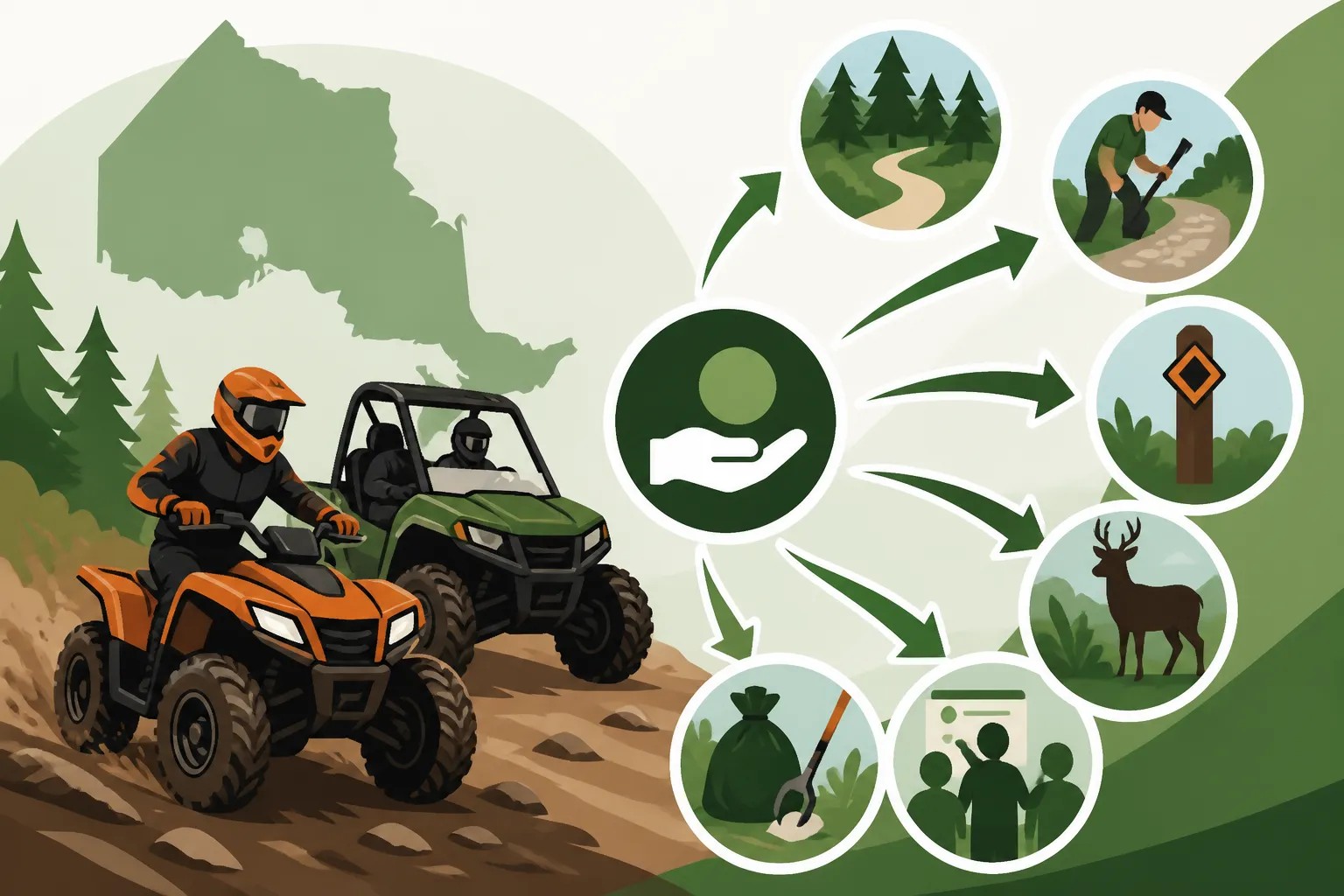
This is where your trail permit money really hits the dirt, quite literally. The local ATV clubs are the unsung heroes of the Ontario trail system. They are often volunteer-run organizations, and the money they receive from your permit goes directly into making your riding experience possible. This includes a vast array of activities:
- Trail Maintenance: Clearing fallen trees, repairing washouts, maintaining bridges and culverts, and ensuring proper drainage. Heavy rains can quickly damage trails, requiring immediate attention.
- Signage: Installing and maintaining clear trail markers, safety warnings, and navigational signs to prevent riders from getting lost or straying onto private land.
- Equipment: Purchasing and maintaining equipment like excavators, bulldozers, chainsaws, and even grooming machines for winter riding where applicable.
- Insurance: Covering the hefty liability insurance premiums necessary to operate a trail system and protect landowners who allow trails on their property. This is a massive expense for clubs.
- Landowner Relations: Building and maintaining positive relationships with private landowners whose property the trails often cross. This often involves formal agreements and compensation.
- Advocacy: Local clubs often represent riders' interests at municipal council meetings, advocating for trail expansions, road access, and responsible riding.
Imagine riding through a beautifully maintained section of trail, crossing a sturdy bridge over a creek, or navigating clearly marked intersections. All of that is a direct result of the local clubs' hard work, funded by your trail permit. Without these fees, the extensive network of managed trails that Ontario riders cherish simply wouldn't exist. It’s a vital investment in the sport itself, ensuring we have safe and legal places to ride for years to come.
What Your ORV Fees Fund: A Quick Look
To help clarify where your various ORV-related payments go, here's a brief breakdown:
| Fee Type | Primary Destination | Purpose |
|---|---|---|
| Initial Registration Fee | ServiceOntario / Provincial Government | Administrative costs, processing, issuance of permit/plate, enforcement of ORV Act. |
| Replacement Plate/Permit | ServiceOntario / Provincial Government | Cost of producing and issuing replacement documents/plates. |
| Retail Sales Tax (RST) | Ontario Provincial Consolidated Revenue Fund | General provincial services (healthcare, education, infrastructure). |
| OFATV Trail Permit | OFATV Federation & Member Local Clubs | Trail maintenance, signage, insurance, equipment, landowner relations, advocacy. |
| Individual Club Pass | Specific Local Club (e.g., Ganaraska Forest Pass) | Direct funding for maintenance and operation of that specific trail system. |
As you can see, the money you spend on your ORV is distributed through several different channels, each supporting a specific aspect of off-road vehicle ownership and riding in Ontario. From keeping the provincial registry up-to-date to ensuring your favourite local trail is clear of fallen trees, these fees are essential to the ORV landscape in the province.
Disclaimer
This article is for general informational purposes only and does not constitute professional advice. Laws, prices and regulations vary by location and change over time. Consult a qualified professional for guidance on your specific situation.