How Long You Have to Register an Ontario ATV
So you've just bought an awesome ATV or UTV in Ontario, perhaps a sweet used quad from a local seller or a brand new side-by-side from a dealership, and you're absolutely itching to hit the trails. But then that nagging question pops up, the one that can quickly turn excitement into a bit of anxiety: how long do you really have to get it officially registered and plated? This guide will cut through the confusion and explain the critical timeframe you have to get your new machine properly permitted and ready to ride in Ontario.
The Six-Day Registration Deadline in Ontario
Let's get straight to it: in Ontario, the clock starts ticking the moment you take ownership of an off-road vehicle (ORV). You have a hard deadline of six calendar days from the date of purchase or transfer to register your ATV or UTV at a ServiceOntario centre. This isn't just a suggestion; it's a legal requirement outlined in the province's regulations. Many riders, especially first-time owners or those new to Ontario, often underestimate this tight window, leading to unnecessary stress or even potential fines.
Imagine you've just closed the deal on a Saturday afternoon, feeling great about your new purchase. Sunday comes and goes, you're maybe doing some light maintenance or just admiring your machine. Then Monday rolls around, it's a holiday, and ServiceOntario is closed. Suddenly, your six days are shrinking fast, and you haven't even had a chance to get to the counter. It's a common scenario that highlights just how quickly this deadline can creep up on you. You'll want to read more about [Six Days From Purchase in Ontario] to understand this period fully.
Why Six Days? It's About Prompt Compliance
The provincial government sets this six-day limit to ensure prompt compliance with registration and tax requirements. It’s designed to prevent machines from being bought and immediately used on trails or roads without proper documentation, which can create issues for law enforcement, insurance providers, and ultimately, other riders. Think about it: if there were no clear deadline, people might drag their feet for months, making it harder to track ownership and ensure everyone is playing by the rules.
This period also gives you, the new owner, a reasonable but firm window to gather all your necessary paperwork and make an appointment or walk into a ServiceOntario location. It forces you to prioritize this administrative step before getting too carried away with modifications or elaborate riding plans. While it might feel like a tight squeeze, it's there to keep things orderly and accountable on Ontario's trails and designated roads.
What "Ownership" Really Means
When we talk about the six-day window, "ownership" usually means the date recorded on your bill of sale. This is the official document that transfers legal possession from the seller to you. It's absolutely crucial that this date is accurate and clearly stated on your paperwork, as ServiceOntario staff will use it to determine if you're within the allowed timeframe. If you're [Buying a Used ATV in Ontario], ensuring the bill of sale is correct and dated properly is one of your most important tasks.
However, ownership isn't always a straightforward cash-for-keys transaction. For instance, if you receive an ATV as a gift from a family member, the "date of ownership" would typically be the date of the gift transfer, as documented in a sworn affidavit or a detailed letter. Similarly, if you've inherited a machine, the date might relate to the probate process or the official transfer from the estate. Regardless of how you acquire it, there needs to be a clear, provable date that marks your legal possession.
What Happens If You Miss the Deadline?
Missing the six-day window to register your Ontario ATV or UTV isn't just an administrative inconvenience; it can have real consequences. While ServiceOntario staff might process your registration slightly past the deadline, provided you have a reasonable explanation and all the correct paperwork, it's not a guarantee. More importantly, riding an unregistered machine after this period can lead to fines and other legal issues.
Potential Fines and Enforcement
The most immediate and concerning consequence of missing the registration deadline is the risk of being fined. If you're pulled over by law enforcement – whether on a municipal road where ORVs are permitted or on an approved trail – and your machine isn't properly registered and plated, you could face a significant penalty. Officers can verify registration status quickly, and a lack of a valid permit after the six-day grace period means you're operating the vehicle illegally. Learn more about the potential repercussions in [What Happens After the Sixth Day].
Beyond just the registration, an officer will also be looking for proof of insurance and proper plate display. All these elements work together to ensure legal operation. An unregistered machine often means an uninsured one, which carries even steeper penalties in Ontario. It's a risk that simply isn't worth taking, especially when a simple trip to ServiceOntario can prevent so much trouble.
Roadblocks to Registration
If you show up at ServiceOntario significantly past the six-day mark without a compelling reason, you might face some additional scrutiny. While they won't outright refuse to register your machine in most cases, they might ask for more documentation or a more detailed explanation for the delay. This isn't about punishment, but about ensuring that the vehicle hasn't been operated unlawfully during the unregistered period, and that all taxes are being properly collected.
Another roadblock could arise if there's any ambiguity about the purchase date or if your paperwork isn't perfectly in order. Delays can complicate matters, as memories fade, and sometimes original documents can be misplaced. It's always best to get it done within the specified timeframe to avoid any unnecessary headaches or bureaucratic hurdles.
Paperwork and Preparation: Getting Ready to Register
The key to a smooth registration process within that six-day window is preparation. Don't wait until day five to start gathering your documents. Have everything ready to go so you can walk into a ServiceOntario centre with confidence. Knowing what you need beforehand can save you multiple trips and a lot of frustration. For a complete overview of what to bring, check out [Ontario ATV Registration Paperwork].
Essential Documents for Registration
Here's a breakdown of the critical documents you'll need when registering your ATV or UTV:
- Bill of Sale: This is the cornerstone of your registration. It must clearly state the date of purchase, the purchase price, the full names and addresses of both the buyer and seller, a description of the ATV/UTV (make, model, year, VIN), and signatures from both parties. If you're creating a bill of sale for a private sale, resources like LawDepot can provide professional templates to ensure all necessary legal information is included.
- Proof of Identity: You'll need valid government-issued identification, such as an Ontario driver's licence or a provincial photo card. This is to confirm you are who you say you are and that you're old enough to register an ORV.
- Proof of Ontario Residency: While often covered by your driver's licence, sometimes additional proof like a utility bill might be requested if there's any question about your residency.
- The Previous Owner's Ontario Vehicle Permit (if applicable): If you're buying a used machine that was previously registered in Ontario, the seller must provide you with their half of the [The Ontario Vehicle Permit Explained]. This permit acts as a record of the machine's history and proof of previous registration. Without it, you'll need to jump through more hoops to prove ownership.
- Vehicle Information Number (VIN): Ensure the VIN on your bill of sale matches the VIN physically stamped on the machine. ServiceOntario staff will verify this. This is critical for [Proving Ownership of an Ontario ATV].
Taxes and Fees at ServiceOntario
When you register your ATV or UTV, you'll also be paying the Retail Sales Tax (RST) directly to ServiceOntario. In Ontario, this is 13% of the purchase price you declare on your bill of sale. It's important to remember that this tax is paid at the ServiceOntario counter, not to the private seller. Even if you're buying a used machine from an individual, you're responsible for paying the tax to the province. Learn more about this in [Ontario RST Paid at the Counter, Not to the Seller].
There's also a one-time registration fee for the Ontario ORV permit and licence plate. Unlike snowmobiles, ATVs and UTVs in Ontario do not require annual registration renewal. Once you've paid the fee and received your permit and plate, you're generally set for the life of your ownership, assuming you don't lose the plate or permit. This makes the initial registration crucial.
Here's a quick overview of what to prepare:
| Item | Requirement | Notes |
|---|---|---|
| Bill of Sale | Clearly dated, signed by both parties, accurate purchase price, full details. | Essential for proving ownership and calculating RST. Consider a template from LawDepot for private sales. |
| Proof of Identity | Valid government-issued photo ID (e.g., driver's licence, provincial photo card). | Confirms who you are and verifies age requirements. |
| Previous Owner's ORV Permit | If buying a used machine previously registered in Ontario, bring their permit. | The seller should provide their "plate" half and sign the "transfer" section. Crucial for tracing ownership. If they lost it, you'll need specific steps covered in Proving You Own a Quad With No Papers. |
| Payment for RST & Fees | Debit, credit, or cash for the 13% RST and one-time registration fee. | Be prepared for the full amount based on your declared purchase price. |
Special Scenarios: Gifts, Out-of-Province, and More
While the six-day rule is pretty standard, there are a few special scenarios that can affect how and when you need to register your ATV or UTV in Ontario. These situations often come with their own set of rules or require slightly different documentation, but the underlying principle of timely registration remains.
Receiving an ATV as a Gift
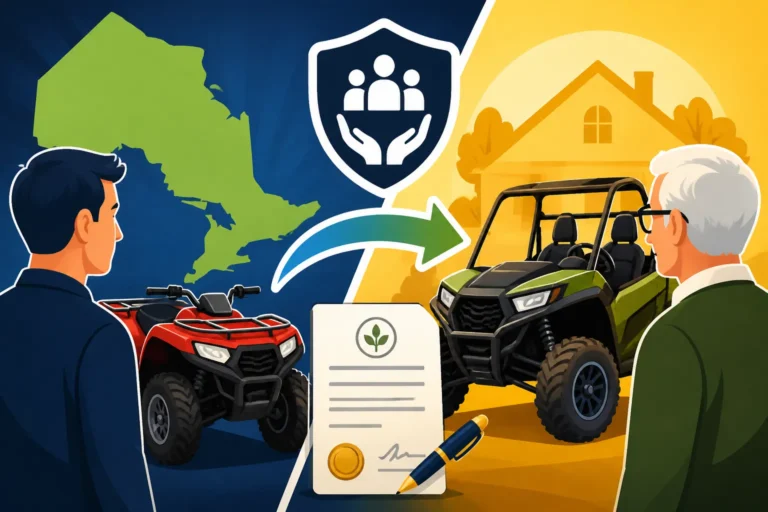
If you're lucky enough to receive an ATV as a gift from a family member, you might be exempt from paying the 13% Retail Sales Tax (RST). This is known as the [The Family Gift Exemption in Ontario]. However, even with this exemption, you still need to register the machine within the six-day window of receiving it. You'll need to complete a Sworn Statement for a Family Gift of a Used Motor Vehicle form, available through ServiceOntario, which formally declares the gift.
This form acts as your "bill of sale" in a sense, establishing the date of transfer and confirming the familial relationship. It's crucial to have this document properly filled out and signed when you go to register. Without it, you might be assumed to have purchased the vehicle and be liable for the RST.
Bringing an ATV from Out-of-Province or Country
Moving to Ontario with an ATV you already own, or purchasing one from another province or even the United States, also triggers the six-day registration requirement. The clock starts from the date you establish residency in Ontario (if moving) or the date the machine crosses into Ontario with the intent of being permanently housed here. You can learn more about [Ontario Rules for an Out-of-Province Machine].
For machines imported from outside Canada, you'll have to navigate customs and import paperwork first. Once the machine has officially cleared customs and is legally within Ontario, that's when your six-day countdown for provincial registration begins. ServiceOntario will require proof that all federal import duties and taxes have been paid before they will issue an Ontario permit and plate.
Inheriting an ATV
If you inherit an ATV or UTV, the process is slightly different, but the six-day principle still applies once the machine is formally transferred to you from the estate. There's typically an [Ontario's Estate Transfer Exemption] for RST purposes when a vehicle is transferred to a beneficiary through a will. However, you'll need the proper documentation from the estate, such as a copy of the will, letters of probate, or an executor's sworn statement, to prove the transfer.
The date of ownership for an inherited machine will often be tied to the date the estate officially transfers the vehicle into your name, not necessarily the date of death. It's best to confirm these specifics with ServiceOntario or the estate's legal counsel to ensure you have the correct "start date" for your registration window.
Registering a Machine with No Papers
This is a tricky one, and it's a common concern for folks who find a great deal on an old farm quad or a machine that's been sitting unused for years. If you acquire an ATV with absolutely no documentation – no old permit, no bill of sale, nothing – registering it within six days becomes much more complex, if not impossible. ServiceOntario requires a clear chain of ownership. You'll need to explore avenues like getting a sworn affidavit of ownership, potentially tracing the VIN, or even contacting the previous registered owner if possible. This is a situation where the six-day rule almost becomes irrelevant, as your first hurdle is proving you legally own the machine at all. You can dive deeper into this challenging process with [Registering a Quad With Nothing but a Frame Number].
Ultimately, whether you've bought a shiny new machine or received a beloved hand-me-down, the message is clear: don't procrastinate. That six-day window might seem generous, but it can vanish quickly. Get your paperwork in order, make that appointment, and get your ATV or UTV registered so you can enjoy Ontario's trails worry-free.
Disclaimer
This article is for general informational purposes only and does not constitute professional advice. Laws, prices and regulations vary by location and change over time. Consult a qualified professional for guidance on your specific situation.