Registering Two Machines at Once
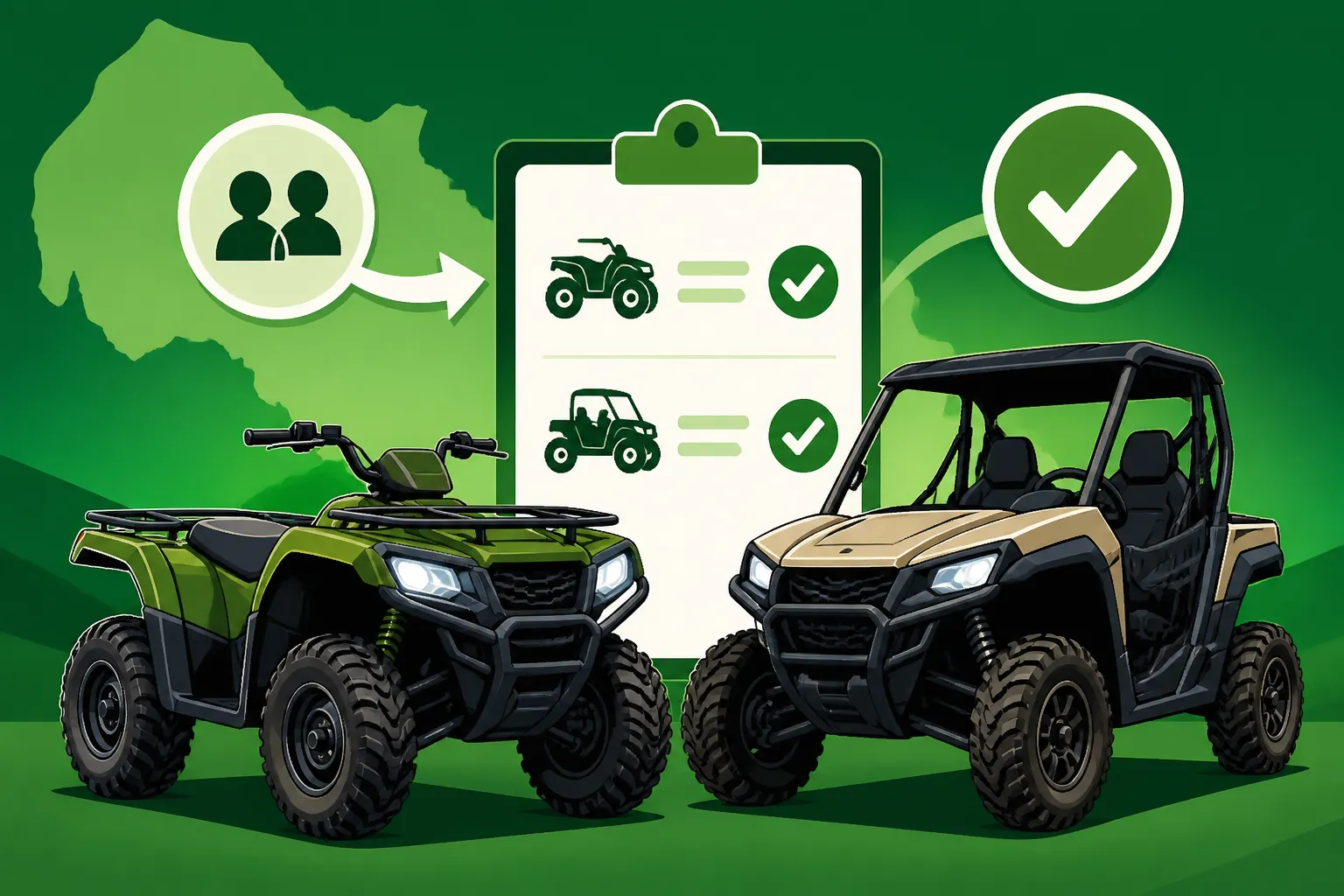
Buying one ATV or UTV is an exciting adventure, but sometimes, the call of the trail means bringing home two machines at once – perhaps one for yourself and a partner, or matching quads for you and your best riding buddy. While the thrill of twin new toys is undeniable, the thought of navigating the registration process for both at the same time can feel like double the headache. It’s easy to get overwhelmed by the paperwork and procedures, wondering if you need two separate appointments or if the process simply doubles up. This guide is here to untangle that process, helping you smoothly register both your new off-road vehicles in Ontario without unnecessary stress.
Why Registering Multiple ORVs Can Feel Like a Hurdle
Bringing home a pair of ATVs or UTVs, whether they're brand new from a dealership or beloved used machines, often comes with a unique set of challenges when it's time to get them officially registered. It’s not just a simple case of doing everything twice; there are nuances that can trip up even experienced riders. The provincial government, through ServiceOntario, is set up to handle individual vehicle registrations, and while they can certainly process multiple at once, anticipating the potential snags will make your visit far more efficient.
The Paperwork Pile-Up
One of the most immediate concerns when registering two machines is the sheer volume of paperwork. Each ATV or UTV is its own entity, requiring its own complete set of documentation. This means if you have two machines, you’re looking at two original bills of sale, two proofs of ownership from previous permits, and possibly more. If you're dealing with private sales, ensuring each machine has a meticulously completed bill of sale can be a critical step. A simple template, perhaps from a reputable service like LawDepot, can be a lifesaver here, ensuring you don't miss any vital details for either machine. Imagine arriving at ServiceOntario only to discover one bill of sale is missing a VIN or a signature – that’s a quick way to turn excitement into frustration. This isn't like registering a boat and trailer where some documents might intertwine; each off-road vehicle operates on its own set of administrative requirements.
ServiceOntario Appointment Strategy
You might wonder, "Do I need to book two separate appointments if I'm registering two machines?" The good news is, usually no. ServiceOntario centres are generally equipped to handle multiple transactions within a single appointment slot, especially if you're well-prepared. However, it's wise to consider the complexity of your situation. If both machines are straightforward (e.g., new from the same dealer, with perfect paperwork), one appointment should suffice. If you're dealing with one new machine and one used one, or perhaps an imported machine alongside a local purchase, the transactions might take longer. In such cases, if you have any doubts or anticipate extended discussions, calling ahead to your local ServiceOntario centre to explain your situation might be a good idea. They can advise you on whether a single, slightly longer booking is appropriate or if they’d prefer separate slots to ensure ample time. Showing up organized dramatically reduces the chances of needing a second trip.
The Financial Aspect of Multiple Registrations
Beyond the paperwork, the financial implications are another significant consideration. When you register two ATVs or UTVs, you're not just paying one registration fee; you're paying one for each machine. The same applies to the 13% Retail Sales Tax (RST). This tax is calculated on the purchase price of each individual machine, or its fair market value if the declared price is deemed too low or it's a gift. While the registration fee itself is a one-time charge per machine (and it never expires, unlike snowmobile registrations), the RST can add up quickly. Understanding that these costs apply per unit helps you budget effectively and avoid any surprises at the counter. Each machine is treated as a distinct purchase for tax purposes, even if bought at the same time from the same seller.
Your Step-by-Step Guide to Registering Two ATVs Simultaneously
Navigating the registration process for a single off-road vehicle can be a bit of a maze, so doing it for two at once requires an even higher level of organization and attention to detail. The key is to approach each machine as its own separate entity, ensuring all documentation and steps are completed for both before you even think about heading to ServiceOntario. Think of it like packing two separate suitcases for a trip; while they might be going to the same destination, their contents are distinct.
Gathering Documents for Each Machine
This is perhaps the most critical step. For each ATV or UTV you intend to register, you will need a complete and accurate set of documents. There’s no mixing and matching here.
- Original Bill of Sale: For each machine, you need a distinct [Ontario ATV Bill of Sale Requirements]. This document must clearly state the seller's and buyer's information, the purchase date, the price paid, and most importantly, the Vehicle Identification Number (VIN) for that specific machine. If you purchased both machines from a private seller, having separate, clearly delineated bills of sale is crucial. Consider using a template from LawDepot to ensure all necessary fields are covered.
- Proof of Ownership: If the machines were previously registered in Ontario, you’ll need the original Ontario Vehicle Permit (OVP) for each. This permit acts as the primary [Proving Ownership of an Ontario ATV]. The seller must sign the transfer portion of their permit for each machine. If a previous owner lost the permit, you'll need to explore alternative proofs of ownership, which can complicate things.
- Personal Identification: You, as the registrant, will need to present your valid driver's licence or other acceptable identification. This remains consistent whether you're registering one or ten machines – it’s about verifying your identity.
- Insurance Information: While you don't always need to show proof of insurance at the time of registration, it’s legally required to have it before you operate either machine. It's prudent to have your insurance details for both machines on hand, just in case. ServiceOntario staff might ask, and it certainly won't hurt to be prepared.
It can be incredibly helpful to create two separate folders, one for each machine, and place all corresponding documents inside. This simple organizational trick can prevent confusion and speed up your ServiceOntario visit.
Handling Retail Sales Tax for Both
The 13% Retail Sales Tax (RST) applies to each ATV or UTV you register. This is collected by ServiceOntario on behalf of the provincial government.
- Purchase Price Declaration: For each machine, the tax will be calculated based on the purchase price declared on its respective bill of sale. If you bought from a dealership, the tax is usually itemized on their sales agreement. For private sales, ServiceOntario staff will review the declared price.
- Fair Market Value: Be aware that if the declared purchase price on a private sale bill of sale is significantly lower than the machine's perceived market value, ServiceOntario may levy the tax based on their assessment of the fair market value, not your declared price. This applies to each machine independently. They're not assessing "your total purchase" but rather the individual value of each item.
- Exemptions: There are specific RST exemptions that can apply to off-road vehicles, such as [Ontario ATV Tax on a Family Gift] or certain farm-use exemptions. If you believe either of your machines qualifies for an exemption, you'll need the appropriate documentation for that specific machine to present to ServiceOntario. These exemptions also apply on a per-machine basis.
It’s important to clearly separate the tax calculations for each machine. You'll effectively be paying two distinct RST amounts, even if you write one cheque or make one combined payment.
The ServiceOntario Visit
When you arrive at a [Registering an ORV at a ServiceOntario Centre], bring your two organized folders, your ID, and payment methods.
- Presenting Your Documents: Clearly indicate to the ServiceOntario representative that you are there to register two separate off-road vehicles. Present the first machine’s documents, allow them to process it, and then present the second machine’s documents. This clear separation helps the clerk manage the transactions efficiently. They are accustomed to these scenarios.
- Payment: You’ll pay the individual registration fee for each machine and the calculated RST for each. Ensure you have sufficient funds to cover both transactions.
- Receiving Your Permits and Plates: Once processed, you will receive two separate [The Ontario Vehicle Permit Explained] documents, one for each VIN. You will also be issued two distinct Ontario ORV licence plates, each with its own unique number. These plates are crucial for legal operation on trails and open roads. Remember, each plate and permit belongs to a specific machine and must remain with it.
By being meticulously organized, you transform what could be a drawn-out affair into a smooth, efficient process, allowing you to get both your machines ready for the trail.
Common Scenarios and Considerations for Dual Registrations
Registering two machines at once, while fundamentally similar to registering one, often presents unique situations that are worth considering. Thinking through these common scenarios beforehand can save you headaches and ensure a smoother registration experience. It’s all about anticipating the nuances that come with handling multiple transactions.
Buying from the Same Seller vs. Different Sellers
The source of your machines can significantly influence your paperwork.
- Same Seller: If you’ve purchased both ATVs from a single dealership or a private individual, the process can feel slightly more streamlined. A reputable dealer will typically provide two distinct sales agreements, but a private seller might try to combine details on one document. Insist on separate bills of sale, or at least a very clearly itemized one that explicitly details each machine (VIN, price, etc.). Using a LawDepot template for each sale, even from the same person, ensures all critical information is captured for each specific ORV, preventing any ambiguity that ServiceOntario might question. This makes it easier for the ServiceOntario agent to process two distinct transactions.
- Different Sellers: This is perhaps the most common scenario for dual registrations. You might buy one machine from a friend and another from a different online listing. In this case, you will inherently have two completely separate sets of paperwork – two distinct bills of sale, two separate previous permits, and so on. This is actually a simpler scenario for ServiceOntario as the transactions are clearly independent, though you’ll still want to keep them well-organized within your own system.
Different Machine Types or Classes
Ontario recognizes various classes of off-road vehicles, including ATVs (all-terrain vehicles), ROVs (recreational off-highway vehicles, which include side-by-sides and UTVs), and off-road motorcycles (dirt bikes). If you’re registering, say, an ATV and a side-by-side, or a dirt bike and a quad, each machine will fall under its specific class.
- Documentation Alignment: While the fundamental requirement for a bill of sale and proof of ownership remains the same, ensure that all documentation correctly identifies the specific type of machine. For example, a [Ontario ORV Registration for a Side-by-Side] will have specific weight or width considerations, just as an [Ontario Registration for a Dirt Bike] might have different characteristics noted. The ServiceOntario system will classify each machine according to its VIN and manufacturer data, and your paperwork should align with that.
- No Impact on Simultaneous Registration: The good news is that registering different types of ORVs simultaneously usually doesn't create additional hurdles. ServiceOntario staff are trained to handle various vehicle types. As long as the individual paperwork for each machine is in order, they can process them concurrently.
The "Six-Day Deadline" for Each
Ontario has a [Six Days From Purchase in Ontario] rule, meaning you have six days from the date of purchase to register your off-road vehicle. When you're buying two machines, it's crucial to understand that this deadline applies individually to each ORV.
- Individual Deadlines: If you buy one ATV on a Monday and another on a Wednesday, their respective six-day deadlines will be different. While you might take both to ServiceOntario on the same day, ensure that day falls within the six-day window for both purchases. Missing the deadline for even one machine can lead to questions or complications, so it's best to act promptly for both.
- Staggered Purchases: If your purchases are staggered, you might find yourself with a tight window to register both together. Planning your ServiceOntario visit carefully is key to avoid any expired deadlines.
Insurance for Both Machines
Before either of your newly registered machines hits the trail or any open road, both must be insured. [Insurance and Ontario ORV Registration] is mandatory for all off-road vehicles in Ontario, even if only used on private land.
- Separate Policies or Combined: You will need to obtain liability insurance for each machine. Often, an insurance provider can add multiple ORVs to a single policy, which can simplify administration. However, ensure that each machine has its own distinct proof of insurance, such as an insurance card, that you can carry with you.
- Proof at Registration: While not universally required for all ORV registrations, ServiceOntario can request proof of insurance. Having both insurance documents ready, perhaps printed and tucked into each machine’s folder, demonstrates your preparedness and compliance.
Keeping Your Dual Registrations Organized Post-Purchase
Congratulations, you've successfully registered both your machines! But the journey doesn't end at the ServiceOntario counter. Maintaining good organization and understanding what to do with your new documents is just as important for a stress-free riding experience and any future transactions. Think of it as setting up a good filing system for your new off-road adventures.
Understanding Your New Permits and Plates
Each of your newly registered ATVs or UTVs will now have its own unique identity within the Ontario system.
- Individual Permits: You will receive two distinct Ontario Vehicle Permits (OVPs), one for each machine. Each permit will list the specific Vehicle Identification Number (VIN) of that machine, along with its make, model, year, and your registration information. It is crucial to keep these permits separate and associated with their correct machine. You can't just grab any permit for any quad; the VINs must match.
- Unique Licence Plates: Similarly, you will be issued two separate licence plates, each with its own unique alphanumeric sequence. These plates must be mounted on their corresponding machines. Ontario has specific rules about [Ontario ORV Plates and Where They Mount], generally requiring them to be clearly visible at the rear of quads and side-by-sides, and sometimes at the front for three-wheelers. Never swap plates between your machines, even if they're both yours; each plate is tied directly to a specific VIN on its permit.
Storing and Carrying Your Documents
Once you have your new permits, the next step is ensuring they are properly stored and accessible when you're out riding.
- The Original Permit: The actual Ontario Vehicle Permit is an official document. Many riders prefer to keep the original at home in a safe place, such as a fireproof safe or a secure filing cabinet. This protects it from loss, damage, or theft while you're out on the trails.
- True Copies: For riding purposes, you are legally permitted to carry a "true copy" of your permit. This can be a high-quality photocopy or a digital image on your phone. However, it must be legible and clearly show all information. For two machines, this means you need a true copy for each machine. A smart strategy is to laminate a paper copy for each ORV and keep it in a waterproof bag or container stored on the machine itself. This is particularly important for [Keeping Your ORV Permit Dry on a Wet Ride] during inclement weather. Ensure that each rider always has the correct permit copy for the machine they are operating.
Future Sales or Transfers
Life happens, and you might eventually decide to sell one of your machines, or perhaps gift it to a family member. Having registered them separately makes future transactions much clearer.
- Individual Transfer Process: When you decide to sell one of your ATVs, the transfer of ownership process will apply only to that specific machine. You will simply follow the standard procedure of signing over its individual Ontario Vehicle Permit to the new owner. There’s no need to involve the other machine in the sale. This clear separation prevents any confusion and streamlines the paperwork for the buyer. Refer to guides like [Transferring a Permit to a Buyer in Ontario] for detailed steps.
- Maintaining Records: Even after selling one machine, it's wise to keep records of the sale, including a copy of the bill of sale and the buyer's information, for your own files. This can be helpful for future reference or if any issues arise. The other machine's registration remains completely unaffected, allowing you to continue enjoying it on the trails.
By understanding these post-registration steps, you can ensure both your off-road vehicles remain legally compliant and that any future changes in ownership are as smooth as possible.
Disclaimer
This article is for general informational purposes only and does not constitute professional advice. Laws, prices and regulations vary by location and change over time. Consult a qualified professional for guidance on your specific situation.