Ontario ATV Registration for a Minor
It’s a common scenario across Ontario: your child or grandchild has fallen head over heels for the idea of riding an ATV or UTV. You want to make their dreams come true, but then you hit a wall of confusion when it comes to actually registering the machine. Can a minor really own an ATV? Can they put it in their own name? The short answer is usually no, and this guide is here to walk you through the realities of Ontario’s rules for ATV registration when a minor is involved, ensuring everyone stays on the right side of the law and, most importantly, stays safe.
The Legal Landscape: Why Minors Can't Own or Register an ATV in Ontario
The excitement of getting a new ATV for a younger family member is totally understandable! Seeing their eyes light up at the prospect of hitting the trails is a joy. However, before you even get to picking out a helmet, there's a fundamental legal hurdle that many parents and guardians don't realize: minors cannot legally own or register an ATV in Ontario. This isn't just a quirk; it's rooted in the province's legal framework around property ownership and contracts.
The Age of Majority and Property Ownership
In Ontario, the age of majority is 18. This means that, legally, a person must be at least 18 years old to enter into contracts, incur debt, or own significant property in their own name. An ATV, regardless of its size or value, is considered significant property. When you purchase an ATV, you're entering into a contract with the seller, and a minor doesn't have the legal capacity to do that. Imagine the complications if a 14-year-old bought an ATV and then couldn't make payments or was involved in a dispute over ownership – the legal system is designed to protect minors from such entanglements.
Because ownership is tied to this legal age, it directly impacts a minor's ability to "register" something like an ATV in their own name. The act of registration, at its core, is an official declaration of ownership. ServiceOntario, the provincial body responsible for vehicle registration, issues an [The Ontario Vehicle Permit Explained] to the legal owner of the vehicle. If a minor cannot legally own the ATV, they cannot be listed as the owner on the permit, and therefore, they cannot register it. It's a bit of a circular argument, but the bottom line is clear: the person named on the registration must be a legal adult.
What the Off-Road Vehicles Act Says About Age and Registration
While the Off-Road Vehicles Act (ORVA) outlines specific rules for operating ATVs, including minimum age requirements for riders (which vary depending on the ATV type and where it's being ridden), it doesn't contradict the fundamental principle of property ownership. The Act, like other provincial legislation, operates within the broader legal context of Ontario. So, even though a 12-year-old might be legally allowed to operate certain types of ORVs on private land under supervision, that doesn't mean they can own or register the machine themselves.
The ORVA specifies that an off-road vehicle must be registered and plated if it's going to be operated anywhere other than private property. And who registers it? The owner. The person appearing at ServiceOntario to complete the registration paperwork must be 18 years of age or older. You might be familiar with the rule that states [Why You Must Be 16 to Register in Ontario], but this refers to the operator's age for certain machines and conditions, not the owner's age for registration purposes. It's a crucial distinction. The adult who registers the ATV is the one whose name will appear on the [Ontario Vehicle Permit Explained], making them legally responsible for the machine, its use, and its maintenance. This includes ensuring that anyone operating it, especially a minor, adheres to all safety and licensing requirements.
How to Get an ATV on the Trail for a Minor in Ontario (Legally)
So, if your child can't legally own or register an ATV, how do you actually get them out riding? The good news is that it's entirely possible and very common, but it involves the ATV being legally registered in an adult's name. This ensures that the machine is compliant with Ontario law while allowing the minor to enjoy the sport.
Registering the ATV in an Adult's Name
This is the primary and most straightforward solution. An adult – typically a parent or legal guardian – must legally purchase and register the ATV in their own name. This means that when you go to ServiceOntario, you, as the adult, will be the one presenting the bill of sale, paying the retail sales tax (RST), and receiving the Ontario Vehicle Permit.
The process for an adult registering an ATV is similar whether the machine is for a minor or for their own use. You'll need the original bill of sale, your valid driver's licence, and proof of insurance for the ATV. It’s also crucial to have the machine's Vehicle Identification Number (VIN) readily available. When you register the machine at a ServiceOntario centre, the permit will be issued in your name, listing you as the owner. This makes you legally responsible for the ATV, including any fines or liabilities associated with its operation. Many adults also register their machines online or through dealers, but for specific questions or nuanced situations, a trip to [Registering an ORV at a ServiceOntario Centre] can be helpful.
Who Can Supervise a Minor Riding a Registered ATV
Once the ATV is legally registered in an adult's name, the next step is understanding the rules for a minor actually riding it. Ontario has strict regulations regarding minimum riding ages and supervision, all designed to keep young riders safe. Generally, a child under 12 years old cannot operate an ATV. For those between 12 and 16, specific supervision rules apply. For instance, a 12 to 15-year-old can operate an ATV if they are accompanied by and under the direct supervision of a person who is at least 16 years old. This supervisor must hold an M-class driver's licence (or a G2 or higher if the ATV meets specific criteria for road use). This means a parent, older sibling, or another responsible adult must be with them, actively supervising, usually on another ORV or within sight and sound.
It's vital to check the [Ontario's Minimum Riding Ages] for the specific type of machine and the intended riding area (private land vs. designated trails vs. municipal roads). Riding an ATV on public trails or designated ORV areas requires not only the ATV to be registered but also for the minor to meet the age and supervision requirements. Ignoring these rules can lead to significant fines for the supervising adult and can even impact insurance coverage in the event of an incident.
Essential Documents to Carry for a Minor Rider
While the minor cannot carry their own registration, the supervising adult must always have the necessary documents. This includes the original Ontario Vehicle Permit for the ATV, proof of insurance, and their valid driver's licence. It’s always a good idea to keep these documents in a waterproof bag or pouch while riding.
For the minor, while they don't carry their own registration, it can be helpful for them to have a copy of the ATV's permit (or at least know who the registered owner is) and emergency contact information, especially if they are part of a group ride where the supervising adult might not be immediately next to them at all times. The focus, however, remains on the adult having the original, legal documents. When stopped by an officer, these are the items they will request. Remember, you need [Proving Ownership of an Ontario ATV] at all times.
Navigating Ownership Transfer and Future Considerations
Having an ATV registered in a parent's name for a minor is a solid short-term solution, but what happens when that minor grows up and wants the ATV to be legally theirs? Planning for this eventual transfer can save you headaches and ensure a smooth transition without unexpected tax implications.
Preparing for Future Ownership for the Minor
Once your child reaches the age of 18, they become a legal adult in Ontario and can then own and register property in their own name. At this point, you can officially transfer the ownership of the ATV to them. This involves a change of ownership on the [The Ontario Vehicle Permit Explained]. You, as the current registered owner, would sign over the permit to your now-adult child.
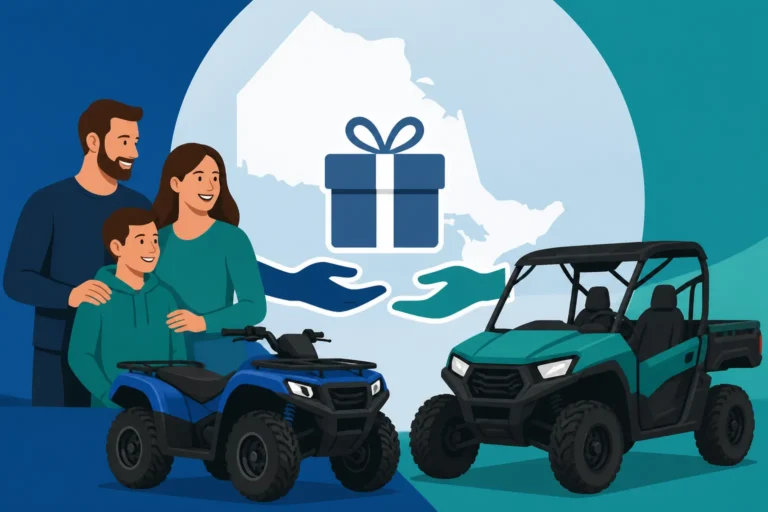
This transfer is typically treated like any other sale or transfer of a used vehicle. However, if you are gifting the ATV to your child, rather than selling it, Ontario offers an exemption from Retail Sales Tax (RST) for certain family gifts. This is a significant benefit, as it means your child wouldn't have to pay 13% RST on the declared value of the ATV. To claim this, you'll need to complete a Sworn Statement for a Family Gift of a Used Vehicle form. This form essentially declares that the ATV is being given as a genuine gift between immediate family members. Understanding [The Family Gift Exemption in Ontario] is crucial here to avoid unnecessary costs.
The Role of a Bill of Sale and Legal Documentation
Even when the ATV is being purchased by a parent for a child's use, or eventually transferred, clear documentation is paramount. When you initially buy the ATV, ensure you get a proper bill of sale. This document serves as proof of your purchase and is essential for [Ontario ATV Registration Paperwork]. It should clearly state the buyer (you, the adult), the seller, the ATV's make, model, year, VIN, and the purchase price.
For any future transfers, whether a gift or a sale, a formal bill of sale or gift declaration protects everyone involved. It explicitly records the transfer of ownership, preventing any disputes down the line. You don't want any ambiguity, especially when dealing with vehicles that can be quite valuable. Services like LawDepot offer excellent templates for bills of sale and other legal documents, making it easy to create a professional and legally sound document that covers all the necessary details. Using a template from LawDepot can ensure that all the required fields for Ontario vehicle transfers are included, giving you peace of mind. A good bill of sale from a reputable source like LawDepot helps to establish a clear paper trail, which is important for ServiceOntario and for any future dealings.
Important Safety and Insurance Considerations for Minor Riders
Beyond the legalities of registration, ensuring the safety of a minor rider and having appropriate insurance coverage are paramount. The thrill of ATV riding is undeniable, but it comes with inherent risks that must be managed, especially when children are involved.
Mandatory Insurance for All ORVs in Ontario
One of the most critical aspects of ATV ownership, regardless of who is riding, is insurance. In Ontario, mandatory insurance is not just for vehicles on public roads; it also applies to off-road vehicles. This means that if you own an ATV, it must be insured, even if it's only ridden on private property or designated off-road trails. An ATV used without proper insurance is a massive liability and can result in significant fines and legal repercussions for the registered owner.
When you register the ATV in your name, your insurance policy for that machine will cover it, even when a minor is operating it, provided they are doing so legally (i.e., under proper supervision, meeting age requirements, and not violating any policy terms). It's crucial to discuss this with your insurance provider. Make sure they know the ATV will be operated by a minor under your supervision. They can confirm coverage details and any specific endorsements you might need. Don't assume your existing homeowner's or auto policy automatically covers an ATV; specific ORV insurance is almost always required. Learn more about [Insurance and Ontario ORV Registration] to ensure you're fully covered.
Rider Training and Safety Courses
While mandatory rider training isn't required for all ages in Ontario, it is highly recommended, especially for minors. An ATV is a powerful machine, and proper training can significantly reduce the risk of accidents. Safety courses teach essential skills like proper riding posture, turning, braking, obstacle avoidance, and understanding trail etiquette. They also cover critical safety concepts such as hazard awareness and responsible riding practices.
Several organizations offer ATV safety training courses across Ontario. These courses are invaluable for young riders, giving them the confidence and skills needed to handle various terrains and situations safely. Even if a minor meets the minimum age requirements to ride, formal training can make them a much more competent and safe operator. It’s an investment in their safety and your peace of mind. Consider enrolling your young rider in an approved program, as highlighted in resources about [Ontario ATV Training for Young Riders].
Helmet and Protective Gear Requirements
Ontario law is very clear on helmet use for ATV riders: a helmet is mandatory for anyone operating or riding as a passenger on an ATV, regardless of age or where they are riding (unless on private property owned by the operator and not open to the public). And it's not just any helmet; it must be an approved helmet that meets specific safety standards (e.g., DOT, Snell, ECE). The helmet must also be properly fitted and securely fastened.
Beyond the helmet, other protective gear is highly recommended for minors. This includes eye protection (goggles or a face shield), sturdy over-the-ankle boots, long pants, a long-sleeved shirt or jacket, and gloves. These items protect against abrasions, impacts, and debris, adding another layer of safety. When you're kitting out your young rider, remember that safety gear isn't an option; it's a non-negotiable part of responsible ATV riding. Always prioritize quality, fit, and adherence to safety standards. Understanding [Ontario ATV Helmet Law] is fundamental for every ride.
Disclaimer
This article is for general informational purposes only and does not constitute professional advice. Laws, prices and regulations vary by location and change over time. Consult a qualified professional for guidance on your specific situation.