Ontario ATV Registration for an Imported Quad
So you've found that perfect ATV or UTV outside of Ontario – maybe a great deal south of the border, or a fantastic machine from a family member in another province. You've brought it home, and now you're staring down the confusing task of getting it legally registered in Ontario. This can feel like navigating a maze of paperwork and regulations, but this guide is here to simplify that journey, walking you through every step to successfully register your imported quad in Ontario and hit the trails without a hitch.
Understanding the Initial Hurdles of Importing Your ATV/UTV into Ontario
Bringing a vehicle, even an off-road one, across a border or provincial line isn't just a matter of driving it over. There are critical governmental processes that must be completed before ServiceOntario will even consider your registration application. Skipping these steps is a surefire way to face delays, fines, or even the seizure of your prized machine. Getting this right from the beginning sets you up for a smooth registration process later on.
The Crucial First Step: Customs and Import Clearance
Before you even think about setting foot in a ServiceOntario centre, your imported quad or side-by-side needs to be legally recognized as having entered Canada. This isn't just a casual drive across the border; there's a formal process managed by the Canada Border Services Agency (CBSA). This agency is responsible for ensuring that all goods, including motorized vehicles, entering the country meet regulatory requirements and that all applicable duties and taxes are paid.
The key piece of evidence here is the customs declaration form, often a stamped Form B3 (Canada Customs Coding Form), which proves that you have successfully navigated the import process and settled any required federal taxes and duties. Without this specific document, ServiceOntario has no legal basis to register your machine, as it would technically be an undeclared import. This form is your golden ticket, confirming that the vehicle is now legally within Canadian jurisdiction. Be aware that even if you paid sales tax in the originating jurisdiction, like a U.S. state, you might still owe additional federal duties and the provincial [Ontario RST on an ATV Purchase] upon import.
Does the Registrar of Imported Vehicles (RIV) Apply to Your ORV?
One of the biggest points of confusion for people importing vehicles is the Registrar of Imported Vehicles (RIV) program. Many immediately assume their ATV or UTV will need to go through RIV, just like a passenger car or truck brought in from the United States. It's a natural assumption, given how widely the RIV program is advertised for road vehicles, but it's important to clarify the distinction for off-road machines.
The RIV program primarily focuses on ensuring that vehicles intended for on-road use in Canada meet specific Canadian safety standards. These standards cover everything from seatbelts and airbags to lighting and emissions, all designed for public highway safety. Most ATVs and UTVs, by their very design and intended use, are classified as off-road vehicles and are not typically subject to the same RIV requirements as conventional on-road vehicles. This means you generally won't have to worry about costly modifications or specific RIV inspections for a standard quad or side-by-side.
However, it's always prudent to exercise caution and verify the specific classification of your machine with CBSA or by checking the official RIV website. There can be niche categories or vehicles that blur the lines between off-road and on-road, or specific provincial rules that might still require some form of compliance for certain models. For the vast majority of traditional ATVs and UTVs, though, you can breathe a sigh of relief knowing that the RIV process is usually not a hurdle you'll need to jump.
Essential Documentation for Registering an Imported Quad in Ontario
Once your imported machine has officially cleared customs, the next step involves gathering a comprehensive set of documents to present to ServiceOntario. This phase is all about proving ownership, showing that taxes have been paid, and confirming your identity and residency. Accuracy and completeness are paramount here; missing or incorrect paperwork is the most common reason for registration delays.
Proving Ownership: The Bill of Sale and Its Importance
Just like buying any vehicle, whether new or used, a solid bill of sale is the cornerstone of proving ownership for your imported quad. This document legally transfers ownership from the seller to you and is critical for demonstrating how you acquired the machine. Without a clear and comprehensive bill of sale, ServiceOntario simply cannot verify that you are the rightful owner.
For an imported machine, it's crucial that your bill of sale is meticulously detailed. It must clearly state the full names and addresses of both the buyer (you) and the seller, the exact date of the sale, the full purchase price agreed upon, and, most importantly, the complete Vehicle Identification Number (VIN) of the ATV or UTV. If you're importing from the U.S., while not always required by Ontario for registration, having it notarized might be a standard practice in some states and can add an extra layer of legal legitimacy. For guidance on what specifically Ontario expects, you might find [Ontario ATV Bill of Sale Requirements] helpful. To ensure you haven't missed any vital information and to protect yourself in a private sale, consider using a template from a reputable service like LawDepot; their forms are designed to cover all the necessary legal bases, which can be invaluable when dealing with an out-of-province or out-of-country transaction.
The Customs Declaration: Your Ticket Past the Border
We touched on this earlier, but it bears repeating: the customs declaration is arguably the single most important document for registering an imported machine in Ontario. This isn't just about showing you've crossed a line; it's about proving legal entry and tax compliance to the Canadian government. The official, stamped Form B3 (or its equivalent) from the Canada Border Services Agency (CBSA) serves as undeniable proof that your off-road vehicle has legally entered Canada and that any required duties and Goods and Services Tax (GST) were paid at the time of import.
Without this official CBSA documentation, ServiceOntario has no way of confirming the legality of the machine's presence in Canada and will, understandably, refuse to register it. Imagine the chaos if vehicles could be registered without proof of legal import! Always keep the original of this document in a safe place, and it's a very good idea to make several photocopies for your records and for potential submission to ServiceOntario. Remember, while federal GST is paid at the border, you will still be responsible for paying the Ontario Retail Sales Tax (RST) on the purchase price directly to ServiceOntario when you register, unless a specific exemption applies. This makes the customs declaration doubly important, as it often provides the baseline for the value assessment for the provincial tax.
Supporting Identification and Residence Proof
Even if your imported quad has cleared customs and you have a perfect bill of sale, ServiceOntario needs to verify who is registering the vehicle and where they live. This is standard procedure for any vehicle registration in Ontario, ensuring accountability and proper record-keeping. You'll need to present valid personal identification.
Typically, an Ontario Driver's Licence is the easiest form of ID to use, as it already confirms your residency. However, if you're new to the province or don't have an Ontario licence yet, other government-issued photo identification like a passport combined with secondary proof of identity might be acceptable. In addition to proving who you are, ServiceOntario also requires proof that you actually reside in Ontario. This often means presenting documents like a recent utility bill, a bank statement, or an official government letter that clearly shows your name and your current Ontario address. This step ensures that the vehicle is being registered by a legitimate resident of the province. Whether you're bringing a machine from [Moving a Quebec-Plated Machine to Ontario] or [Bringing a Michigan Quad Across the Border to Ride], demonstrating your established residency is a mandatory step.
The ServiceOntario Process: Getting Your Imported Quad Plated
With all your ducks in a row – customs cleared and documents organized – it's time for the final leg of the journey: visiting ServiceOntario. While the process can feel intimidating, knowing what to expect and being prepared will make it as smooth as possible. This is where your imported quad truly becomes an Ontario-registered machine.
Booking Your Appointment and What to Bring
Gone are the days when you could always just stroll into ServiceOntario and expect immediate service for a complex transaction. While some centres still accommodate walk-ins, especially for simpler tasks, registering an imported vehicle is a multi-step process that often benefits from a dedicated agent. Therefore, booking an appointment online beforehand is highly recommended. It saves you from potentially lengthy wait times and ensures that a ServiceOntario representative will be available to assist you thoroughly, reducing stress and frustration.
Before your appointment, create a physical checklist of all the documents you’ve gathered. This should include your original bill of sale, the crucial customs declaration (Form B3), your valid personal identification (like an Ontario Driver's Licence), and your proof of Ontario residency. It’s also wise to bring any previous ownership documents for the quad, such as a title or previous registration from the originating jurisdiction, even if it's not strictly required by Ontario for ORVs. Having everything organized in a folder or envelope will not only impress the agent but also speed up the verification process. Making photocopies of all original documents is also a smart move; you might need them for your own records or if the agent requires a copy. The ServiceOntario staff are there to guide you, but the more prepared you are, the faster and more efficiently they can help you complete the process.
Paying the Ontario Retail Sales Tax (RST) and Registration Fee
Once the ServiceOntario agent has meticulously reviewed and approved all your documentation, the financial part of the registration process begins. For most imported quads, this primarily involves paying the Ontario Retail Sales Tax (RST) and the one-time registration fee. The RST rate in Ontario is 13% and is calculated on the purchase price you declared on your bill of sale. However, it's important to note that ServiceOntario has the authority to assess the market value of the machine if the declared purchase price seems unusually low or unrealistic. If they determine the market value is higher than what you paid, they may apply the 13% RST to that higher assessed value. This is why having a transparent and fairly priced bill of sale, perhaps drafted with a reliable service like LawDepot, is crucial. For a deeper dive into this tax, refer to [13 Percent RST on an Ontario ATV].
In addition to the RST, you will also pay the [Ontario ATV Registration Cost]. This is a significant distinction for off-road vehicles in Ontario: unlike cars or even snowmobiles, ORVs in Ontario benefit from a one-time registration fee. This means that once you've paid it and received your plate and permit, you won't have annual renewal fees to worry about. This "no annual renewal" policy is a fantastic benefit for ORV owners, offering long-term savings and simplicity once you've completed this initial registration.
Receiving Your Ontario ORV Plate and Permit
This is the moment of truth, the culmination of all your efforts! Once all your documentation has been verified and approved, and the necessary fees and taxes have been paid, the ServiceOntario agent will issue you two crucial items: your official [Ontario Vehicle Permit Explained] (often referred to simply as your "permit" or "ownership") and your new Ontario ORV license plate.
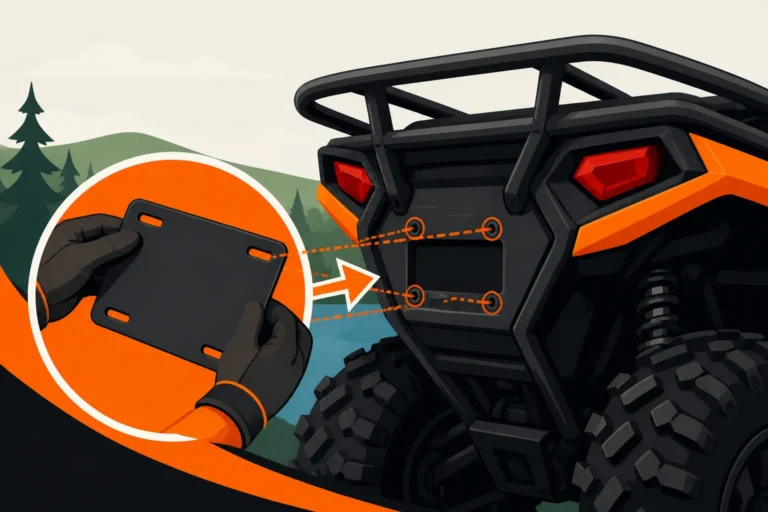
The vehicle permit is a legal document that lists you as the registered owner of the imported quad and details all the pertinent information about the machine, including its VIN, make, model, and year. Before leaving the ServiceOntario counter, take a moment to carefully review all the information on the permit to ensure there are no errors. Any mistakes could cause issues down the road, so it's best to catch them immediately. Along with the permit, you'll be handed your physical ORV license plate. This plate is your machine's unique identifier and a legal requirement for riding on most trails and any municipal roads where ORVs are permitted. You'll need to know [Ontario ORV Plates and Where They Mount] once you're ready to hit the trail. Remember, while you've diligently completed the import and registration process, Ontario's law generally states you have [Six Days From Purchase in Ontario] to get everything officially registered. With an imported machine, these steps might take longer than six days from the date of purchase, but as long as you're actively pursuing the legitimate registration process and have your paperwork in order, you're on the right track. Now, go mount that plate and enjoy the freedom of riding your legally registered machine!
Navigating Special Circumstances: Older Machines, Gifts, or Missing Paperwork
While the standard process covers most scenarios, some imported quads come with unique challenges. Whether you're dealing with an antique machine, a family gift, or regrettably, missing paperwork, these situations require extra attention and specific approaches to ensure a successful registration in Ontario.
What if Your Imported Quad is Older or Has No Title?
Finding a fantastic deal on an older ATV or UTV, perhaps from a jurisdiction where formal "titles" for off-road vehicles aren't commonly issued, can be exciting. However, this lack of a traditional title can present a significant hurdle when you try to register it in Ontario, as ServiceOntario typically expects some form of official ownership document.
In such cases, the burden of proof shifts heavily to a meticulously drafted and comprehensive bill of sale. This document must contain as much detail as possible about the machine, its history, and any previous owners you can trace. If the paper trail is thin, or if you're several owners removed from the original purchase, you might need to provide additional supporting documents. This could include a sworn affidavit, signed before a notary public or commissioner of oaths, formally declaring your ownership and explaining the machine's provenance. This affidavit essentially serves as your legal declaration of ownership in the absence of a traditional title. For more detailed guidance, consider reviewing resources like [Proving You Own a Quad With No Papers]. Furthermore, ServiceOntario may, especially for older machines or those with unclear histories, require a Vehicle Identification Number (VIN) verification. This often involves a physical inspection by a police officer or an authorized mechanic to confirm the VIN is legitimate, hasn't been tampered with, and matches your documentation, primarily to rule out the possibility of it being a stolen vehicle. While these extra steps add to the timeline, they are essential to legally establishing your ownership and registering your quad.
Importing a Gifted Quad or Inherited Machine
Receiving an imported quad as a gift from a family member or inheriting one can be a wonderful experience, and Ontario does offer some specific Retail Sales Tax (RST) exemptions for these situations. However, even if you don't have to pay RST, you are still absolutely required to follow all the standard import and registration procedures. The machine still needs to legally enter Canada through customs, and you still need to formally register it at ServiceOntario.
For a gifted machine, you will need clear, written proof of the gift. This typically takes the form of a notarized letter from the giver. This letter should explicitly detail the machine's information (make, model, VIN), clearly state that it is a gift, name you as the recipient, and crucially, confirm the familial relationship between you and the giver. This last point is vital because RST exemptions, such as [The Family Gift Exemption in Ontario], are generally limited to specific family relationships. Similarly, if you've inherited the quad through a will, you'll need official documentation from the estate. This would usually include a copy of the will, a letter from the estate's executor confirming the transfer of ownership to you, and any other relevant probate documents. While the RST implications may differ, the fundamental requirements for customs clearance (if crossing the border) and subsequent registration at ServiceOntario remain firm. If you're navigating the complexities of an inherited machine, [Registering a Machine You Inherited in Ontario] can offer further insights.
Dealing with Missing or Incomplete Import Paperwork
This is, without a doubt, the most challenging scenario. If you've somehow acquired an imported quad that lacks proper customs documentation – meaning it was brought into Canada without the official CBSA declaration and payment of duties/taxes – you are in a very difficult position. ServiceOntario operates under strict regulations and will categorically refuse to register any vehicle that cannot prove it has legally entered Canada. They simply cannot validate ownership or status without that crucial customs paper trail.
Your immediate and only viable course of action in such a situation is to contact the Canada Border Services Agency (CBSA) directly. You will need to explain your situation and inquire about the process for retroactively declaring the vehicle and paying any outstanding duties, taxes, or penalties. Be prepared: this can be a complex, time-consuming, and potentially expensive undertaking, often involving significant fines in addition to the original taxes and duties. Trying to circumvent customs regulations is not only illegal but can lead to severe consequences, including the seizure of your vehicle, substantial financial penalties, and even legal charges. It is always, always in your best interest to ensure that any imported vehicle you purchase or bring into the country has a complete and legitimate paper trail. If you are ever buying an imported machine from a private seller, insist on seeing the original customs documentation as part of your due diligence, and consider using a robust bill of sale from a reputable service like LawDepot to fully document the transaction and protect yourself from future liabilities.
| Document Type | Purpose | Where to Obtain/Check | Key Notes |
|---|---|---|---|
| Bill of Sale (Original) | Proof of purchase, establishes legal ownership, purchase price | Seller (Private or Dealer) | Must include buyer/seller names, VIN, date, full purchase price |
| Customs Declaration | Proof of legal entry into Canada, payment of federal duties/GST | Canada Border Services Agency (CBSA) – typically Form B3 | Absolutely critical for ServiceOntario; must be stamped and validated |
| Personal Identification | Confirms your identity to ServiceOntario | Valid Ontario Driver's Licence, Passport, etc. | Must be current and government-issued |
| Proof of Ontario Residency | Confirms your eligibility to register a vehicle in the province | Utility bill, bank statement, lease agreement (dated within 90 days) | Name and address must match your ID |
| Previous Ownership Doc. | Any existing title or registration from the originating jurisdiction | Previous Owner / State DMV (e.g., U.S. Title) | Bring if available; helps establish vehicle history and legitimacy |
| Sworn Affidavit | For older machines or those lacking traditional ownership docs | Notary Public or Commissioner of Oaths | Required if paper trail is weak or no formal title exists (e.g., very old machine) |
| Gift/Estate Documents | Proof of familial relationship or legal transfer for tax exemptions | Notarized Gift Letter, Will, Executor's Letter | Essential for claiming [The Family Gift Exemption in Ontario] or other RST exemptions |
Disclaimer
This article is for general informational purposes only and does not constitute professional advice. Laws, prices and regulations vary by location and change over time. Consult a qualified professional for guidance on your specific situation.