Ontario ATV Registration for a Side-by-Side Under 1,000cc
Trying to figure out how to register your shiny new (or new-to-you) side-by-side in Ontario can feel like navigating a maze, especially when you start hearing about engine sizes and different classifications. Many folks get hung up on whether their machine, particularly one under 1,000cc, is even considered an ATV for registration purposes, and what paperwork is truly essential. This guide is here to cut through that confusion, walking you through the straightforward steps to get your side-by-side plated and ready for the trails.
Understanding Your Side-by-Side in Ontario's Eyes
First things first, let's clear up some common misunderstandings about what a side-by-side (SXS) or Utility Terrain Vehicle (UTV) is in the context of Ontario's regulations, especially for those machines with an engine displacement under 1,000cc. While many of us use "ATV" as a catch-all term for any off-road vehicle, the province actually has specific categories that impact how your machine is classified and, consequently, how it needs to be registered and operated. This distinction is super important because it dictates everything from where you can ride to what safety gear you need.
The Official Classification: ROV, Not Just "ATV"
In Ontario, what most people call a "side-by-side" officially falls under the classification of a Recreational Off-Highway Vehicle (ROV) within the broader category of Off-Road Vehicles (ORVs). The term "All-Terrain Vehicle" (ATV) typically refers to single-rider or two-up machines where the operator straddles the seat, like a motorcycle. An ROV, on the other hand, is designed for multiple occupants sitting side-by-side in seats, often with a steering wheel and foot pedals, much like a small car. Even if your side-by-side has an engine under 1,000cc, it's still primarily an ROV, and the registration process will reflect that. The engine size itself doesn't change its fundamental classification as an ROV, though it might come into play for specific municipal road access rules later on.
It's easy to get these terms mixed up, especially since many manufacturers market them together, and the spirit of off-road riding is the same. However, when you walk into a ServiceOntario centre, using the correct terminology can help streamline the process and ensure you're getting the right information. You're not registering an "ATV," you're registering an "ORV" that happens to be an "ROV" type, even if it's a smaller engine size.
Why Engine Size Matters, and Why It Doesn't for Registration
The fact that your side-by-side is "under 1,000cc" is a detail that often sparks questions. For basic provincial registration, the engine displacement isn't typically a barrier or a defining factor for whether you can register it. If it's an off-road vehicle that meets the safety and design criteria, it's generally registerable. Where the engine size can become relevant is when you start looking at specific local municipal bylaws for road access. Some townships or municipalities might have different rules or restrictions for ORVs based on their engine size or weight, particularly if they fall into another specific category like a Multi-Purpose Off-Highway Utility Vehicle (MPV).
However, don't let the engine size distract you from the primary goal: getting that provincial permit and plate. For the initial registration, focus on the fact that it's an ROV, regardless of whether it's 500cc, 800cc, or 999cc. All eligible ORVs in Ontario follow a similar registration path. It’s always a good idea to ensure you understand all the classifications, though, as knowing your vehicle type helps with adherence to all aspects of the [The Off-Road Vehicles Act and Ontario Riders].
The Registration Process: Getting Your Side-by-Side on the Books
Alright, let's get down to brass tacks. You’ve got your side-by-side, it’s under 1,000cc, and you’re ready to hit the trails legally. The process itself isn't overly complicated, but it does require attention to detail and the right documentation. Think of it less like a bureaucratic nightmare and more like a necessary step to ensure everyone on the trails is accounted for and contributing to the maintenance and safety of the riding environment.
Where to Go and What to Expect
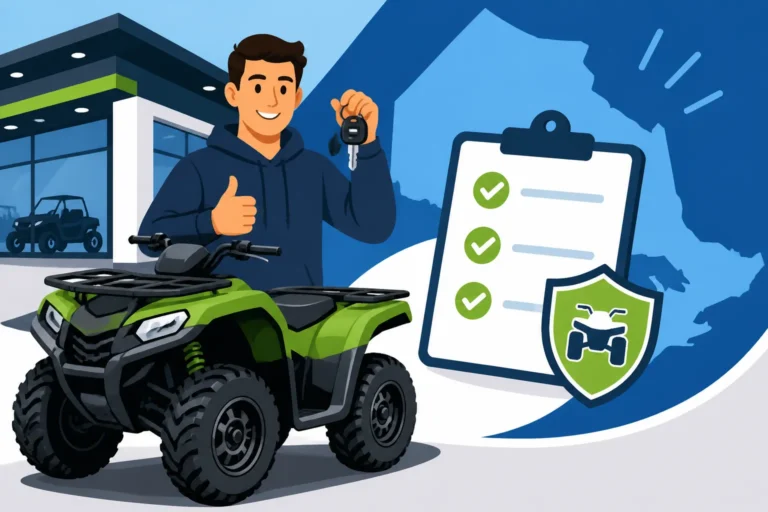
The place to get your side-by-side registered in Ontario is your local ServiceOntario centre. These are the provincial government offices that handle everything from driver's licenses to health cards, and yes, ORV registrations. You can either walk in (though be prepared for potential wait times) or, in many locations, book an appointment online, which I highly recommend to save yourself some time.
When you arrive, you’ll be dealing with a ServiceOntario agent who will review your documents, verify your identity, and process the registration. They'll input your vehicle’s information into the provincial system, calculate any applicable taxes, and issue you an Ontario Vehicle Permit and a licence plate. The entire process, assuming you have all your ducks in a row, usually takes less than an hour. If you've ever registered a car or even a snowmobile, it will feel familiar, though with some key differences specific to off-road vehicles. For more detailed insights on the process, check out [Registering an ORV at a ServiceOntario Centre].
The Six-Day Rule: Don't Delay!
One crucial timeline to be aware of is Ontario’s "six-day rule." When you purchase a side-by-side, whether it's new from a dealer or used from a private seller, you have six days from the date of purchase to complete the registration at a ServiceOntario centre. This isn't just a suggestion; it's a legal requirement. Failing to register your machine within this timeframe can lead to fines, and more importantly, you won't be able to legally operate it on public trails, Crown land where permitted, or any municipal roads that have been opened to ORVs.
This six-day window can fly by, especially if you buy on a Friday and ServiceOntario is closed on weekends. So, plan accordingly! Get your documents together as soon as the purchase is complete and aim to visit ServiceOntario as quickly as possible. Many new owners, excited about their purchase, forget this detail and end up scrambling. Don't be one of them! You can read more about this deadline in [Six Days From Purchase in Ontario].
What You'll Receive: Permit and Plate
Once your registration is successfully processed, you'll walk out with two essential items:
- The Ontario Vehicle Permit: This is a green slip of paper, similar to a car's ownership, that serves as your proof of ownership and registration for the side-by-side. It will list your name and address as the owner, along with specific details about your machine, including its Vehicle Identification Number (VIN). This permit is absolutely vital and must be carried with you (or a true copy) whenever you are operating the ORV. Losing it can be a hassle, so keep it safe and consider making a photocopy to carry on rides while the original stays securely at home. [The Ontario Vehicle Permit Explained] goes into further detail about what this document means for you.
- The Ontario ORV Licence Plate: You'll be issued a standard ORV licence plate that must be securely attached to your side-by-side. For an ROV (side-by-side), the plate is typically mounted on the rear. The plate acts as visible proof of your registration and allows enforcement officers to identify your machine. Ensure it's mounted in a way that is visible, clean, and not prone to falling off or being obscured by mud during your adventures. [Ontario ORV Plates and Where They Mount] can give you tips on proper mounting.
Essential Documents and What to Prepare
Having all your paperwork in order before you head to ServiceOntario is half the battle. Nothing is more frustrating than waiting in line, only to be told you're missing a critical document and have to come back another day. Taking the time to gather everything beforehand will save you immense headaches and ensure a smooth registration experience for your side-by-side under 1,000cc.
Proof of Ownership: The Bill of Sale
This is arguably the most critical document. Whether you're buying new from a dealer or used from a private seller, you need a clear, legible Bill of Sale. For a new machine, this will be provided by the dealership. For a used side-by-side, you and the seller will need to complete one. A good Bill of Sale should include:
- The full names and addresses of both the buyer and the seller.
- A clear description of the side-by-side, including the make, model, year, and most importantly, the Vehicle Identification Number (VIN).
- The date of the sale.
- The purchase price (even if it's $0 for a gift).
- The signatures of both the buyer and the seller.
It's highly recommended to use a standardized template for a private sale. Websites like LawDepot offer excellent, customizable Bill of Sale templates that ensure all necessary legal information is included, protecting both parties. This helps prevent issues later if ServiceOntario needs to verify details. Trust me, a handwritten note on a scrap of paper often leads to questions and delays. For more on what your bill of sale needs, check out [Ontario ATV Bill of Sale Requirements].
Proof of Identity
You will need to prove who you are. This typically means bringing a valid, government-issued photo identification, such as your Ontario Driver's Licence. If you don't have an Ontario Driver's Licence, other forms of ID like a Canadian passport or an Ontario Photo Card may be accepted. The key is that it must be current and clearly identify you as the person registering the vehicle.
Paying Your Dues: Retail Sales Tax (RST)
Unless you qualify for an exemption (more on that later), you will need to pay the Ontario Retail Sales Tax (RST) on the purchase price of your side-by-side. This is currently 13 percent and is paid directly to ServiceOntario at the time of registration, not to the private seller. Even if you bought your machine from a dealer, and they collected the HST, ServiceOntario will still confirm the tax details. When you buy from a private seller, the RST is calculated on the purchase price declared on your Bill of Sale. This is a significant cost, so make sure you factor it into your budget. [13 Percent RST on an Ontario ATV] and [Ontario RST Paid at the Counter, Not to the Seller] offer more details on this.
Used Machine Specifics: Proving Ownership Chain
If you're buying a used side-by-side, especially one that might have changed hands a few times, it’s a good idea to bring any previous ownership papers or permits if the seller provides them. While the Bill of Sale from your seller is paramount, having a clear chain of ownership can sometimes help if there are any discrepancies or questions about the vehicle's history or previous registration. While not strictly required every time, it can smooth the process. This is particularly important if the seller has misplaced their original permit; having a comprehensive Bill of Sale, perhaps from LawDepot, becomes even more crucial. For guidance on buying used, refer to [Buying a Used ATV in Ontario] and [Proving Ownership of an Ontario ATV].
| Document Category | Specific Document | Purpose |
|---|---|---|
| Proof of Ownership | Bill of Sale | Essential for new and used machines, declares buyer/seller, VIN, price, date. |
| Identity | Valid Photo ID | Your Ontario Driver's Licence or equivalent. |
| Payment | Debit/Credit/Cash | For Retail Sales Tax (RST) and the registration fee. |
| Previous Documents (Used) | Old ORV Permit (if available) | Helps verify ownership history, though your Bill of Sale is primary. |
Common Pitfalls and How to Avoid Them
Even with the best intentions, registering a side-by-side can sometimes hit a snag. Knowing these common issues beforehand can help you navigate the process more smoothly and avoid unnecessary delays or frustrations. It's about being proactive and informed.
The Permit Versus a Title
In Ontario, what you receive for your side-by-side is an Ontario Vehicle Permit, not a "title" like some jurisdictions in the United States use. This permit serves as proof of ownership and registration. It's not a certificate of title in the traditional sense, which often implies a separate document establishing legal ownership apart from registration. For all intents and purposes, your Ontario Vehicle Permit is your ownership document. Don't go looking for a separate "title" as you won't find one. Understanding this distinction can prevent confusion, especially if you're accustomed to vehicle ownership processes outside of Ontario. You can learn more about this nuance in [The Permit Versus a Title in Ontario].
Overlooking Retail Sales Tax Exemptions
While most purchases of a side-by-side will be subject to the 13 percent RST, there are legitimate exemptions that many people either don't know about or forget to claim. These include:
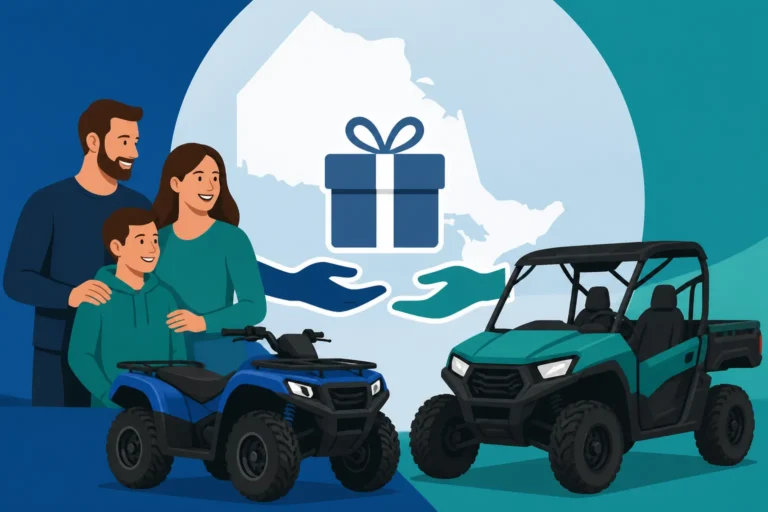
- Family Gifts: If the side-by-side is a genuine gift from an immediate family member (e.g., parent to child, spouse to spouse), you may be exempt from RST. You'll need specific documentation to prove the relationship and that it's a gift.
- Farm Use: If the side-by-side is purchased for use exclusively in a farming business, it might be eligible for a farm-use exemption. Again, specific forms and proof of farming operations are required.
- Estate Transfers: Machines transferred as part of an inheritance through a will might also be exempt.
It's crucial to understand the exact requirements for each exemption and have the necessary forms and supporting documentation ready. Attempting to claim an exemption without the proper paperwork will lead to delays. ServiceOntario agents are trained to verify these claims carefully. For more on this, check out [Ontario RST Exemptions for an ATV].
Not Considering Insurance Before You Ride
While you generally don't need to show proof of insurance at the ServiceOntario counter to register your side-by-side, mandatory insurance is absolutely required to operate an ORV in Ontario. You cannot legally ride your registered side-by-side without a valid insurance policy. Many new owners, focused on registration, sometimes forget this critical step.
It’s best practice to arrange for insurance coverage before you even pick up your machine or leave the seller’s property. Your insurance policy will protect you from liability in case of an accident and often covers damage to your own machine. Riding uninsured can result in significant fines and legal penalties, not to mention the financial catastrophe if you're involved in an accident. Always carry your proof of insurance with your permit when riding. For further reading, consult [Insurance and Ontario ORV Registration].
Confusion with Snowmobile Registration
It's important to remember that the registration process for a side-by-side (an ORV) is distinct from that of a snowmobile, even though both are recreational vehicles. Snowmobiles have an annual registration renewal fee and require a trail permit, whereas ORVs do not have an annual renewal fee once registered, and their trail permits are handled through organizations like the Ontario Federation of ATV Clubs (OFATV), not directly by ServiceOntario. Trying to apply snowmobile rules to your side-by-side registration can lead to unnecessary confusion. For a clearer picture of the differences, see [How Ontario ORV Registration Differs From a Snowmobile's].
Getting your side-by-side under 1,000cc registered in Ontario doesn't have to be a daunting task. By understanding the classifications, knowing where to go, preparing your documents diligently (with the help of resources like LawDepot for a robust Bill of Sale), and being aware of common pitfalls, you can ensure a smooth process. Once that permit and plate are in hand, you’re all set to legally and safely enjoy the incredible trails and riding opportunities Ontario has to offer. Happy riding!
Disclaimer
This article is for general informational purposes only and does not constitute professional advice. Laws, prices and regulations vary by location and change over time. Consult a qualified professional for guidance on your specific situation.