Registering a Quad With Nothing but a Frame Number
It's incredibly frustrating when you've got your hands on what seems like a great quad or side-by-side, only to realize you don't have the stack of paperwork you need to register it in Ontario. Maybe you inherited it, found it in an old barn, or bought it from someone who was just as unorganized as you might be feeling right now. This guide is here to walk you through the challenging, but often possible, process of registering an ATV or UTV when all you have is the frame number.
The Frustration of Lost Paperwork and Unknown Histories
Let's be real, you're not alone in this boat. Many riders have stumbled upon a fantastic deal, or inherited a machine with sentimental value, only to find the original owner's meticulous filing system was… non-existent. You might be staring at a perfectly good machine, dreaming of hitting the trails, but the bureaucratic hurdles feel like Mount Everest. It's a common scenario, and it leaves many folks scratching their heads, wondering if their new-to-them ride will ever see a legal trail.
Why This Situation Happens
There are countless reasons why an ATV or UTV might end up without its proper registration papers. Sometimes, it's an honest mistake – papers get lost in a house move, or forgotten in a drawer after a sale years ago. Other times, the machine has changed hands multiple times, each owner caring less about formalizing the transfer until the paper trail simply vanishes. You might find machines that were used exclusively on private property, never needing formal registration, and thus no one bothered to keep the original documentation. Or, in less ideal situations, the machine might have been imported informally, or worse, has a problematic history that the previous owner wanted to conceal. It’s a messy reality, and you’re left with the cleanup.
The Challenges You'll Face
Without a clear paper trail, you're immediately up against a wall of questions from ServiceOntario. They need to confirm who legally owns the machine, ensure it hasn't been reported stolen, and verify that all past taxes (like Retail Sales Tax) have been paid or are due. Without a bill of sale, a previous [The Ontario Vehicle Permit Explained], or any official documentation, it's hard to satisfy these requirements. You'll likely encounter skepticism and a strict adherence to procedure, which can feel incredibly discouraging when you're just trying to do the right thing and get your machine legal. You might even find yourself dealing with the uncomfortable possibility that the machine has a lien against it or was stolen years ago.
Your First Steps to Proving Ownership
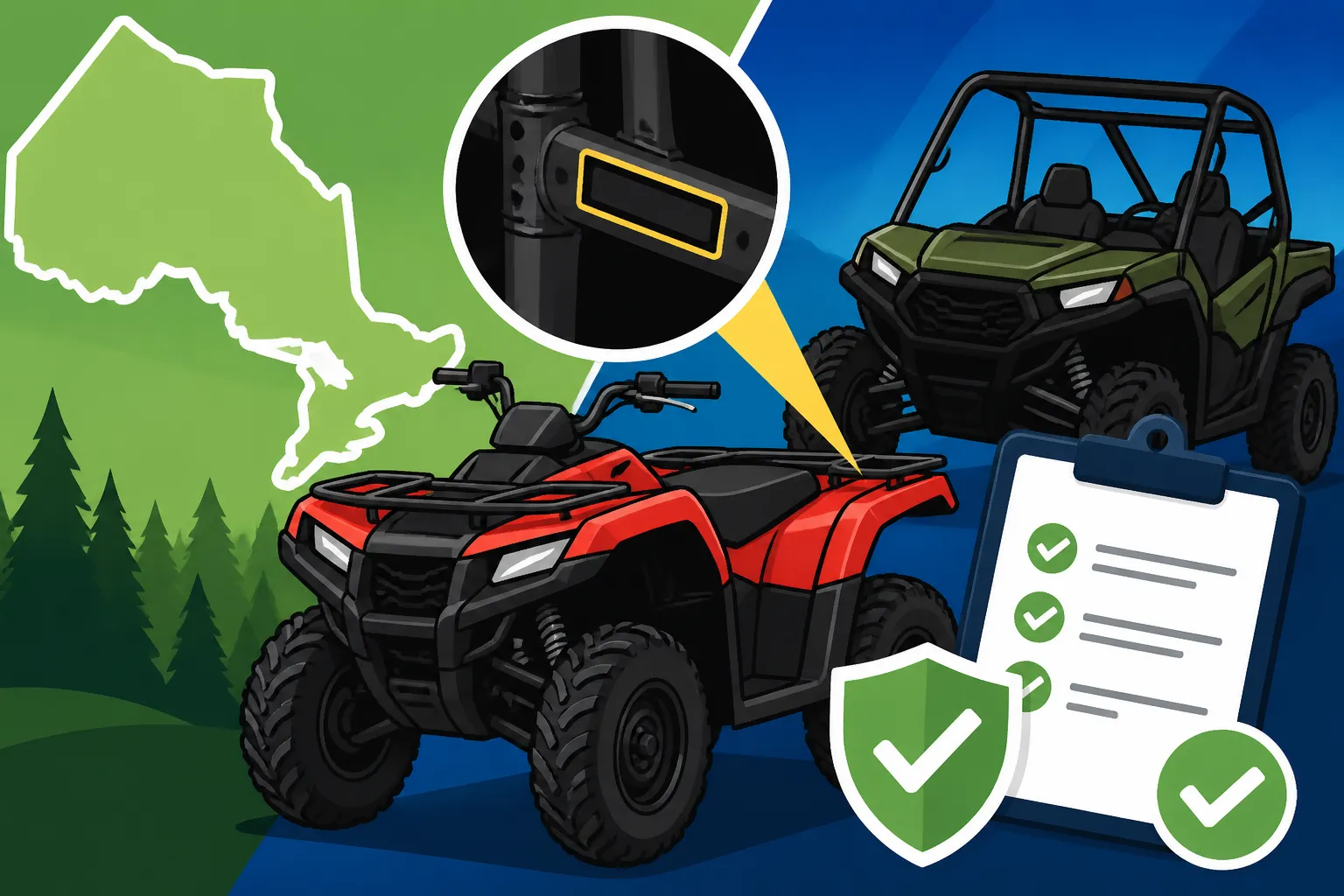
So, you're starting with just a frame number. This is your anchor, your single piece of undeniable identification for the machine. Every ATV and UTV has a unique Vehicle Identification Number (VIN) stamped on its frame, usually in a visible spot. This number is your starting point, and it's absolutely crucial for unraveling the machine's history.
Tracing the VIN and Its History
The very first thing you need to do is locate that VIN on your machine. It's usually stamped into the frame, often near the steering head, on a frame rail, or sometimes under the seat. Once you have it, write it down accurately. This number is like the machine's DNA. Your next step is to use this VIN to search for any existing records. You can start by checking with local police services to see if the machine has been reported stolen. This is a critical step, as you absolutely do not want to register a stolen vehicle, and trying to do so could land you in serious legal trouble.
Beyond that, there are private services that specialize in [Ontario ATV VIN Check Before Buying] and lien checks. While these services typically charge a fee, they can often access databases that might reveal previous registration details, accident history, or most importantly, if there's an outstanding lien on the vehicle. A lien means someone else has a financial claim against the machine, and until that's cleared, you won't be able to register it in your name. Think of it as peeling back the layers of an onion – you're trying to find any shred of official history connected to that VIN. Any information you can find about previous owners or registration attempts will be invaluable in building your case.
Gathering Supporting Evidence
Since you don't have a traditional paper trail, your goal is to assemble as much alternative evidence as possible to demonstrate legitimate ownership. This might include:
- Affidavits: If you acquired the machine from someone, even informally, ask them to write a sworn affidavit (a legal document witnessed by a commissioner of oaths or notary public) stating how they came to possess the ATV/UTV and that they are transferring it to you. This is like a sworn verbal bill of sale.
- Photos: Take clear, dated photos of the ATV/UTV, especially highlighting the VIN.
- Correspondence: Keep any emails, texts, or social media messages relating to the acquisition of the machine.
- Witness Statements: If there were witnesses to the transfer of the machine to you, ask if they would be willing to provide a statement.
- Purchase Records (if any): Even if it's not a formal bill of sale, if you have any receipt from a mechanic who worked on it, or a purchase record for parts in your name, it shows your investment and connection to the machine.
The more pieces of the puzzle you can bring, the stronger your argument will be when you present your case to ServiceOntario. Services like LawDepot can be helpful here if you need a template for a bill of sale, or even an affidavit that you can customize and have sworn, to formally document how you acquired the machine, even if it's an "after the fact" record.
When a Bill of Sale Is Absolutely Required
While you're starting with just a frame number, ultimately, to [Registering an ATV Without a Bill of Sale] in Ontario is nearly impossible. ServiceOntario will require proof of ownership and purchase. If you don't have one, you'll need to create one, even if it's retrospective. If you inherited the machine, you might need documentation of the estate transfer. If you bought it informally from someone who also had no papers, you'll need them to sign a bill of sale, even if it's a simple, handwritten one. Remember that this bill of sale needs to be legible, include the VIN, the purchase price, and the names and signatures of both the buyer and the seller. Without this crucial document, ServiceOntario has no legal basis to transfer ownership to you, or to assess the 13% Retail Sales Tax (RST) due on the purchase.
Navigating ServiceOntario Without a Permit
So, you’ve done your homework. You’ve traced the VIN, gathered any available evidence, and ideally, you've even managed to create a bill of sale with the person who transferred the machine to you. Now comes the moment of truth: heading to ServiceOntario. This step can feel intimidating, but being prepared and understanding their requirements will make a world of difference.
What ServiceOntario Needs from You
When you walk into ServiceOntario, especially for a situation like this, you're essentially presenting a case to them. They need to be convinced that you are the rightful owner and that the machine is legitimate. Here’s what they’ll generally require:
- Your Valid ID: Driver's license or another form of government-issued identification.
- The Bill of Sale: This is paramount. As discussed, even if it's a new one you've created with the previous owner, it needs to be presentable. Ensure it clearly states the VIN, make, model, year (if known), purchase price, and the full names and signatures of both buyer and seller.
- Proof of Retail Sales Tax (RST) Payment or Exemption: If the purchase price is declared on the bill of sale, they will calculate the 13% RST. You’ll pay this directly to ServiceOntario. If you believe you qualify for an exemption, such as a [The Family Gift Exemption in Ontario] or [Ontario's Estate Transfer Exemption], you'll need to bring the specific documentation to prove it. This might include an Affidavit of Gift form if it was a gift from a family member.
- The VIN: Be ready to provide this clearly. The ServiceOntario agent will enter it into their system to check for existing records, liens, or stolen status.
It’s often a good idea to bring all your supporting evidence – the VIN check results, any police reports (if it was recovered), or affidavits – even if they aren't explicitly requested. It shows you've done your due diligence and are serious about legitimate registration.
Potential Roadblocks and How to Overcome Them
Registering a machine without its original [Ontario ATV Registration Paperwork] can definitely hit some snags. Here are a few common ones and how to approach them:
- No Previous Record: If the VIN comes up with no previous registration in the ServiceOntario system, they might be extra cautious. This is where your bill of sale and any other documentation proving legitimate acquisition become absolutely vital. You might need to explain the history of the machine (e.g., "it was a farm machine, never left private property").
- Lien Found: If a VIN search reveals an active lien, you simply cannot register the machine until that lien is discharged. This is a big one. You'll need to contact the financial institution that holds the lien and work with the person who owes the money to resolve it. Do not proceed with the purchase or registration if there's an unresolved lien, as you could become responsible for the debt. This underscores the importance of a thorough [Ontario ATV Lien Check Before Buying] before you even try to register.
- Stolen Vehicle: This is the worst-case scenario. If the machine is flagged as stolen, it will be immediately seized by the police. You will lose the machine, and potentially any money you paid for it. This is why the initial police check is paramount.
- Incomplete Bill of Sale: If your bill of sale lacks crucial information, like a proper VIN, purchase price, or contact information for the seller, ServiceOntario may refuse the transaction. They need to be able to verify the details. Make sure you use a comprehensive template, perhaps one from a service like LawDepot, to ensure all necessary fields are included.
- Skepticism from Staff: Some ServiceOntario agents might be unfamiliar with these complex, non-standard registration scenarios. Be patient, polite, and have all your documentation neatly organized. If one agent seems unwilling or unable to help, you can politely ask if there's a supervisor or another agent who might have more experience with unusual cases. Persistence, coupled with thorough preparation, is key.
The Path Forward to Riding Legally
Once you successfully register your quad or side-by-side with ServiceOntario, receiving your [The Ontario Vehicle Permit Explained] and your shiny new [Ontario ORV Plates and Where They Mount], you’ve cleared the biggest hurdle. Congratulations! But the journey to hitting the trails legally isn't quite over yet.
Insuring Your Newly Registered Machine
One of the absolute critical steps, and one that is legally required in Ontario before you can ride on any public land (and highly recommended even on private land), is getting insurance. Just because you have a permit and a plate doesn't mean you're covered. You need to contact an insurance provider that offers off-road vehicle policies. Many major insurance companies offer this, or you might look for a specialized broker. They will ask for your VIN, make, model, year, and proof of registration (your new permit). Don't just assume your existing car insurance will cover it; dedicated ORV insurance is a must. The minimum coverage typically required is for third-party liability, but comprehensive coverage is often a wise investment given the nature of off-road riding. [Ontario ATV Insurance Requirements] are strict, and failing to have it can lead to significant fines.
Hitting the Trails Legally
With your machine registered and insured, you're almost ready to explore Ontario's fantastic network of trails. Remember that even with your permit and insurance, you still need to adhere to all provincial and municipal laws regarding off-road vehicles. This includes things like age restrictions for riders, helmet laws, and where you are legally allowed to ride. Most organized trails in Ontario require a trail permit from the Ontario Federation of ATV Clubs (OFATV) or a specific club if it's not part of the OFATV network. Make sure you understand [Ontario ATV Trail Permits Explained] and acquire the appropriate pass before heading out. Always carry your permit and proof of insurance with you when you ride. Whether it's the ServiceOntario document, or a copy of your permit, it needs to be accessible. [Carrying the Permit or a True Copy] is a requirement, and trail patrollers or law enforcement may ask to see it. Enjoy your rides, knowing you've done all the hard work to make it legal!
Disclaimer
This article is for general informational purposes only and does not constitute professional advice. Laws, prices and regulations vary by location and change over time. Consult a qualified professional for guidance on your specific situation.