Ontario ATV Insurance Proof at Registration
It can be incredibly frustrating to head to ServiceOntario, ready to get your off-road vehicle (ORV) registered, only to be turned away because you're missing a crucial piece of paper you didn't even know you needed. Many Ontario riders assume that registering an ATV or UTV is a simple matter of proving ownership and paying a fee, much like a snowmobile, but the province has specific requirements regarding insurance proof right from the start. This guide will clarify exactly what insurance documentation you need to successfully register your ATV or UTV in Ontario, helping you avoid unnecessary delays and headaches.
Why Insurance is Crucial for Your Ontario ORV
When you’re excited about a new ATV or UTV, whether it’s fresh off the dealer lot or a solid used machine you just picked up, the last thing on your mind might be insurance. After all, it's an off-road vehicle, right? You're not planning on driving it on Highway 401. But here's the kicker: in Ontario, having valid insurance isn't just a good idea for protecting your investment or covering potential accident costs; it's a non-negotiable legal requirement for registration. This surprises a lot of people, especially those coming from other jurisdictions or simply assuming that an ORV is treated differently from a car in every aspect.
The Mandate for Liability Coverage
The Province of Ontario mandates that every off-road vehicle must be insured, primarily for liability coverage. This means that if you're involved in an incident where your ORV causes injury or property damage to someone else, your insurance policy is there to cover those costs. Without it, you, the owner and operator, would be personally responsible for what could be financially devastating expenses. This isn't just about protecting your own wallet; it's about protecting other people, too. Think about it: an ORV, even at low speeds, can cause significant damage or harm. The province wants to ensure that anyone operating such a machine is prepared for those eventualities. This is why when you go to [Registering an ORV at a ServiceOntario Centre], they'll ask for proof of this critical coverage.
For many riders, the focus is often on the fun and adventure of riding, not the legalities. But this foundational requirement ensures a baseline of responsibility across all ORV owners. It applies whether you plan to ride on managed trails, your own private land, or even just cross a municipal road where permitted.
Beyond Registration: Protection on the Trail and Road
While insurance is essential for getting your ORV registered, its importance extends far beyond the ServiceOntario counter. Every time you throw a leg over your quad or buckle into your side-by-side, that insurance policy is your safety net. Imagine you're out on the trails, enjoying a fantastic ride, and something unexpected happens—maybe you misjudge a corner and slide into a tree, or perhaps you have a minor collision with another rider. Without proper insurance, the financial repercussions could be enormous.
Your insurance policy not only covers the mandatory liability but can also offer additional protection, such as coverage for damage to your own machine, theft, or even medical expenses if you're injured. While these aren't required for registration, they are absolutely vital for peace of mind. Many riders just focus on the minimum to get the plate, but taking the time to understand the broader protections can save a lot of heartache down the line. It's not just a piece of paper for the government; it's a shield for you and your assets. For a full breakdown of what's expected, you might want to review [Ontario ATV Insurance Requirements].
The Type of Insurance Ontario Requires for Registration
Navigating the world of insurance can feel like trying to find your way through a dense forest without a map. When it comes to registering your ATV or UTV in Ontario, the requirement is clear: you need a motor vehicle liability policy. This isn't some niche ORV-specific policy that's hard to find; it's the standard type of insurance that covers your legal responsibility if you cause an accident.
Understanding the Motor Vehicle Liability Policy
At its core, a motor vehicle liability policy ensures that if you, as the operator of the ORV, are legally responsible for injuries to another person or damage to their property, your insurance company will cover those costs up to the policy limits. In Ontario, the minimum liability coverage required is typically set by regulation, and it's important to confirm this with your insurer. This isn't just about covering minor scrapes; it's designed to protect against significant claims, such as those arising from serious accidents that might lead to long-term injuries or extensive property damage.
When you purchase an ORV, your insurance broker will guide you through the options, but they will always ensure you have this mandatory liability component. Without it, ServiceOntario simply won't process your registration. It's a foundational element of responsible ORV ownership in this province. Think of it as the bedrock upon which all other protections for your machine are built.
What Your Insurance Card (Pink Slip) Proves
When you visit ServiceOntario, the physical proof you'll need to present is your insurance card, often affectionately called a "pink slip" in Ontario, even if most of them aren't pink anymore. This card is a concise summary of your insurance policy, indicating:
- Your Name and Address: Proving you are the policyholder.
- The Insured ORV's Details: Including the make, model, and crucially, the Vehicle Identification Number (VIN). This ensures the policy matches the machine you're trying to register.
- Policy Number: A unique identifier for your coverage.
- Effective Dates: Showing that the policy is currently active and valid.
- Insurance Company Name: Identifying the provider of your coverage.
The ServiceOntario representative will carefully check these details to ensure they align with the ORV you are registering and that the policy is current. They aren't just glancing at it; they're verifying the specifics. It's a quick but essential part of the process. So, before you head out, double-check that your insurance card is for this specific ORV and that the dates are correct. Having a clear and legible card is key; a faded or damaged one might raise questions.
For those purchasing a used ATV, sometimes the seller might provide some old paperwork. However, remember that the insurance must be in your name and for your active policy. An old policy from the previous owner won't cut it. Speaking of paperwork, platforms like LawDepot can be helpful for generating a solid [Ontario ATV Bill of Sale Requirements] to complement your registration documents, ensuring you have all your ducks in a row for ownership proof.
How to Prove Your Insurance at ServiceOntario
You've secured your ORV, you've got your insurance sorted, and now it's time to face the ServiceOntario counter. This step, while seemingly straightforward, can sometimes trip up even the most prepared individuals. Knowing exactly what to bring and how it will be verified can make all the difference between a quick visit and having to reschedule.
The Physical Insurance Card: Your Golden Ticket
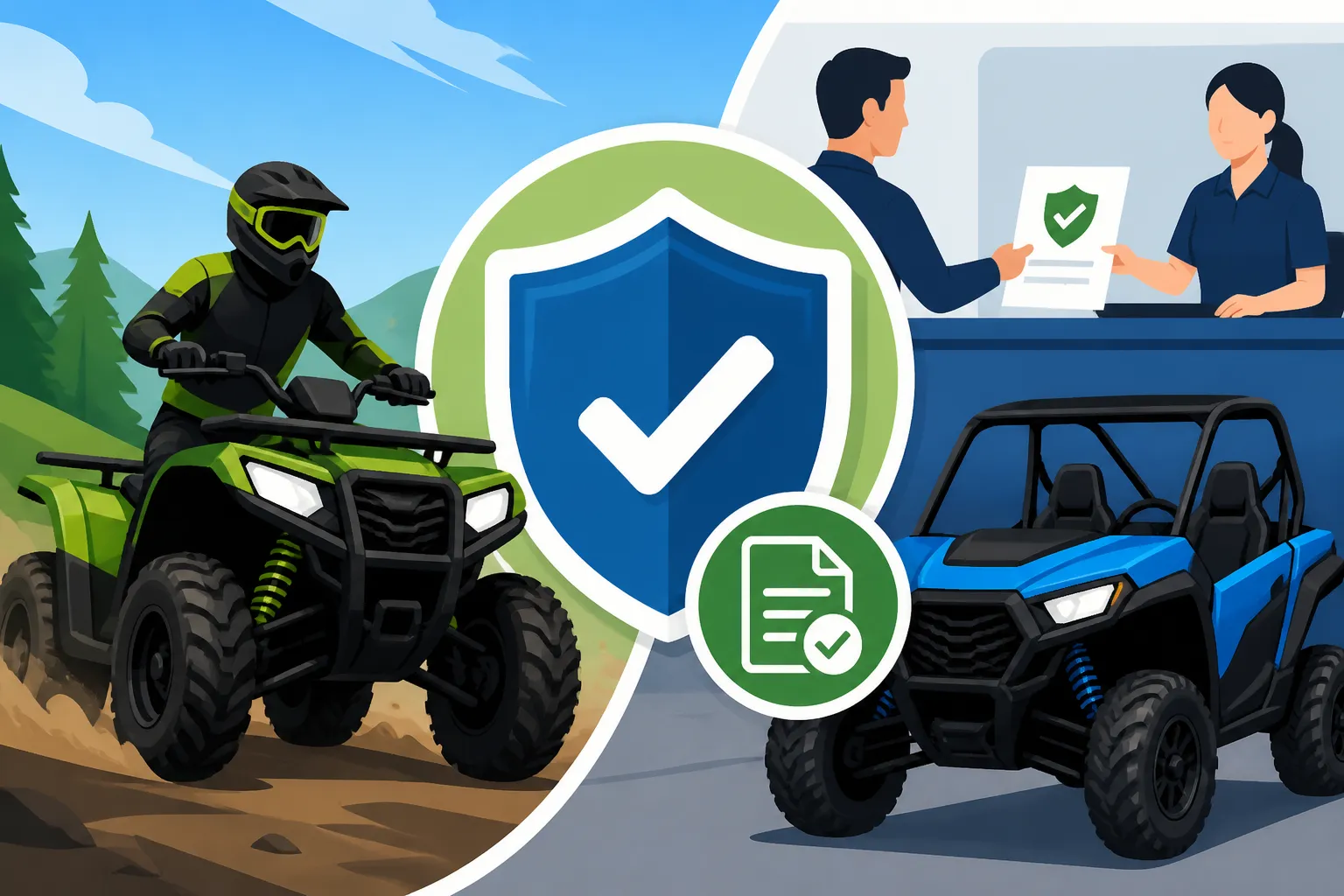
The primary document you absolutely must have in hand is your current insurance card, or "pink slip." As mentioned, this card must specifically list the ATV or UTV you are registering, complete with its Vehicle Identification Number (VIN), and show that the policy is active.
When you approach the counter, the ServiceOntario agent will ask for this card. They'll scrutinize it to ensure the VIN on the card matches the VIN on your [The Ontario Vehicle Permit Explained] application or your bill of sale. They'll also check the effective dates to confirm your coverage is current and hasn't expired. This isn't just a formality; it's a legal safeguard. Without this physical proof of valid insurance, they simply cannot issue you an ORV permit and plate.
It's a good practice to keep this card, or a true copy, with you whenever you ride. While digital proof is increasingly accepted in some situations for roadside stops, for the initial registration process at ServiceOntario, a physical, legible card is generally expected and preferred to avoid any potential technical glitches or delays.
What if You Don't Have a Physical Card Yet?
Sometimes, you've just purchased insurance, and your physical card hasn't arrived in the mail yet. This is a common concern. Thankfully, most insurance providers understand this timeline and can offer temporary solutions:
- Temporary Proof of Insurance: Many insurance companies can email or fax you a temporary insurance document or a digital copy of your pink slip almost immediately after you purchase coverage. This document will contain all the necessary details, including the VIN, policy number, and effective dates.
- Print a Copy: If you receive a digital copy, ensure you print it out clearly. A printout of your temporary proof of insurance is usually acceptable at ServiceOntario, provided all details are perfectly legible and it's clearly a valid, official document from your insurer.
- Confirm with ServiceOntario: If you're unsure whether your temporary document will be accepted, it's always best to call your local ServiceOntario centre ahead of time to confirm their specific requirements. Policies can sometimes vary slightly, or they might have specific recommendations for temporary proof.
Remember, the goal is to provide undeniable evidence of current, valid liability insurance for the specific ORV. Without it, the registration process will grind to a halt. While ServiceOntario staff are generally helpful, their hands are tied by provincial regulations. They can't make exceptions for missing insurance proof.
Here's a quick comparison of what you need versus what people sometimes mistakenly bring:
| Document Category | What You Need for Registration | What Is Not Sufficient for Registration |
|---|---|---|
| Proof of Ownership | Original Bill of Sale (from previous owner or dealer) | Receipt of down payment, handwritten note without details |
| [The Ontario Vehicle Permit Explained] (if used) | Old registration from another province | |
| Proof of Identity | Valid Ontario Driver's Licence, Passport | Expired ID, work badge, library card |
| Proof of Insurance | Valid Ontario Insurance Card (Pink Slip) | Insurance quote, expired pink slip, policy declaration |
| Temporary Proof of Insurance (printed) | Photos of an insurance card on a phone | |
| Payment for Fees/Tax | Debit, Credit Card, Cash (check local centre) | Personal cheque (often not accepted), IOUs |
Beyond the insurance card itself, you'll also need other [Ontario ATV Registration Paperwork], such as proof of ownership (bill of sale) and your own identification. Ensuring all these documents are in order will make your visit smooth and efficient. It's a good idea to organize all your documents into a folder before heading out. Sometimes, creating comprehensive documents, such as a legally sound bill of sale, can be simplified using resources like LawDepot, which provides templates that help ensure all critical information is included for ownership transfers, which then supports your registration application.
What Happens If You Don't Have Insurance (Or Proof)
It's tempting to think you can just "get by" without proper insurance or that the registration process is just a formality. However, in Ontario, the consequences of not having valid ORV insurance, or failing to provide proof at registration, are significant. These aren't minor inconveniences; they can lead to substantial fines, legal troubles, and even the inability to register your machine at all.
Denial of Registration and Delays
The most immediate consequence of not having valid insurance proof is that ServiceOntario will simply deny your application for an ORV permit and plate. This means you won't be able to legally ride your ATV or UTV anywhere off your own private property. If you bought your machine and expected to ride it that weekend, this can be a major letdown. You'll have to go back to your insurance provider, obtain the necessary documentation, and then return to ServiceOntario, effectively delaying your riding plans.
This delay isn't just a waste of your time; it can impact other aspects too. For example, if you're trying to meet the [Six Days From Purchase in Ontario] deadline for registration and tax payment, a denied application because of missing insurance proof could push you past that window, potentially causing further complications. It's much easier to secure your insurance before you even think about stepping foot into ServiceOntario.
Steep Fines for Riding Uninsured
Beyond the registration counter, the legal repercussions for riding an uninsured ORV in Ontario are severe. Operating an off-road vehicle without valid insurance is a serious offence under provincial law, specifically the Compulsory Automobile Insurance Act. The fines for this offence are substantial, often ranging into the thousands of dollars for a first conviction, plus additional fees and surcharges. These [Ontario Fines for No ATV Insurance] can be a huge financial burden and are designed to deter riders from taking such a risk.
It's not just about getting caught by an officer on the trail or road. If you're involved in an accident while uninsured, even a minor one, you could face these fines on top of being personally liable for all damages and injuries. This could lead to massive out-of-pocket expenses that could impact your financial stability for years. It's a risk simply not worth taking, especially when readily available insurance can provide that critical safety net.
| Scenario | Consequence without Insurance/Proof |
|---|---|
| At ServiceOntario for Registration | Application for ORV permit and plate will be denied. Cannot legally operate ORV anywhere but private land. |
| Riding on Public Trails/Roads | Significant fines (often thousands of dollars) for riding uninsured. |
| Potential impoundment of your ORV. | |
| Involved in an Accident (at fault) | Personally liable for all damages, injuries, and legal costs. |
| Potential for civil lawsuits against you. | |
| Involved in an Accident (not at fault) | May still face fines for being uninsured. |
| Limited recourse for your own damages/injuries without proper coverage. |
Legal and Financial Ramifications
The financial penalties are just the start. Operating an uninsured vehicle can also lead to:
- Impoundment of Your ORV: Law enforcement has the authority to seize and impound your ATV or UTV if you are caught operating it without valid insurance. Retrieving your machine from impound can be an expensive and complicated process, adding further costs and headaches.
- Increased Future Insurance Premiums: If you are caught riding uninsured, it will be noted on your driving record. This can make it much harder and more expensive to obtain insurance in the future, not just for ORVs but for other vehicles as well. Insurance companies view uninsured driving as a high-risk behaviour.
- Inability to Sue/Recover Damages: If you're involved in an accident and you're uninsured, your ability to recover damages for your own injuries or machine might be severely limited, even if the other party was at fault. Insurance acts as a critical reciprocal protection.
The message is clear: insurance isn't optional for ORV owners in Ontario. It's a mandatory safeguard that protects you, other riders, and property. Don't let the excitement of a new machine overshadow the fundamental responsibility of securing proper insurance. Getting all your documents in order, perhaps even keeping a digital backup of your critical paperwork like a bill of sale which you might prepare with a service like LawDepot, can make the entire registration and ownership experience much smoother.
Disclaimer
This article is for general informational purposes only and does not constitute professional advice. Laws, prices and regulations vary by location and change over time. Consult a qualified professional for guidance on your specific situation.