Ontario Registration for a Dirt Bike
Riding a dirt bike through Ontario's diverse trails, whether it's the challenging rocky terrain up north or the winding paths through southern forests, is an incredible experience. However, a common point of confusion for many riders, especially those new to the province or to the sport, revolves around the seemingly mysterious world of dirt bike registration. Unlike a car that clearly needs plates, many assume that because dirt bikes are largely off-road, they might be exempt. This simply isn't the case, and failing to properly register your dirt bike can lead to significant headaches and fines. This comprehensive guide is here to cut through the confusion and walk you through everything you need to know about getting your dirt bike legally registered and ready for adventure in Ontario.
Understanding Dirt Bike Classification in Ontario
Before diving into the nuts and bolts of registration, it's really helpful to understand how Ontario classifies dirt bikes. It might seem like a minor detail, but the specific legal category your machine falls into directly impacts the registration process, what documents you need, and even where you can legally ride. This isn't just bureaucratic jargon; it's the foundation of legal off-road vehicle operation in the province.
Why Classification Matters for Registration
In Ontario, off-road vehicles (ORVs) are broadly defined, but there are distinct categories within that umbrella. Your dirt bike, for the purposes of the Off-Road Vehicles Act (ORVA), is typically classified as an "Off-Road Motorcycle." This might sound obvious, but it's a specific legal distinction that sets it apart from an ATV (All-Terrain Vehicle) or an ROV (Recreational Off-Highway Vehicle, which typically includes side-by-sides). While all these vehicles require registration, the specific nuances can differ.
Many riders, especially those who come from jurisdictions with different rules, often assume that if a vehicle is designed for off-road use, it doesn't need to be registered, particularly if it will never touch a paved road. This is a common and understandable misconception, but one that can lead to problems. The ORVA mandates registration for any ORV operated off private property, whether that's a managed trail system, Crown land, or even crossing a road allowance. Understanding that your dirt bike, as an Off-Road Motorcycle, falls under this requirement is the first crucial step to legal riding.
Off-Road Motorcycle Versus Dual-Sport
It's also important to distinguish between what most people call a "dirt bike" and a "dual-sport" motorcycle. A true off-road motorcycle, or dirt bike, is purpose-built for unpaved terrain. It often lacks features like turn signals, mirrors, or proper headlights and taillights for street legality. These are the machines we're primarily discussing in this guide, and they are registered as Off-Road Motorcycles under the ORVA.
On the other hand, a "dual-sport" motorcycle is designed to be street-legal while still having significant off-road capability. These machines come equipped from the factory with all the necessary lights, mirrors, speedometers, and other safety features required for operation on public roads. A dual-sport is registered as a regular motorcycle with the Ministry of Transportation (MTO), much like any street bike. Its registration process involves different steps, often including a safety inspection, and it requires a motorcycle license to operate on the road. Knowing which type of machine you have is vital, as this guide focuses specifically on the registration of dedicated off-road dirt bikes.
The Mandatory Registration Process for Dirt Bikes
So, you've got your dirt bike, and you're ready to hit the trails. Your next step, and it's a non-negotiable one, is getting it officially registered with the Province of Ontario. This isn't just a suggestion; it's a legal requirement that ensures you can enjoy your machine without worry.
It's Not Just for Road Use: Why You Need a Plate
This is perhaps the biggest misconception out there: "If I'm not riding on the road, I don't need a plate." I hear this all the time from riders, and I totally get why it seems logical. Dirt bikes are made for the dirt, right? Why would the government care about something only used in the bush? Well, the truth is, they do. The Off-Road Vehicles Act (ORVA) applies to all off-road vehicles, including dirt bikes, operated anywhere other than your own private property. This means if you plan to ride on managed club trails (like those maintained by OFATV clubs), on Crown land where ORVs are permitted, or even just cross a municipal road allowance to get from one private property to another, your dirt bike must be registered and display a valid Ontario ORV plate.
Operating an unregistered dirt bike on public land or designated trails is akin to driving an unregistered car on the highway – it's illegal and comes with consequences. You could face fines if stopped by an enforcement officer, whether it's a provincial police officer, a conservation officer, or a by-law officer. The registration serves several vital purposes: it provides a unique identifier for your machine, proves legitimate ownership, and helps law enforcement track vehicles, especially in cases of theft. So, even if your tires never touch asphalt, that green plate and its corresponding permit are your ticket to legal off-road adventure. Remember, understanding [Riding an Unregistered ATV in Ontario] will give you more context on the penalties.
Documents You'll Need at ServiceOntario
When you head to your local ServiceOntario centre to register your dirt bike, you'll need to come prepared with the right paperwork. This is where many people get tripped up, so it's worth taking the time to gather everything meticulously. Think of it like building a case for ownership; you want to present a clear and undeniable trail of evidence.
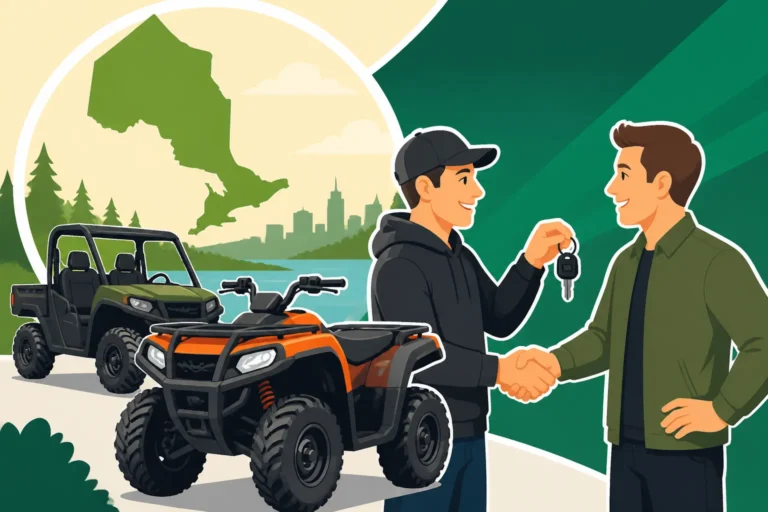
The absolute cornerstone document is the Bill of Sale. Even if you're buying privately, you need a detailed, signed bill of sale that includes the date of sale, the purchase price, the full names and addresses of both the buyer and seller, and crucially, the complete Vehicle Identification Number (VIN) of the dirt bike. For a new machine purchased from a dealership, you'll receive a Manufacturer's Statement of Origin (MSO) or a New Vehicle Information Statement (NVIS) instead, which acts as the initial proof of ownership. If you're buying a used dirt bike from an individual, you'll also need the previous owner's Ontario Vehicle Permit, signed over to you. This permit is proof that the previous owner legally owned the machine and is transferring that ownership to you. Without it, you're going to have a much tougher time convincing ServiceOntario that you are the rightful new owner. To help ensure your private sale bill of sale is comprehensive and legally sound, services like LawDepot can be incredibly useful for drafting a proper document. They provide templates that cover all the necessary information, giving you peace of mind that nothing important is missed.
Beyond the ownership documents, you'll also need proof of your identity (like a valid Ontario driver's licence) and proof of your Ontario residency. This ensures that the permit is issued to the correct individual at the correct address. Always ensure the VIN on all your documents matches the physical VIN on your dirt bike exactly. Any discrepancies can lead to delays or even refusal of registration. For more detailed insights, check out [Proving Ownership of an Ontario ATV].
Paying the Fees and Retail Sales Tax
Once you have all your documents in order and you're at the ServiceOntario counter, there are two main financial components to consider: the registration fee and the Retail Sales Tax (RST). This is another area where off-road vehicles in Ontario differ from other jurisdictions, and thankfully, it's generally good news for riders.
The registration fee for an off-road vehicle, including a dirt bike, is a one-time charge. That's right – once you pay it, you're done! There are no annual renewal fees, no yearly stickers to buy, and no need to revisit ServiceOntario every spring. This is a huge benefit for ORV owners in Ontario, making the ongoing cost of legal riding much lower compared to other vehicles. This "pay once and you're good" system is a welcome relief for many. If you want to dive deeper into this, read [No Annual Renewal for an Ontario ORV].
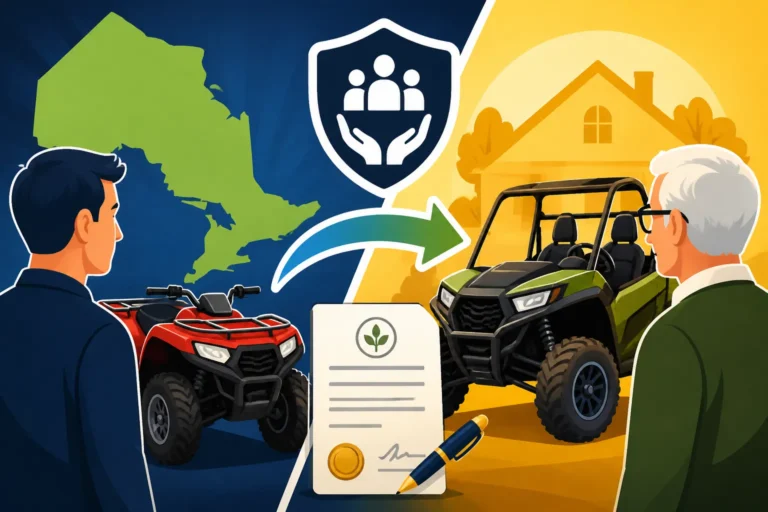
In addition to the registration fee, you will also be required to pay the 13% Retail Sales Tax (RST) on the purchase price of your dirt bike. This tax is paid directly to ServiceOntario when you register the vehicle, not to the private seller. If you purchased from a dealer, they would typically collect the HST (Harmonized Sales Tax) at the point of sale, and you wouldn't pay additional RST at ServiceOntario. However, for private sales, the RST is mandatory. The tax is calculated on the actual price you paid, unless the declared price is significantly lower than the vehicle's market value, in which case ServiceOntario may assess it based on its appraised value. There are, however, specific exemptions to the RST, such as when a dirt bike is transferred as a genuine family gift or through an estate. Understanding these exemptions, which are detailed in [The Family Gift Exemption in Ontario], can save you a significant amount. For more information on the tax itself, refer to [13 Percent RST on an Ontario ATV].
What You Get After Registration
Successfully navigating the ServiceOntario process means you're almost ready to hit the trails legally! Once the fees and taxes are paid and your paperwork is processed, you'll walk out with two crucial items that signify your dirt bike is properly registered in Ontario. These are your proof of ownership and your legal identifier for the machine.
The Ontario Vehicle Permit and Plate
The first, and arguably most important, item you'll receive is the Ontario Vehicle Permit. This is a green, wallet-sized document that officially identifies you as the owner of the dirt bike and confirms its registration with the province. It contains important details such as your name and address, the dirt bike's VIN, make, model, year, and its unique ORV plate number. This permit is your official proof of ownership and registration. Think of it as your dirt bike's birth certificate and passport rolled into one. It's absolutely critical to keep this document safe, as you'll need it for various reasons, including future sales or if requested by an enforcement officer. [The Ontario Vehicle Permit Explained] provides an excellent overview of what this permit entails.
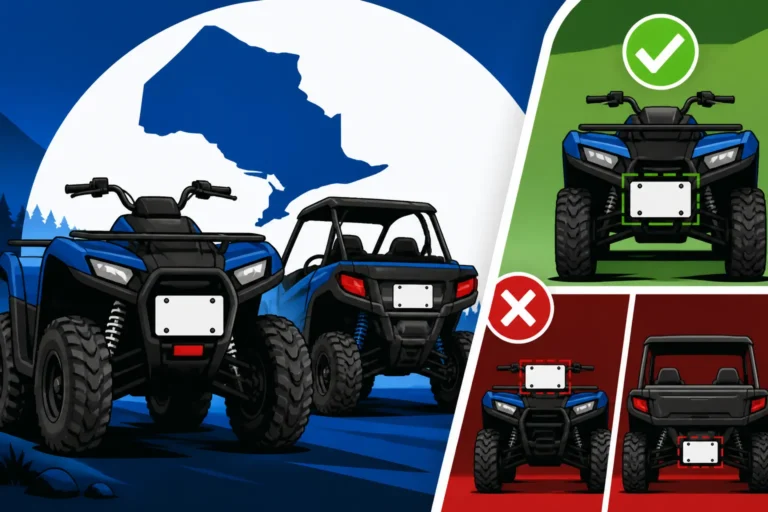
The second item is the physical ORV license plate. For dirt bikes, this is typically a smaller, square-ish plate with a green background and white lettering, identifying it specifically as an off-road vehicle plate. The plate must be securely mounted on the rear of your dirt bike, in a clearly visible location. It should be free from obstruction, easily readable, and kept clean enough that all numbers and letters are legible. This physical plate is the visible confirmation to others, including enforcement, that your machine is registered and legal to operate off your private property. Ensure it's mounted in a way that minimizes the chance of it being damaged or lost during aggressive riding, perhaps with a sturdy bracket.
Carrying Your Documents While Riding
Now that you have your shiny new permit and plate, there's one more critical step to ensure you're always riding legally: carrying your documents. It's not enough to simply have them; you must have them with you whenever you operate your dirt bike off your own property. This includes proof of your Ontario Vehicle Permit and proof of valid insurance.
Imagine you're out on a fantastic trail ride, far from home, and you encounter a provincial police officer or a conservation officer. They have the authority to stop you and ask for your documents. If you cannot produce them, even if your dirt bike is technically registered and insured, you could face fines for non-compliance. [Carrying the Permit or a True Copy] is a crucial read, as it details the requirement to carry either the original permit or a "true copy" (like a clear photocopy). Many riders choose to carry a laminated photocopy in a waterproof pouch on their person or secured on the bike, keeping the original in a safe place at home to prevent loss or damage.
The consequences for riding without these essential documents can be severe, potentially resulting in fines for operating an unregistered or uninsured vehicle. It's a simple step that can save you a lot of hassle and expense. Always ensure your documents are protected from the elements – a plastic bag or a dedicated waterproof compartment on your bike can be a lifesaver on a wet or muddy ride.
Insurance Requirements for Dirt Bikes
Beyond registration, another crucial element for legal and responsible dirt bike ownership in Ontario is insurance. Just like registration, this isn't an optional extra; it's a mandatory requirement under the law, whether you're riding on public roads (if legally permitted) or strictly off-road. Many riders overlook this, thinking that if their machine isn't road-legal, insurance isn't needed. This is a dangerous and costly assumption.
Why Insurance is Non-Negotiable
It's a common misconception that because dirt bikes are used off pavement, they don't need insurance. However, in Ontario, any off-road vehicle that is required to be registered under the Off-Road Vehicles Act (ORVA)—which includes your dirt bike—is also required to be insured under a valid motor vehicle liability policy. This is mandated by the Compulsory Automobile Insurance Act. Failing to have valid insurance means your registration itself is invalid, and you are operating your vehicle illegally.
The purpose of this mandatory insurance is primarily to provide third-party liability coverage. This means if you are involved in an accident while riding your dirt bike and you cause injury to another person or damage to someone else's property, your insurance policy will help cover those costs. Without it, you could be personally on the hook for hundreds of thousands, or even millions, of dollars in damages. The fines for operating an uninsured ORV in Ontario are substantial, easily reaching into the thousands of dollars, and your machine could even be impounded. The provincial government takes this very seriously. Don't risk it; read about the penalties in [Ontario Fines for No ATV Insurance].
Finding the Right Dirt Bike Insurance
Once you understand the necessity of insurance, the next step is finding a policy that's right for your dirt bike and your riding habits. This can sometimes be a bit trickier than insuring a car, as not all insurance companies actively write policies for off-road motorcycles. Your best bet is to seek out insurance brokers or companies that specialize in recreational vehicles or specifically mention ORV policies.
When you contact an insurer, be very clear that you are looking to insure an "off-road motorcycle" or "dirt bike" for off-road use. They will typically ask about the make, model, and year of your bike, your riding experience, and where you primarily intend to ride (e.g., private land, club trails, Crown land). Be honest and thorough in your answers, as any misrepresentation could void your policy. While the minimum legal requirement is third-party liability, you may also want to consider additional coverage options, such as collision, comprehensive, or specified perils, especially if your dirt bike is valuable or you want protection against theft or damage. Each additional coverage will affect your premium, so it's a balance between protection and cost. [Finding an Insurance Broker Who Writes ORV Policies] offers more practical advice on this search.
Common Scenarios and Special Considerations
The world of dirt bike ownership and registration isn't always a straight line. Sometimes you buy a used machine, sometimes the paperwork is less than perfect, and sometimes you're dealing with younger riders. Understanding how to navigate these common scenarios can save you a lot of grief and ensure your trail riding remains within the bounds of the law.
Buying a Used Dirt Bike in Ontario
Purchasing a used dirt bike can be a great way to get into the sport or upgrade your machine, but it comes with its own set of considerations. Unlike buying from a dealership, where many of the checks are done for you, a private sale puts the onus squarely on the buyer to ensure everything is legitimate. This is where a little due diligence goes a long way to prevent future headaches.
First and foremost, always verify the seller's identity and ensure they are the legitimate owner of the dirt bike. Ask to see their driver's licence and compare the name to the name on the Ontario Vehicle Permit. Next, conduct thorough checks on the dirt bike itself. This involves performing a Vehicle Identification Number (VIN) check. Compare the VIN on the physical frame of the bike to the VIN listed on the Ontario Vehicle Permit and the Bill of Sale. Any discrepancies should be a major red flag. A VIN check can also reveal if the machine has been reported stolen or has any outstanding liens against it. Many services allow you to perform these checks online for a small fee, which is money well spent for peace of mind. [Ontario ATV VIN Check Before Buying] and [Ontario ATV Lien Check Before Buying] are excellent resources to guide you through these critical pre-purchase steps.
Once satisfied, create a comprehensive Bill of Sale. I can't stress this enough: a detailed bill of sale protects both you and the seller. It should include the full names, addresses, and signatures of both parties, the date of sale, the agreed-upon purchase price, and the complete VIN of the dirt bike. Services like LawDepot can provide templates for robust bills of sale, ensuring all legal requirements are met and all necessary details are captured. With a proper bill of sale and the signed-over previous owner's permit in hand, you can then proceed to ServiceOntario to officially complete the transfer of ownership. This usually involves paying the 13% Retail Sales Tax on the purchase price and updating the permit to your name. This process is similar to [Ontario ATV Registration Transfer to a New Owner].
Registering a Dirt Bike with No Paperwork
This is one of the trickiest situations a dirt bike owner can face. You've acquired a machine, perhaps it was a barn find, a gift from an older relative, or a super-cheap auction purchase, but there's no Ontario Vehicle Permit and no clear bill of sale from a previous owner. What do you do? The honest answer is: it's incredibly challenging, and sometimes impossible, to legally register such a machine in Ontario.
ServiceOntario is very strict about establishing a clear chain of ownership to prevent the registration of stolen vehicles or those with disputed titles. Without a previous permit or a proper bill of sale, you have very little to prove you are the rightful owner. In some rare cases, if you can convincingly demonstrate how you acquired the machine and swear an affidavit attesting to ownership and the circumstances, ServiceOntario might consider it. However, this often involves extensive documentation, police checks to ensure the VIN isn't flagged, and a lot of patience. You might need to contact the manufacturer to trace the original sale or try to track down previous owners. This process is fraught with difficulty and potential dead ends. [Proving You Own a Quad With No Papers] delves deeper into these complex scenarios.
My strong advice: be extremely cautious about purchasing any dirt bike without a clear Ontario Vehicle Permit and a verifiable bill of sale. While the initial price might seem like a steal, the inability to legally register it means you can only ride it on your own private property, if you even manage to insure it. The headache and potential legal ramifications far outweigh any initial savings.
Age Requirements for Registration and Riding
Dirt bikes are often associated with younger riders, but Ontario has specific age requirements both for registering an ORV and for operating it, especially on public lands and trails. Understanding these rules is crucial for both parents and young riders to ensure safety and legal compliance.
First, to register a dirt bike in Ontario, you must be at least 16 years old. This means a parent or legal guardian will need to register the dirt bike in their name if the primary rider is under 16. The permit will be issued to the adult, making them the legal owner responsible for the machine's registration and insurance. This requirement is consistent across all ORV types in the province, as highlighted in [Why You Must Be 16 to Register in Ontario].
Second, the age requirements for riding a dirt bike vary depending on the location. On your own private property, with the landowner's permission, there are generally no age restrictions (though safety and supervision are paramount). However, if you plan to ride on any public land, including OFATV trails or Crown land where ORVs are permitted, the minimum age is 12 years old. A rider between the ages of 12 and 15 must be supervised by an adult (at least 16 years old) and cannot carry a passenger. Riders 16 and older can operate an ORV unsupervised, provided they meet all other requirements (licence, insurance, registration). For more details on age rules, especially off-road, check out [Ontario's Off-Road Minimum Age of Twelve]. While not mandatory for adults, rider training courses are highly recommended for all riders, especially youth, to ensure they develop safe riding habits and understand the capabilities of their machine.
| Feature | Off-Road Motorcycle (Dirt Bike) | Dual-Sport Motorcycle |
|---|---|---|
| Primary Use | Off-road trails, private land | On-road and off-road |
| Registration Type | Ontario Off-Road Vehicle Permit | Ontario Motorcycle Permit (MTO) |
| License Plate | Green ORV plate, rear-mounted | Blue or White motorcycle plate, rear-mounted |
| Road Legal? | No (typically) | Yes (with proper equipment) |
| Required Equipment | Basic lights, muffler | Headlight, tail light, turn signals, mirrors, horn, speedometer, DOT tires |
| Insurance | Mandatory ORV liability insurance | Mandatory motorcycle liability insurance |
| Operating License | No specific license (G1/G2/G is sufficient for off-road operation if 16+), M1/M2/M for road use if street legal | M1/M2/M license for road use |
| Registration Fees | One-time fee, no annual renewal | Annual renewal fees apply |
| Retail Sales Tax | 13% RST on private sale (at ServiceOntario) | HST/RST at point of sale (dealer) or RST on private sale (at ServiceOntario) |
Disclaimer
This article is for general informational purposes only and does not constitute professional advice. Laws, prices and regulations vary by location and change over time. Consult a qualified professional for guidance on your specific situation.